
This sermon was preached at Northside Presbyterian Church in Ann Arbor, Michigan and is based on Psalm 139.

This sermon was preached at Northside Presbyterian Church in Ann Arbor, Michigan and is based on Psalm 139.
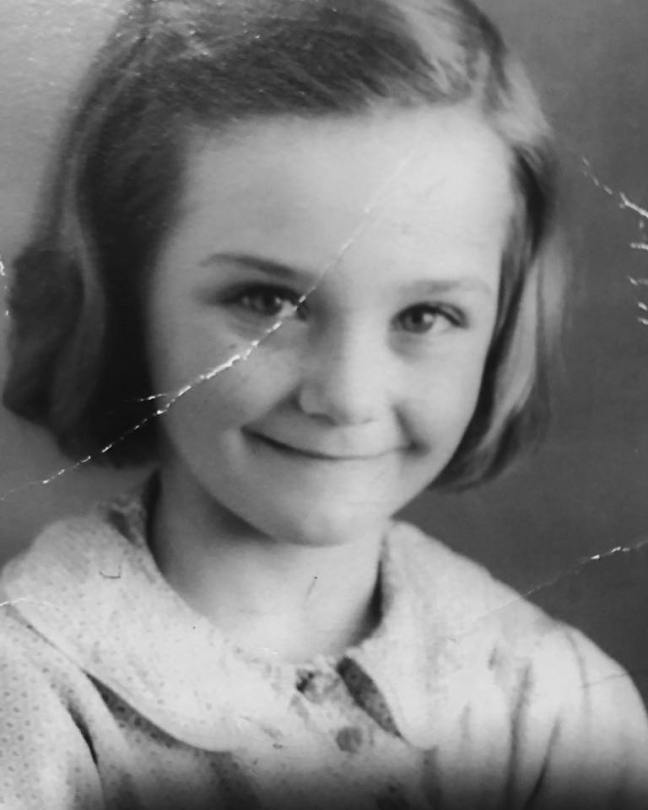
I love this photo of a darling 2nd grader. She’s Ruby Mae Foster, my Grandmother, when she was just 8 years old.
My Grandmother died last week. We called her Memaw, one of the silliest sounding Grandma names in the lexicon of Grandma names — though of course, it was not said with silliness but affection. Thankfully, she lived a long, full life. She was partnered with Jim Foster, my Grandfather (Papaw) for many years, though sadly, he died much sooner. She had two children, four grandchildren, and recently met her twin, great-grandchildren who were just born. She also has a great-grandchild on the way, my cousin’s first child.
That same cousin posted this photo on Facebook last week, and I loved seeing Ruby has an 8 year old. I’ve never seen a photo of her this young. And I was instantly reminded of this:
Our lives begin before our lives.
I would not, and I could not exist as the person I am, had this 8 year old also not lived. In part, I come from her. And there is a whole period of her life, a whole historical period, to which I am connected (1933-1982) simply because she lived it before I was born. My life is inextricably linked to these things.
And this is true all the time — yes, in relatives with whom we share DNA, but also, so many others. A whole myriad of humans shape us and continue to shape us.
Our lives always begin before our lives.
I like to wonder sometimes. . .
Who shaped the people who shaped me,
Who mentored the people who mentored me,
Who gave me life in some way before my life ever started, and
How do these people show up in my living?
Perhaps in deeper ways than I am even aware?
Our lives begin before our lives.
And the lives of others are beginning in ours. We’ll meet some of them, but many, we’ll never know about. Individually and collectively, our lives are shaping the particularities that will shape others. It’s not totally deterministic – a good thing, after all, as some particularities are hard. But this is deeply connective. Deeply creative. I think this is a mysterious, marvelous thing.

I’ll be away much of the week to be present at Ruby’s visitation and funeral, so this will be my only post for the week. But when I return, I’ll be right back at it! The best to all of you.
V.S. Ramachandran designed an experiment that was utterly brilliant in its creativity and its simplicity. Most importantly, it worked. For the long haul, it worked.
Ramachandran is a neuroscientist who is famous for a variety of discoveries about the human brain. In particular, his work has helped reveal the incredible qualities of its plasticity and malleability. Decades ago, he designed an experiment to alleviate phantom limb pain by using two simple mirrors.
Phantom limb pain is a kind of curious thing in and of itself. Documented in medical literature for more than 500 years, many physicians had written about the odd and challenging phenomenon some patients had after losing limbs. For years, even decades, these patients continued to feel a painful sensation in the limb that was missing. Some felt as though their lost arm or leg was held permanently in an awkward or painful position. They remarked that they wished to move it back into a more typical, comfortable position. Of course, that was impossible.
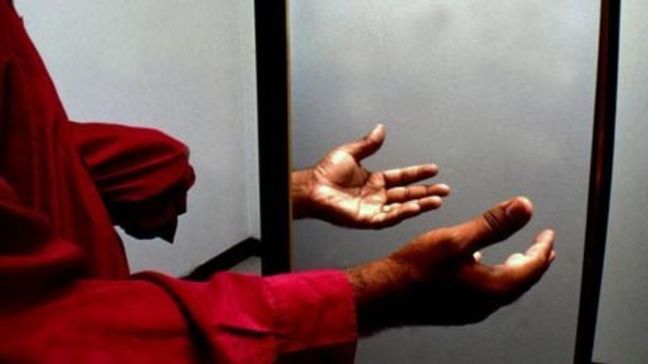
In a flash of curiosity, V.S. Ramachandran created a mirror box. He placed two mirrors together at a right angle and invited amputees to step inside the box. Suddenly, those who, say, lost their right arm, could see their left arm projected on the right side of their body. Inside the mirror box, it appeared that they had both arms. Then, they could “move” their missing limb into a better position by simply moving their remaining limb. And shockingly, this led to actual relief of the phantom pain! For many people, this was a permanent shift.
I love this experiment. I love that it worked. And if you’ll allow me, perhaps we can also enter this as a bit of a life analogy also:
There are times when we face one another too, and our human brains also have mirror neurons. When we see the emotions of the person standing in front of us, the neurons in our own brains begin to fire and sync with the other person. Isn’t that an incredible thing? (By the way, V.S. Ramachandran has done work on this too.)
We face one another.
At times,
we recognize each other and smile,
we demonstrate need to one another,
we marvel in the presence of one another,
and at times,
we present pain:
broken and insecure attachment,
grief and longing,
fear and anxiety.
In all of these, in ourselves and in others, we can choose the intention to see one another well. Certainly, with our vision, we can’t save anyone into wellness. But by choosing to mirror back what is true — love, belonging, acceptance, openness, our own humanity and vulnerability — we can create conditions that allow us to see each other and see ourselves with more clarity.
We can see each other with more truth, more safety, and more healing. This too is brilliant in its creativity and in its simplicity.
Here’s something I love about New Year’s celebrations: The timing is completely arbitrary, but the collective energy is vital. When we view something — in this case, a shift in time — with collective vision, we see things differently, even if just for a bit.
Now, of course, in a calendar sense, the timing of a new year isn’t completely arbitrary. Obviously, we know the date when a year ends, and we know the date when a new one begins. But there is only one reason January 1 is the first day of the year: We’ve collectively agreed upon that marker.
My partner is an astronomer, and a couple of years ago, I asked him a question I had never really thought about before. “Is there any reason that our calendar year starts on January 1? I mean, isn’t that date rather arbitrary?” It turns out that’s true. Our 365 day year is based on the earth’s revolution around the sun, but astronomically speaking, the year could technically start at any point on that revolution journey.
I think about this every year when we cross over from December 31 to January 1. I don’t find the arbitrary nature of the shift to be deflating. I actually find it to be heartening. As people agree upon a collective marker to honor change, the collective energy results in actual change.
Sure, New Year’s resolutions don’t always result in permanent shifts in our individual lives. That may be true, but collective vision does actually change things. Around the world, we have playful rituals to honor New Year’s Eve and the shift from one year to the next. The customs vary, but this arbitrary date does manage to connect the world. And for a particular period, we are connected to one another in better hopes. That certainly changes things.
We need each other,
We need to be connected,
We need to refresh our hopes.
In many cases, some challenges from our previous year remain firmly intact, but as we cross over a completely arbitrary marker, we somehow manage to reevaluate our relationship to those very challenges. We hope for new visions, and we resolve to work toward them.
Yes,
We need each other,
We need to be connected,
We need to refresh our hopes.
I love the gift of this annual, collective reset.

“Mom — Grandma! Look!”
This is the phrase I heard so many times while I was recently in Kroger. A young girl — maybe 8 or so — kept requesting her Grandma’s attention. She kept accidentally calling her Mom but then correcting herself.
“Mom — Grandma! Look!”
Then Grandma would look, and she did so with affection every single time. And that’s when the little girl would break into song. I wonder what sort of personal connection they had to this song. It was known to just about everyone in the store, but it seemed to have particular meaning to them.
“Oh, when the saints! Go marching in! Oh, when the saints go marching in!”
“Mom – Grandma! Look!” The girl opens the ice freezer. “Oh, when the saints! Go marching in! Oh, when the saints go marching in!” They laugh.
“Mom – Grandma! Look!” The girl picks up a grocery bag and starts marching. “Oh, when the saints! Go marching in! Oh, when the saints go marching in!” Grandma sings too.
“Mom – Grandma! Look!” The girl turns around in place. “Oh, when the saints! Go marching in! Oh, when the saints go marching in!” People are watching them interact, but the girl mostly just notices her Grandma.
Over and over again, she is expressing a need to be seen, and Grandma is seeing with affection. This is such a profound, human need.
Certainly, we don’t all shout “Lookit!” and break into song in the grocery store, but that being said, I don’t think we ever outgrow this need to see and be seen. It is a joy to recognize the moments when we are held in a loved one’s vision, and it is a joy to see loved ones with the same kind of affection and connection.
I don’t typically do New Year’s Resolutions, and yet, I find myself resolving to this: I want to have a year with vision and connection. I don’t want to see past people. Instead, I want to joyfully see people — in their discoveries, in their element, in their vulnerability (when invited), and in their own joys. And I want to be seen in these ways too.
A year of seeing and being seen.
“Lookit!”
This sermon was preached at Northside Presbyterian Church in Ann Arbor, Michigan and is based on Luke 2:22-40.
When the time came for their purification according to the law of Moses, they brought him up to Jerusalem to present him to the Lord (as it is written in the law of the Lord, “Every firstborn male shall be designated as holy to the Lord”), and they offered a sacrifice according to what is stated in the law of the Lord, “a pair of turtledoves or two young pigeons.”
Now there was a man in Jerusalem whose name was Simeon; this man was righteous and devout, looking forward to the consolation of Israel, and the Holy Spirit rested on him. It had been revealed to him by the Holy Spirit that he would not see death before he had seen the Lord’s Messiah. Guided by the Spirit, Simeon came into the temple; and when the parents brought in the child Jesus, to do for him what was customary under the law, Simeon took him in his arms and praised God, saying, “Master, now you are dismissing your servant in peace, according to your word; for my eyes have seen your salvation, which you have prepared in the presence of all peoples, a light for revelation to the Gentiles and for glory to your people Israel.” And the child’s father and mother were amazed at what was being said about him. Then Simeon blessed them and said to his mother Mary, “This child is destined for the falling and the rising of many in Israel, and to be a sign that will be opposed so that the inner thoughts of many will be revealed—and a sword will pierce your own soul too.” There was also a prophet, Anna the daughter of Phanuel, of the tribe of Asher. She was of a great age, having lived with her husband seven years after her marriage, then as a widow to the age of eighty-four. She never left the temple but worshiped there with fasting and prayer night and day. At that moment she came, and began to praise God and to speak about the child to all who were looking for the redemption of Jerusalem. When they had finished everything required by the law of the Lord, they returned to Galilee, to their own town of Nazareth. The child grew and became strong, filled with wisdom; and the favor of God was upon him.
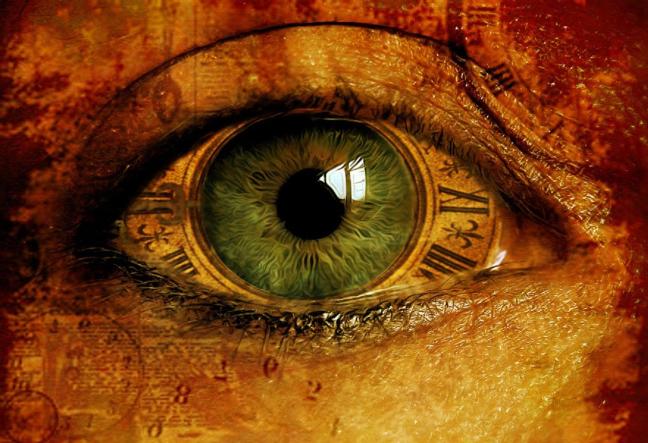
We carry time within us.
Sometimes, a simple smell, sound, or sight can transport us to another time –
a time long ago,
but a time we still carry within ourselves.
Somehow, the present moment can bring the past right into focus. In the midst of this, we feel connections to previous moments and people who were a part of them. We even experience this in our bodies. The past makes itself known in our feelings and physical sensations.
All of this is true
in our very best memories and connections,
in our relationship to grief and loss, and
in our experiences of trauma.
Time travels so easily because we carry time within us. This is part of being human.
But we are not solely passive agents in the midst of this. We can make some choices about how we bring time to ourselves. We can build connections between moments, and these connections can give us ahas of insight. We can make space to feel our emotions. We can honor people who have died. We can allow time to speak to us and make new meaning for the present.
And
We can be a Mediator. We can facilitate communication between past and present — toward healing, toward insight, toward laughter, toward joy.
When the past brings meaningful memories and connections, we can invite these to speak directly to anything we especially need right now.
And when eras of challenge or pain suddenly snap into focus, we can mediate
the best of our current experiences,
the best of our wisdom, and
the best of our nurture
straight toward the version of ourselves that lived in another time.
Then speaks to Now,
Now speaks to Then,
Older and younger versions of ourselves are in communion.
We are in relationship with ourselves, connected to a myriad of people and moments.
And from that awareness, the mediation of time doesn’t have to be heavy or deeply serious. It can also be playful. It can certainly be life-giving.
So. . . shall we try it a bit?

We internalize voices of people —
people near, people far,
people recent, people long past,
people who affirmed, people who criticized.
Sometimes, we carry these voices around for a long time.
Who is telling you about you recently? In your own mind, whose voices are chiming up? If we could see a pie chart, what percentage of time and space do those voices take up in our thinking? In our processing? In our feelings? In our beliefs about what is possible?
This may be something to consider, because I know that in many cases, we privilege the most critical voices, at times, even the ones who were completely wrong in their criticisms.
Maybe we need to turn this completely in the opposite direction. How can we privilege the voices of those who gave affirmation? Those who challenged us because they believed in us? Those who opened up our perspectives on the world? Those who helped us find a calling larger than ourselves? Those who loved us no matter what? Those who created space for us to be ourselves – including opportunities to try things and fail, and get back up again?
Though we are each one person, we are made of these many parts. As we negotiate these, in a real sense, we are in relationship with ourselves. So how do we integrate the best voices into our own internal voice?
It’s good to give these more airtime.

When you’re an astronomy family, as we are (my partner is an astronomer), you move around a lot, at least in the first eight to ten years. If astronomers are studying to stay in academia, they typically do a Ph.D., then two post-doctoral positions before moving on to a more permanent placement. Ian finished all of these a while back, but as is typical, we followed that moving trajectory. We’ve lived in three states together.
Eight years ago, we were transitioning out of Austin, Texas toward what was next, and for a brief window, we had two completely different possibilities before us. There were two offers to two positions in two different states. During that time, I remember having an intriguing thought:
There is probably some core part of myself that will be the same no matter if we choose State 1 or State 2. But once we’ve finished that experience, and it’s time to leave, other parts of me will probably be different depending on whether we’ve chosen State 1 or State 2. The people we meet and the experiences we’ll have will somehow make us more particular. State 1 Renee and State 2 Renee will be somewhat different from one another.
Of course, we weren’t going to move to both places, so I could never know this for sure. But it was an interesting thought exercise because deep down, I think that’s true. There are core parts of ourselves that ring true to who we are matter where we go. But throughout our lives, we become much of who we are in and through our relationships. The people we know particularize us in a sense — not making us less who we are, but making us more of who we are.
We come to know ourselves in relationships, and the experiences we have in those relationships shape the trajectory of our lives. How we choose vocations, partners, friends. . . How we develop a life philosophy. . . How we build families. . . How we root ourselves in a sense of place. Relationships particularize us, making our lives more specifically what they become. In this process, we become more uniquely ourselves.
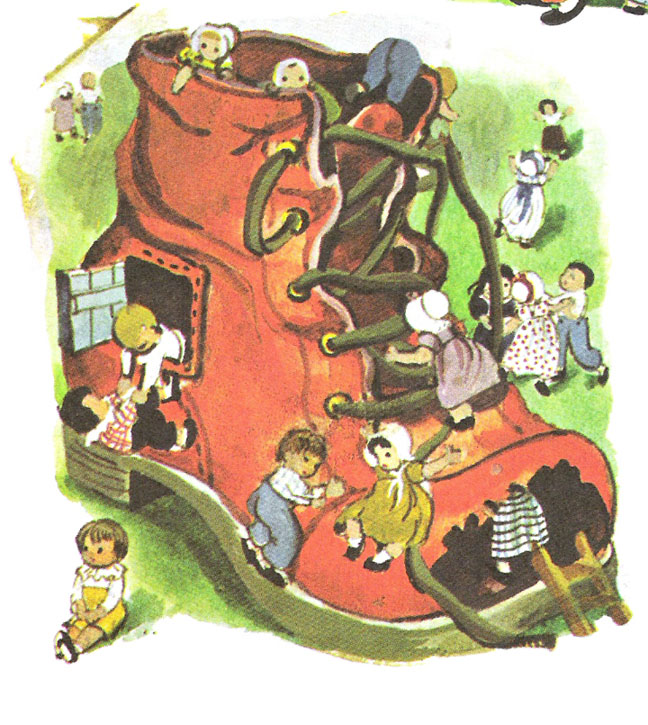
[The Old Woman Who Lived in a Show, image from Artisan Landscape]
“What if you think of it this way?” she said.
Sometimes, we can shift a situation simply by reframing it.
Years ago, a friend of mine was feeling sad, frustrated, and angry. Then, as we sometimes do, she began to turn those feelings inward, feeling sad, frustrated, and angry with herself for having such feelings in the first place. In the midst of that, she had a conversation with someone pretty wise. That person said,
“Imagine you’re a grandmother, and you have so very many grandchildren. In fact, you have more grandchildren than you can count, and maybe they’re running around all over the place. It probably feels pretty disorienting. Frustrated though you are, you’re a loving grandmother, so rather than lashing out at all these grandchildren, you approach them one at a time, and you try to figure out why each one is acting up. These grandchildren are your feelings. Maybe they have some things to tell you. What if you approach them one by one and ask them they need?
“Maybe you say, ‘Honey, you can’t run around like this, and you can’t hit your sister feeling over the head. But come here. Can you tell me why you’re frustrated? Can you tell me why you’re feeling so sad? I’m listening to you.’
“Then listen to yourself. Really listen. Mirror back what you hear. ‘Oh, I hear that you’re scared. Yeah, that can feel scary.’ Then say, ‘I’m here.’ And give these grandchildren what they need — love, reassurance, and confidence that you’re going to be present and that you’ll protect them.”
This was a wise reframing.
Sometimes, we especially need to remember that we are in relationship with ourselves. Entering that recognition more deeply, we can have important insights and grow. None of us is uniform or monolithic. We have parts, and sometimes, some parts of ourselves need to be heard by other parts. We can have internal dialogue. No need for shame spirals. We can hear ourselves with loving intention.
So if it’s helpful, I offer this reframing: You too can be that grandmother.
The Guesthouse
This being human is a guest house.
Every morning a new arrival.
A joy, a depression, a meanness,
some momentary awareness comes
as an unexpected visitor.
Welcome and entertain them all!
Even if they are a crowd of sorrows,
who violently sweep your house
empty of its furniture,
still, treat each guest honorably.
He may be clearing you out
for some new delight.
The dark thought, the shame, the malice.
meet them at the door laughing and invite them in.
Be grateful for whatever comes.
because each has been sent
as a guide from beyond.
— Jellaludin Rumi,
translation by Coleman Barks

