S-Town: Me Too

Like so many others, I spent the weekend listen-binging to the newly released podcast S-Town. And I really needed it.

In case you’re wondering, the title is a polite, public radio way of saying S***town. A mystery begins when an eccentric character of a person sends an email to Brian Reed of This American Life. His name is John B. McLemore. The subject line has the same name as the podcast. In that email, John B. McLemore encourages Reed to investigate a murder in Woodstock, Alabama, the s***hole of a town where he’s lived his whole life.

But the podcast doesn’t end up being about that murder. It’s about John himself.

No spoilers. Instead, I recommend that you give this podcast a listen and learn about John. Without giving anything away, I can say that this: This podcast is an attempt to find beauty under layers and layers of pain. And I think it succeeds.

Perhaps like me, you listened and really needed this podcast this week.

I’ve been weighing a lot lately. . . I think we probably all have. Last week, a couple of different situations absolutely knocked the wind out of me. I spent the last week feeling deeply sad, and at times, angry. On top of this, I know that many of us have spent the last ten weeks collectively concerned – maybe overwhelmed is a better word – for our nation and world, wondering, where are we going? Will people have what they need?

These large, collective pains and the specific ones known in our more immediate circles can weigh heavy. In moments like these, we certainly don’t need a silver lining, but it does help to find beauty in the midst of the pain.

And that’s where we need each other. Sometimes that beauty is easily found, but other times, we have to do some serious digging. And the digging process often starts in a helpful way when we look each other in the eye and say, “Me too. That’s how I’m feeling too.”

Then we dig and see what we can discover.

Renee Roederer

W.W. Moments

We call them W. W. Moments.

Ian and I use this phrase to describe moments when truth emerges quite suddenly, often in unexpected and unavoidable ways. It’s a reference to a particular scene in the series Breaking Bad.

What follows is a major spoiler, so if you haven’t seen that series and you expect to do so, read no further.

Throughout the series, Walter White is cooking high-grade methamphetamine and making an absolute fortune. This started out as an attempt to supplement his income as a high school chemistry teacher and pay for his cancer treatments. But it doesn’t take long for it to spiral into a life of crime, violence, and grand secrets. All of this, of course, is kept from his family. And that is especially important because Hank, his brother in law, is a DEA agent.

Throughout the series, Hank seeks answers obsessively. He wants to capture an individual known on the streets as Heisenberg, an elusive, prolific meth cook who has crafted a blue form of the drug, the purest he has ever seen. Hank goes to great lengths to investigate and capture Heisenberg, including getting severely injured. He’s taken off the case, but he just can’t let it go… Little does he know that Heisenberg is his own brother in law.

Breaking Bad has five seasons. Well through the final season, Hank has been continuously on the trail but unable to figure it out.

Until one particular moment. The W.W. moment.

Skyler, Walter’s wife, has recently figured it out herself. She has become complicit, laundering the drug money through the recent purchase of a car wash business. That night, Skyler and Walter decide to share a narrative to help all of this make sense. Walter has a gambling problem. . . but he’s really good at it. He won a lot of money, and they have invested it in the purchase of this new business.

This is the lie they decide to tell Hank and Skyler sister, Maria, over dinner.

And at first, it works. At first.

Then Hank goes to the bathroom, where the weight of the full truth emerges unexpectedly and unavoidably. In a mundane moment of calm, Hank reaches behind him to find some bathroom reading material. He finds a book of poetry by Walt Whitman, and inside the the cover, is a written dedication by Gale Boetticher, an individual that Hank has already encountered in his investigation: “To my other favorite W.W. It’s an honour working with you. Fondly, G.B.”

Memories from the investigation suddenly come rushing back, and in a moment of absolute horror, Hank realizes the unexpected but unavoidable truth: Walter White, his own brother in law, is Heisenberg.

W.W. Moments. . . Despite the great amount of wrongdoing and secrecy that happens in this world, I think that truth often takes on a life of its own. It refuses to stay silent.

If you’ve ever discovered a W.W. Moment, you know that it can be equal parts exhilarating and terrifying. It can serve as the ticket to long awaited accountability, but the knowledge carrier is also put at risk just for knowing the truth. Above all, it is disorienting. Truth is not necessarily what we thought it was.

Yet truth does emerge, and this is a good thing. Even a holy thing.

W.W. Moments are truth’s revolt, pathways of revelation that cannot be controlled – not by an alliance, an authoritarian, or an autocrat. Not by a family, a business, a conartist, a religious institution, a university administration, a crime ring, or even the highest office of the land.

Truth revolts and reveals.

Renee Roederer

#BlackWomenAtWork

I want to encourage us to take a few minutes today to look at the stories emerging under the hashtag #BlackWomenAtWork. You can find them on Facebook and on Twitter.

On live television a couple of days ago, Bill O’Reilly was watching a clip of Representative Maxine Waters discussing Russia. When the clip was over, he said, “I didn’t hear a word she said. I was looking at the James Brown wig. If we have a picture of James, it’s the same wig.”

In response to these remarks, black women are sharing stories of their encounters with racism and sexism at work. They are naming the everyday racism and sexism they’ve encountered simply when they are trying to do their jobs.

It’s important to take this in and name it for the sinister reality it is.

Renee Roederer

Sacred Stardust

Like us, Jesus was made of stardust.

I found myself reflecting upon this yesterday. One of the central celebrations of Christianity is the Incarnation, a conviction that God is not distant from us, but with us. God has been revealed among us as one of us.

This hallows our lives. This illumines the beauty of our humanity.

Perhaps we remember that famous quote from astronomer Carl Sagan, spoken from his groundbreaking series, Cosmos: A Personal Voyage. . .

“The nitrogen in our DNA, the calcium in our teeth, the iron in our blood, the carbon in our apple pies were made in the interiors of collapsing stars. We are made of starstuff.”

Our humanity is forever linked to the earth we inhabit and the universe that has shaped it over time.

Jesus was made of starstuff too.

In the celebration of God-in-humanity, Christianity should love and cherish the earth too. The entire universe, in fact.

Elizabeth Johnson, theologian and author, says this:

“Born of a woman (Gal. 4:4) and the Hebrew gene pool, Jesus of Nazareth was a creature of earth, a complex unit of minerals and fluids, an item in the carbon, oxygen, and nitrogen cycles, a moment in the biological evolution of this planet. Like all human beings, he carried within himself the signature of supernovas and the geology and the life history of the earth. The atoms comprising his body once belonged to other creatures.”

This is worthy of reflection.

Humanity made of earth and star stuff. . .

God has revealed among humanity. . .

This world, this entire universe, is a holy habitation.

Renee Roederer

These words by Elizabeth Johnson come from in a paper entitled, “Deep Incarnation: Prepare to Be Astonished,” presented at the VI International UNIFAS conference in Rio de Janeiro in July 2010.

The Church that Proclaims Belovedness

I still can’t get over these balloons.

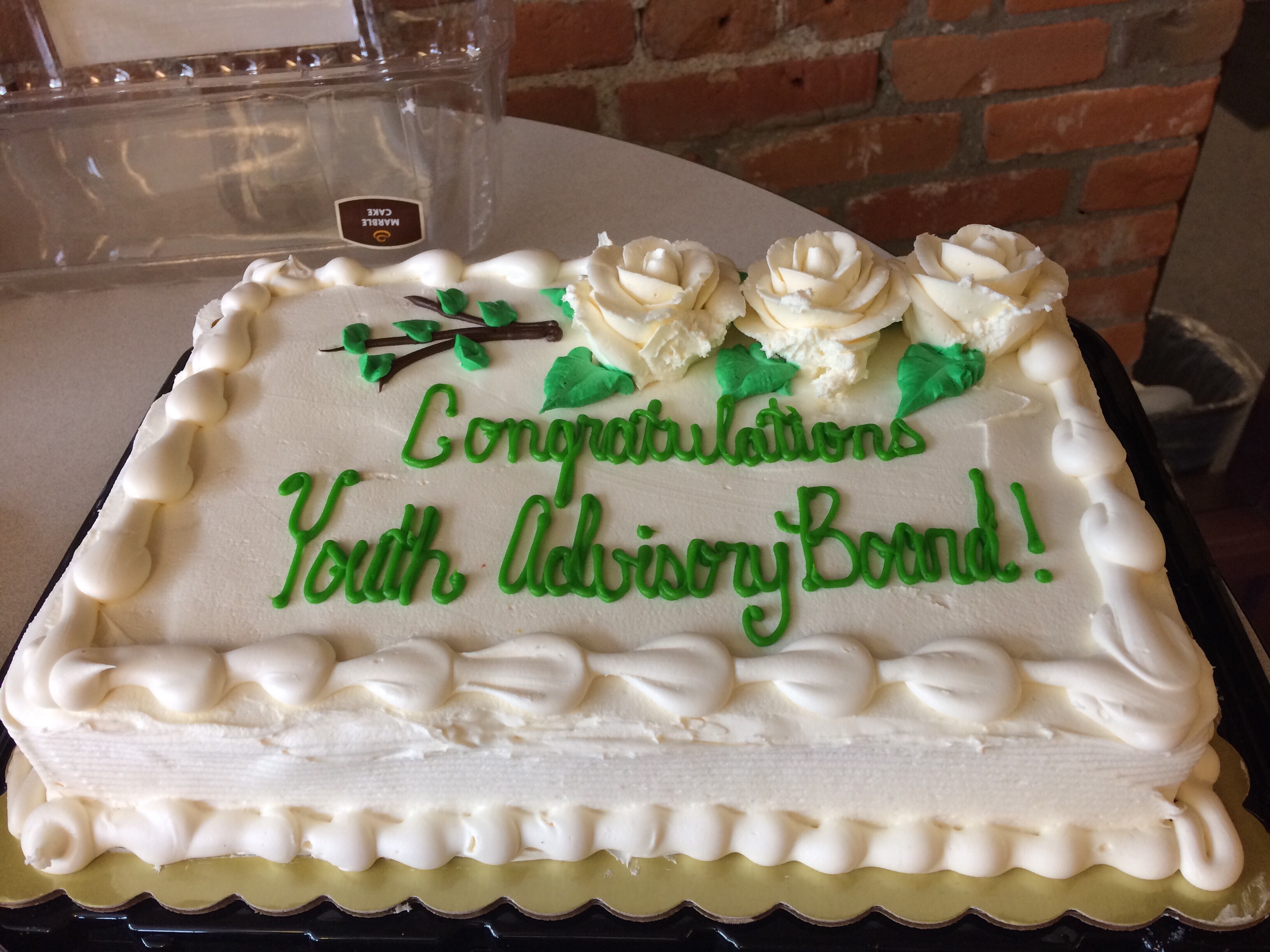
Right now in my house, I have purple balloons and flowers, and each time I see them I smile. Some people did a really nice thing for me a few days ago. I’ve been leading worship services at a particular church while they wait for their interim pastor to begin. I was with them two times in the fall, and I’ve been there five times over the last two of months.

So, just seven times.

But when they got word (and not from me) that it was the fifth anniversary of my ordination (to be fair, that’s not really a huge number. . . not like the 20th anniversary or something) they had a surprise reception for me! So kind and thoughtful.

Yesterday, I saw these balloons again, and it reminded me of something. Many people associate church with some of its worst behavior. And by the way, I absolutely do not blame people for this… I will tell you honestly, as someone who has been a pastoral leader for 9 years (not just the 5 ordained ones) I have had a front row seat to some of the very best and the very worst of church.

I haven’t given up on it entirely, mostly because I still believe in the vision behind it. And along with others, I do want to participate in the reform of how it functions, which in part, involves getting back to that better vision.

I’m certainly not the sole arbiter of understanding that larger vision, but I do believe this: The Church would come alive – I am talking about something much larger and richer than having more people in the doors – if the community would take purposeful care and intention to celebrate people’s Belovedness.

Not just the pastoral leader, who now has balloons. But everyone.

Can you imagine what would happen if people began to associate church communities with the discovery that they are absolutely, thoroughly loved? Perhaps even learning it through joyful surprise? Because they were in the presence of a community that could not even be itself without mirroring that truth to each other? Because it’s foundational to who they are together?

Yes, more of that!

-Renee Roederer

The church who threw me a reception is New Life Presbyterian Church in Sterling Heights, Michigan. I’m grateful for them!

Curiosity

I live on top of an enormous amount of trilobites.

You probably do too. Did you know. . . Cement is partly made of limestone, and limestone contains a whole lot of calcified trilobites? I didn’t, but it’s true.

The foundation of my house is made of an ancient world – a world where little beings with strange exoskeletons were once extremely abundant. They show up in the fossil record about 520 million years ago, and they went fully extinct 250 million years ago.

In addition to the foundation of my house, I used to work in a building that was made entirely of limestone. Who knew I was surrounded by trilobites the whole time? I didn’t.

I learned all of this recently on one of my favorite podcasts. It’s called Surprisingly Awesome. The hosts take a look at topics that are certainly seemingly boring – topics like concrete, mold, and flossing – and find ways to show that they’re actually pretty interesting. I love to walk around the gym and listen to this podcast. It gets my curiosity going.

I think the cultivation of curiosity is a spiritual practice. I’d also say that curiosity is a tremendous stress reliever. It’s helpful to be reminded that we live in a beautiful, intriguing world. That world is larger than us, and we really belong to it.

This weekend, I had the wonderful privilege to hear Diana Butler Bass speak. She is a religious historian, scholar, and theologian whose work I admire quite a bit. On Friday, she mentioned that sociological studies continue to reveal people in the U.S. are becoming increasingly less involved with institutional religious communities, but they also report having spiritual experiences of awe and wonder at the universe and the world around them.

Often, spirituality is taking shape in the midst of the world around us too.

How can you cultivate a spirituality of curiosity this week? What intrigues you?

I suppose we can find curiosity even in the mundane things. Even in boring, old cement.

Renee Roederer

Predatory Capitalism is Not Christian

I am saddened and dismayed when Christianity is twisted and co-opted to bless and baptize predatory capitalism in the United States. Perhaps we could re-write our Pledge of Allegiance to mirror this?

“I pledge allegiance to the flag of the United States of America, and to the Republic for which it stands, one God under nation, divisible, with poverty and injustice for many.”

It’s certainly not a new phenomenon, but Christianity is increasingly twisted to serve the corporate interests of the powerful at the expense of people experiencing poverty, economic stagnation, and vulnerability.

All day yesterday and through the night, people in power negotiated and debated legislation which is projected to result in a loss of healthcare for 24 million people. Some demanded to alter the bill so insurers will no longer have to provide essential services. With fewer people able to pay into the market, prices will likely go up for many of us.

At some point in these negotiations this week, the Congressional Budget Office updated their initial projections to account for changes, indicating that 24 million people will still lose coverage, but the new changes will cost approximately $180 billion more than the original draft.

Who is being served here? I can assure these leaders that most Americans who demanded better healthcare in the last election did not ask their representatives to price them out of the market.

These changes serve the corporate interests of insurance companies and will result in enormous tax breaks for individuals in the wealthiest 1% income bracket.

Deep down for some, a “free market” capitalism that serves the rich and corporate interests at the expense of the poor has risen to the level of a national religion. It is frequently baptized in Christian language, though it is anything but Christian.

How do people smatter campaigns with Christian language and believe deep down that people in economically impoverished situations are just lazy or a necessary casualty of a survival-of-the-fittest economy?

How does a Freedom Caucus make us more free by demanding that essential services are no longer required? Are we more free when emergency room visits, hospitalizations, mental health care, and maternal care and delivery are no longer covered in the plans we pay for?

How do people say they are pro-life yet move forward with legislation they know will result in a loss of coverage and life-saving treatment?

Folks can move in these directions, and they are. But they should not bless it with Christian language.

In his very first sermon, Jesus said,

“The Spirit of the Lord is upon me, because he has anointed me to bring good news to the poor.

He has sent me to proclaim release to the captives and recovery of sight to the blind, to let the oppressed go free, to proclaim the year of the Lord’s favor.”

Renee Roederer

Terrorism and the Manipulation We Fear

I will be honest about something today.

When I hear about a terrorist attack in the United States or another country in the Western world, my first reaction is to feel deep sadness for the people most affected. I feel great concern for people who have lost loved ones and for the local residents who are shocked by the confusion, trauma, and violence of it all.

Then, my second reaction is to feel fear. Though it’s not the fear that many may expect.

I don’t fear dying in a terrorist attack.

The odds of that are actually quite rare. I denounce terrorism in all its forms, and it’s truly horrific any time it happens. But when it comes to terrorism as it is typically defined in the United States, I do not expect to die in this way.

So what do I fear?

I fear dying from the manipulation of that terrorist attack.

And I don’t fear this solely for myself. I fear that we will bomb entire nations in response, killing civilians who had nothing to do with what we experienced. I fear that men and women in our military will die in large numbers. I fear that American citizens born into an experience of poverty will conclude that military service is their only option out of that experience. I fear that white Americans will become radicalized and act violently toward Muslims, or any other people group that may be stereotyped and dehumanized.

And I fear that some individuals and corporations will make money off of all of this – in fact, that this will be a silent, invisible motive to manipulate the terrorist attack at hand.

I know I am not alone in these fears. These are the fears of my generation, people who came of age in the War on Terror.

We are not the only generation to feel this way, but I can promise you that many of us immediately fear the manipulation of a terrorist attack even more than we fear terrorist attacks.

And we want to change the narratives that make that possible.

Renee Roederer

The Egalitarian, Solidarity-Driven Church

What if church could be more egalitarian and solidarity-driven?

As we’ve watched crucial needs emerge this year, this has been on my mind and heart. I’ve also been thinking about it because I’ve seen these values modeled in some beautiful ways recently.

I’m involved with an activist community at our university. Together, we are addressing white supremacy within our campus and local area, working to educate others and dismantle the systems that drive it.

A few days ago, while I was meeting with this community, I found myself thinking, “I wish church folks could see how these meetings are run.”

– That’s because there’s a strong commitment to sharing power in equal ways.

– That’s because there’s a strong commitment, in fact, an ultimate commitment, to share solidarity and support with people who are vulnerable and marginalized. It’s why we exist.

Both of these are on display in these meetings. No one lives or models these values perfectly, of course, yet these are such a given as values that this community prioritizes conversations about how to live them better. And when we fall short of them, there is little resistance or defensiveness to discuss how to improve.

Part of the reason I found myself saying, “I wish church folks could see how this meeting is run,” is because egalitarianism and solidarity are things that we say we value in the church. We might not always use those exact terms, but in my own Presbyterian tradition, these very concepts are written into the documents that serve as our constitution.

But have we internalized them as values collectively? Are they on display in our work together, in our community life, and in our meetings?

If you stepped into a meeting of this activist community, you might discover pretty quickly that there is literally no leader. The collective is the leader.

People use their leadership skills, but we do not have any one person in that role. Yet we have procedures to make this possible. We rotate who moderates the meeting and who chairs committees with practices to ensure continuity in the work. We voted upon all of these procedures.  We make decisions collectively, and we are remarkably transparent. This community has the most egalitarian, power-sharing I’ve witnessed in a group.

These are church values too, but do we prioritize them?

If not, are they really internalized values?

If they are not internalized values, do they inhibit the level to which we are able to show solidarity with people who are vulnerable and marginalized?

A good friend and colleague of mine gave me some advice when I was being ordained. He said, “When I enter a church, I immediately try to answer two questions: Where is the money flowing? And who is empowered to make actual decisions? If you can figure out these two things, you’ll know where the power center is.”

If we can’t recognize privilege and share power internally inside our own communities, perhaps our efforts to live in solidarity with others is inhibited.

But if we are called again into solidarity, as I believe we are, we will also need to wake up to our privilege and our use of power over others.

These are linked. May they both call each other toward greater change.

Renee Roederer

Trader Joe’s Karaoke

What if church could feel more connectional and playful?

I found myself pondering this a couple days ago, and an odd scenario brought this to mind. Actually, it’s a great scenario, though it may seem like a stretch to make analogous comparisons to church communities. At least, initially.

The odd/great scenario is this: People are always singing at Trader Joe’s.

I’ve noticed this for a long time. In fact, about a year ago, I wrote a whole other post about people dancing in Trader Joe’s. Sure, people are there putting groceries into carts, and sometimes, it’s very crowded. But people actually sing and dance in that space! And it kind of fascinates me.

While I push my cart, I will inevitably hear someone singing, perhaps quietly to themselves, along with the music from the loudspeakers. This weekend, I saw employees singing to each other. That 80s song, “Sara,” was on, and someone started crooning it to Rachel.

Rachellllllll. . . RACHEL! Storms are brewin’ in your eyes. . .

Lately, I’ve started a bit of an experiment of my own. I’ve started singing – less under my breath, but actually singing – to the music to see if others will do the same. You know what? They do, and we smile at each other.

I came home and said to my partner Ian, “Why is it that I can sing aloud at Trader Joe’s, and that is somehow, completely acceptable?”

Ever since, I’ve been wondering what makes that so, and I’m wondering if there are any analogous connections to church.

I guess what I’m really noticing is that total strangers are able to connect with each other very easily in that space.

– Perhaps it’s because the store is small and doesn’t look like a grocery store in a warehouse.

– Perhaps it’s because people know what to expect. Folks go to the grocery often. It’s a routine experience they anticipate having with other people.

– Perhaps it’s because pictures of the neighborhood are all over the place.

– Perhaps it’s because there’s an entire wall with drawings from kids.

– Perhaps it’s because the staff seems to communicate that they genuinely enjoy being together and with us.

All of these pieces make the space feel very humanized and connectional. To an actual level that total strangers will sing and dance in the store, fully in the presence of each other!

Now I don’t really need people wearing Hawaiian shirts or singing Jefferson Starship in Christian worship, and the last thing I desire is for church to attempt to be “cool” and “edgy” in some marketing attempt. That always feels disingenuous.

But I will say that some of my favorite, sacred moments happen in experiences of what I call “Holy Low Church.”

I appreciate the sacred mystery and beauty conveyed in formal liturgy and classical music. Some call that “High Church.” That can feel wonderfully transcendent. But I also love when a sacred feeling emerges in worship forms that are a bit more mundane, where the sense of holiness happens less in the formal order but in the connections between the people gathered.

This actually takes planning too. “Holy Low Church” worship isn’t willy-nilly thrown together. It involves crafting a deliberate kind of community space with a rhythm that conveys that something special and sacred is happening. It’s more improvisational in a lot ways, and it comes more directly from the people themselves than the bulletin, though there may still be an order. All of this involves intentional efforts to craft a community culture and space that makes all of this possible.

Maybe Trader Joe’s has something to teach us.

Renee Roederer