. . . what if we socialized people to desire love instead of power?
Transformative Care For Ourselves and Others

A few days ago, I watched a really helpful video from James Finley. He teaches at the Center for Action and Contemplation, founded by Richard Rohr. He wanted to discuss ways to care for ourselves and others during times of collective trauma.
As we know, people around the world are experiencing numerous challenges that are deeply disturbing. We are living in a time of great inequities and injustices. As we experience these directly or hear about them through the news, we are affected.
I find these words to be comforting and helpful. I encourage you to take some time to view James Finley’s video: A Message from James Finley.
Remember

When we make space to be present to the moment before us,
When we create intention to notice the surroundings around us,
We are soon reminded of people.
Isn’t that true?
We walk around the grocery store and see a food item that someone especially likes.
We cross an email off our to-do list and remember someone we’d like to check in with later.
We smell a comforting scent and remember the people present in a long-ago memory.
The remembrances of people are around us all the time. This means we are invited into community all the time.
I find myself thinking about the word ‘remember.’ Though we don’t typically think about it this way, in English, the word is literally phrased as ‘member again.’ This is a way to express belonging. In community, we are members of one another. We belong.
And when Jesus shared his very last meal with his closest friends and confidants, he blessed bread before them, and broke it, saying, “Take and eat. This is my body broken for you. Do this in remembrance of me.” He then poured the cup of wine before them and said, “Drink this, all of you. As often as you do so, do this in remembrance of me.”
In the recounting of this moment, the Greek word for ‘remember’ means ‘to make present.’ Jesus is not simply asking disciples to think about him when they eat future meals together. He is asking them to reenact this moment in a way that makes him present.
In this very Sacrament, and
In a life of sacramental living —
noticing, reflecting, contemplating —
people become present to us all the time.
So when we remember them —
as they are membered once more in our thoughts,
and made present to us —
perhaps would be meaningful if we reached out to say hello, making ourselves present too.
Space For Our Names
Last weekend, Ian and I had a really wonderful opportunity to travel to the Upper Peninsula of Michigan for a few days. It was a needed gift to change up our routines, do some hiking, explore new areas, and see some beautiful fall colors.
One thing I try to do occasionally, especially in times of stress, is make some space to simply notice things. From time to time, it’s good to just let the surroundings speak to us.
This weekend, I noticed one thing that will stay with me for a long time:
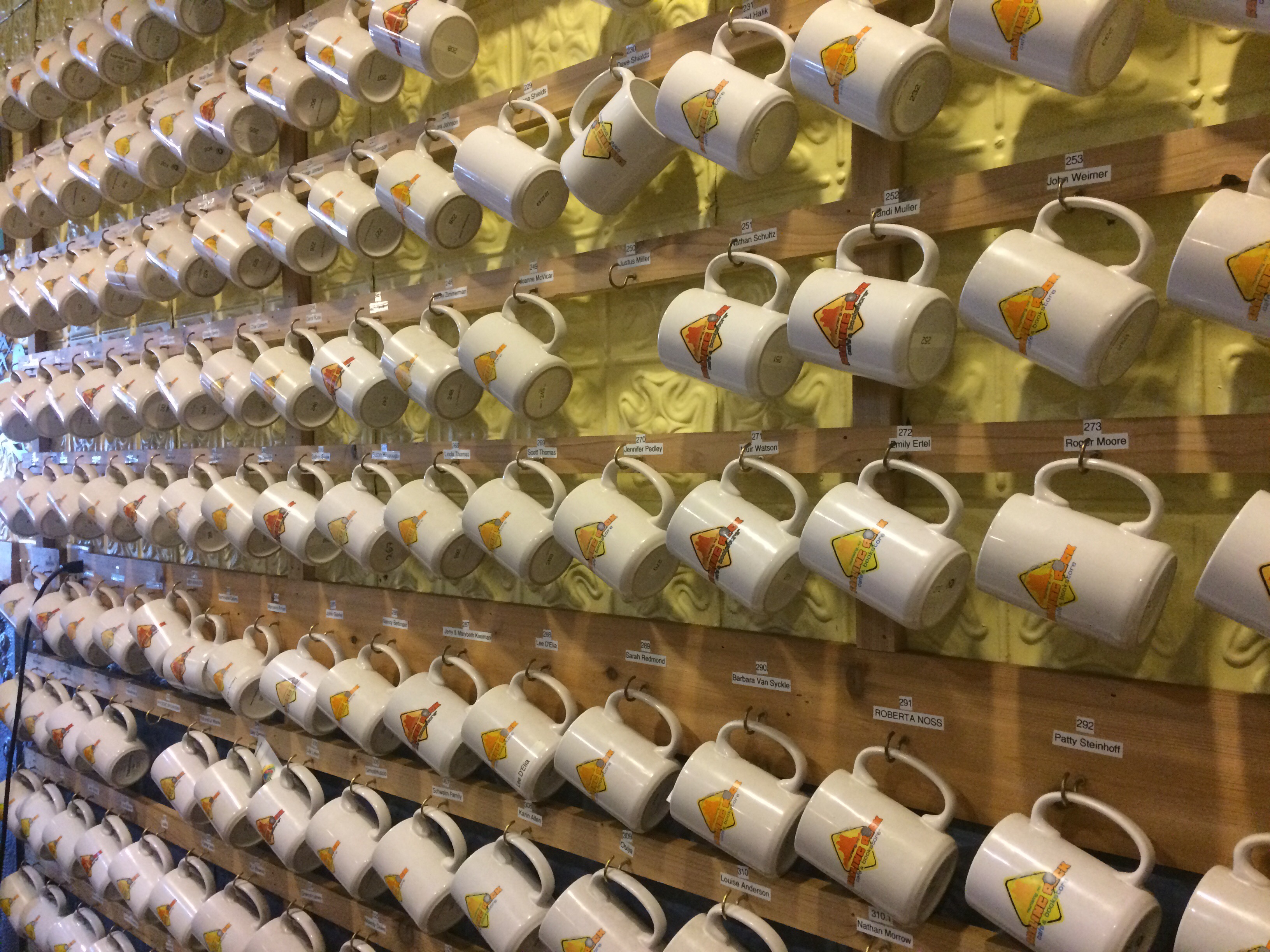
On Friday, we walked into a café in Munising, Michigan. It’s called Falling Rock Café and Bookstore. As soon as we stepped in the door, I was moved by a particular sight – a huge number of mugs hanging on hooks. Each mug was labeled with a person’s name. Four whole walls of mugs and names.
All the mugs represented the regulars from the community in Munising.
There were rows and rows of first and last names. Some labels used relational titles like “Rev. _____” and “Coach _____.” I saw many Indigenous names. I saw some names in quotes, a nickname inserted between a person’s first and last name. All of these people could pull their own mugs down from the wall and order coffee.
This was all so touching. These mugs were a symbol of welcome. These mugs were a symbol of being known and valued.
I teared up a bit as I stood there looking at these long lines of mugs.
We all have a deep, human longing to be known and welcomed just like this. We need to know that we belong in our communities – that there is space for us.
Space for who we are. Space for our very names.
Let the Trees Speak to Our Roots
Today’s piece is a re-post and one very connected to this time of year. Enjoy!
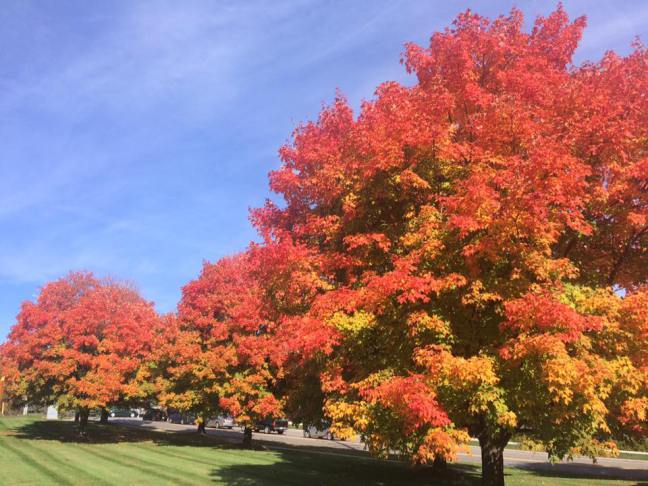
I had a total geekout yesterday about these trees.
When I walked out of the gym, I just stood there, stunned that so many gorgeous fall leaves were present in one place. Of course, I did more than just stand there. I took a bunch of photos and recorded a goofy, geekout video on Snapchat.
Beyond the worthy geekout, however, these trees also remind me of something. I think they’re a valuable symbol, especially as we feel fatigued and on edge during this season.
Every autumn, trees reveal their vibrant colors
when their energy is shifted toward their roots.
All spring and summer, leaves gather energy for sustenance and growth through their photosynthesis process. When the autumn begins, leaves don’t really turn red, orange, yellow, and brown. They are revealed to be red, orange, yellow, and brown. In preparation for winter, deciduous trees stop their photosynthesis process. As a result, the accompanying color of green recedes, and we see the revealed colors of these leaves. This process prepares for the winter season in which roots can continue to thrive and grow.
When we see the vibrant colors of autumn, we might also make spiritual analogies and ponder our own rooting process.
As we think about the present moment we’re living, and the future we want to live,
What forms of energy do we need to shed?
What forms of energy do we need to pursue?
To what and to whom are we rooted?
With what and with whom are we connected?
How can a sense of groundedness reveal beauty?
How can rootedness help us see the worth and value of our neighbors?
During this season, when we see the trees (and potentially, have a geekout) perhaps we can ponder these kinds of questions. As I watch trees make these changes, I like to imagine that their energy and focus is moving into the ground — into the most foundational parts of being — and I find myself wanting to do the same.
What do we need to bring inside ourselves toward the most foundational parts of our being?
Grace
in the midst of divisiveness?
Joy
in the midst of strife?
Conviction
in the midst of cynicism?
Justice
in the midst of violence?
Peace
in the midst of anxiety?
Let’s ponder these when we see the leaves.
Life Finds a Way

Am I foolish for believing that we can create a better society? A deeper way of living through empathy? A better way to organize ourselves toward care and human flourishing?
I don’t know. It’s possible that such hopes are absolutely foolish, but I still want to believe them. I bet you do too. And if we don’t dream better, we’ll never do better.
Whether this is foolish or ultimately hopeful, I will tell you something I do believe at the core of my very being:
I believe in the Mystery of Goodness.
I believe that life finds a way.
Despite the harm we cause the earth and one another, remarkably, goodness still shows up. In fact, it is a bit of a Mystery, isn’t it? Alongside the suffering, love often finds us in completely unexpected ways. And we ourselves are empowered by strength within us and beyond us to reach out and cultivate that kind of love too.
We lean into this Mystery of Goodness –
the second chance,
the sudden surprise,
the hilarious synchronicity.
the grace received.
Life truly finds a way.
Now here’s where I make a silly nod to a movie: Remember that scene in Jurassic Park where Dr. Ian Malcolm, Jeff Goldblum’s character, discovers that the dinosaurs on the island have figured out how to procreate, even though they are all female? Biology has kicked in and created an alternative method. To the dismay other scientists, he says with annoying conviction, “Life, uh, finds a way.”
I do not deny the harsh realities of violence, trauma, and loss in our world. Sometimes pain is unleashed in ways that can never been fully rectified or fully redeemed. We ache in these moments.
And yet —
The Mystery of Goodness finds us and can fill us in sustaining ways. She gives birth to new chapters, new dreams, and new ways of being.
Do we dare hope for this?
Dreaming a Grace (Marlene Marburg)
I imagine a place
a-fire
people gathering, sharing
food and conversation and
their deep desires
for the way things can be
in this world at this time
in places
where Church is crumbling
and a new consciousness
of God in all things
(in joy and pain)
is emerging
without competition,
without striving to be or do anything.
I imagine listening and awakening, and holding
as precious each other
and each other’s gifts and each other’s dreams,
inviting each other to speak,
to show and tell stories,
to challenge and be challenged
by the arts,
to say what can only be spoken
in airy spaces,
to separate stifling rules and blinkered vision
from expansive love and kindness.
I imagine insight and discernment
and holy decisions and implementation.
I imagine shared prayer
and the uplifting grace of love
that won’t tolerate stinginess,
maintaining the way things have been.
I imagine leadership that enables
recedes from its own ego,
from the disabling power of self-doubt.
I imagine a ritual of reclaiming, reshaping
a communion of souls,
lifted and raised to the Mystery of God
the mystery of each other.
I imagine a quiet interior ‘yes,’
a buoyant ‘yes,’ risking the storms
which try to drown God’s feet in us.
I imagine daring and courage
until they are no longer such.
I imagine the ‘yes’ of Jesus
tipping tables and healing hearts,
the ‘yes’ disposition to all-things-God
that took him to Gethsemane.
I imagine post-resurrection people,
Pentecost people
living the unquenchable flame.
I wonder what you imagine.
This is the fifth and final piece in a series on feminist spirituality. Feel free to check out the others as well:
The Moon is My Petronus
The Rise of the Matriarchy
She
Can Our World Experience Post-Traumatic Growth?
Can Our World Experience Post-Traumatic Growth?
These days, it’s so important to give and receive gentleness from one another.
Gentleness is a consistent human need, but right now, we may need it in a particularly deep and present way. Our world seems to be reeling from waves of trauma. When we hold awareness of traumatic pain, whether we’ve experienced it directly or felt it via the news cycle, our bodies, minds, and spirits can be deeply affected.
Waves of trauma in our world are not new, of course, but right now, we are especially aware of injustices and forms of insecurity – white supremacy, economic inequality, numerous natural disasters, deportations and family separations, and violence on a massive scale. To be aware of these things is not merely to know about them but to be affected by them.
We need action – decisive, creative, and disruptive action to adequately address and rectify all of these.
And alongside that action, we also need gentleness.
Our bodies need it, our minds need it, our emotions need it, our sense of spiritual longing needs it.
And perhaps, our sense of time needs it too. Here is a paradoxical thing I have learned over the years about trauma:
Trauma often distorts time. This is especially true in a post-traumatic experience. A small detail in the present moment can suddenly pull us back into the past, making it feel as though a past upheaval is happening right now. Likewise, a small detail in the present moment can suddenly ignite anxiety, causing a tailspin of fear in which we imagine a future where the upheaval might repeat itself. In these ways, trauma can bookend the present moment with a past and future that feel quite painful and insecure.
But with gentleness,
Trauma also opens up time. This is a pretty miraculous thing. There is also concept called post-traumatic growth. (Watch this video). Some people who experience the upheaval of trauma are able to remake their lives and live them more deeply, often with a greater sense of love and spiritual meaning than they might have had before. This is in no way to suggest that the trauma is somehow a good thing or a blessing in disguise. Certainly not. But post-traumatic growith can happen alongside the traumatic distortion. When it comes to a sense of time, there can actually be a bit of reversal of what I’ve articulated above. Good memories and meaningful relationships can be internalized in such a way that they are felt as deeply present. Beloved people and life-giving moments from past and hopes for the future can feel more accessible in the present moment among people who have experienced post-traumatic growth.
So what helps people experience this kind of growth? Two things are very important:
1) being surrounded by a community of care with relationships that add gentleness and sustaining presence
and
2) becoming enabled to make meaning of the traumatic experience, while learning to create a new narrative with that meaning.
So these days, in this time we’re living, I wonder,
Can our world collectively experience post-traumatic growth? Can this be a collective awakening toward deeper love and greater meaning?
Those questions are not easily answered, so they linger.
But I know this: Gentleness will be important.
Hope to Sin Only in the Service of Waking Up
by Alice Walker
Hope never to believe it is your duty or right to harm another simply because you mistakenly believe they are not you.
Hope to understand suffering as the hard assignment even in school you wished to avoid. But could not.
Hope to be imperfect in all the ways that keep you growing.
Hope never to see another not even a blade of grass that is beyond your joy.
Hope not to be a snob the very day Love shows up in love’s work clothes.
Hope to see your own skin in the wood grains of your house.
Hope to talk to trees & at last tell them everything you’ve always thought.
Hope at the end to enter the Unknown knowing yourself. Forgetting yourself also.
Hope to be consumed to disappear into your own Love.
Hope to know where you are –Paradise–if nobody else does.
Hope that every failure is an arrow pointing toward enlightenment.
Hope to sin only in the service of waking up.
This is the fourth piece in a series on feminist spirituality. Feel free to check out the others as well:
The Moon is My Petronus
The Rise of the Matriarchy
She
Life Finds a Way
She

She.
When I lead worship in congregational settings, I typically use gender-neutral language for God. But these days, in my own personal, spiritual practice, I use feminine language and imagery almost entirely.
It’s not that I believe God is literally female. I don’t believe God is literally male either. God is a Mystery beyond our our limited language.
But yet, precisely because God is Incarnational, God can be made known and revealed to us in our limited language, often in very intimate ways. Jesus used the personal title Abba to address God, a word that might be translated, “Papa.” I find this at once to be precious and powerful — endearing and intimate, while revealing an orientation of trust with the totality of one’s being.
Biblical scriptures are written in Hebrew and Koine Greek, and because of their particular grammatical structures, a lot of language about God gets translated into a grammatically masculine framework. (Think about languages like Spanish or German and the ways they assign grammatical gender to nouns).
Then all of that grammatical gender gets internalized inside of us. Quite naturally, we begin to make connections between that grammatical gender, our cultural understandings of gender, and God. More challenging, we take the those very cultural understandings, including distortions of masculinity, and paste them onto God. Then, we make these distortions Ultimate in our world.
When all of this happens, we stop noticing the feminine imagery for God in those very same Biblical texts. (For more on this, see Elizabeth Johnson’s enlightening book, She Who Is). Worse, we begin to connect with a god who is primarily distant, angry, and vengeful (again, distortions of masculinity) – one who wields power over others and initiates the very hierarchy by which we do the same.
So here’s a question for us:
How many of us grew up picturing God as a bearded man in the sky — perhaps even an angry, bearded man?
Most of us don’t believe in that god anymore. Thank goodness.
But even if we don’t believe in such a god anymore, this old, internalized understanding can still get in our way. It can be challenging to pray to God when that ghost of a god keeps popping up. Maybe we don’t even notice he’s there. But in God’s presence, we keep finding ourselves feeling afraid or ashamed. Or maybe prayer feels silly and embarrassing because our understanding of God, however amorphous, still feels like a cartoon or a caricature.
This can be challenging. For all of these reasons, I often encourage the people I mentor to try using feminine language for God exclusively for a while. Does it feel different? Does it open up new understandings? Does God feel closer, and less like a cartoon?
It might not be helpful for all people, but I have found it to be helpful for me. It’s just something to try. Thankfully, the God Beyond Our Understanding is quite capable of revealing Herself in our very limited language.
To close, a brief story:
Earlier this week, I wrote that I’ve been thinking about the moon. Lately, it keeps showing up as a symbol in my life. Referencing Harry Potter, a few days ago, I joked that The Moon is My Petronus. In fact, all week long on this blog, I’ve been sharing photos of the moon, delving into feminist spirituality, and adding some poetry.
Last night, I was walking around the University of Michigan campus, and in just the right place at the right time, I saw the full moon very low in the sky. In contrast to all that was around it, the moon looked so enormous, bright, and present.
And always — always! — when the moon is like this, I want to snap a really good photo of it. I always try. But you know what is true every single time? It’s utterly impossible.
Unless you have special equipment, you cannot get an adequate photo of a contrast moon because the camera does not process that contrast in same ways our brains do. Every photo looks woefully inadequate. I just cannot capture the experience.
I think God is like that. Our language and imagery is woefully inadequate. But as we open ourselves to the moment — endearing and intimate, trusting with the totality of our being — She will surely meet us.
Enjoy this choral piece called “Evensong” by Stephen Paulus. The text is from Matthew Claudius.
“See how the moon has risen, among the stars that glisten high in the firmament. Dark stand the woods and silent while from the meadows island white veils of ghostly mist ascend. Now has the world grown silent, while in the evening’s twilight we find protective peace, as in our quiet chamber after much toil and labor in healing sleep we find release. Look, how the half moon shineth while from our view it hideth its fullness, round and whole. Thus many truths are hiding from utter lack of striving on our part to see them whole. The hour draws near for sleeping, and rest and in God’s keeping entrust we body and soul. Protect us, Lord from danger, keep watch o’er barn and manger and make our ailing neighbor whole. Entrust we body and soul. And make our ailing neighbor whole. See how the moon has risen.”
This is the third piece in a series on feminist spirituality. Feel free to check out the others as well:
Post navigation
The Rise of the Matriarchy

I want to see the Patriarchy topple.
I want to see the Empire fade.
Toward something else. . .
Toward a completely different way of relating with one another and the earth itself.
Keep in mind, when talking about “The Patriarchy” I’m not talking about men themselves. But I am talking about a move away from –
an external ordering of the world, and
an internalized axis in our own thinking where we continually. . .
. . . determine people’s worth based on perceptions of their productivity,
. . . exert power-over one another in dominance, with the assumption that this makes sense and is normative,
. . . abuse and even kill with deep-seated rage once we encounter people’s culture, skin tone, gender, full presence, and full particularity,
. . . wield brute force in violence when marginalized people seek power, freedom, and resources,
. . . view the world through a lens of scarcity and hoard resources with an assumption that greed is reasonable and good.
Ecologist Joanna Macy says that we have come to a juncture in human history where we encounter two very real story lines. The ways we have been living collectively are dangerous to the point that we soon cannot sustain our lives on the earth. She calls this The Great Unraveling. But the great adventure of our time involves the potential reorientation of our lives toward life-giving, sustaining aims. She calls this The Great Turning. I long for this.
I long for the Rise of The Matriarchy.
An ethic of care, where human beings. . .
. . . honor and celebrate people’s worth based on their Humanity,
. . . share power and decision-making with a recognition that horizontal practices and relationships are good for the collective whole of the community (I also know we never arrive at this or practice it perfectly. . . so we keep putting it before ourselves and working at it)
. . . revere the life that we find on the earth and in one another, as we encounter people’s culture, skin tone, gender, full presence, and full particularity,
. . . dismantle systems that marginalize human beings, so that all people can have access to empowerment, freedom, and resources,
. . . view the world through a lens of abundance and willfully share resources, with an assumption that greed limits our empathy and our very life, and a realization that care with and among neighbors increases our compassion and our very life.
We can find particular places and particular moments of time where these are all happening. Jesus seemed to believe that a little bit of yeast can leaven the entire bread.
When we see glimpses of The Great Turning, we can lean into them with our gratitude, our intentions, and our own actions.
I long for this rise.
Good Bones (by Maggie Smith)
Life is short, though I keep this from my children.
Life is short, and I’ve shortened mine
in a thousand delicious, ill-advised ways,
a thousand deliciously ill-advised ways
I’ll keep from my children. The world is at least
fifty percent terrible, and that’s a conservative
estimate, though I keep this from my children.
For every bird there is a stone thrown at a bird.
For every loved child, a child broken, bagged,
sunk in a lake. Life is short and the world
is at least half terrible, and for every kind
stranger, there is one who would break you,
though I keep this from my children. I am trying
to sell them the world. Any decent realtor,
walking you through a real shithole, chirps on
about good bones: This place could be beautiful,
right? You could make this place beautiful.
This is the second post in a series about feminist spirituality. Feel free to check out the others as well:
The Moon is My Petronus
She
Can Our World Experience Post-Traumatic Growth?
Life Finds a Way
The Moon is My Petronus
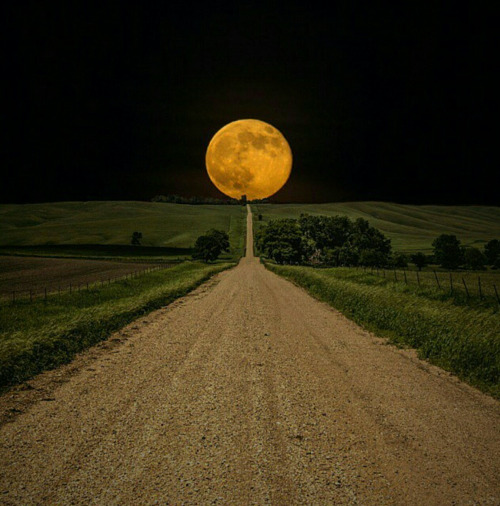
At this stage in my life, I am completely drawn to the moon.
In case anyone is concerned, let me assure you that I’m not a werewolf.
The moon does, however, suddenly seem to be my Petronus (Harry Potter reference). It just keeps showing up lately in my daily life as a symbol, so I’m paying attention to it.
All of this is likely on my mind because my summer was book-ended with gorgeous, stunning, natural phenomena involving the moon. And these are the kinds of gorgeous, stunning, natural phenomena you never forget.
My summer started with a trip to North Topsail Beach in North Carolina. For a whole week, while staying with our family in a beach house, we lived on a Horizon. That was a real gift. We saw some memorable sunrises and sunsets.
But one evening, I saw something unlike anything I’ve ever seen before: I saw a Moonrise over that same Horizon. This was a red, full moon, made enormous by the visual contrast of the ocean. It grabbed my attention and absolutely mesmerized me. I left the deck of the house because I felt compelled to stand right where the ocean and sand met. I had to watch this moon rise into the sky. Somewhere within myself, I was aware that the moon and the ocean have both long been viewed as feminine, cultural symbols. I stood there, feeling remarkably empowered and called, as if my spirituality and my life were being summoned in a deeper direction. This was a very special moment.
Then my summer ended with the opportunity to witness a total eclipse of the sun. To see this happen, our family drove to Russellville, Kentucky and waited for hours with a couple hundred people at a local, public library. To bring this home, all I can really say is that during an eclipse, the moment of totality (and the journey toward it) is absolutely magical. The moon completely covers the sun. Meanwhile, a band of gorgeous color is found at the horizon in 360 degrees. I did not even know to expect this aspect. As the moon stands in front of the sun, it appears that the sun is setting in every direction. This is unlike anything I have ever seen in my life.
Ancient cultures could not fully understand what was causing an eclipse (I can barely imagine the terror of not expecting or understanding it!) Yet many of the same cultures made meaning of such an event. Some believed this phenomenon signaled a threat to the Empire.
As I watched this total eclipse happen, I kept thinking about the sacred feminine eclipsing the Empire — a new way of being, relating, sharing, loving, dreaming. A move away from systems that demand power-over. This is not about gender but about a different orientation toward the world and one another.
So the moon keeps calling to me. And I suppose, ultimately, as a symbol, it reminds me that a new way of being is calling me. Do you hear this too?
With That Moon Language (by Hafiz)
Admit something:
Everyone you see, you say to them, “Love me.”
Of course you do not do this out loud, otherwise someone would call the cops.
Still, though, think about this: this great pull in us to connect.
Why not become the one who lives with a moon in each eye,
that is always saying,
with that sweet moon language,
what every other eye in this world is dying to hear?
This is the first post in a series about feminist spirituality. Feel free to check out the others as well:
The Rise of the Matriarchy
She
Can Our World Experience Post-Traumatic Growth?
Life Finds a Way

