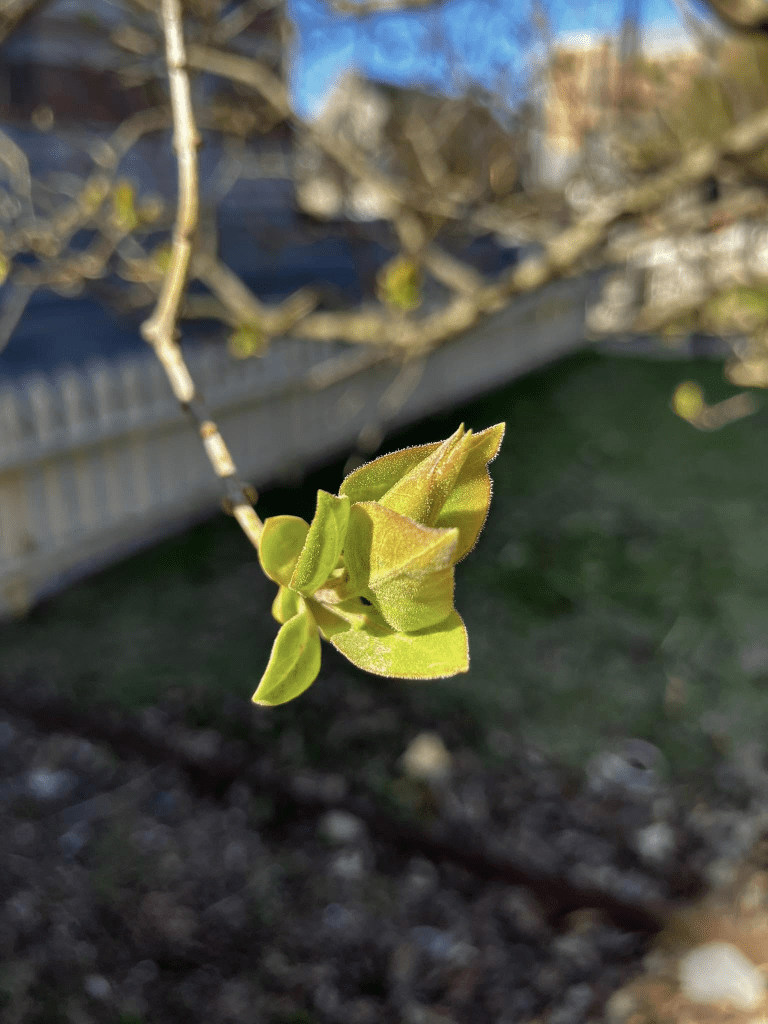

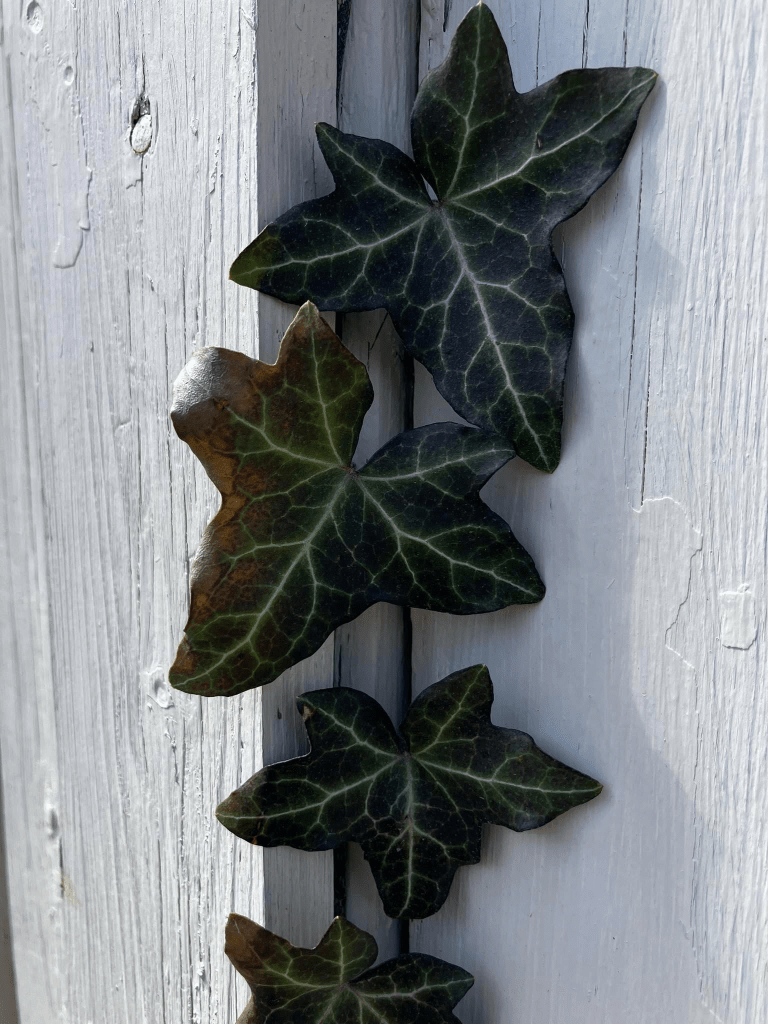

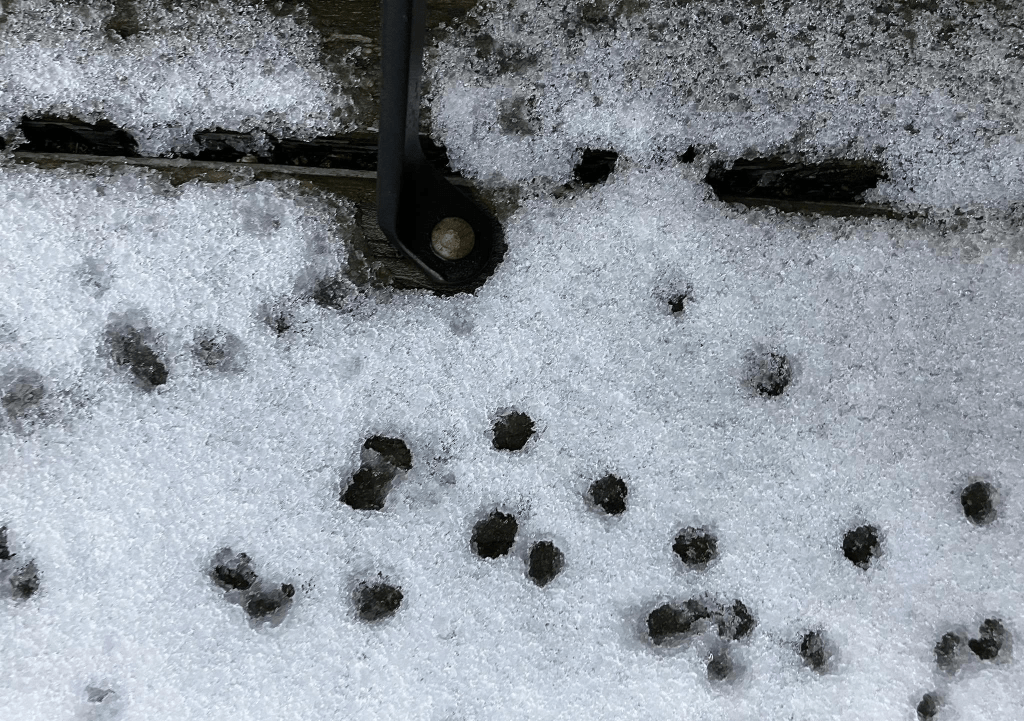

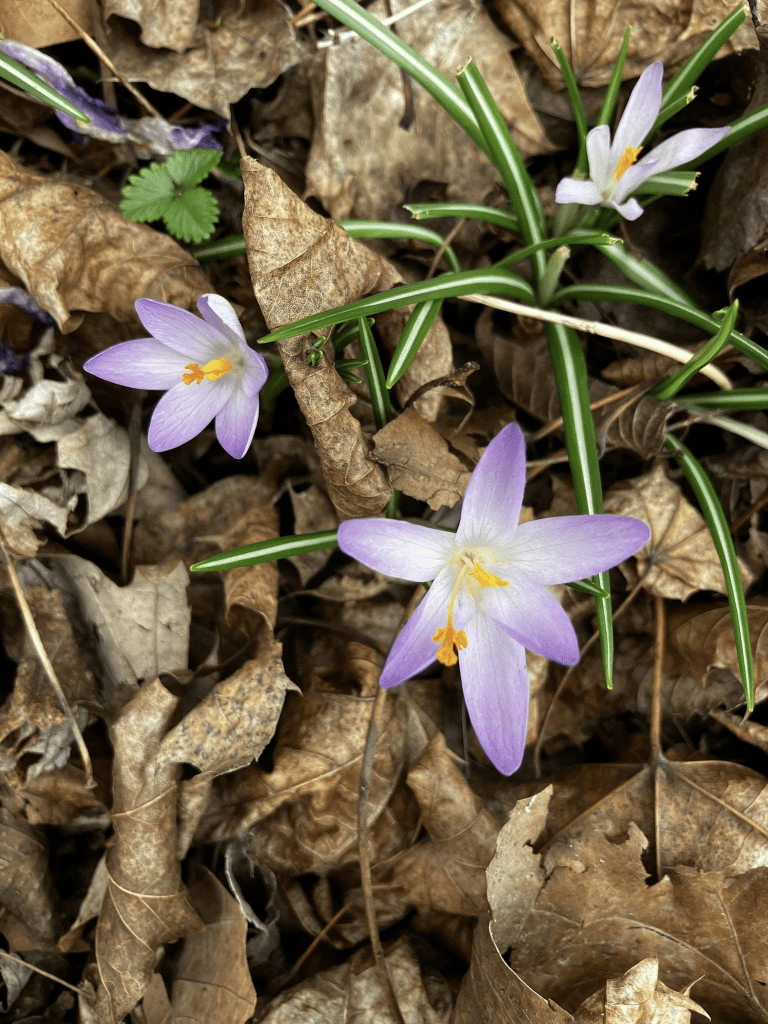

— Photos by Renee Roederer
This week, I learned about raku firing in pottery from a university student I know. Afterward, I enjoyed watching this video. Very neato!
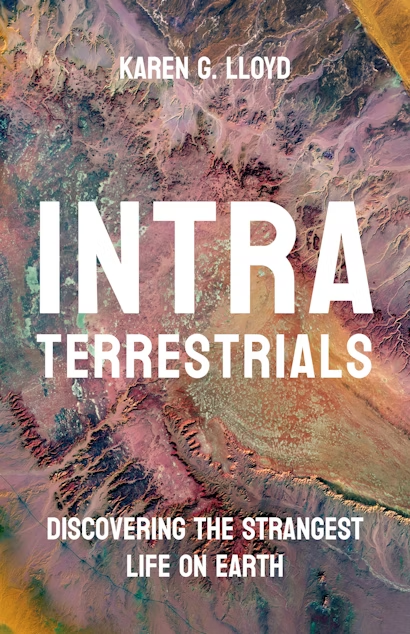
This blew my mind, so I have to tell you about it.
I recently listened to an episode of Unexplainable, a podcast by Vox, and it introduced me to a kind of lifeform that is absolutely bonkers. The episode is called “Intraterrestrials,” and the main character is not a person, but a single-celled organism—one that lives deep in the ocean mud.
Not just near the bottom of the ocean. In the mud. Way down. And once it’s there, it doesn’t really move. It just… sits. It doesn’t grow, it barely consumes energy, and—here’s the kicker—it might not reproduce for millions of years. And yet, it’s still alive.
Microbiologist Karen G. Lloyd calls these mud-dwelling microbes intraterrestrials, and scientists have pulled them up from layers of sediment that are a million years old—or even older. If the data holds, the microbes they’re seeing might be the exact same cells that were buried there a million years ago. Not the descendants. The same organisms. Still alive.
Honestly, it sounds like science fiction. But Lloyd says that, strange as it is, the most reasonable explanation is that these microbes went into a kind of biological stasis. They hibernate, like tiny Sleeping Beauties under layers of dust, poop, and plankton bits (glamorous, I know). They survive on an amount of energy so small it shouldn’t be enough. And they wait.
That’s the part that really caught me. They wait. Maybe, Karen G. Lloyd says, they’re waiting for a kind of microbial spring. Maybe tectonic plates shift over millions of years, and eventually, new nutrients are mixed into the sediment—just enough to wake them up and give them the energy to reproduce again.
I don’t know about you, but I kind of love this. A lifeform that says, “I’m going to tuck in here for, oh, a few ice ages or so, and when the time is right, I’ll be ready.”
And it makes me wonder: What else is out there, living so slowly or quietly we just haven’t noticed yet?
Listen to the podcast episode here.
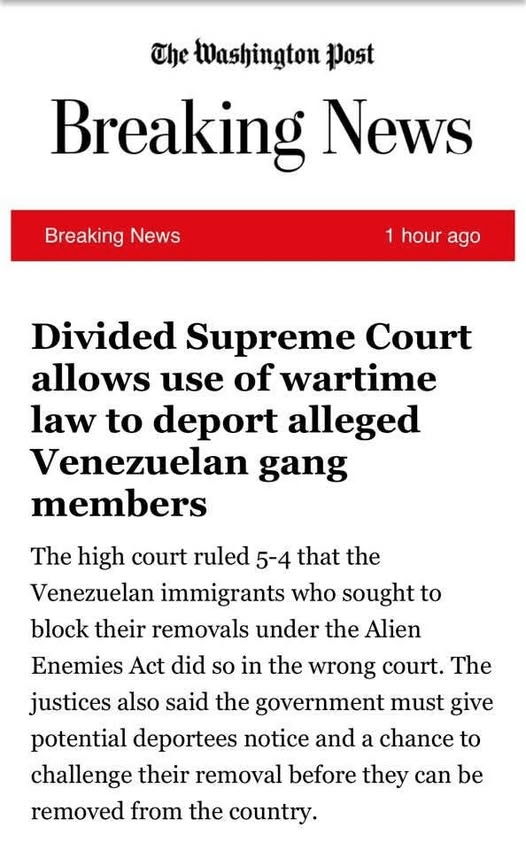
Today, I’d like to share remarks from the Rev. Ricardo Corzo Moreno. Fifteen years ago, he and I served together as pastors in Los Angeles. Afterward, he moved to Michigan, and he moved back to Venezuela, his home country. I am deeply concerned about deportations, especially without due process, and I am also troubled about the brutality of prison conditions to which we are sending Venezuelans in El Salvador. The marginalization of our fellow human beings also creates difficult conditions for Venezuelans in the United States. This has social and economic impacts, and as people hide in the shadows, this creates a public health crisis as well. — Renee Roederer
As a Venezuelan, I’m deeply angered by this split decision 5-4 by the Supreme Court of the United States. The vast majority of Venezuelans in federal immigration detention centers in the US and the maximum-security prison for “terrorists” in El Salvador are not criminals; they are simply immigrants seeking better job opportunities. Approximately 54% of Venezuelan Temporary Protected Status (TPS) holders have obtained a College degree.
Something that is not considered in the mainstream media narrative, regardless of whether someone supports or opposes President Nicolas Maduro’s government, is that Venezuelan migration increased as a result of the criminal and coercive sanctions imposed by the United States against the Venezuelan economy and oil industry. There are statistics about patterns of Venezuelan migration to the United States since at least 1950 at Immigration Customs Enforcement (ICE).
I repeat one may agree or disagree with the Venezuelan government, but you cannot subject an entire population to sanctions to force regime change.
The policy of regime change through economic sanctions has been a failure in Cuba, Iran, North Korea, and Russia, and it will continue to be so in Venezuela.
As a Venezuelan, I oppose economic sanctions and condemn the inhumane treatment of my fellow citizens who are suffering in the United States and El Salvador. They are treated as merchandise to generate profits for the private prison industry.
The vast majority of Venezuelans are not criminals, according to Homeland Security numbers, only 0.9% of Venezuelan migrants have committed some type of crime, and even that small minority deserve a fair trial and be presented before a judge.
As an example, according to the U.S. Department of Homeland Security (DHS), by October 2024, 600 Venezuelan immigrants were detained, from this group only 20 were prosecuted for trial in federal court for alleged crimes.
Immigrants are worthy of respect for their human rights as children of God.
#SCOTUS
— Rev. Ricardo Corzo Moreno
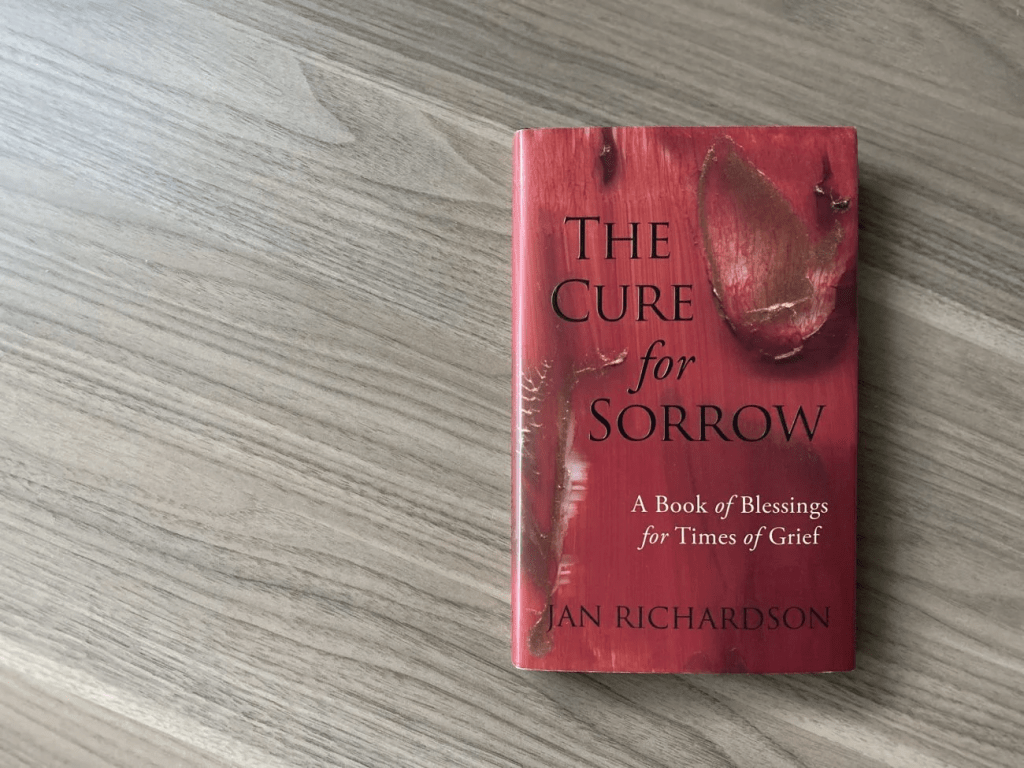
A dear friend recently gathered a treasured circle of people in her home to honor the birthday of a loved one who has passed. Most of us were meeting for the first time, and we were honored to connect with one another. During our time together, my friend read a blessing by Jan Richardson that speaks the gut-wrenching truth of what grief feels like. It also recounts how clichés can wound a person during times of loss.
My friend read the entire blessing, but before she began, she shared one line: “Give me instead.” Addressing those gathered, she said, “Thanks for being ‘Give me instead’-ers.” That line, along with the blessing, will stay with me for a long time. I’d like to share it today:
The Blessing You Should Not Tell Me
Do not tell me
There will be a blessing
In the breaking,
That it will ever
Be a grace
To wake into this life
So altered,
This world
So without.
Do not tell me
Of the blessing
That will come
In the absence.
Do not tell me
That what does not
Kill me
Will make me strong
Or that God will not
Send me more than I
Can bear.
Do not tell me
This will make me more compassionate,
More loving,
More holy.
Do not tell me
This will make me
More grateful for what
I had.
Do not tell me
I was lucky.
Do not even tell me
There will be a blessing.
Give me instead
The blessing
Of breathing with me.
Give me instead
The blessing
Of sitting with me
When you cannot think
Of what to say.
— Jan Richardson
May we strive to be “Give me instead”-ers.

I truly love where I live, but I am so over Michigan winters. This post is actually about the opposite, but let me first set the scene:
It’s not just that it’s cold outside in winter (though I’m not a huge fan of that either). It’s what happens socially. When our long winters drag on, people tend to stay inside more, and it becomes harder to socialize organically. Many go into hibernation mode, living a cozy, mostly indoor existence. But I love nature. And I love people.
I struggle with this dynamic because I’m very extroverted. Don’t get me wrong—I enjoy cozy solitude at times, too. I embrace it. But, basically, I’m a golden retriever in human form. I tire of how much work it takes to set up social events when it could happen much more naturally if it were simply warmer.
So, that’s how I feel about winter.
But that’s not how I feel now. Why? It’s warming up! Sure, we’re barely above 50 degrees most days, but this process will continue over the next few months. What’s most obvious to me, though, is that the social hibernation mode is over and continuing to thaw. I’m running into more people when I’m out and about. There are more opportunities to spend time with friends, both one-on-one and in groups. Events are popping up. I love all of this.
On Saturday, I walked into the grocery store and bumped into a treasured friend I hadn’t seen in a while. We stood by the bananas and caught up. She’s an incredibly wise woman, also witty and hilarious. I loved every part of our conversation. She told me about a gigantic rally taking place just down the street—thousands of people gathered to promote democracy. After leaving, I drove down the street and honked at them with joyful abandon. I was so glad she pointed me in that direction.
But before I left, she playfully scolded me. “And put on a jacket, won’t you? It’s chilly outside!”
True.
Yet my dear friend, after many long months, socially, it is not. I’m so glad to be scolded about my jacketless existence, especially with a dear friend, right by the bananas.
— Renee Roederer
Do you ever feel a desire to take action, but wonder if it’s too small, too meager, or too insignificant to make an impact?
Maybe you’ve had a sudden urge to call an old friend. Or perhaps you left messages for your elected officials. You joined a group of friends to make protest signs. Your community collected canned goods to donate to a food pantry. You watched your neighbor’s toddlers for a few hours. Your gardening club planted some seeds. You recommended a podcast to a friend. You wrote a social media post, encouraging others to take action. You read friends’ social media posts, encouraging you to take your own forms of initiative.
These actions may seem small, but when we all act at the same time, caring for one another and connecting through our relationships, we can create a contagion of action. And in community, our collective efforts can evolve into movements.
Here’s an excellent analogy: dominos have the ability to knock over others that are 1.5 times their size. So, something tiny—say, a 5-millimeter domino—can eventually move something immense. A member of my community shared this on social media over the weekend, and I loved thinking about it.
Our inspired actions, no matter how small they seem, can initiate so much. Don’t underestimate them.
This is a lovely message. Dr. Nathan Mellor explores how mental models are flexible and how adopting a growth mindset allows us to change the way we think.

 Smuggling Grace