




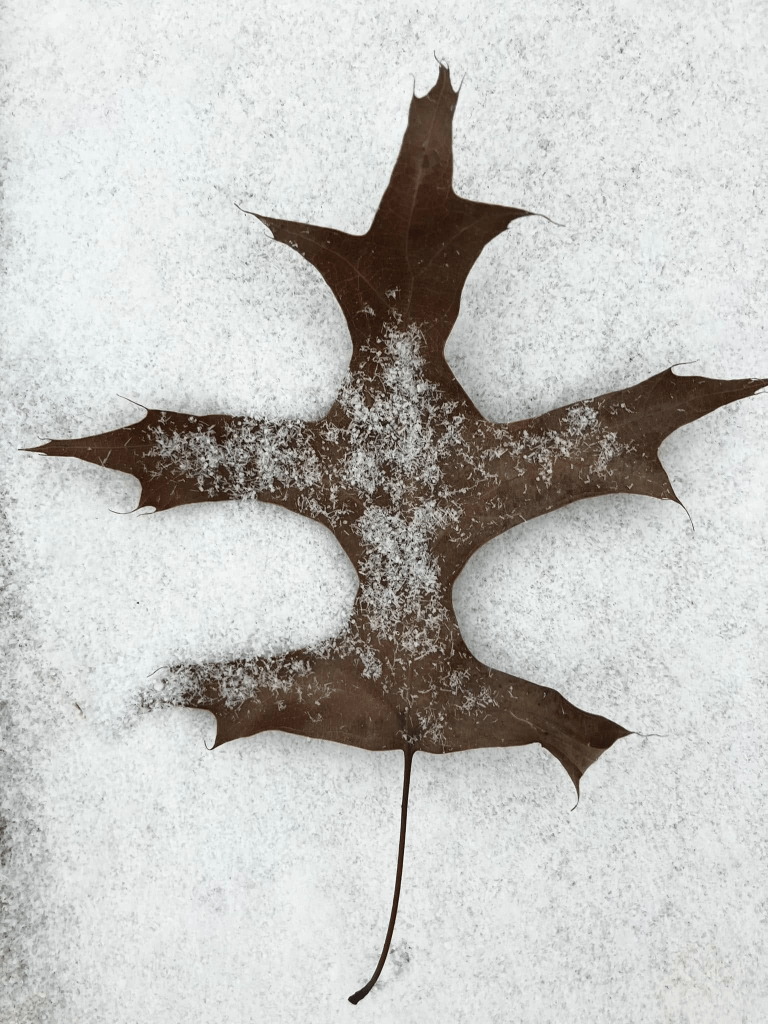
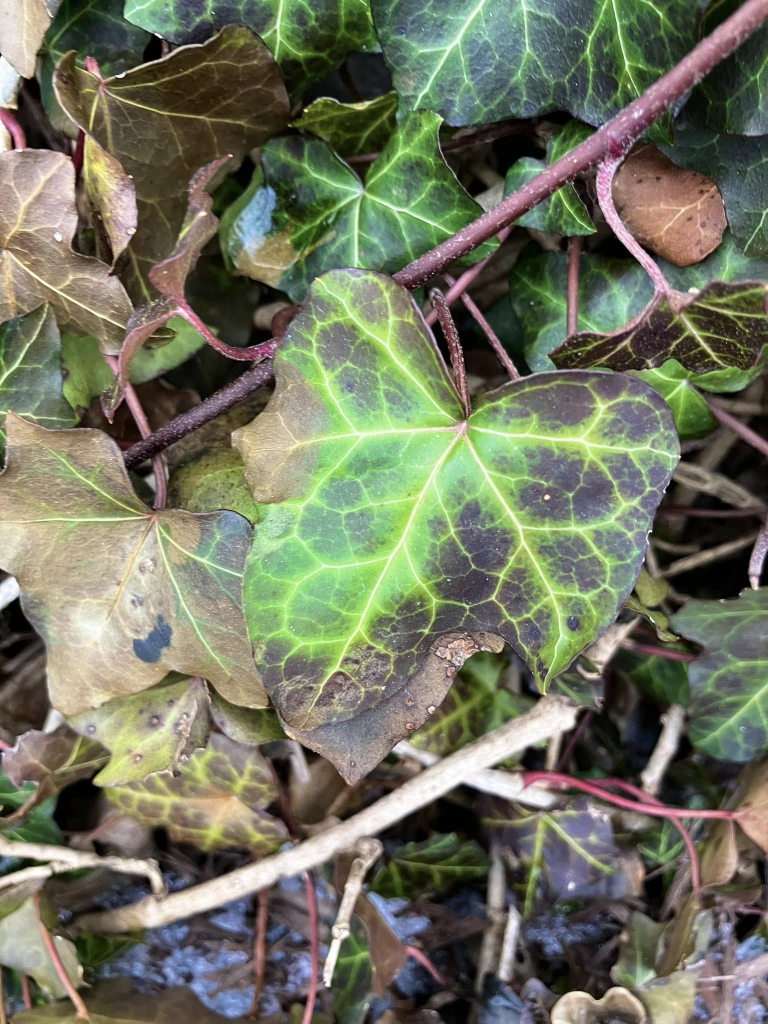
— Photos by Renee Roederer

I’m writing a book, and this feels important to me. It’s about a spirituality of kinship — What does it mean to choose one another? What does it mean to widen our sense of connection and belonging? What does it mean to shift our understandings of family so that they are not limited, filled with barriers, or exclusive, but instead, wildly expansive?
I love these questions. They’ve been sitting with me and shaping me for a long time.
And since it’s what has formed most closely, I’m exploring this book through the lens of some of the teachings, symbols, spirituality, meaning-making of Jesus. But I hope to cast a wide vision (I mean, that’s what the book is about!) so that people feel they can explore the themes of kinship through the teachings, symbols, spirituality, and meaning-making of their own lives — above all, reflecting on the relationships we have with great gratitude and appreciation.
At the moment, I’m between two different subtitles, but the one-word main title (before the colon-to-be) is
Beheld
This book begins with a narrative that’s important to me, one of seeing and being seen, perceiving, and marveling in the presence of each other, and it expands from there — Beheld.
I finished the first chapter of this book last weekend, but I want you to know I’ve had an outline and have been writing this book in my head and heart for seven years. It’s time to get it on paper (or screen) because above all, this feels like a need-to-write love letter to everyone I’ve ever loved. Whether mentioned directly or not, you need to know that this book is peopled from beginning to end.
And then I’ll add one more addendum here because it’s important for this moment we’re living: I don’t need someone to be a Christian, either by belief or background, to read this book or be in conversation with it. This is about all of our relationships. But I must also add, when I see so many people weaponizing these symbols that are beloved to me to harm others, I want to articulate something in the opposite direction. I hope this book offers an experience of feeling embraced.
The book weaves together spiritual reflection and personal life stories. Mostly, it’s prose, but there are some poems too. And since we’re talking about an expansive vision of belonging, here’s a poem from chapter one.
The Universe
Sometimes, I marvel at who is in my life.
Sometimes, I am stunned to ponder that I could begin alone
then
become
connected
to
who after
who after
who after
who.
And this never ends.
It’s like a Big Bang, really.
A Whole Universe of Belonging.
We each start as a singularity.
Then
each one of us
bursts forth,
brought into an abundance of connections,
born anew bit by bit
through the particularities of relationship.
And these particularities
create
build
form
nurture
cultivate
and
renew.
They expand.
This is an ever expanding Universe —
this Cosmos
of
who after
who after
who after
who.
— Renee Roederer
While it’s certainly not limited to these, I want to give some shout outs to communities that are absolutely central to the creation of this book:
— This book bursts forth (to quote my poem above) from my experience of being raised in and by St. John Presbyterian Church in New Albany, Indiana, where a big circle of people chose to interact with me and love me as if I were their own daughter. I have been building and shaping a big, beautiful chosen family ever since (more on that in a moment). This book would not exist without who you have been in my life.
— This book begins with a vision and metaphor (and is, in fact, named after) a powerful experience I had at University Presbyterian Church in Austin, Texas. I can hardly believe how many pivotal people came into my life through my connection to this church community. And for UPCers reading along, the very first words of chapter one begin with a question our beloved Bobbie Sanders once asked me: “Did you ever have a thought you didn’t think?” (Referring to many experiences of intuition.)
— The whole outline of this book exists because of an 11-part sermon series I was invited to lead at Northside Presbyterian in Ann Arbor, Michigan, during the summer of 2018. This book wouldn’t exist without you. Thank you. 💜 I’ve been dreaming this up ever since.
— Throughout these pages, I am deeply influenced by the Disability Communities and Queer Communities I am connected to and a part of. Their visions of interdependence and connection have transformed my lifeand continue to change me all the time.
— I have been privileged to build and be built into an incredible chosen family network that has expanded over time. There are so many individuals who are profoundly close to me—people who are parents, siblings, children, and relationships that need no label because they transcend them—with no biological ties at all. Just choice after choice after choice.
They are written all through the pages of this book, whether named or not.
And this is a love letter to them.

Whether religiously affiliated or not, many people are familiar with the story of The Feeding of the 5,000. It’s a well-known narrative in the Bible, where Jesus multiplies a small amount of bread and fish to feed a crowd of 5,000 people. It has also been portrayed in art. Today, I want to explore two ways of viewing and interpreting this story, and I hope you find encouragement in it.
Here’s the basic story:
Many people had been following Jesus on foot as he traveled throughout the towns of Galilee, teaching along the way. One day, about 5,000 people gathered, and the disciples suggested sending them home, concerned that they needed food and rest. But Jesus said, “You give them something to eat.”
Um… how?
He asked how much food they had, and they responded with five loaves and two fish.
That’s when Jesus took action. He instructed the people to sit in groups, and they sat down in groups of hundreds and fifties. Taking the five loaves and the two fish, he looked up to heaven, blessed the loaves, broke them, and gave them to his disciples to distribute. He also divided the two fish among them all. Everyone ate and was filled, and they collected twelve baskets full of broken pieces and fish. The number of people who had eaten the loaves was about five thousand men. (Mark 6:40-44)
What happened here?
Interpretation #1:
One interpretation is that Jesus performed a miracle of creation. He took a meager amount of food and made enough to feed 5,000 people with leftovers. And Mark, the gospel writer, harkens back to the first sentence of what he wrote: “The beginning of the good news of Jesus Christ, the Son of God.” Jesus is in alignment with the Creator.
And there’s also another possibility.
Interpretation #2
Notice that the story doesn’t explicitly say Jesus created more bread and fish. He broke the food before them and set it in front of them. What happened in that space between blessing, breaking, setting before, dividing, and “And all ate and were filled“? I once heard theologian John Dominic Crossan suggest that Jesus was providing a teaching moment. He showed this small amount of food and began dividing it as if he were going to split it among them all, and then they, sitting in groups, realized the lesson. Perhaps they too had a small amount to share. And so they took what they had brought — even if it was small — and also set it before one another for the sharing.
The miracle was that they shared what they had, and there was so much between them that there were baskets of leftovers.
Jesus revealed a miracle.
Perhaps one or both of these may speak to you in this time we are living. I want to leave you with two quotes.
One is a mantra I tell myself:
There is abundance in the community, and the community is my partner.
The other is something I recently heard Bernie Sanders say:
“What we can do, we must do.”
— Renee Roederer

Have you ever wondered, “Do the things I’m doing really matter? Do they make any difference?”
The answer is a resounding yes.
On average, each person affects 8,000 people every day.
I learned this from an insightful book called Connected: The Surprising Power of Social Networks and How They Shape Our Lives by Nicholas Christakis and James Fowler. In the book, the authors share fascinating research on how our social networks connect us and influence our lives. Their conclusion is striking. Our actions, thoughts, and emotions impact others every single day. That’s where this number comes from: on average, we affect about 8,000 people daily.
How did they arrive at this number?
Christakis and Fowler discovered that, on average, each person knows twenty people well enough to invite them to dinner. If those twenty people each know twenty people in the same way, and those people know another twenty, we get a total of 20 x 20 x 20 = 8,000 people.
We are all connected in a vast web of relationships. Their research shows that we influence and are influenced by our friends’ friends’ friends. Even if we don’t directly know someone three degrees away, we are still part of that chain of influence. Our actions, thoughts, and emotions ripple through this network, impacting others in ways we may not even realize. That’s truly remarkable.
Christakis and Fowler explain that our feelings and emotions often spread to others, even without us realizing it. When we feel joy, stress, anxiety, or calm, we pass these emotions along. Sometimes, this happens in an instant—just by seeing someone’s facial expression. Our mirror neurons prompt us to mimic that expression and feel the same emotion. This happens with fear, but also with a smile. These emotions are contagious.
So, if we can unconsciously impact a network of 8,000 people, imagine what we could do if we acted with intention. How can we practice intentional reflection and empower ourselves to make a positive impact on our social network, especially through compassion, advocacy, and solidarity?
This leads us to important questions:
— How can we reflect on our own role in the world and empower ourselves to create positive change for those around us? Our choices, no matter how small, can influence others, especially when we consciously choose to spread support.
— And what is possible when we unite our efforts? What kind of positive contagions can we create when we act together in solidarity and support?
All of these actions contribute to a ripple effect of connection and transformation.
If you ever doubt the impact you’re having, remember that your actions matter. Everything you do makes an impact.
— Renee Roederer

A Poem on Hope
by Wendell Berry
It is hard to have hope. It is harder as you grow old,
for hope must not depend on feeling good
and there is the dream of loneliness at absolute midnight.
You also have withdrawn belief in the present reality
of the future, which surely will surprise us,
and hope is harder when it cannot come by prediction
any more than by wishing. But stop dithering.
The young ask the old to hope. What will you tell them?
Tell them at least what you say to yourself.
Because we have not made our lives to fit
our places, the forests are ruined, the fields eroded,
the streams polluted, the mountains overturned. Hope
then to belong to your place by your own knowledge
of what it is that no other place is, and by
your caring for it as you care for no other place, this
place that you belong to though it is not yours,
for it was from the beginning and will be to the end.
Belong to your place by knowledge of the others who are
your neighbors in it: the old man, sick and poor,
who comes like a heron to fish in the creek,
and the fish in the creek, and the heron who manlike
fishes for the fish in the creek, and the birds who sing
in the trees in the silence of the fisherman
and the heron, and the trees that keep the land
they stand upon as we too must keep it, or die.
This knowledge cannot be taken from you by power
or by wealth. It will stop your ears to the powerful
when they ask for your faith, and to the wealthy
when they ask for your land and your work.
Answer with knowledge of the others who are here
and how to be here with them. By this knowledge
make the sense you need to make. By it stand
in the dignity of good sense, whatever may follow.
Speak to your fellow humans as your place
has taught you to speak, as it has spoken to you.
Speak its dialect as your old compatriots spoke it
before they had heard a radio. Speak
publicly what cannot be taught or learned in public.
Listen privately, silently to the voices that rise up
from the pages of books and from your own heart.
Be still and listen to the voices that belong
to the streambanks and the trees and the open fields.
There are songs and sayings that belong to this place,
by which it speaks for itself and no other.
Found your hope, then, on the ground under your feet.
Your hope of Heaven, let it rest on the ground
underfoot. Be it lighted by the light that falls
freely upon it after the darkness of the nights
and the darkness of our ignorance and madness.
Let it be lighted also by the light that is within you,
which is the light of imagination. By it you see
the likeness of people in other places to yourself
in your place. It lights invariably the need for care
toward other people, other creatures, in other places
as you would ask them for care toward your place and you.
No place at last is better than the world. The world
is no better than its places. Its places at last
are no better than their people while their people
continue in them. When the people make
dark the light within them, the world darkens.
— Wendell Berry

I was recently in a Zoom meeting with a group of people when one person shared a story. I don’t remember exactly what prompted it, but it came up naturally in the conversation. One of the group members began recounting her personal experiences in her neighborhood.
She had lived in the same place for more than forty years, deeply rooted in the community. Neighbors often greeted one another on their porches in the summer and helped shovel each other’s sidewalks in the winter. They’d catch up about sports or what was going on in their lives when they met at the end of their driveways to get the mail.
But these relationships ran deeper. She saw children grow up who once played in the yards or rode their bikes around the block. Sometimes, neighbors gathered for dinners or went to baseball games together. Eventually, her next-door neighbor, Martha (a changed name), became ill and needed in-home care. So, Martha sold her house and moved in with the person who was telling the story on the Zoom screen.
“You’ll take me to the Tigers games, right?” Martha would ask, knowing full well that her neighbor never missed a Detroit Tigers game. “Well, of course!” my friend replied.
As she shared this story, she said, “Sometimes people would tell us, ‘You’re so good to do this.’ And we’d say, ‘No, we’re not! This is what you do!’ This is how we’re supposed to take care of each other.” She said it with such conviction, truly believing this was simply the natural way to be. We’re supposed to care for each other.
Now, deep down, I do believe that welcoming a neighbor into your home for medical care is a big commitment. This is a kind and loving gift. But what struck me most about this story was the way my friend exclaimed, “This is what you do!” with such emphasis.
When we witness so many systemic failures and hear dehumanizing speech, it’s important to take heart and remember that people like this still exist. There are extraordinary individuals in our communities, and across the world, who live with a sense of duty and care. They don’t think of their commitments as extraordinary. They just know they are right. “This is what you do!”
So, take heart. These people are among us. And you probably have ways of being one, too.
— Renee Roederer
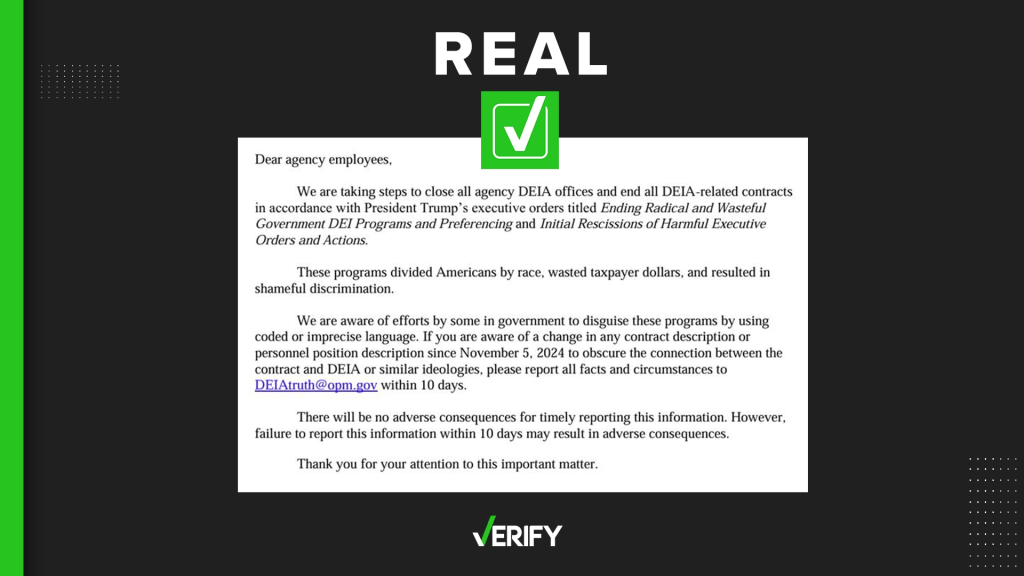
Among many important functions, the Department of Education protects the civil rights of students with disabilities. This week, I’m thinking of many students, families, teachers, and administrators as particular leaders of the executive and legislative branches advocate for the closure of the Department of Education.
On top of this, 17 states have filed a lawsuit, titled Texas v. Becerra, which could undo Section 504 of the landmark Rehabilitation Act of 1973. This law ensures that students with disabilities can have accommodations in the classroom.
Below, we have a photo of the memo that was sent to agency employees on the second full day of the Trump Presidency. You can find this text in written form here.
— Renee Roederer
Additionally, February is Black History Month, and this is an excellent time to celebrate and learn from Black disability activists and advocates who have shaped our communities, nation, and world.
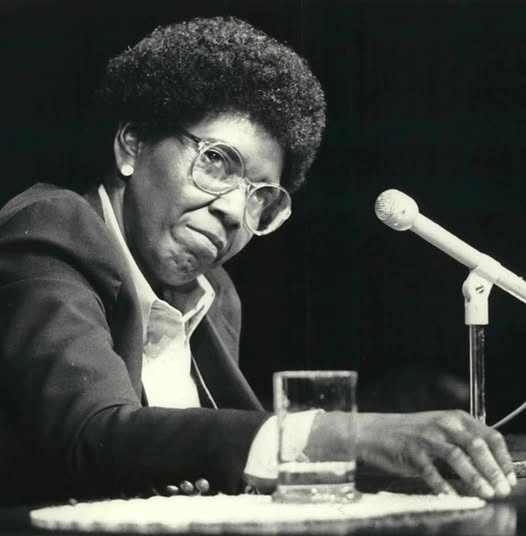
“Barbara Jordan was a famous advocate for voting rights, immigration reform, minimum wage laws, and civil rights. She was the first African American woman from a southern state in congress in 1973. She is most famously remembered for her role in the Watergate hearings and for delivering the keynote at the 1976 Democratic national convention, being the first Black woman to do so. She continued her advocacy through education as a professor at the University of Texas at Austin. Throughout the later years of her life she used a wheelchair due to of Multiple Sclerosis.”
You can learn more here:
https://disabilityrightsflorida.org/blog/entry/impactful_black_disability_advocates_and_advocates?fbclid=IwY2xjawIa-kxleHRuA2FlbQIxMAABHe4wTOP7undYe-kNFuFVCgRQszoOFeCb1_MGdmbAqZPo1ZL3cJOoMYiv7Q_aem_WgWIcE1jRNX4QgapodNp9w



 Smuggling Grace