I am trying not to panic, but I, too, am so scared right now.
We’re not wrong for feeling vulnerable. We’re not wrong that the most vulnerable among us are made remarkably more vulnerable.
And in grief, I am missing people tonight who I wish I could call and talk to about this.
I am not prepared to lose even the nominal amount of justice and order we have in a country that is already frequently unjust to vulnerable people. I don’t think I am prepared for that level of grief and chaos. I am scared of where we’re going. I’m scared of how much people are willing to give over.
All of that is true.
And
I will also say this:
So much is uncertain, but what I will not lose is loving my community. What I will not lose is loving you.
I would like to share this sermon once more, both to encourage us on Election Day, and to honor Amy Weston Roth, who died a few weeks ago. I may write more about her in the coming weeks. Her “Yes” to me invited me into a community that loved me deeply, and that has shaped just about every other community I have found myself within. With gratitude — Renee.
This morning, I’d like to re-share a post that I first published here in 2016. This was something that Ben Johnston-Krase wrote as a guest blogger right before that election 8 years ago (hard to believe we’re here again). But here’s my prediction: Though I recognize I could be wrong, I think Kamala Harris is going win the election. I am going to be grateful. I am going to celebrate her historic Presidency. I am going to cheer her on in many things. I am also going to push and protest on some of her policies, actions, and inactions. I believe we should do this, no matter who is in office, based on our values.
I am thinking about this piece again because I know that we are living in this uncertainty. I want to ask, who are we going to be no matter what? What are we going to do, no matter the election’s result?
Here’s that piece from 2016:
Ben Johnston-Krase.
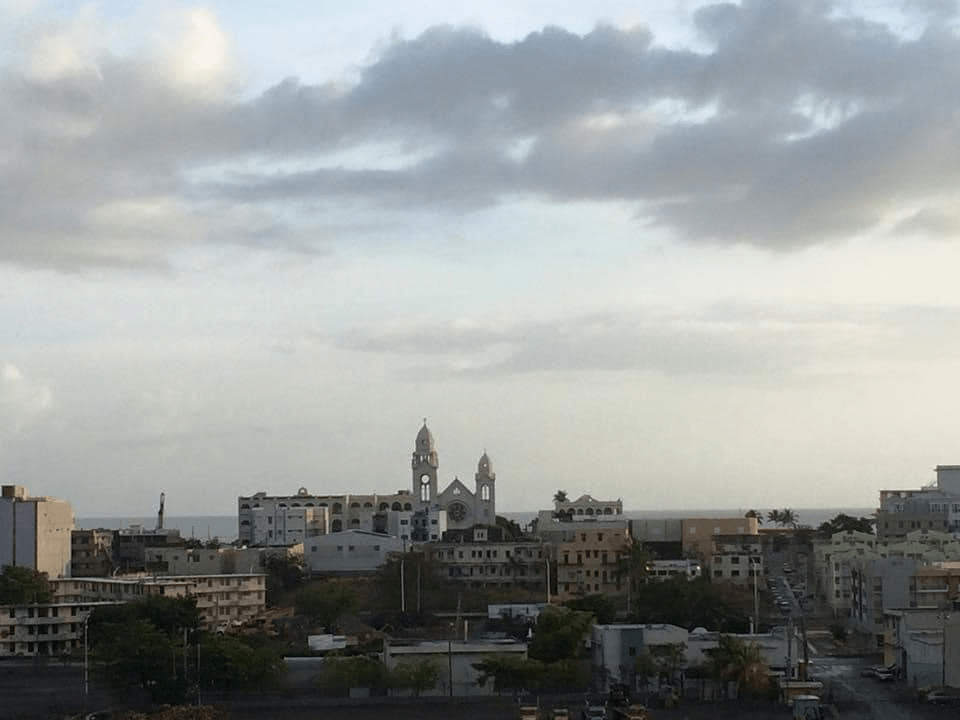
My 10-year-old daughter asked me the other day, “Dad, what will we do if Trump wins?” I’m sure she had overheard me telling some friends that if Donald Trump became president, we’d move to Guam. “Guam?” she probably thought. “Where’s Guam?” No doubt the thought of relocating to some remote island, wherever it was, loomed large in her mind as she calculated distance from friends, school, family…
She looked anxious, and so I responded, “Well, honey,” I said, “If Trump wins, we’ll stay right here and we’ll keep working hard to, you know, further our values.”
Further our values? Ok. At least that didn’t involve moving to Guam. And so, somewhat satisfied I guess, my daughter moved on with her day. But she left me wondering, what will I do if Trump wins? For sure I’ll need a better explanation for my kids. But really, what will I do?
So here it is. If Trump wins, I will…
Spend at least 48 hours with the pain. One time I dropped an axe on my shoeless foot, which was bad enough, but a nanosecond later the axe’s handle bounced into my groin. I yelped and went down to the floor like a 175-pound slab of twitching meat, crying out in pain and wishing for unconsciousness. It’ll be like that. For at least 48 hours. First I will feel the pain.
Next I will call to check on friends and neighbors. This is what you do after a disaster, isn’t it? Make sure everyone’s ok? This will be a good time to share casseroles.
I will briefly check real estate listings in Guam. I’m just being honest.
I will arm myself with sources that will focus my attention away from worthless regrets and hapless escapist fantasies—sources that kick my butt, remind me who I am, and who I feel called to be. These include things like Martin Luther King Jr.’s “Letter from a Birmingham Jail,” Wendell Berry’s poem, “The Mad Farmer, Flying the Flag of Rough Branch, Secedes from the Union,” and a bunch of prophets from the Hebrew Scriptures. I’ll listen to songs like Frank Turner’s “Journey of the Magi” and Ingrid Michaelson’s “Blood Brothers.” I’ll immerse myself in poets and prophets that have called the world toward goodness and grace.
I will get my ass to work. I’ll double down on everything good and wonderful and beautiful I’ve ever been taught. I’ll listen more and I’ll sharpen my sensitivity to injustice. I’ll seek out relationships with those with whom I disagree. I’ll paint signs with my children and show up at more protests. I’ll teach them again and again that justice, liberty, and equality are worth fighting for and I’ll show them what that fight looks like. I’ll learn more names on my street. I’ll write more music, create more art, and cheer on those who are doing the same.
If Donald Trump wins, I will strive to more vividly shape my life in opposition to smallmindedness, fear, and violence. I will find others who are doing the same and together we will not simply work to elect someone else in four years; rather we will look to address the conditions in our culture that have paved the way for a Trump to become anything more than a sad reminder of what happens to us when we succumb to our worse instincts.
In short, if Donald Trump wins, I will grieve and then I will stand and fight for the world as I hope it can be. I suppose this is what I meant when I told my daughter that we’d “stay right here and keep working hard to, you know, further our values.”
In light of everything I’ve just said, maybe the best question for me is the one Mary Oliver asks at the end of her poem, “The Summer Day.”
Tell me, what is it you plan to do with your one wild and precious life?
No matter who wins nationally or on the state level tomorrow, there’s work to be done and I only have but one wild and precious life to live. God help me to live it well. Otherwise I might as well be in Guam.
I didn’t really think about this until I was almost finished, but…
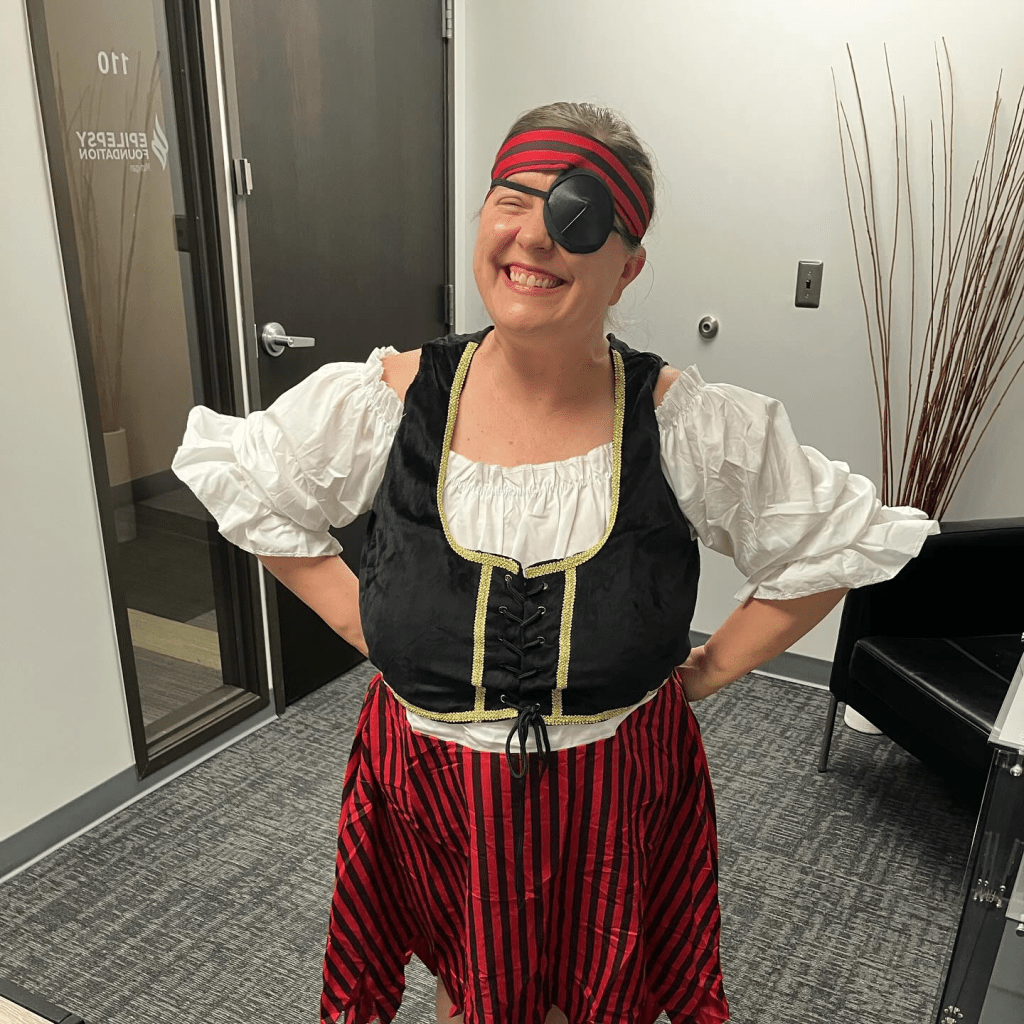
If you go to Costco after work while you’re still in costume, and you eat about 12 different samples at various stations throughout the store, did you or did you not just do the adult version of trick or treating?
Love the quick profit, the annual raise, vacation with pay. Want more of everything ready-made. Be afraid to know your neighbors and to die. And you will have a window in your head. Not even your future will be a mystery any more. Your mind will be punched in a card and shut away in a little drawer. When they want you to buy something they will call you. When they want you to die for profit they will let you know.
So, friends, every day do something that won’t compute. Love the Lord. Love the world. Work for nothing. Take all that you have and be poor. Love someone who does not deserve it. Denounce the government and embrace the flag. Hope to live in that free republic for which it stands. Give your approval to all you cannot understand. Praise ignorance, for what man has not encountered he has not destroyed.
Ask the questions that have no answers. Invest in the millenium. Plant sequoias. Say that your main crop is the forest that you did not plant, that you will not live to harvest. Say that the leaves are harvested when they have rotted into the mold. Call that profit. Prophesy such returns.
Put your faith in the two inches of humus that will build under the trees every thousand years. Listen to carrion – put your ear close, and hear the faint chattering of the songs that are to come. Expect the end of the world. Laugh. Laughter is immeasurable. Be joyful though you have considered all the facts. So long as women do not go cheap for power, please women more than men. Ask yourself: Will this satisfy a woman satisfied to bear a child? Will this disturb the sleep of a woman near to giving birth?
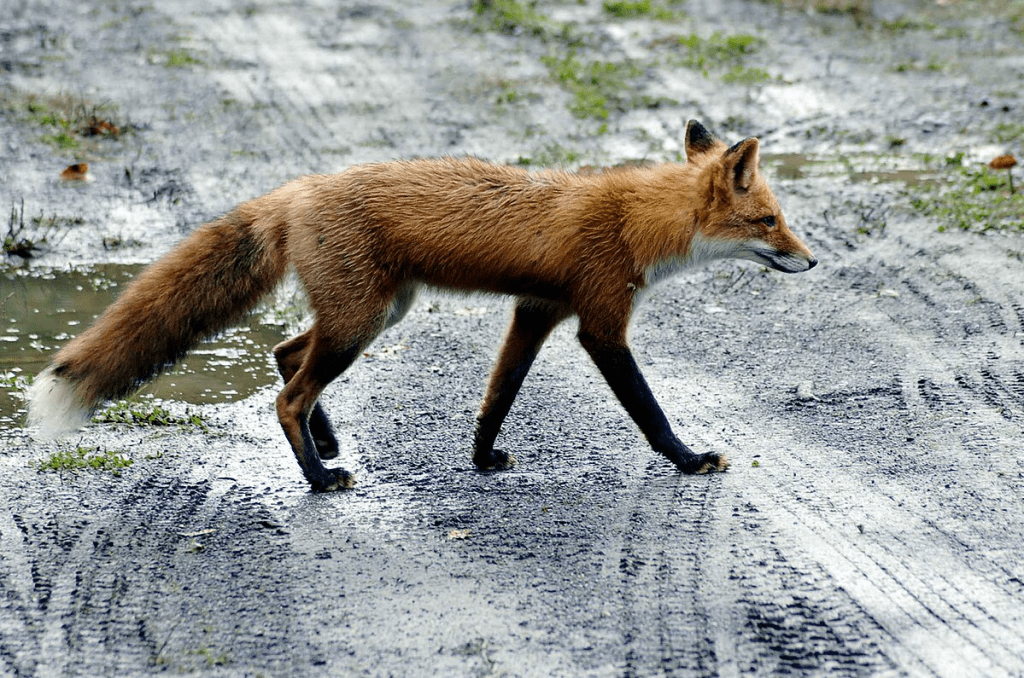
Go with your love to the fields. Lie down in the shade. Rest your head in her lap. Swear allegiance to what is nighest your thoughts. As soon as the generals and the politicos can predict the motions of your mind, lose it. Leave it as a sign to mark the false trail, the way you didn’t go. Be like the fox who makes more tracks than necessary, some in the wrong direction. Practice resurrection.
Figure 3 from The Misperception of Racial Economic Inequality by Michael Kraus et. al. Underestimates of the Black–White wealth gap from 1963 to 2016. Each of the small colored dots represents one respondent’s estimate. The large black dots represent mean respondent estimates of Black wealth when White wealth is set to $100. The diamonds represent the actual median Black wealth when White wealth is set to $100, calculated using federal data from the Survey of Consumer Finances (Bricker et al., 2017). Error bars indicate 95% confidence intervals around the mean estimates.
I recently attended a lecture at the University of Michigan by Dr. Michael Kraus, a Professor at Northwestern University, titled The Narrative of Racial Progress. His research challenges how we understand progress, and how our assumptions about progress can work against actual change.
One powerful part of the lecture involved a question Dr. Kraus asks his research subjects: “In the United States, if an average white family has $100 in wealth, how much does the average Black family have?” He asks participants to estimate this answer across various years in our history and to project it into the future. The answers are revealing.
As Dr. Kraus shared, every U.S. racial and ethnic group overestimates the level of racial wealth equality in our country, but white Americans overestimate it the most. The truth is stark: from 1963 to the present day, the average wealth of Black families has hovered around $8 for every $100 held by white families. The number has moved slightly up or down, but it has never moved steadily upward as we might hope.
This gap between perception and reality speaks volumes. Many of us have internalized the belief that racial progress is natural—that it simply happens as time goes on. But Dr. Kraus challenged this narrative directly. He asked, “If you expect that progress happens naturally, why would you think policies are needed to increase equity?”
It’s a sobering reminder that the story we tell ourselves about progress is often a comforting one, but it isn’t necessarily true. Progress doesn’t happen without effort, and without policies and community-driven action, inequities persist or even worsen.
This connects directly to the work we do at the Epilepsy Foundation of Michigan and within our national Epilepsy Foundation network. We are continually seeking to understand the data and personal experiences around health inequities, so we can close these gaps and build health equity. If the average Black household holds only 8-10% of the wealth of the average white household, is it any wonder that these inequities echo across our health systems, education systems, and social services? Wealth shapes access to care, stability, and opportunities, and disparities in wealth contribute to disparities in health outcomes.
Dr. Kraus’s lecture was a crucial reminder: Equity, whether in health or economics, will not improve on its own. It requires foresight, intention, research, and tangible action. We can’t afford to be passive; progress demands our active participation.
The disparities we face today weren’t created by chance, and they won’t be dismantled by chance either. It will take all of us, committed to recognizing inequities, understanding their roots, and working intentionally to create a fairer future.
Reference: The Misperception of Racial Economic Inequality by Michael W. Kraus, Ivuoma N. Onyeador, Natalie M. Daumeyer, Julian M. Rucker, Jennifer A. Richeson.
People with their arms locked around each other. Public domain.
I’ve been feeling election anxiety.
I know I’m not alone in this. I’m thinking of you, too — all people who will read this. I know some of you by name; others will just stumble upon this post. I am thinking of all of us and each of us.
It’s a physical anxiety I feel, one that is somehow present and up-to-date, and one that feels old, connected to the past. Time is co-mingling. I’m sure I’m not alone in this either. This kind of anxiety used to be a hallmark in my physiology, but it’s been a long time since I’ve felt this.
It’s not buckling me over. Daily life is still happening. And I’m finding things to delight in, just like typical me. But I feel this. This election is too close for me to be comfortable, especially with so much at stake. Between you and me, I actually think Kamala Harris will win. But I don’t know that. And I wish I could know that. And even if she does win, I think conditions on the ground and in some people’s hearts are dangerous. At a rally, Donald Trump recently said, “I am your retribution!” Why wouldn’t some of those people choose to be his retribution? Especially when we’ve seen them do it before?
Things feel unpredictable.
So I’ll share this: I am connected to an incredible community called Farm Church in Durham, North Carolina. I appreciate something that those community members often say to each other: “Whatever you’re feeling, don’t feel it alone.”
I think that’s a good message for a Mental Health Monday. Whatever you’re feeling, don’t feel it alone. Thanks for reading my feelings this morning. I hope you feel less alone in yours too.









 Smuggling Grace