Every Adventurer Turns Toward Home

Regensburg, Germany

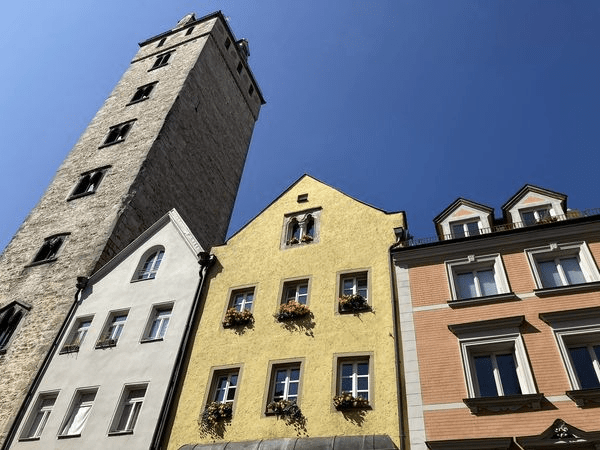
I journeyed to Regensburg, Germany, a gorgeous, charming town where you can find architecture from the Romans, the Middle Ages, the 19th Century Kingdom of Bavaria, and our modern era all on display as you turn corners or sit somewhere to sip coffee. It is all present, ready to be discovered.

In the afternoon, I crossed the Stone Bridge, a structure constructed from 1135-1146 CE, which allows people to walk across the Danube River from Old Town to an additional set of Regensburg neighborhoods. When I walked across, I entered the university area, and I saw students on bicycles, at cafes, along the riverbank, and inside the river on tubes and rafts.

Here’s what I’d love to share today:

Every adventurer eventually turns toward home.

I don’t only mean that trips come to an end, as mine is about to do in a couple days. I mean that we begin to desire home, and I think often, we begin to imagine our entry differently. I remember Cynthia Rigby, a treasured professor, saying to our class (paraphrased): “We tend to think about rest and time away as recreation — an experience where we recharge so we can re-enter the rat race of our lives with more energy. But instead, we can think about it as re-creation, so that we reenter as people who have been changed, and so that the rat-race changes too.”

We reenter differently.

I am ready for this, and I also desire it. Questions on my heart include…

What if my time at home felt more like an adventure? What if I savored individuals, communities, and encounters with so-called strangers like I do while traveling? What if I took more time for gratitude? What if I noticed nature even more intentionally? What if I ate more slowly? What if I became more aware of ways that local history impacts my local neighbors? What if I kept this level of reflection going?

What could be possible?

As I walked around and noticed what was around me, I thought,
“I also live near a river. I also live in a college town.”

I found myself turning toward home and differently.

Renee Roederer

Noticing Talent that Goes Unnoticed

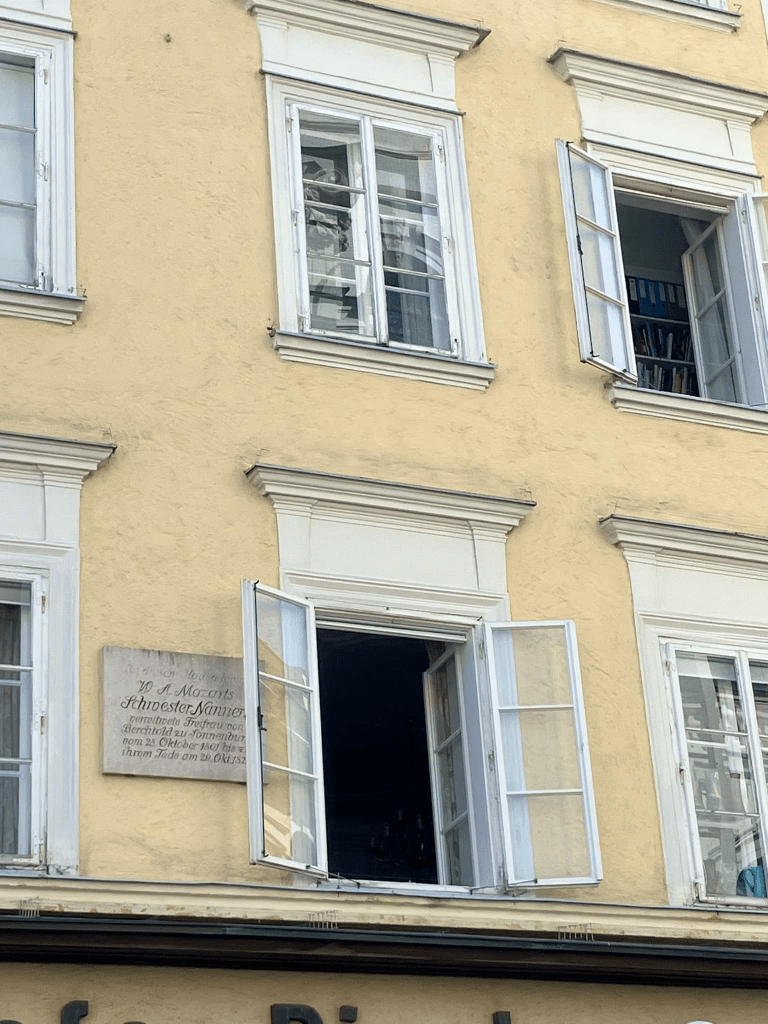
The home of Maria Mozart.


Sing it with me!
How do you solve a problem like Maria (Anna ‘Nannerl’ Mozart being left out)?

Given the context, I’m being playful with my more serious question, and we’ll come back to that.

I spent a day in Salzburg (yes, the place where The Sound of Music was filmed) and it was gorgeous. Walking around on cobblestone, in the old part of the city, you can find the birth house of Wolfgang Amadeus Mozart where he lived until age 17 with the rest of his family. Then he moved to another location in the city. This birth house is 800 years old. Of course, there have been renovations over the centuries, but when he was born there in 1756, it was already more than 500 years old.

After seeing this, I’m grateful that a tour guide also asked us, “So do you know about Maria Mozart?” Most of us did not. “Come with me,” she said.

Then she showed us the home of Maria Anna Mozart, who was nicknamed “Nannerl.” She was the older sister of Wolfgang, and she, like her brother, was also a musical prodigy. She lived in this house pictured until she was in her 80s.

When Wolfgang and Maria were young, their father, Leopold, took them both on tours around Europe to showcase their tremendous talent. Maria was also a brilliant pianist, and she, too, was a composer, because as she aged, she and her brother would write letters back and forth and discuss their compositions. But sadly, none of her compositions can be found; likely, when Wolfgang died at age 35, much was taken from his home, and these may have included her compositions.

When Maria was 14 years old, her father Leopold, stopped taking her on the tours with younger Wolfgang. As she was getting older, it was seen as improper for her father to travel with her alone, so in order for her to come, they would have had to pay more money for her mother or a maid to travel with them. It was also expected that in the near future years, she would marry and have children. So with that, her recognition waned while Wolfgang’s blossomed.

And she did do exactly that; she married and had children. And she moved to St. Gilgen, a town about 30 kilometers away. But after the death of her husband, she returned to Salzburg, and from there, she became a renowned piano teacher and a soloist in the concerts of Prince Ernst von Schwarzenberg. Some of her students were women, including Anna Sick, who became the court pianist at Stuttgart.

So how do we reflect upon this change of expectations and this transition that allowed her brother to flourish in performances, opportunities, and appointments while hers became much more limited? There is no doubt that he deserved his recognition. But so did she, and here I am — a whole person with a music degree — and I knew very little about her. I knew she was an influence on him, but again, that story was presented with him at the center.

I am reminded that people in this world have great talent, intelligence, drive, and imagination. Some are held down by expectations, and some are oppressed by systems with barriers and narratives that say “this one,” or “these ones,” “do not matter very much.”

But they do, and so do these talents, forms of intelligence, passions, and great examples imagination. We should recognize this. And if we have doorways opened for us, we should also open doors for others.

Renee Roederer

Thousands of Unknown Stories

Spitz, Austria

Greetings, Friends, from Central Europe.

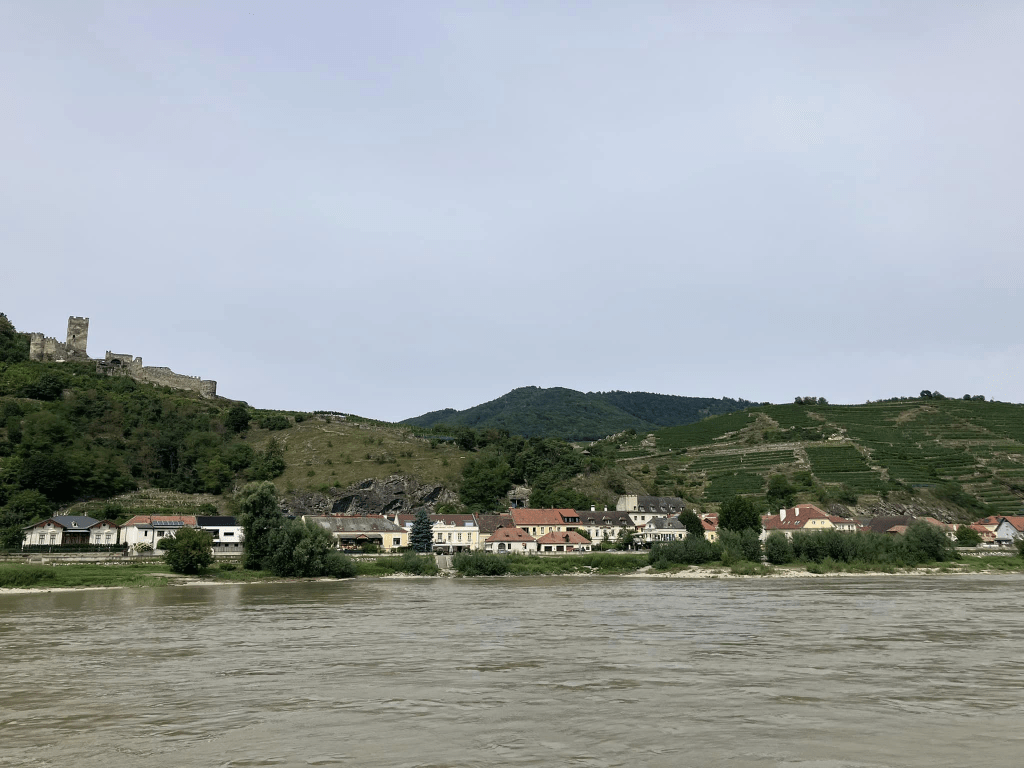
One of the best parts of my trip involves… just floating by. Yesterday, we sailed past Spitz, a small Austrian town, with a great deal to notice as we moved down the river. The houses and churches surround a large hill with vineyards. That hill is called 1000 Buckets Mountain. In ancient times, it was a good year if the mountain produced 1000 buckets of wine. That is how it got is name.

Opposite 1000 Buckets Mountain lies the ruins of a castle from 1100s, known as Hinterhaus. It’s astounding to find structures in Europe that are so old.

So with a lingering glance from a river, I got to see these, and I thought, “There are thousands of unknown stories.” I love to ponder places because they contain communities across time, not only with big, heroic moments, but thousands of unknown stories with mundane experiences.

And some of them probably involve those buckets of wine.

Renee Roederer

My Life Rhymed in Vienna

Karlskirche in Vienna

Greetings, Friends, from Central Europe.

Yesterday, I had a very special day in Vienna. After practicing German daily for nearly two years, I was able to put it to use, and that was very satisfying. But most important to me, in the present moment, I enjoyed the city in a way that resonated with the past.

Austria is the first country I ever visited outside of the U.S. During the summer before my senior year, my high school choir visited four cities in Austria on a tour, including Vienna. At age 17, was enamored with this city.

And I had some special moments here personally as well. Our choir sang during a service at Karlskirche (St. Charles’ Church), which is one of the old churches in the Vienna. Opened in 1737, it is much younger than the St. Stephen Cathedral, constructed from 1137-1578. Both churches are gorgeous. During that service at Karlskirche, I was deeply moved, and I made a decision for my college direction. I decided I wanted to go to music school. Later, I did that exactly and attended the University of Louisville School of Music. And that decision, made under the dome of this cathedral, led me in many adventurous directions.

Yesterday, 25 years later, I returned. I was able to go into the balcony, right where we sang. The view below was lovely. I sat there and thought about the last 25 years — music made, of course, but most of all, relationships and communities — and I was grateful.

Later, in the evening, we went to a Viennese Concert, and sure enough, it was also in the same space where I attended a concert at age 17. I remember that night well because I felt very youthful and excited for the future. Last night, I felt like age-17-me and age-42-me got to attend a concert together.

When time and place meet, we are not only in relationship with those around us and those that emerge from those experiences. Life rhymes, and we can also be in relationship with parts of ourselves.

Renee Roederer

Held in Hopes

The nave of the Franciscan Church of the Annunciation in Bratislava.

Greetings, Friends, from Central Europe.

I spent yesterday in Bratislava, Slovakia, and it was a glorious day of discovery in a tremendous city. I enjoyed it very much.

While meandering about, I walked toward a gothic spire in the city until it revealed the larger structure of a church. I walked inside, and when I did, I discovered the Franciscan Church of the Annunciation, built in 1297. It’s stunning to sit inside a space so old.

I sat down in a pew, and others had done the same. Interspersed throughout the building, all sat in silence, reflective. This is a space where it makes sense to pray, and I might have done that in a traditional way, except as I sat there, I found myself reflecting on prayers of people who built this church building. I don’t know if they could have imagined the year 2024, but I do assume that they thought, imagined, and prayed for a future beyond their own lives when this nave would hold space for people they would never know. I thought about how more than 700 years later, we are some of those people.

And then I thought — and was this also a prayer? —

How expansive can our hopes become, and how might they hold others well beyond our own time?

Renee Roederer

Life, Memory, and Collective Action

The Dohány Street Synagogue, the largest synagogue in Europe.

Greetings, Friends, from Eastern Europe.

Yesterday, I spent the day in Budapest, and I had the occasion to see the Dohány Street Synagogue, the largest synagogue in Europe. Its architecture towers beautifully in a highly populated neighborhood with restaurants, shops, and people walking about — both residents and tourists.

That very neighborhood is, of course, painfully, the area once known and experienced as the Jewish ghetto. Before Hungary was occupied by the Nazis, 825,000 Jews lived in Budapest, but during that occupation, half of that population was deported and systemically killed in the Holocaust.

As we walked through the neighborhood, I was struck by the contrast of remembering and honoring the reality that people were restricted to this very neighborhood, grieving for loved ones while knowing that their own death was imminent, yet today, it stands as a bustling location of life and memory, with a synagogue that remains and people pausing to honor loved ones, eat, and shop in that very neighborhood. Today, that feels like a miracle, yet hundreds of thousands of Jews lived a markedly excruciating and contrasted reality right here.

I thought of Jewish loved ones who I hold dear, aware that today, anti-Semitism continues to be a threat in my country and around the world. We must speak out about this when we see it and hear it.

I thought of loved ones who are connected to people around this world where violence, genocide, restriction, and starvation are underway now. Can our collective memory and collective life move toward collective action to protect them?

Over 40,000 people have died in Gaza in the last 10 months — 1 in 55 people — and many of them are children. Nearly everyone is displaced while the basic infrastructure of life has been destroyed across the Gaza Strip. Learn more here.

Over 14,000 people have died in Sudan in the last year, and many of them are children. 8.6 million people are currently displaced from their homes. Learn more here.

All of these loved ones deserve our collective action now — our speaking, our honoring, our interrupting, our protesting, our caring, our financial giving, our policy-crafting, and our protecting.

Renee Roederer

Mental Health Monday: Make a “To-Done” List

A To-Done List

We all know that to-do lists can be helpful. And sometimes… they can take over our lives, and we may feel like we need some freedom from them.

Would you like to try something different?

Make a To-Done List. (I know that doesn’t have the same ring). That being said, these can be very helpful. Instead of writing down things you need to do, write down the things you have done. This is a weekly habit that has been very helpful for me. I keep track of these at work, in particular, because in addition to helping me feel accomplished, I can look back and see what I did and which week of the year it happened. This helps me plan for the next year.

And it’s fun to see a list of things that are done! Just something to try.

Renee Roederer

Verbal Hugs

Purple Background, White Writing — Call & Connect Network: Support groups to connect you to those who understand what you’re going through

My workplace hosts five Call and Connect support group. Four of them meet over Zoom, but one of them — the OG group — started many years ago as a conference call.

And this particular community of adults who live with epilepsy still like that format. Once a week, they call the same phone number and love to be on the same line all together. You might be surprised how a once-per-week phone call could turn into a robust sense of community.

These folks playfully grumble if anyone calls them a “group.” “We’re a family!” they say. And they are. They call each other throughout the week outside of the group time to check in on each other. They’ve gotten together in person to do fun things. They’ve gone over to each other’s houses to fix each other’s appliances. I’ve witnessed all of this in my six years with them.

They also love to give verbal hugs.

When someone is having a difficult week or if someone has a special celebration, someone will eventually say, “Let’s give [name] a family hug.”

“Okay, one, two, three!”

“Mmmmmmmm!”
“Squeeeeeze!”
“Eeeeeeeeee!”

they all say verbally over a phone line.

I’m about to go to go on a trip for a while (more about that soon) and as I was about to end the call today, I heard,

“Hey, let’s give Renee a family hug!”

“One, two, three!”

“Mmmmmmmm!”
“Squeeeeeze!”
“Eeeeeeeeee!”

I felt it too. A lovely send off.

Community Care is the Best.

Renee Roederer