Narrative Theology #1 by Pádraig Ó Tuama

Narrative Theology #1 by Pádraig Ó Tuama
And I said to him
Are there answers to all of this?
And he said
The answer is in a story
and the story is being told.
And I said
But there is so much pain
And she answered, plainly,
Pain will happen.
Then I said
Will I ever find meaning?
And they said
You will find meaning
Where you give meaning.
The answer is in the story
And the story isn’t finished.
Is there a word, phrase, or image that stands out to you in a particular way?
Presence (Part 2) — The Pebble Exercise

Several times a year at the Epilepsy Foundation of Michigan, I have an opportunity to offer Project UPLIFT, a program aimed and supporting individuals who are navigating seizures and mental health challenges. I have the privilege of co-facilitating these sessions alongside Andrea Thomas, a compassionate therapist from the Henry Ford Comprehensive Epilepsy Center. Together, we teach tools of mindfulness, mediation, and relaxation, and midway through the program, we lead participants through an experience called the Pebble Exercise.
The Pebble Exercise is a seemingly simple yet profoundly impactful practice, and it unfolds in a way that often leaves participants both intrigued and grateful. In preparation for this particular session, we invite each person to bring a pebble to our time together without revealing the purpose behind this unconventional request.
When the time comes, Andrea Thomas leads us through a mindfulness reflection centered on pebbles that each person brings. With guidance, everyone is invited to observe the intricate details of these pebbles – their textures, shapes, and colors. Th mindfulness exercise, read by Andrea, also allows people to ponder the origins of the pebbles, imagining the journeys they’ve undertaken to find their way into our palms.
After this, each participant describes their pebbles in detail to the rest of the group and people are always surprised by all that they notice in these seemingly ordinary objects. Then Andrea Thomas then gently prompts us to consider the broader implications of this exercise. She shares, “If we can find such beauty and depth in something as seemingly insignificant as a pebble, something most people would right walk past and never see, imagine how much we can notice in the world around us. And think about how that can invite us to be grateful for the present moment.”
In this way, the Pebble Exercise serves as an invitation to larger, more intentional practices of mindfulness. It encourages us to approach each moment with curiosity, recognizing their details, surprised for what we notice.
—Renee Roederer
Presence (Part 1): The Constant Change of Spring
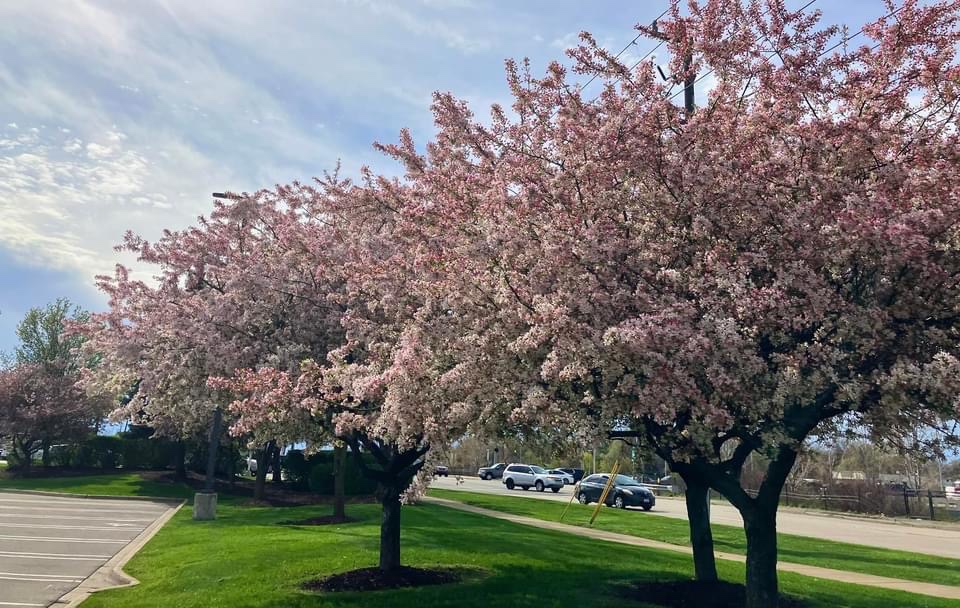
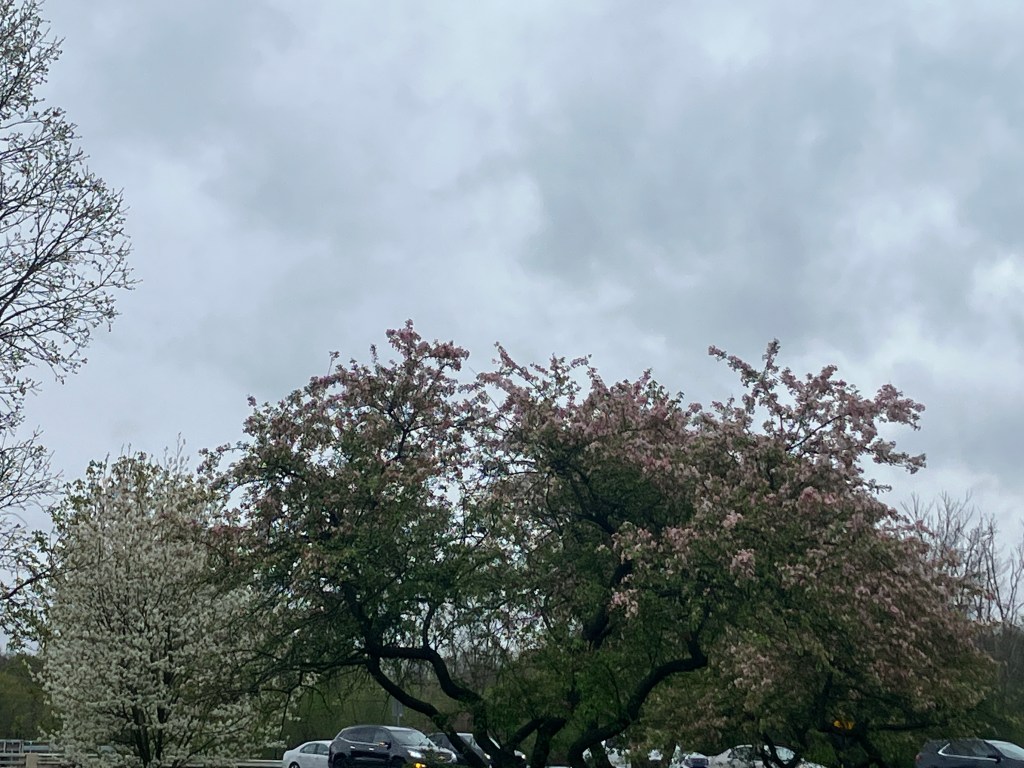
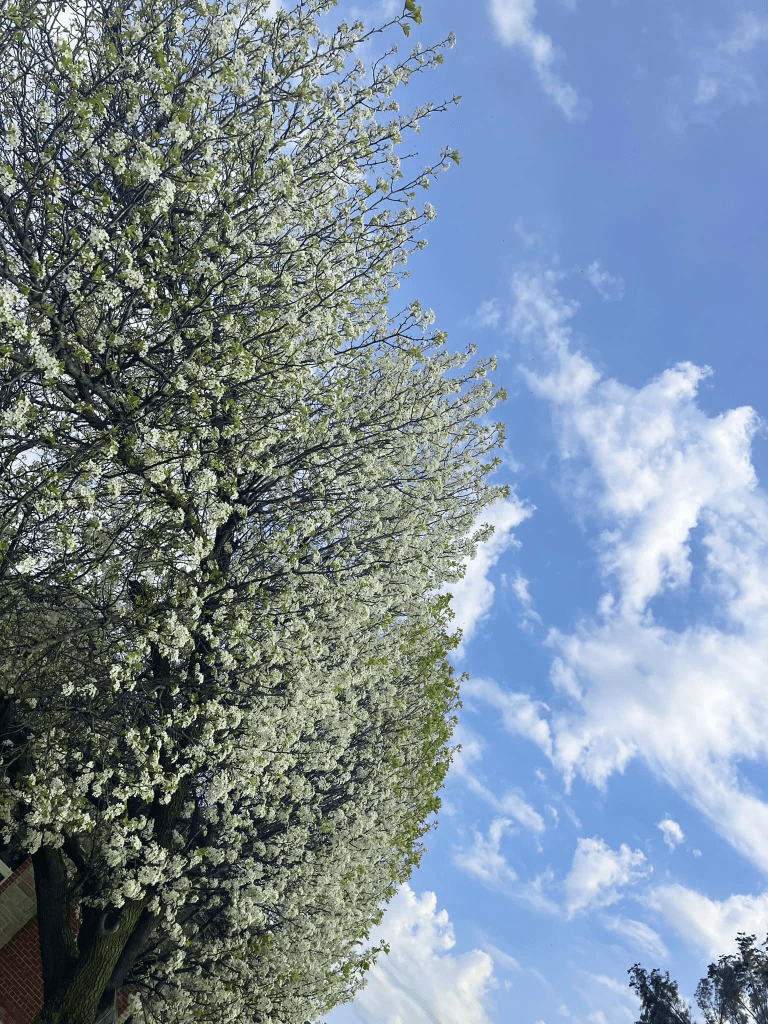
In late April, I am always amazed at how quickly things are changing as spring unfolds. One week, we have white blooms on Bradford pear trees, and the next week, we have the pink blooms of crabapple trees. We don’t have long to take these in, because soon after, they’re gone, all while there’s a new flower or tree to notice in their own transformation. These changes are popping up and fading away one by one.
It always a reminder to be more present and to notice more. The details of life are changing all the time, too. Spring is dramatic beautiful reminder to pay attention there also.
— Renee Roederer
That Which We Did Not Plant

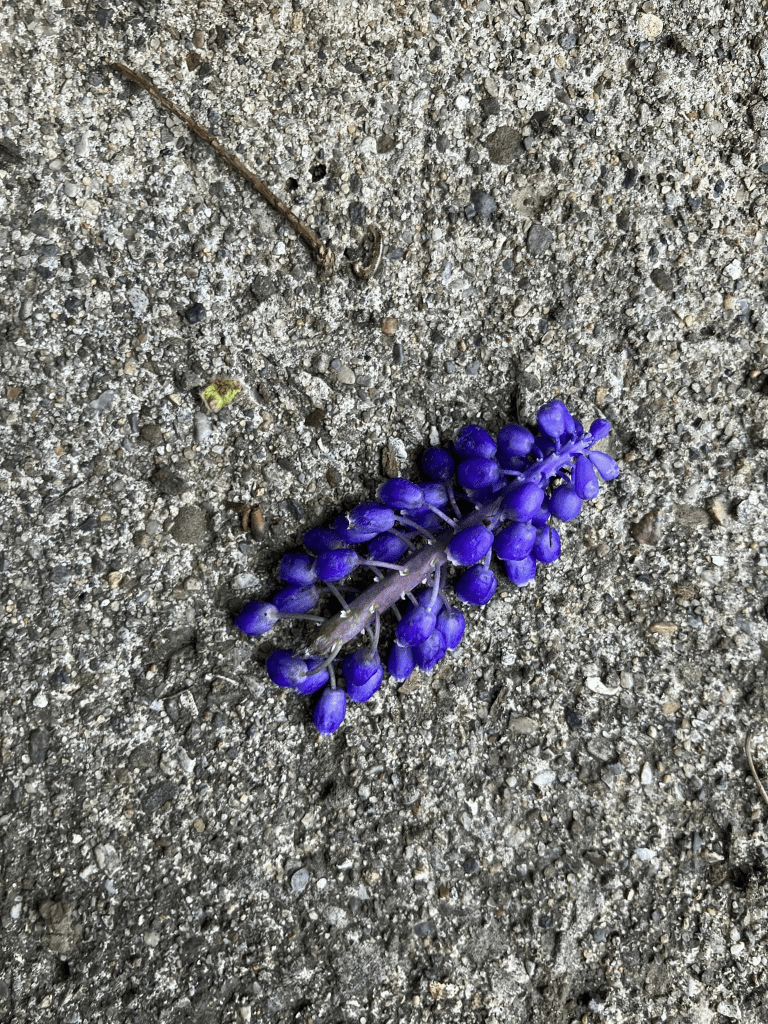
There are purple hyacinths growing in my yard this spring, and they smell divine. I appreciate their color and their scent. They make me smile each time I see them.
I also never planted them. They just emerged, seeded from other hyacinths elsewhere. And I wonder, were those parent hyacinths intentionally planted, or did they just emerge too? How far back would we have to go to discover the linage of hyacinths initially planted by a person?
Every day, we receive from that which we did not plant. We receive the gifts and talents of those people around us. We inherit the contributions of organizations. We learn the deep wisdom that was forged by whole communities.
When we notice these, we can say thank you. And we can encourage their continued growing.
— Renee Roederer
Mental Health Monday: What is Sensorimotor Psychotherapy?
The painful experiences of our lives are held in our bodies. Our bodies also hold patterns of behavior and automatic coping mechanisms. Sensorimotor therapy focuses on how our bodies hold our memories and works physically to notice, release, transform how they are held.
This Week in Nature

Neato Curiosities: How Tattoos Work
Constant Partial Attention — What Do You Notice?
Dr. Ellen Langer, scholar and researcher on mindfulness, uses a particular phrase to describe the ways we become disconnected from the present moment. She says that so frequently, we live in a perpetual state of constant partial attention.
Constant partial attention. . . Isn’t that a perfect way to describe that kind of experience? So often, we move through our days simply going through the motions, rarely paying attention to what is right in front of us. Instead, our minds gravitate toward our to-do lists or the situations that make us most anxious. We get stuck mulling over the past or worrying about our imagined future. In the process, we miss the present moment.
And sadly, this means we lose some awareness of our surroundings, our inner life, our neighbors, and the deep stirrings within us.
I’m curious, in this video, what do you notice?
My Doubt by Jane Hirshfield

My Doubt, by Jane Hirshfield
I wake, doubt, beside you,
like a curtain half-open.
I dress doubting,
like a cup
undecided if it has been dropped.
I eat doubting,
work doubting,
go out to a dubious cafe with skeptical friends.
I go to sleep doubting myself,
as a herd of goats
sleep in a suddenly gone-quiet truck.
I dream you, doubt,
nightly—
for what is the meaning of dreaming
if not that all we are while inside it
is transient, amorphous, in question?
Left hand and right hand,
doubt, you are in me,
throwing a basketball, guiding my knife and my fork.
Left knee and right knee,
we run for a bus,
for a meeting that surely will end before we arrive.
I would like
to grow content in you, doubt,
as a double-hung window
settles obedient into its hidden pulleys and ropes.
I doubt I can do so:
your own counterweight governs my nights and my days.
As the knob of hung lead holds steady
the open mouth of a window,
you hold me,
my kneeling before you resistant, stubborn,
offering these furious praises
I can’t help but doubt you will ever be able to hear.
 Smuggling Grace