Headed Toward Reformation? Listening to Nones and Dones

I wrote this piece last year in preparation for this day — not only for Halloween, but to mark the upcoming 500th anniversary of the Protestant Reformation which is today. Some folks believe we’re in the midst of a new Reformation now. This rings true to me as well. So I share this again for our pondering. . . and wondering. . . and dreaming. . .
Reformation 1

The Reformation That Formed Us

When Halloween night rolls around in 2016, we’ll surely experience traditions that are cherished, annual rituals. Tiny goblins, witches, and Elsas (we’ll still have a zillion look-alikes from Frozen) will ring our doorbells and shout, “Trick or Treat!” with gusto. Some of us will carve pumpkins, and some of us will go on hayrides in the midst of the chilly, autumn air.

Those traditions will be lovely and expected.

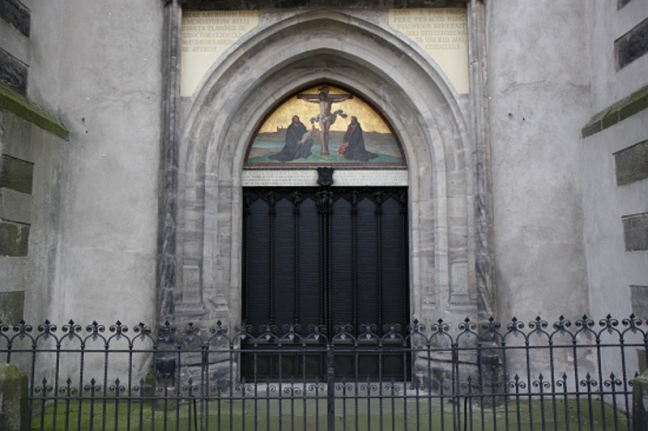
But when Halloween night rolls around in 2017, the world will experience a large scale anniversary. October 31, 2017 marks the 500th anniversary of the start of the Protestant Reformation — the fateful day when Martin Luther, a Roman Catholic monk and professor, nailed a list of demands to the double doors of the Castle Cathedral in Wittenberg. Those demands are called the 95 Theses, and they ushered in a movement for reform of the Christian Church.

There is no need to completely romanticize this moment of change. It did lead to solid reforms, and along with the development of the printing press, it placed the words of the Bible into the hands of the individuals for the first time. But in the process, this movement for reform also led to wars, persecution, and the splintering of the Church into innumerable denominations.

I have no expectation that the entire world will geek out over this 500th anniversary next year. My good friend from seminary used to dress up as the Wittenberg Cathedral doors for Halloween, and I imagine she might do it again for such an anniversary. But I doubt that many non-church geeks will take notice. Maybe there will be a Google Doodle for it.

Instead, though this reformation still informs our world, this anniversary may feel irrelevant to those who are losing their connections to institutional churches.

Nones and Dones

Religious demographics in the United States are changing. These days, some feel quite uneasy walking into a sanctuary of a faith community, and some are equally apprehensive to affiliate with any form of organized religion. The Pew Research Center conducted two Religious Landscape Studies in 2007 and 2015, and researchers discovered that the numbers of the religiously unaffiliated are growing. Pew researchers coined the term “religious Nones” to describe individuals who are unaffiliated with any particular faith community. They also discovered that 61% of Nones believe in God, and many of them are interested in spirituality.

In response to this new terminology, others recognized that an additional term was needed. Sociologists, church historians, bloggers, and pastors began to use the term “Dones” to describe Christians who have maintained their religious identity but left established, institutional churches behind. The sociological studies of the Dones are revealing that many of these individuals have been among the most committed leaders and members in local congregations. After trying to stay, they felt they had to leave when churches condemned their questions of faith, practiced judgment, or refused to share power and leadership. Many Dones value participatory forms of church in worship, mission, and vision. Instead, they encountered institutional churches obsessed with their own survival while refusing to change or adapt in participatory ways. (See Josh Packard and Ashleigh Hope’s sociological study, Church Refugees: Sociologists Reveal Why People are Done with Church but Not Their Faith to learn more about this research.)

Nones are simply not walking through the sanctuary doors, and the Dones are stepping out of sanctuary doors never to look back. These populations are certainly varied, but together, they are speaking. They aren’t nailing 95 Theses to the doors of the Church, but they are speaking with their feet.

But even more, many are speaking with a longing for a new vision. Many Nones and Dones do not want to leave faith and spirituality behind altogether. But where can they go to engage spiritual practices and build Christian community together?

Some are beginning to answer that question in varied ways as spirituality meetup groups, justice organizations, and new worshiping communities are forming in organic ways across the United States.

But perhaps there is a more exciting question to ask:
Will the Nones and Dones eventually lead toward a new reformation of the Christian Church?

I like to think so.

The Reformation Before Us

Phyllis Tickle was a brilliant scholar, researcher, and faith-filled friend of many. She died last year. With a delightful name and hilarious sense of humor, she invited people to ponder what the future of the Christian Church might look like. In her astute work, The Great Emergence: How Christianity is Changing and Why, Tickle articulates an intriguing premise that the Church experiences a major form of reformation approximately every 500 years.

Tickle gives a broad overview of the previous reformations throughout the history of Christianity, including the monastic movement (approx. 500 CE), the schism between the Eastern and Western Churches (approx. 1000 CE), and the Protestant Reformation (approx. 1500 CE). She argues that approximately every 500 years, a new form of Christian expression emerges outside of the current scope and institutional form of the Church. Each time, this new emergence tends to be more in step with the social, political, economic, and cultural shifts of the day.

Initially, when the new movement emerges, it experiences conflict with the traditional, religious communities that preceded it. But the new vision eventually has an effect on the older structures too; frequently, as a result of new movements, traditional Christian institutions experience a counter-reformation in response. Through both parts of the process, more people are authentically welcomed into Christian community.

Though we cannot know fully where it is all headed, Phyllis Tickle believed we are in the midst of a new reformation right now. It excites me deeply to ponder that. Though I am am also unsure of where it is all heading, I believe that the Nones and the Dones are  key players in the future of Christianity and the future of religious communities as a whole.

So will we listen to them as they cast a new vision?
Time to connect beyond the doors of our own sanctuaries.

Reformation 2

Renee Roederer – These days, I am organizing a new community of friendship in Southeastern Michigan called Michigan Nones and Dones. This community is a part of Meetup.com and includes those who are religiously unaffiliated (the Nones), those who have left established, institutional churches (the Dones), and those who are connected to particular traditions but seeking new, creative forms for their expression.


That Tiny Thing You’re Good At Is A Big Deal. . . Really.

Today’s piece is a repost. Maybe this is a good reminder:

That tiny thing you’re great at. . . is a big deal. Really. When shared with others purposefully and resourcefully, it catalyzes change. So what is it?

– Do you have an ability that seems tiny only because it comes so naturally to you?

– Do you engage with it regularly to the point that it doesn’t seem like a real gift?

– Do you forget to marvel at it because it seems so routine or easy?

Well, that’s a gift you need to put into the world. Purposefully.

That’s a gift that seeks greater expression in your community, neighborhood, nation, and world.

These days, when we see the great needs and concerns around us, and when we ponder our fears about needs and concerns to come, we can become absolutely overwhelmed. Our meager work and purposeful sharing can seem. . . well, tiny. It may feel that way, but. . .

That tiny thing? Do not underestimate what it can do.

– When placed strategically with the gifts of others, it can become organized change. What resources can you bring uniquely — money, connections, abilities? Some of which come so naturally to you? Do all you can to make those things fit with the leadership and commitment of others. Look purposefully for where they can be placed alongside the great work that is already happening. Your tiny gift will easily multiply.

That tiny thing? Do not underestimate what it can do.

– When launched into the world with intention, that tiny thing may add a level of care that increases relational safety. Even if only for a moment, it matters. In this current climate, people are reasonably fearful and discouraged. Your tiny thing in a tiny moment may serve as a reminder of human worth and connection. It may provide a needed boost which encourages others to put their gifts into the world too.

So what is it? What is that tiny thing?

In actuality, it might not be so tiny.

Renee Roederer
 

A Visit to the Tree

Tree

Yesterday, I wrote about Thomas Merton’s corner and found myself grateful that we can truly come to greater understanding and love in any place and at any moment. If we ponder our own life stories, I imagine we have experienced this personally with revelations both large and small.

The same is true with purpose and calling. An awareness of these can come in any place and at any moment as well. And because this is true — thankfully! — questions of purpose and calling can be asked repeatedly throughout our lives.

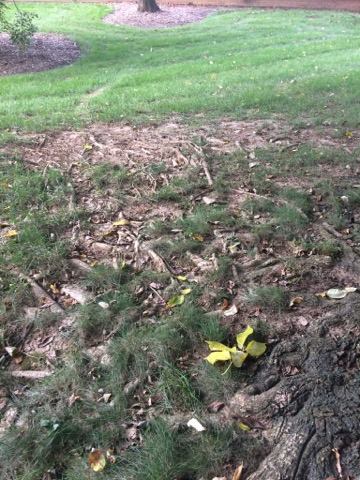
Over the weekend, I visited this tree. It was good to make a return to this exact spot. The tree is not anything too special to see, but I was sitting under this exact tree fifteen years ago (How has it been fifteen years. . . ? Wow. . .) when I decided that I wanted to go to seminary and eventually enter a ministry vocation.

I was a sophomore in college at the time. For the first year and a half of school, I had been a part of the Music Composition program. I had a moment of calling in high school that brought me to this too, but once I was really within the work, I realized I greatly disliked my pathway. There was nothing inherently wrong with it, and I was doing pretty well in the program. But I was always off in a practice room by myself (ahem, I’m an off-the-charts extrovert) working up some compositions, and I found myself writing music with the motivation to please my professors rather than having any personal, intrinsic motivation.

So I made a switch and changed my degree program. I loved being in music school, and I didn’t want to shift that, so I stayed there on a different pathway. But ultimately, I knew I wanted to go to seminary afterward, and that became my new goal and motivation.

I was sitting under this tree when I participated in that sense of purpose finding me. I even remember the exact date: April 2, 2002.

As I visited the tree this weekend, I noticed how many of its roots were visible — a whole lot of roots! And I found myself grateful that this decision has led me to a lot of communities and people with whom I now feel a great sense of rootedness too. There have been some ups and downs and winding roads on this journey, but I always give thanks for the places and the people.

roots

And you know what? Those places and those people have always moved the calling along, because. . . Awareness of calling and purpose can truly come at any place and at any moment so — thankfully! — we can keep asking these questions repeatedly throughout our lives.

Grateful, grateful.

Renee Roederer

Any Place and Any Moment Whatsoever

IMG_0687

Any Place
and
Any Moment

can be
the Space
and
the Time

of
Revelation
and
Awareness.

Any single place and any single moment can open us to Understanding and Love.

I’ve been learning a bit from Thomas Merton lately. Merton (1915-1968) was a Monastic Christian who lived in Kentucky. I love a particular both/and in his personal faith: He was a mystic, yet not at all removed from the world. He delved into some of the largest challenges and traumas that humanity has faced. He was a practical theologian and a humanitarian, grounded deeply in a sense of mystical communion with God and other people.

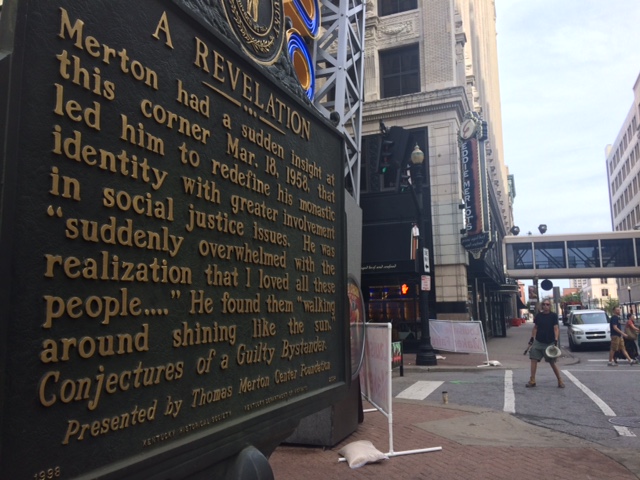
These two aspects of Merton’s faith really came together when he was simply standing at an intersection. He was standing on the corner of 4th and Walnut (now Muhammad Ali Blvd.) in Louisville, Kentucky. As he watched people walk by, he was suddenly overcome with a deep sense of connection. He said he was, “suddenly overcome with the realization that I loved all these people. . .” as they “walked around shining like the sun.”

It changed his whole life.

He probably wasn’t expecting that when he was out running some errands. But any place and any moment can introduce us to a revelation of Understanding and Love. Any place and any moment.

When I was in Louisville this weekend, I went to this corner. It’s really fitting because there’s still a great deal of foot traffic. There is a placard that commemorates this place and moment, and right behind it, is 4th Street Live — two city blocks blocked off for foot traffic with restaurants, and often, live music.

I snapped a photo of this place. (There was also a guy in the background who looked a lot like Tom Petty!) I also stood there and prayed for people I know as well. It was a meaningful experience.

And it was a good reminder.

Any Place
and
Any Moment

can open us for
Understanding
and
Love.

Any single one at all.

 Renee Roederer


Returning For One Another

Cardinal Singers

Over the weekend, I had the opportunity to participate in something remarkably special. I returned to Louisville, Kentucky to celebrate Dr. Kent Hatteberg, greet friends I haven’t seen collectively in twelve years, and join our voices together to make some music.

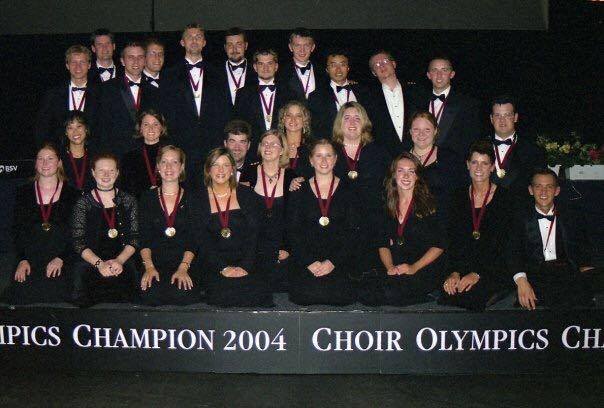
When I was in undergrad, I sang with the University of Louisville Cardinal Singers, a choir that had a pretty amazing trajectory of memory-making via world travel. From 2003 to 2005, we ended up (quite unexpectedly, I might add) making a name for ourselves on the world stage of choral music.

I suppose folks in the United States enjoy a good choir should they bump into one, but there are places around the world that actually make a really big deal out of choral singing. Over the span of three years, we ended up competing in four world competitions that just all happened to be in Germany (Wernigerode, Bremen, Limburg-Lindenholzhausen, and Marktoberdorf) and the World Choral Symposium in Kyoto, Japan. The event that really put us on the map was the 2004 Bremen Choir Olympics.

I suppose it seems ridiculous that there is such a thing — a Choir Olympics, that is; I picture choristers trying to sing while jumping hurdles — but in actuality, this was an incredible event with 350 choirs from around the world that competed in different styles of music. We entered three of the categories: Chamber Choir, Contemporary, and Spiritual/Gospel. I will never in my life forget the utter shock and joy I felt during that award ceremony. The emcees began by announcing the results of the Chamber Choir competition, which was kind of the overall category.

They started at the bottom of the list, announcing the choirs in order. They never said any of the place names — “And now, in 23rd place!” for instance. They just went up the list. At some point, they started naming choirs that had amazed us with their music and artistry.

“Oh no, they forgot us. . .” I thought.

Then all of the sudden, two TVs lit up with the word CHAMPIONS in all-caps. At first, I was completely confused, but then as we looked at each other, we realized we were the only choir that had not yet been named. We actually won.

We were aware that we had done some of the best singing of our lives in this competition, but never once, did we even imagine this scenario as a hypothetical situation. We were all totally stunned. In fact, we didn’t quite know what to do. Then we realized we were supposed to leave our bleachers in the stadium and head to the front for the national anthem. We all received gold metals.

Then we received two more gold metals for our other categories of singing. Such a random thing in my life: I have three gold metals from the Choir Olympics.

But, of course, that’s not ultimately what I gained in this experience. Over those years, as students, we built really incredible friendships with one another. Collectively, we’ve kept in touch on social media, but until this last weekend, I haven’t been in one place with so many them since 2005 when I was 23 years old.

Kent Hatteberg, our conductor, made all these friendships and experiences possible. This year, he is celebrating his 20th year at the University of Louisville. In honor of this, we decided to throw a surprise party for him! It was also his birthday, so this was a double occasion. In fact, we had a cake for each.

We rented out space at Flanagan’s Ale House on Baxter Avenue in Louisville. In addition to catching up, the best part of the night was actually singing together. We had about 100 people present — all former students who had sung with the Cardinal Singers over the span of 20 years — in one place making music together. Dr. Hatteberg seemed so content conducting all of us.

At one point, during a piece called Hymne à Saint Martin, I just couldn’t keep it together anymore and cried grateful tears. This was just so very special, and I kept thinking about everything this community gave me during a critical time in my younger years.

And in the midst of it, I thought about the practice of return.

I suppose we could say that return is a spiritual practice —
to return to our memories,
to return to our emotions,
to return to our voices,

and most of all,
to return to one another,
actually present,
actually recognizing how sacred it is.

In light of all of these, thanks to Dr. Kent Hatteberg and the Cardinal Singers for a sacred practice of return this weekend.

Renee Roederer

If you click this link, you can hear us singing Shenendoah, arranged by James Erb, at Flanagan’s Ale House.

Later, I had a laugh noticing the TVs behind us, which included some funny commercials and Jim Harbaugh clapping. I suppose there was a taste of Ann Arbor, my home, in this experience as well.

The Joy of Silly, Spontaneous Memories

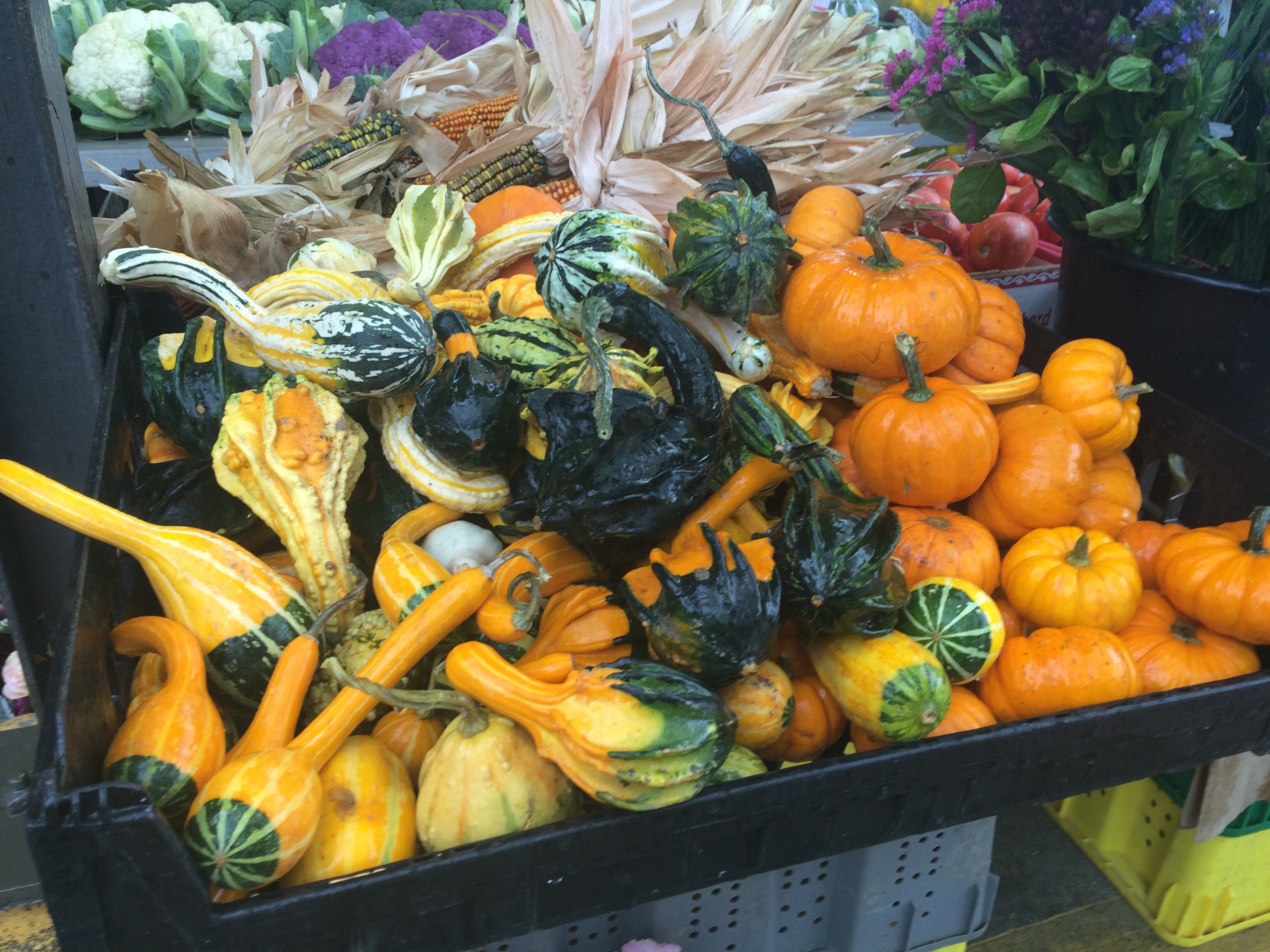
A few days ago, I spontaneously laughed aloud at the grocery store when I saw an assortment of decorative gourds. In and of themselves, there’s nothing particularly funny about them. They just reminded me of something.

They reminded me of my first job. How many people can say this? As a high schooler, my first job ever was

Gourd Shellacer.

Yep, I worked at a farm where my main task was to spray shellac on decorative gourds to make them SHINE. Shine with all their decorative glory!

And to me, the funniest thing about this is that when I later applied for my second job – a place where I ended up waiting tables throughout high school and college for the next six years – the application asked for my previous employment history. I didn’t know what to write for my previous job title. So I wrote,

Gourd Technician.

What a ridiculous thing to say. I suppose partly this was for my own amusement. But the person interviewing me did actually ask, “So what is a Gourd Technician?” and I had to answer!

I think in the moment, I laughed about it, said I was a Gourd Shellacer, but I didn’t know how to name that precisely on an application.

Thankfully, I got the serving job despite the oddities.

You know, if we pay attention throughout our day, I bet we can all find a bunch of silly, spontaneously memories. And they might just bring us some joy, as strange as they and we might be.

Renee Roederer

I Can Hardly Believe This Happened

homeboy

So I’m an external processor.

I mean, you probably know this about me. I do blog five times a week. But beyond that, I live for the rhythms that allow me to reflect in words with others. Given my calling, I am privileged to receive the reflections of a large number of people on a regular basis. And I too, love speaking my own.

Well, two days ago, I found myself wanting to process some things that have been on my mind and heart. Over these last few months, been pondering my own sense of calling and all the gifts it has given me over these last twelve years. Throughout the ups and downs and winding roads of it, I marvel at the sense of community that has been built over time. These days, I feel a desire to rededicate myself to that calling and larger community vision.

In the midst of pondering these things earlier this week, I had so many thoughts and questions. Then I suddenly thought of Father Greg Boyle and said inwardly, “I wish I could talk with him about all of these things.”

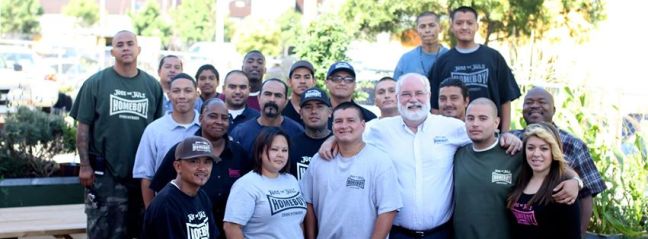
Greg Boyle is the founder and spiritual leader of Homeboy Industries in Los Angeles, an organization that provides healing, hope, jobs, and economic opportunity for people who were recently incarcerated or have left gangs. He is also the author of Tattoos on the Heart, my very favorite book. In that book, Greg Boyle tells the stories behind the community at Homeboy Industries, reflecting theologically as he invites us into a spiritual practice of kinship and deep belonging.

I have admired Father Greg and the entire community at Homeboy Industries for years. When I lived in Southern California, I met him briefly once, and twice, I sat through the daily Morning Meeting at Homeboy Industries. This is a really moving daily practice where the whole community begins the morning together with laughter, celebration, and a “Word of the Day” meditation.

In addition to the general admiration I’ve had for Father Greg all these years, on Monday, I found myself actually wanting to talk to him, because I knew he was the perfect person to understand some of my reflections, questions, life directions, and stories.

So. . . perhaps because I needed to externally process something, I created a post on Facebook.

I shared a photo of a cup of coffee and wrote,

If you could sit down with anyone, dead or living, to receive some life advice, maybe over coffee or tea, who would you choose?

I have so many questions right now for Fr. Greg Boyle.

You?

And here’s what I can hardly believe: In less than a minute — less. than. a. minute. — a friend of mine told me that a relative of hers is married to a relative of his, and that she could actually put me in touch to have a conversation with him.

Then later in the day, another person told me that her own good friend and colleague is also a very close personal friend of Father Greg. She could also put me in touch with him.

So. . . at some point in the next month, I think I’m actually going to try to make some plans to talk to Father Greg Boyle about my own calling pathway.

And I can hardly believe this has happened!

Renee Roederer


We Can Choose Peace Over Productivity

bridge

Once more, I’m mindful of the impacts of the Me Too conversations happening on social media this week. In the midst of them, perhaps it is important to remind ourselves,

We can choose peace over productivity.

In fact, there may be a number of situations and contexts where we need to hear such freedom.

We really can choose peace over productivity.

We have constructed our culture in such a way (in fact, this is part of the Patriarchal way of organizing ourselves, and it hurts people of all genders) to value productivity above much else — including our own wellbeing and the wellbeing of our neighbors.

When we are hurting, how often do internalized messages bubble up to the surface, conveying. . . ?

“Come on. Get on with it.”

“This isn’t as bad as what ________ experienced. Why can’t I get anything done?”

“I don’t have time to think about this. I have so much to do.”

“Look competent.”

“Get it together.”

These are self-critical messages in contexts where our productivity and our constructed image are viewed more highly than our true selves and our need for wholeness.

Well, guess what matters more?

You — the real you — and your wholeness.

We can choose peace over productivity.

So what space do you need today?

Renee Roederer