Support for Smuggling Grace

img_4419

Hello, Dear Friends,

I want to take a moment to thank you personally for following my writing on Smuggling Grace. Each week, I enjoy connecting with you here. I greatly appreciate the ways you add yourselves and initiate conversations within these pieces. Thank you so much.

Twice per year, I offer an invitation for people to give a gift to support this work. Donations large and small allow me to keep writing free of charge, and that support also contributes toward the larger vision of what I am doing in Southeast Michigan as well.

If these pieces have been meaningful to you, and you are able to give, would you like to contribute? No gift is too small, and every bit is appreciated!

Click here to support Smuggling Grace.

Your presence is also a gift. Many thanks to you all!
Renee Roederer

“This Conversation Impacts 40,000 People”

40000-02-copie

I found this image here.

Quite frequently, the news feels daunting. Very often, we’re concerned that national discourse and policy are harming our loved ones and our neighbors. At times, we are frustrated personally with our friends and family members, and we’re already anticipating what the holidays might feel like this year.

All of this is true.

And without negating any of it, I find myself reflecting on a hopeful thought that was expressed last night in community.

The Michigan Nones and Dones community held an event last night called “Support in Times of Collective Stress.” We opened space for people to name stressors in their personal lives and in our larger, collective experience. We asked ourselves, which convictions, spiritual practices, and wisdom keep us grounded and centered internally? And we considered the ways that connection and community-belonging can ease our stress and move us toward collective change.

At one point, I recalled something I had read years ago, and I shared it with the group, thinking that it might illuminate the ways that stress and health can both move through relationships. Nicholas Christakis and James Fowler are social scientists who wrote a book called, Connected: The Surprising Power of Social Networks and How they Shape Our Lives  In the book, Christakis and Fowler conduct intriguing scientific research on social networks to discover how they connect us and affect us. And through a number of studies, they concluded,

On average, each person on the planet consistently affects 8,000 people every day.

Christakis and Fowler have discovered that on average, each person knows twenty people well enough to invite them to a dinner party. If those friends then know twenty people to the same degree, and then those friends know twenty people to the same degree, we are talking about 20 x 20 x 20 = 8,000 people.

We are relationally connected and deeply embedded in these relationships. Their research revealed that we affect and are affected by our friends’ friends’ friends in social and emotional contagions. Even if we don’t directly know these people three degrees away, we are consistently impacting each other every single day of our lives. That’s astonishing.

Christakis and Fowler discuss the ways that our actions, thoughts, and emotions impact others. When we feel joy, calm, stress, or anxiety, we often pass our emotions to one another in contagion. Sometimes, this happens as quickly and simply as seeing someone’s facial expression. The mirror neurons in our brains fire to make a similar facial expression, and then we feel a similar emotion too. This can happen with fear. It can also happen with a smile. These are truly contagious.

So if each of us has the ability to impact a social network as large as 8,000 people pretty unconsciously, what is possible if we consider this consciously? And what is then possible then when whole communities are acting? And beyond mere feelings (though they are important) how can can we positively affect our social network with acts of compassion, advocacy, and solidarity? What is possible when we choose wellness? What is possible when these connections move toward collective change?

After talking more about stress, personal practices, stories, and convictions, we circled back to this thought at the end. Gathered around a table as five people, we realized,

“This conversation impacts 40,000 people.”

We are facing large, looming challenges, and some people are more directly-impacted by those challenges than others. This is true and worthy of our grief and anger.

And at the same time, I hold out hope that collective change is possible. It’s always possible, and it happens through relationships.

Renee Roederer

The Weaponization of False Victimhood

truth

CW: Family Systems Theory, Abuse, Trauma, National Discourse

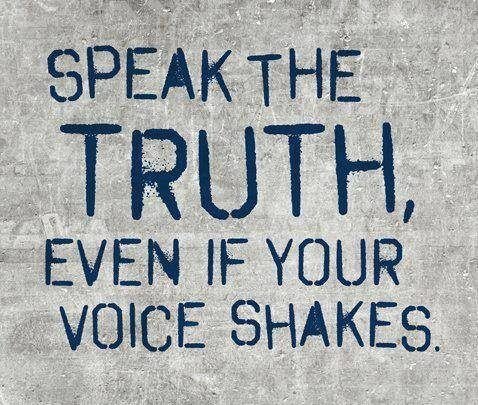
One of the most harmful things we ever do in our collective life is designate victims as perpetrators and their abusers as the victims. It’s a terribly savvy move, and it happens in a variety of contexts, always serving to protect those who are in power.

This happens in homes and extended families when those who are abused are told they caused it (“you made me do it”). Then when they speak up or remove themselves, they are told they are harming the family. For telling the truth and disrupting the family system as it was previously functioning, the abused are then collectively treated as though they are the actual perpetrators. This is a double wound, as the same individuals carry the trauma of their abuse and the collective stigma and shaming of a family that removes support from them, instead giving it primarily to the one(s) who actually caused abuse.

This happens in schools and workplaces when people speak to the truth of bullying or serve as whistleblowers. Even at a young age, children know that they take a risk in naming bullies, as this can magnify the scope of bullying. A bullying individual can then become a bullying group exacting revenge on the “narc” who is now viewed as the perpetrator. Whistleblowers, meanwhile, name wrongdoing for a larger cause often at their own risk. In response, once the collective organization is disrupted by the truth of what has been named, they lash out at the whistleblower for the disruption itself rather holding the wrongdoers accountable or doing the hard work of changing their collective culture. Those who are harmed are viewed as the perpetrators, and power remains among those causing the harm.

This happens in religious communities when power is used abusively in the imbalance of hierarchy, then theology and historical practice are used to bolster that hierarchy as a good norm — often creating conditions where those toward the top of that hierarchy are placed above accountability altogether. Theology is also used to pressure victims never to speak up, emphasizing that victims must forgive (framing forgiveness as a simple dismissal of concern) rather than emphasizing the need for confession and accountability. At times, when victims of abuse tell the truth, the collective religious community seeks to guard itself from disruption, and once more, victims are treated with suspicion as though they are perpetrators while those who engage in harm are protected.

This is also happening culturally in our national life. Last week, Trevor Noah spoke about a pattern he sees in our politics in which false victimhood is weaponized. He spoke of the ways he sees this actively in the leadership of Donald Trump. The same pattern could be expanded toward others and this collective moment. I would like to share that video today.

It can be daunting to recognize this pattern. But when we allow ourselves to see it, we can shift and disrupt that pattern toward truth and support for those who most need it, while working toward restitution and reconciliation whenever it is possible.

We also know that in times of conflict, there is not always a clear-cut delineation of those harmed and those doing harm. But that is all the more reason that we must take harm seriously, especially abuse. Sometimes, harm comes in multiple directions, and we need to see it clearly, rather than automatically lashing out at those who are already most vulnerable. We are often complicit in bolstering the harm around us or in remaining silent. But we don’t have to be.

Renee Roederer

When Communities Shift

Family Systems Theory teaches us that individuals cannot really be understood in isolation, but rather, through the lens of relationships. We are all parts of emotional, social units, and we impact them and are being impacted by them in dynamic ways. Family Systems Theory, introduced by Murray Bowen and popularized by others, takes a look at how groups function — families, workplaces, schools, religious communities — and considers how self-differentiated people can impact the overall health of a system.

For instance, what happens when a person expresses a conviction? What happens when a person or small group of people say, “No more,” to harmful behaviors? What happens when someone tells the truth, perhaps uncovering what has been hidden? What happens when someone practices stronger, more healthy boundaries? What happens when certain people defy expectations and add health to a system, simply by choosing emotional health for themselves?

I think of an analogy that my friend Karen Wright shared with me many years ago:

It’s as if a small group of people are sitting together in a tiny fishing boat, and then someone suddenly shifts their position. That destabilizes the equilibrium. Now the people in the boat have a choice: They can pull that person back or down (and goodness knows, families, workplaces, schools, and religious communities do just that at times) or… they can shift their weight and change their positions.

One of the best things we can do for the emotional health of a community is to choose emotional health for ourselves — again, not in isolation but in relationship to the whole. Sometimes, that has a vital way of impacting the whole.

It can involve risks. Sometimes the community responds by pulling you down or by scapegoating. But this can also create new possibilities.

We can choose health. We can tell the truth. We can set boundaries. We can stop tolerating harmful behaviors. We can choose vitality.

Renee Roederer

A Day of Generations

Age is a lovely gift, as is the opportunity to connect across generations. I had that experience more than once yesterday, and I found myself grateful.

In the afternoon, I met with a trusted elder who is double my age.

I value him so much — his stories, his perspectives, and how he has lived over time. He’s a Patriarch in every sense of the word, and people use that word in connection to him, within his immediate and extended family and within an ever-expanding, assembled family of former students who number in the hundreds.

“I was wondering… would you give me –atriarch lessons?” I asked him playfully but sincerely, hoping to swap out the P for an M. In response, he laughed playfully but sincerely, and with delight.

Then, upon leaving this wonderful time together, I immediately went to campus and met with a new student who is half my age.

This time was likewise so meaningful. It was sweet to connect about the newness of campus life, give some of my insights about Ann Arbor and the University, and remember what it was like to make the transition from high school to college — a period I remember well, yet one that feels so long ago.

It was so long ago. Half my life ago.

Ian said recently, “When you started in campus ministry, we were 10% older than the students. Now we’re 100% older.” That’s true this year. It feels rich and wonderful.

And all of this leads me to say once again (truly, I think of this often) that the mid-30s feel like magic.

There is something about this time and the ability to flow between generations, receiving and giving in all directions. It’s lovely. It’s remarkably formative and generative.

As one who was born on the second day of the year, my calendar year and age-year always exist together in parallel ways. Now that we’re making the turn toward the final portion of 2018, I recognize that in three months, I’ll also move from the mid-thirties to the late thirties. When I do, nothing will shift suddenly except a number. But goodness, I think I will always treasure these years; I have never loved an age more than this.

Here’s to what’s next and all the connections that will follow.

Renee Roederer

A Play on Words

IMG_5649 2

Yesterday, a number of students sat around in a circle on couches and chairs in an area that looks a lot like a living room. Together, at Canterbury House, we had a Service of Evengsong.

At one point, we were speaking the words of a Psalm responsively verse by verse as it was printed in the bulletin. And when we spoke a particular phrase, I smiled.

“My lips will sing with joy when I play to you.”

I wondered, was that supposed to be ‘pray to you’?

If so, I loved that. Play can be prayer, for sure.

Later in the service, we did have a time of prayer together. We sat in silence and simply voiced the names of people and situations that we wanted to lift up. Then Matthew, Chaplain of Canterbury House, led us in the Lord’s Prayer. This was printed in the bulletin too, but with our eyes closed, we totally messed it up. You know exactly where —

And forgive us our SINSDEBTSTRESSPASSES, as we forgive OURDEBTORSTHOSEWHOSINTRESSPASSAGAINSTUS, we said.

And we started laughing!

I mean, this happens in churches sometimes, and I’m used to that. People grew up saying this in different ways. But this time seemed extra and delightfully mangled. I guffawed.

“My lips will sing with joy when I play to you.”

I think God delighted too.

Renee Roederer

It’s Okay to Need

It’s okay to need.

It’s okay to have needs. It’s okay to feel as though we’re in need. It’s okay to express our needs.

And we get to choose how we do it.

Jason Kander, candidate for Mayor in Kansas City, and the founder of the Let America Vote organization, announced yesterday that he is withdrawing from his campaign to address his Depression and PTSD and work on healing.

And he wrote a very beautiful statement about this decision.

I realize that a person in his position might not share so openly, fearing stigma and the pressures of patriarchy. He has been honest and created space for others to share their own needs, seek help, and connect with others in support.

I want to share his statement here today. You can find it most directly on his website. I’ll also paste it below:

“About four months ago, I contacted the VA to get help. It had been about 11 years since I left Afghanistan as an Army Intelligence Officer, and my tour over there still impacted me every day. So many men and women who served our country did so much more than me and were in so much more danger than I was on my four-month tour. I can’t have PTSD, I told myself, because I didn’t earn it.

“But, on some level, I knew something was deeply wrong, and that it hadn’t felt that way before my deployment. After 11 years of this, I finally took a step toward dealing with it, but I didn’t step far enough.

“I went online and filled out the VA forms, but I left boxes unchecked – too scared to acknowledge my true symptoms. I knew I needed help and yet I still stopped short. I was afraid of the stigma. I was thinking about what it could mean for my political future if someone found out.

“That was stupid, and things have gotten even worse since.

“By all objective measures, things have been going well for me the past few months. My first book became a New York Times Bestseller in August. Let America Vote has been incredibly effective, knocking on hundreds of thousands of doors and making hundreds of thousands of phone calls. I know that our work is making a big difference.

“And last Tuesday, I found out that we were going to raise more money than any Kansas City mayoral campaign ever has in a single quarter. But instead of celebrating that accomplishment, I found myself on the phone with the VA’s Veterans Crisis Line, tearfully conceding that, yes, I have had suicidal thoughts. And it wasn’t the first time.

“I’m done hiding this from myself and from the world. When I wrote in my book that I was lucky to not have PTSD, I was just trying to convince myself. And I wasn’t sharing the full picture. I still have nightmares. I am depressed.

“Instead of dealing with these issues, I’ve always tried to find a way around them. Most recently, I thought that if I could come home and work for the city I love so much as its mayor, I could finally solve my problems. I thought if I focused exclusively on service to my neighbors in my hometown, that I could fill the hole inside of me. But it’s just getting worse.

“So after 11 years of trying to outrun depression and PTSD symptoms, I have finally concluded that it’s faster than me. That I have to stop running, turn around, and confront it.

“I finally went to the VA in Kansas City yesterday and have started the process to get help there regularly. To allow me to concentrate on my mental health, I’ve decided that I will not be running for mayor of Kansas City. I truly appreciate all the support so many people in Kansas City and across the country have shown me since I started this campaign. But I can’t work on myself and run a campaign the way I want to at the same time, so I’m choosing to work on my depression.

“I’ll also be taking a step back from day-to-day operations at Let America Vote for the time being, but the organization will continue moving forward. We are doing vital work across the country to stop voter suppression and will keep doing so through November and beyond.

“Having made the decision not to run for mayor, my next question was whether I would be public about the reason why. I decided to be public for two reasons: First, I think being honest will help me through this. And second, I hope it helps veterans and everyone else across the country working through mental health issues realize that you don’t have to try to solve it on your own. Most people probably didn’t see me as someone that could be depressed and have had PTSD symptoms for over decade, but I am and I have. If you’re struggling with something similar, it’s OK. That doesn’t make you less of a person.

“I wish I would have sought help sooner, so if me going public with my struggle makes just one person seek assistance, doing this publicly is worth it to me. The VA Crisis Line is 1-800-273-8255, and non-veterans can use that number as well.

“I’ll close by saying this isn’t goodbye. Once I work through my mental health challenges, I fully intend to be working shoulder to shoulder with all of you again. But I’m passing my oar to you for a bit. I hope you’ll grab it and fight like hell to make this country the place we know it can be.

Jason”

It’s okay to need.

It’s okay to have needs. It’s okay to feel as though we’re in need. It’s okay to express our needs.

Really and truly.

Will We Believe Our Neighbors?

IMG_5773

Do you remember the piece I wrote and the piece I shared somewhat recently about a movement and ordinance proposed to create a Police Oversight Commission in Ann Arbor?

A Task Force was appointed by the Ann Arbor City Council to consider a vision for a Police Oversight Commission — How would it work? Who would serve on it? What could it do, and how? That Task Force of people spent hundreds of hours discerning, deliberating, and at times, debating that vision. Then they drafted an ordinance.

In the end, the ordinance they proposed came into being because they listened to the community at large. At times, the community pushed them hard, speaking directly to trauma they and their family members have endured in connection to policing in Ann Arbor. These same leaders demanded substantive change.

The Task Force ordinance was representative of these community perspectives, along with a transformative vision. This ordinance proposed a Police Oversight Commission that is 1) entirely independent and 2) adequately funded, with 3) subpoena power and a 4) trauma-informed, confidential approach that works to protect residents who report policing complaints.

And… in response, the Mayor of Ann Arbor drafted an alternative proposal that undid all four of these. And… after appointing a Task Force to do this work, the City Council voted in the majority to replace the proposal with the alternative ordinance. The alternative ordinance is still being amended, but the ordinance of the Task Force is no longer on the table.

It appears that this vision for a Police Oversight Commission might provide oversight in name only. When they have so much to risk, will members of the Ann Arbor community, especially those most vulnerable and marginalized, come forward to voice complaints when their confidentiality is not going to be upheld?

Last week, as people in our nation watched the public hearings and testimony of Dr. Christine Blasey Ford and Judge Brett Kavanaugh, many considered the excruciating pain involved when someone is invited to speak and re-live trauma with the potential ramifications of it being for naught. Alongside Dr. Ford’s testimony, many people found themselves remembering and re-living their own traumas. What happens when people endure these kinds of processes, but with no effective change? And at their own risk, sometimes severely?

Many people advocating for the vision of the Task Force saw similar dynamics in Ann Arbor last night.

The City Council empowered the Task Force to do its work, and in response, numerous people, particularly Black and Brown residents, vulnerable immigrants, people who experience homelessness, people with mental illnesses, and people with low-incomes spoke to their trauma. But then… nothing substantive changed. And then, the Mayor said that members of the community and their advocates had acted like bullies throughout this process.

Last week, the Mayor wrote a Facebook post about believing survivors of sexual assault, yet the people who wrote the confidentiality processes of the Task Force ordinance are survivors of sexual assault and domestic violence, and he removed those processes in his alternative proposal.

Will we believe our neighbors when it comes to abuses endured by police officers and systems of policing?

When this happened last night, I kept thinking about statistics I read in a very prescient book. That book looks at changes in racial demographics and changes in religious affiliation in the United States and pairs them to study much of what is happening culturally in our collective life.

Robert P. Jones, author of that book, The End of White Christian America, shares this:

“While the legal terrain has certainly shifted since the 1960s, serious racial disparities remain in the criminal justice system. According to a New York Times investigation published in the wake of the Baltimore protests, both official and unofficial statistics show that African American civilians are far more likely to be killed by police than white people. In records where the race of the victim is identified, about three in ten victims are black — two and a half times their proportion of the population. . .

“. . . Widespread social media usage, too, has allowed protestors to amplify their concerns in ways that weren’t possible even five years ago. In the wake of the Baltimore protests, President Obama emphasized that these clashes were part of an alarming pattern: ‘This has been a slow-rolling crisis. This has been going on for a long time. This is not new, and we shouldn’t pretend it’s new.’

“But for many white Americans, the stories of unfair treatment of blacks by the police and court system did feel new. And the fury with which African American protestors took to the streets after each death also challenged the cherished assumption that the country had moved beyond its racially troubled past into a ‘post-racial’ era. African Americans have contended for decades — or even centuries — that the criminal justice system is stacked against them, but many white Americans continue to believe that police departments and courts can generally be trusted to administer justice. Where African Americans perceive familiar configurations of abuse, many white Americans see isolated incidents. . .

“. . . in 1992, the same year that riots exploded in Los Angeles following the beating of Rodney King, an unarmed black taxi driver, by a group of white police officers, fewer than one in ten (8 percent) black Americans reported that they believed blacks and other minorities were treated the same as whites in the criminal justice system, while 89 percent disagreed. White Americans, by contrast, were almost evenly divided over whether blacks and whites received equal treatment in criminal justice (46 percent agreed while 43 percent disagreed). More than two decades later, the racial perception gap stands at more than 30 percentage points: only 14 percent of black Americans, compared to 47 percent of white Americans, agree that the criminal justice system treats minorities the same as whites. . .

“. . . Shortly after the April 2015 protests and riots in Baltimore, a PRRI survey asked Americans whether they thought ‘the recent killings of African American men by police in ‘Ferguson, Missouri, New York City, and Baltimore,’ were “isolated incidents’ or ‘part of a broader pattern of how police treat African Americans.’ Nearly three quarters (74 percent) of black Americans said that these incidents were part of a broader pattern. Among white Americans, only 43 percent saw the men’s deaths as part of a larger pattern; roughly the same number (45 percent) saw these events as isolated incidents. . .

“Among mainline Protestants — a white subgroup that one would expect to be more aligned with black perspectives because their denominations have a long history of official support for civil rights — the perception gap is no different from whites overall.”

(Portions of pages 151-154)

Will we believe our neighbors? Will will believe survivors of police violence?

All people, and all systems need checks and balances. When we give an immense amount of power to a few individuals or a category of individuals in any system — the same is true in politics and in churches, by the way — human beings are capable of abusing power and will even likely to do so. Remember the Standford Prison Experiment?

Shouldn’t we then provide real and effective oversight to policing, especially when it has the potential capacity to use violent force, separate families, create psychological trauma, and initiate harmful economic outcomes for people?

Or even more, shouldn’t we then transform how this works all together?

In Ann Arbor, our city leaders did not believe our neighbors last night (so often, it is perceived that Ann Arbor is too progressive of a city for police abuses to happen here) or at the very least, they believed it was more important to uphold the current system of policing quite closely to how it is already functioning.

It seems to me that if we want to live wholeheartedly with compassion, care, and protection among our neighbors, we have to believe them. Then we have to transform these systems.

Renee Roederer

God Is Here

tambourine

When the worship service began, I noticed how many children were present, especially for a small congregation.

The kids all sat together in the front pews, and when the first hymn started, a few adults helped them find what they were likely most excited about. They opened a chest in the front and handed out instruments — tambourines, rain sticks, and woodblocks.

Then, as all the adults began to sing a slower, opening hymn called “God Is Here,” the kids accompanied the music with their joyful-noisemaking. Musically, these sounds didn’t fit together, and that didn’t matter one bit. Situationally, it was just right. Children were included and leading, and this entry point into the service invited play to be an important part of the community across the age spectrum.

God is Here. I noticed that the kids were singing the hymn text too as they saw the words on the screen up front, a few of them very earnestly,  even as they jiggled tambourines.

God is here! As we your people
meet to offer praise and prayer,
May we find in fuller measure
what it is in Christ we share. . .

Here are symbols to remind us
of our lifelong need of grace;
Here are table, font, and pulpit (and tambourines!)
Here the cross has central place. . .

Here our children find a welcome
in the Shepherd’s flock and fold,
Here, as wine and bread are taken,
Christ sustains us as of old. . .

As this service started, these kids didn’t have any big inhibitions. They were also reverent from the perspective of being exactly themselves.

This week, I keep thinking about the word Wholehearted.

I wonder, what it would be like to live this day…

… without fears of what others might think,
reverent from the perspective of being exactly ourselves?

Renee Roederer

The congregation I was visiting was Garden City Presbyterian Church in Garden City, Michigan.