Sometimes, unexpected connections are the most delightful. They remind us that many forms of friendship and goodness take place every single day, though these rarely make it into the news cycle.
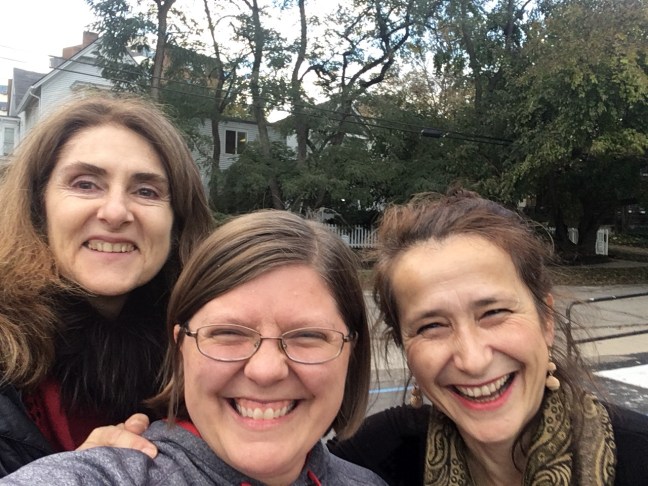
Earlier this week, I was leaving the Michigan Arboretum when two women asked if I could look up some directions for them. They had arrived recently from France and needed to get to a rental car location, but their phone battery had died. When I looked it up, I realized that it was a really long walk, so we just went together in my car.
But we all had time, so we also took a walk before that, and in the process, we became fast friends.
They asked a lot about Ann Arbor, and they told me about Paris. We talked about religion and politics (remember how you’re not supposed to talk about those? They came up quite naturally). And together, we absolutely geeked out over the colors of leaves and took photos.
I love when unexpected connections happen. I did not expect to go sight-seeing in my town with two hilarious, smart, inviting women from France this week. But it happened, and I was delighted. Now we’re friends.
Photo credit: Cptvdisplay by Wags05, public domain
I wonder what it would be like if everything shifted, even for one day, and all the news stories focused on what is going right in our world, all the stories of transformation, all the stories about caring for neighbors — even the daily, mundane love and care that happens on a regular basis.
And what if for one day all the news stories covered the incredible acts of movement-building that are taking place, activists calling us in better directions with crucial demands, people speaking truth to power, neighbors imagining visions of greater love, and communities protecting the vulnerable… What would that be like?
There is undoubtedly so much pain, violence, and trauma taking place in our world. This needs our attention, empathy, care, and action.
But these vital, empowered movements are happening too. Goodness, love, and care are happening every day. We need to turn all of these toward the violence, woundedness, discrimination, and isolation around us.
It’s hard work. But it’s also happening. May we not lose heart.
This sermon was preached at Kirk of Our Savior Presbyterian Church in Westland, Michigan and was focused upon the story that is told in Mark 12:28-34. An audio recording is above and a written manuscript is below.
It was a good question: Which commandment is the first of all?
That question might have been breath of fresh air. It was voiced in a context where religious leaders were asking Jesus challenging questions in attempts to entrap him. I wonder if this question then became an occasion to center themselves once more in what was most important.
We are invited — we are called — to love God fully with all our heart, and all our soul, and all our mind, and all our strength.
And we are called to love our neighbors as ourselves.
These two are the greatest commandments, and they go hand in hand. They cannot be separated. After all, we cannot love God fully with all our heart, and all our soul, and all our mind, and all our strength, without loving our neighbors as ourselves.
These two commandments are at the heart of what it means to follow God and live together as the people of God.
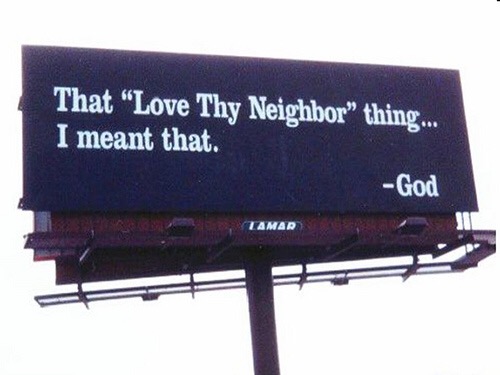
Now in our own times of collective conflict, times in which some seek to belittle others, entrap others, and worse of all, dehumanize and harm others, it is important to come back to this center — to return here and once more proclaim that the God who loves us calls forth our own love. We demonstrate our love for God by loving our neighbors. We fall short of this all the time, but all the time, we are called to it anew.
This morning, you may have come to worship with a heavy heart. I know that is something I am feeling this morning. This has been a remarkably painful week in our collective, national life.
This week, as we have heard in the news, a man sent at at least eleven pipe bombs to national political leaders and media outlets. On Wednesday, a man entered a Kroger in Louisville, Kentucky and shot two Black residents after saying racist comments. Before this, he attempted to enter a church predominately attended by Black residents. I’m from the Louisville area so this, of course, hits close to home. And then, just yesterday, a man entered The Tree of Life Synagogue in Pittsburgh, Pennsylvania and shot and killed eleven people — a number of Jewish people who were there for worship, and soon after, police officers who arrived on the scene. He was shouting anti-Semitic epithets.
All three of these news stories involve the lives of our neighbors, and all three are taking place in a time of great national turmoil and conflict as neighbors turn against neighbors and are so quick to dehumanize one another.
I will say this today because we need to say it in the Church, and we need to say it out of love for our neighbors:
White supremacy and anti-Semitism are sin.
They produce violence in us — the kinds of swift, tumultuous violence we hear in the news, violent rhetoric and words, and systemic forms of violence that take place over great periods of time.
We are called to love God with all our heart, and with all our soul, and with all our mind, and with all our strength. And the second commandment is always like the first. It is always intimately connected to the first: We are called to love our neighbors as ourselves.
So today, we lift up the neighbors who have experienced these forms of trauma; we think about our neighbors who live in fear, worried about being attacked simply for who they are; and we lift up our own hearts in this place, turning toward one another in love, turning toward one another in neighborliness, because if we feel heavy today, if we feel hopeless, if we feel fear, if we feel powerlessness, we need the love of one another. And in that love, God calls us through the presence of one another toward a different way, a way of loving our neighbors by proclaiming their worth, upholding their dignity, and serving alongside them protectively in solidarity and care.
This summer, I had the great occasion to see the film, “Won’t You Be My Neighbor?” the recent documentary about the life and ministry of Fred Rogers. I loved it so much, in fact, I saw it twice, and I’d be happy to see it again. It is a powerful film.
Of course, when we think about what it means to be a neighbor and uplift the worth and dignity of our neighbors, it is easy to think about Fred Rogers and his show Mr. Roger’s Neighborhood. He invited us so often into that way of being and proclaimed to each of us that we are special and worth loving.
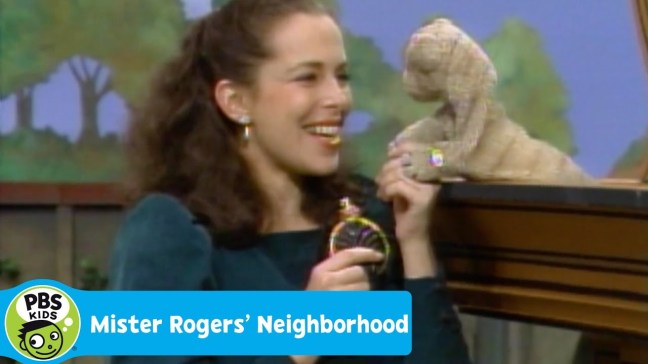
So many moments in this film impacted me deeply, but today, I think about one in particular. In the Land of Make Believe, there is a moment when Daniel Tiger is very vulnerable and shares something painful with Lady Aberlin. He says that he’s been wondering something about mistakes. “I’ve been wondering… if I was a mistake.” He says that he’s never seen a tiger who looks and talks like him, and he feels alone, wondering if he is so different that he might be a mistake. He begins to sing,
Sometimes, I wonder if I’m a mistake, I’m not like anyone else I know. When I’m asleep or even awake, Sometimes I get to dreaming that I’m just a fake. I’m not like anyone else.
Often I wonder if I’m a mistake, I’m not supposed to be scared, am I? Sometimes I cry and sometimes I shake, wondering isn’t it true that the strong never break? I’m not like anyone else I know. I’m not like anyone else.
Then Lady Aberlin chimes in, also singing,
I think you are just fine as you are, I really must tell you, I do like the person that you are becoming, When you are sleeping, when you are waking, you are my friend.
It’s really true. I like you, crying or shaking, or dreaming or breaking, there’s no one mistaking it: You’re my best friend!
I think you are just fine as you are, I really must tell you, I do like the person that you are becoming, when you are sleeping, when you are waking, you’re not a fake, you’re no mistake, You are my friend!
In the documentary, one of the people who worked on the show is interviewed, and paraphrasing her, she said, “This is the moment when you expect Daniel Tiger to say, ‘Oh, I guess I was wrong,’” but instead, the song becomes a duet, and they both sing their portions at the same time toward one another. It’s a reminder that this duet needs to go on and on. We and our neighbors need occasions to internalize that our humanity is loved and cherished by God and by our larger community.
It makes me wonder what would be possible if more and more, the Church became that duet partner? In a context where many are dehumanized and rightfully fearful, what would be possible if the church stood strongly alongside those who are marginalized and stigmatized and proclaimed the sacred worth that is true? What would happen? What could be possible?
These are good questions. And so, friends, wherever we are today, we are no mistake either. We are called again to a great commandment as simple and as challenging as this:
We are to love God with all our heart, and all our soul, and all our mind, and all our strength, and we are to love our neighbors as ourselves.
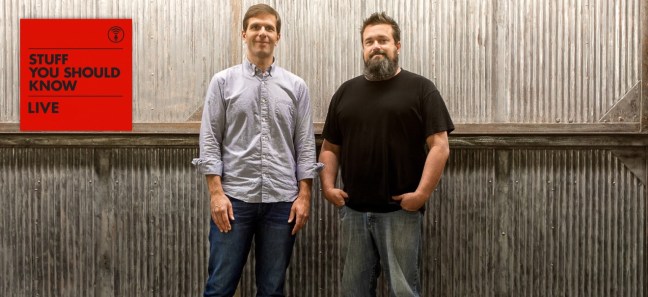
This was one of the first podcasts that made podcasts a popular thing. It’s been going on strong for ten years now and is downloaded millions of times per month. On the podcast, the hosts Josh Clark and Chuck Bryant do a deep dive into research on some topic, giving listeners broad, introductory knowledge about it with a back-and-forth conversational style that is both informative and fun.
When I listen, I learn new things, though admittedly, I try to fall asleep to the episode, not because it’s boring but because it’s new material. And well, it works.
Sometimes, Ian asks me a playful question in the mornings: “What did you not learn about last night?”
The goal then is to share what the topic was, saying, “I didn’t learn about [ballpoint pens, waterbeds, Attila the Hun]!” I’ve usually learned something though. That’s when I share a factoid or two, and it’s always great when I can add, “and that’s really it,” because I fell asleep well.
In short, Stuff You Should Know has become a wonder for this occasional insomniac.
So last evening, a couple hours before going to bed, I decided to go ahead and look at what the topic of the new episode would be.
And… it was a whole episode… about Epilepsy!
I was delighted!
So I listened to it in total without trying to sleep, and it was so well done. It was also a good pairing with what I wrote yesterday. (See also, What If There Were No Stigma?)
Josh and Chuck talk about the history of stigma connected to epilepsy, along with odd, challenging medical treatments. Then they give such a great medical overview that is informational and humanized. They really normalize epilepsy, lifting up the challenges of its experiences, but dispelling myths.
So well done. As a kid, I did not have adequate understanding of my epilepsy while I had it, and what was experienced by me daily went undetected by most. What I would have given to have something like this many years ago — this is a great resource.
Epilepsy is much more common than people think. At any given time, about 1 in 100 people have it. And 1 in 26 people will have an epilepsy diagnosis at some point in their lives. That’s a huge number of people — people you know who have this now or have had it previously, without you knowing it, because stigma is strong and folks struggle to talk about their experiences.
And of course, talking about such experiences is always up to the choice of that person, as it should be, but how sad if people feel they cannot do so out of fear and shame. A lot of people feel those emotions.
So want to learn more? I’m going to start sharing this wonderful episode with people:
When I boarded a plane on Sunday night, I did what most people do. I configured all my stuff so I would have things to do on the flight… phone, headphones, reading material… check. I was all set. Then I chuckled to myself.
“Gracious, this is stigma city,” I thought.
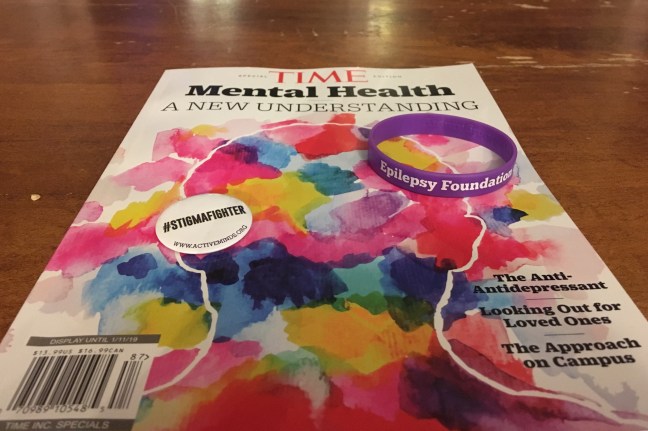
Of course, I didn’t really mean that, nor did I shirk away or hide anything I had assembled. Instead, I smiled, perhaps enjoying an opportunity to buck that stigma tide. I sat there with a whole magazine on mental health on my tray, assembling all the things while wearing a purple bracelet that reads “Epilepsy Foundation of Michigan.” That bracelet also has the phone number of that organization.
I smiled, bucking the tide, but some questions popped into my mind also. When strangers see this bracelet, particularly on a plane, do they assume I have active epilepsy? I no longer do. I’m a remissioner and have been for many years. But does this make people nervous? And since this has a phone number on it, might people assume this is a medic bracelet, like an “In case of emergency, call this number” kind of thing?
A neurologist gave me this bracelet last month, and I occasionally wear it around, normalizing a super common condition that people rarely talk about. That lack of talking makes life much more difficult with people who have epilepsy. I know this personally.
All of this made me ask on that plane, what if there was no stigma?
Goodness knows, particularly when it comes to mental health, stigma creates circumstances where people delay and avoid seeking help. But these needs are so common. When people do seek that help, they sometimes feel shame and assume they cannot talk openly about it. This also makes healing more difficult.
I’m convinced that community is a crucial element of healing for chronic conditions or even stigmatized, temporary needs. When people feel that needs-particular-to-oneself must be hidden from wider community, care is reduced, but even more, a sense of unnecessary isolation sets in. This is wounding in itself.
I know we can’t suddenly snap our fingers and rid ourselves of many various forms of health stigma, but what would we have to do to reduce it?
First, we would have to think a lot about our language. How often do we use words negatively with disabilities, conditions, or identities embedded? We say things like, “That’s so tone-deaf,” or “He was blind to the ramification of his actions,” or “I’m really OCD about that,” (when we really just mean particular) or, “That’s crazy!” or “She’s spazzing out,” or “I’m having a flashback” (to some odd, annoying life detail).
Second — and this is the longer, harder work — we would have to build a real sense of neighborliness where we practice particularity-of-care, where we lovingly know one another at greater depth with awareness that it is really not at all odd that each one of us has needs particular-to-us (healthwise, or fearwise, or personality-wise, or life-circumstance-wise). And with respect and agency of one another, we would participate in caring for those particular-to-each-other needs. This would require that we build an externalized and internalized sense of our neighbors’ dignity. This would require that we raise children to normalize that it’s completely okay for neighbors to be different because… well… we’re all different. We really all have particular-to-us needs. Some are more visible than others, and the visible ones require even greater dignity and respect. With respect, agency, and consent, we can all care for everyone’s needs.
It’s that simple, but it’s really hard work. And it really does require bucking a tide.
Over the weekend, J.J. STARK BLIMP JR. held a wedding in the little town of Albert, Texas. (J.J. STARK BLIMP JR. is the very silly and wonderful acronym created from the first names of our incredible group of friends). K of that acronym got married, and it was absolutely lovely. We all had a really good time at a Texas dance hall, and dance, we did.
During the ceremony itself, the officiant called me forward to give a prayer and blessing. But… I hadn’t received notice that I had a part in the wedding. So I had to wing it. This was no one’s fault; K had sent out information about this, but unbeknownst to us, that info kept going to the wrong email address. Fortunately, the moment of winging it worked.
When in doubt, call attention to the moment, I thought.
I invited us to give thanks for every moment large and small that had led to the one we were now experiencing together — moments of time, memories, and community. I invited us to give thanks for the love between the couple and the love among the community gathered. Suddenly, one moment felt abundant with other moments and many loving connections present in the room.
And I share this today as a reminder, both to myself and anyone reading, that every single moment (not just a super significant one like a wedding) is a culmination of other moments. There is something quite beautiful about this.
Because goodness knows, it is easy to project a sense of anxiety onto the future, wondering if less is possible than we might desire. But when we shift our attention backwards, thinking about everything that has led to any given moment we experience, we soon discover that our moments are connected to a myriad of other moments, and they are abundantly peopled.
This means that we have resources wherever we are. This means that even during trying or painful times, we are accompanied.
Different fridge, but if you come to my house, you can see ours.
I’ve been noticing that a kind word seems to go a long way these days. Maybe more than usual. When I give people affirmations, or when I see a person do a kind act for someone else, there seems to be a bigger reaction as if people are genuinely surprised. I wonder if a backdrop of harsh news and disconnection is impacting our expectations. I’m not sure, but a kind word or loving action is unquestionably a breath of fresh air. May we hold onto such moments.
My favorite blogger, David Smith, has written an essay every single Monday morning since 1999. His very aptly titled blog is Monday Moanin‘. This week, Monday Moanin’ subscribers woke up to a deeply touching post in which David lovingly described his son-in-law — a term, by the way, he says he resents a little, “as if that defined it, or as if a law could ever prevent him from being my son.”
In one sense, the piece is a tribute, but it is built upon a description. It is a compilation of attributes, simply but meaningfully experienced and noticed in every day life, and it becomes a tribute, not on the occasion of having accomplished some great feat (though he has them — I mean, ultramarathons!) but on the occasion of just being himself. How wonderful. It’s genuinely so refreshing.
David Smith ends his piece by saying, “You might have read all the way to this point wondering why I am telling you all this, and it’s simple. Because today people are going to send you pictures of what they ate, or memes of dogs, or political positions, and an array of stuff that will make you cringe. To balance that I wanted you to have an example of what I care most about, a person who makes my life richer. And maybe remind you about what you care most about.”
Lovely.
Last week, our friend Tim Lum (different Tim than son-in-law Tim) stayed with us for a few days. Tim and my husband were best friends during college, and he was the best man in our wedding. Tim lives just outside of London, so we only get to see him in person once every couple of years. We love him deeply. It was also refreshing to have him stay in our house for the first time.
Like everyone who stays in our house, Tim encountered our refrigerator. It’s just plastered with faces of people. There are photos of 27 very beloved people. (I just went and counted). A little more than a year ago, a made a photo album on my phone with these very pictures, so I could scroll through and pray regularly for these folks. Then, when Canterbury House had a special All Saints service inviting us to bring photos of loved ones, I made prints of that album and brought my people along. Afterward, I asked myself, “So what should I do with these prints now?” That’s when I decided to assemble them all on the fridge. After all, I consider every single one of these people to be a part of our family, and I hope that this house, and certainly these relationships, provide a sense of home.
Upon encountering all of these photos, Tim said something wonderful to me: “Tell me about every single person on this fridge.” What a lovely request.
So I did.
I told him all of the obvious things — names, where people live, what they’re interested in, and what they’re doing now. But then, I noticed I naturally gravitated to telling stories too, often naming what these people have given me and what they’ve taught me.
And I just delighted in it all. And Tim clearly delighted in seeing me delight in it all. “I love feeling connected to people you love,” he said. I love that too.
How wonderful it is to rehearse our loves, naming the big themes and stories, of course, but also the small noticings — the daily gifts, attributes, quirks, and very particular connections that make life richer.
I just returned home after a 7+ hour City Council meeting! (They were still going with minor details after I left). I’ve shared a bit of this process in other posts, but the community has been engaging the Mayor and City Council of Ann Arbor as they deliberate toward a Police Oversight Commission. At times, this has involved great conflict.
Tonight, the City Council passed their ordinance. It was a significant departure from the Task Force’s ordinance, but several amendments were added tonight. That brought them closer together in some places, but in other places, key amendments failed.
There was a time of public comment. Alongside others, I spoke in advocacy of an amendment to add a youth member to the Police Oversight Commission. I’m grateful to say that at the very least, this one passed.
Address to City Council
My name is Renee Roederer. I am a resident of Ann Arbor and a Chaplain at the University of Michigan. Today, as you deliberate toward an ordinance for this Police Oversight Commission, I would like to advocate for an amendment to include a youth member on that Commission with full participation and full vote.
For the last eleven years, I have worked closely alongside students and young adults. Many people in our city, including some present today, have worked closely with teenagers in Ann Arbor and Washtenaw County. We know that youth are intimately and acutely aware of the problems their generation faces, some inherited locally, some inherited and endured through centuries of systematic oppression.
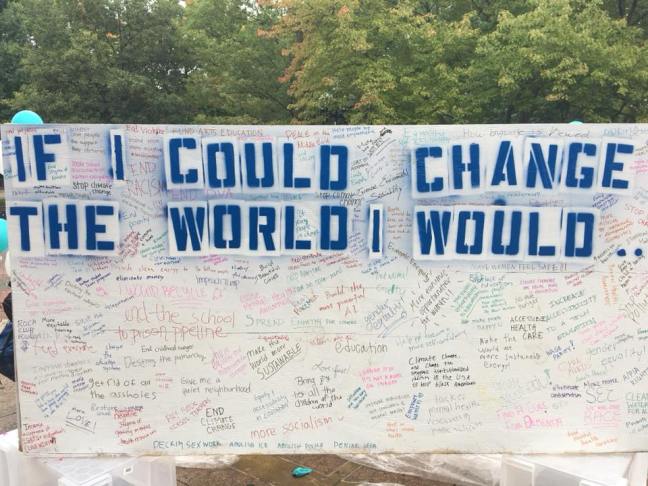
Last week, I walked through the Diag at the University and saw a large sign where students were invited to write answers to this prompt: “If I Could Change the World, I Would…” There, I saw hopes, aspirations, and heartache alike. Young people long to have substantive opportunities to impact their future for their own generation and for people of all ages. But it is so rare for us, their elders, to hand over power, leadership, and decision-making ability. And that seems to be magnified when young people come from marginalized identities and experiences of disenfranchisement.
In the midst of this, I hope we will think about what is possible: What is possible when we invite young people to lead, not only alongside us, but to actually lead the way? To actually lead us? I have built community with hundreds of students over the years and mentored a large number of people for more than a decade. And I wholeheartedly believe in reverse mentoring. I know how much I have learned, how much I have been formed and transformed through these relationships. Our city and our nation need to learn from our youth, and ultimately, be formed and transformed by their leadership.
Marginalized youth in our city know that they and their peers have experienced hardships in connection to policing — at the Blake Transit Center, in traffic stops, in having to look over their own shoulders in the most routine of situations as people unjustly view them with suspicion.
What is possible? I have spoken with Dwight Wilson from the Human Rights Commission and other members of the community who are interested in seeing the creation of a new youth council in Ann Arbor with a youth member serving on the Police Oversight Commission as a liaison to and from that council. We can trust our youth to participate and lead in this process, and we should because they are capable, they are directly-impacted, and they deserve the opportunity to shape and transform what is impacting their lives.
This sermon was preached at First Presbyterian Church in Howell, Michigan and was focused upon the story that is told in Mark 10:17-31. The sermon also references Isaiah 49:8-23. The audio recording is above and a written manuscript is below.
Once, while Jesus was teaching the people, a lawyer asked him a question: “Teacher, which commandment of the law is the greatest?” And Jesus said to him, “You shall love the Lord your God with all your heart, and with all your soul, and with all your mind. This is the greatest and first commandment. And a second is like it: You shall love your neighbor as yourself. On these two commandments hang all the law and the prophets.”
Love of God,
Love of neighbor — loving our neighbors as ourselves —
These two always go together.
We see this in the Gospel of Mark.
In fact, we see this quite a bit in the last two chapters of the Gospel of Mark — chapters 9 and 10.
Again and again, Jesus calls our attention to neighbors. Jesus calls our attention to the vulnerability of neighbors — inviting our own vulnerability. There, we find God in our midst; there, we find kinship in the midst of relationship with one another.
Perhaps you remember some of these stories from the last two chapters:
Jesus brings Peter, James, and John to a mountain by themselves, and while they’re there, something incredible happens. Jesus is transfigured before them, and they see Elijah and Moses speaking with him. Then they hear the voice of God, proclaiming that Jesus is the Beloved One to whom they should listen. They are amazed and afraid by this. It was a very sacred moment.
But then, coming down that mountain, they are immediately brought into a situation of great vulnerability. They meet the other disciples, and there is a crowd around them with some controversy. The scribes are arguing with the disciples, and when Jesus inquires about this, he learns that a father has come and presented his son, a boy who is struggling frequently with violent, convulsive seizures. Try as they might, the disciples cannot seem to heal the situation, and this is where they keep placing their focus — How do we heal this kind of situation? How do we cast it out? Jesus, puts his focus on the child himself, and in entering that vulnerability, and he brings healing.
But the disciples don’t understand.
As soon as they leave that place, they begin arguing with one another along the road about who is the greatest. When they arrive at a house in Capernaum, Jesus asks them, “What were you arguing about on the way?” and they are silent in response, knowing that they had turned their inquiry into a power play among themselves. That’s when Jesus calls their attention once more to vulnerability and love of their their most vulnerable neighbors. He places another child before them — again, a child — and he says, “Whoever welcomes one such child in my name, welcomes me, and whoever welcomes me welcomes not me but the one who sent me.”
But the disciples still don’t understand.
In response to this, John immediately says, “Teacher, we saw someone casting out demons in your name, and we tried to stop him because he was not following us.” Jesus has invited them to relinquish dominance and hierarchy — who is the greatest? —toward vulnerability and love of neighbors. But again, John is interested in the hierarchy and a clear delineation of who is in the community and who is out.
Jesus says, “Do not stop him. . . whoever is not against us is for us.” Then Jesus draws their attention once more to the child before them, telling them not to put a stumbling-block “before these little ones who believe in me.”
But the disciples still don’t understand.
They leave that place and Jesus engages the crowds in some challenging teachings. Then people begin to bring children to Jesus so that he might bless them. But the disciples speak sternly, refusing their request. Yet once more, Jesus opens himself up to the vulnerability and worth of children, some of our most vulnerable neighbors. He says, “Let the children come to me; do not stop them, for it is to such as these that the Kingdom of God belongs. Truly I tell you, whoever does not receive the Kingdom of God as a little child will never enter it.” Jesus took these children up in his arms, laid his hands on them, and blessed them.
Then we come to our passage today. This is the very next moment that follows. Will we, also disciples, get it? Or do we still not understand? Do we need Jesus to call our attention to vulnerability and our neighbors once more?
While Jesus and the disciples set out on a journey, a man ran up and knelt before him. And he asked, “Good Teacher, what must I do to inherit eternal life?” That’s a good question. Jesus places the commandments before this man. Perhaps he expected that, because he said, ‘Teacher, I have kept all these since my youth.” But then Jesus says the thing he might not have expected. The story says that Jesus loved him. Jesus loved him with these words: “You lack one thing. Go sell what you own, and give the money to the poor” — your neighbors — “and you will have treasure in heaven; then come, follow me.” When he heard this, he was shocked and went away grieving, for he had many possessions.
Jesus must have known that these possessions were a stumbling block before him and his neighbors. Maybe they kept them walled off and separated from his neighbors. Maybe they kept him in a place of believing he had more worth and value than his neighbors, or more of a right to power than his neighbors.
I wonder if Jesus was grieved by this too. He said to the disciples, “How hard it will be for those who have wealth to enter the Kingdom of God!” This can indeed be a stumbling block… love of wealth standing between us and a fuller love of God… love of wealth standing between us and a fuller love of neighbors, with neighbors, among neighbors, for neighbors. And now, Jesus calls his disciples ‘children.’ “Children, how hard it is to enter the Kingdom of God! It is easier for a camel to go through the eye of a needle than for someone who is rich to enter the Kingdom of God.”
The disciples are astounded by what Jesus says. Who knows? Maybe they are still thinking about the pathway of power and dominance. If a rich person who has kept the commandments struggles to enter the Kingdom of God, who can?
“Who then can be saved?” they asked Jesus, likely out of concern.
“For mortals it is impossible,” Jesus says, “but not for God; for God all things are possible.”
Thank goodness. Thank God.
It’s interesting that Jesus says it will be hard to enter the Kingdom of God. He doesn’t say, it will be hard for people to attain the Kingdom of God, or earn the Kingdom of God, or possess the Kingdom of God.
It will be hard to enter the Kingdom of God. That involves movement on our part from one way of being to another — to enter this realm of God, this way of God, this community of God. We are challenged to enter a reality where the vulnerable are lifted up… to the point that we are called relinquish the pathway of power and dominance… to the point that we are called to welcome the vulnerable too — our vulnerable neighbors and the vulnerable parts of ourselves.
But thank goodness. Thank God. God often brings the Kingdom to us and us to the Kingdom.
After hearing all of this, the disciples realized that they had left everything. In fact, Peter says this. “Look, we have left everything and followed you.”
And here’s where Jesus says something powerful for them, and I hope it is powerful for us. I hope it is an invitation for us.
Jesus says, “Truly I tell you, there is no one who has left house or brothers or sisters or mother or father or children or fields, for my sake and for the sake of the good news, who will not receive a hundredfold now in this age—houses, brothers and sisters, mothers and children, and fields, with persecutions—” (those sometimes, come as well)
Jesus is not talking about possessions. He is talking about entering this Kingdom — that we are invited to give up particular ways of viewing our lives and viewing our relationships. Thank goodness, thank God, we are able to enter the Kingdom of God which is always also a Kin-dom of God, a way of living and a way of relating in which our neighbors are not possessions, and our possessions are not separating us from the needs of our neighbors.
But instead, in this Kin-dom, the most vulnerable among us become our fathers and mothers and sisters and brothers. Instead, in this Kin-dom, all vulnerable children — not just our own — become children of our concern. They become our very kin — those to whom we are related and no longer separated. They are indeed are never separated from us or what we have because everything belongs to God. Therefore, all things are for the building up of God’s people, our neighbors.
We talk a great deal of stewardship in church, and when we do, we talk about how we use our wealth. How are we good stewards of this? At those times, we say that none of this belongs to us. It all belongs to God.
Do we believe that? That’s challenging. I’m challenged by it.
But when we think about stewardship, how often do we think about stewardship of our relationships, or stewardship of being neighbors with one another — not only with those who are in this sanctuary but also those beyond the sanctuary?
Do we believe that we are in kinship with those who are vulnerable? Those who experience poverty and homelessness? Those whose families are torn apart? Those who are incarcerated? Those experience violence, including violence in their homes, violence in their neighborhoods, and violence by the state? Those who are abused? Those who have disabilities? Those who have challenging diagnoses? Those who are stigmatized? Those who are kept out of view, yet human among us?
Do we believe that we are called into kinship with these vulnerable neighbors, or perhaps those vulnerable parts of ourselves that are hard to name? Can we allow people to be in kinship with those parts of ourselves?
I wonder what would happen if stewardship were about building down the church — not destroying the church, but building it down — away from power, dominance, and hierarchy toward kinship in vulnerability.
I wonder what would happen if stewardship were about building the church outward — expanding what our faith community looks like, not only about a building and membership, but a larger since of kinship and family with neighbors beyond this place.
What would that look like?
I remember this: Nothing is impossible with God. And perhaps it is God calling us into this way of life — love of God, love of neighbor — calling us, thank goodness, thank God, to enter this Kingdom, which is always a Kin-dom.




 Smuggling Grace