In the 90s, there was a brilliant scientific experiment that started out so hopefully, and ended… so badly. Eight people entered a completely sealed-off-to-the-world dome to create a biosphere of their own making. They stayed inside for two years.
Would you like to learn about this endeavor, along with its successes and wild failures?
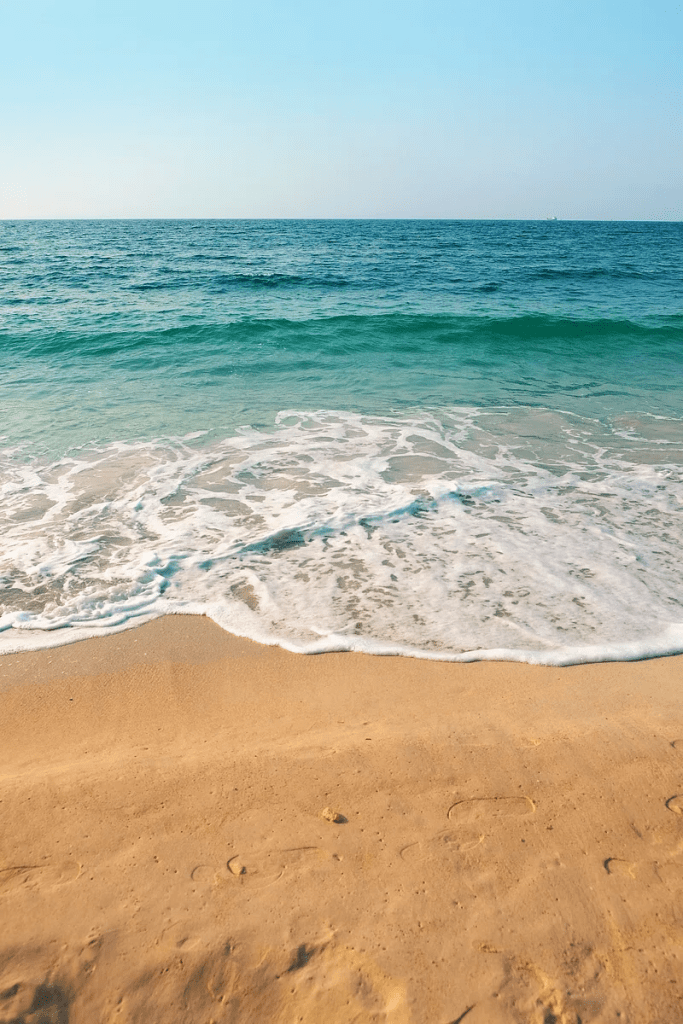
I’d like to share a gorgeous poem by John O’Donahue. I love so many lines, but my favorite is this phrase: “waves of desire I am shore to”
I place on the altar of dawn: The quiet loyalty of breath, The tent of thought where I shelter, Waves of desire I am shore to And all beauty drawn to the eye.
May my mind come alive today To the invisible geography That invites me to new frontiers, To break the dead shell of yesterdays, To risk being disturbed and changed.
May I have the courage today To live the life that I would love, To postpone my dream no longer But do at last what I came here for And waste my heart on fear no more.
~ John O’Donohue excerpt from A Morning Offering, To Bless The Space Between Us
Waves of desire I am shore to… What does that mean to you? And what are you receiving?
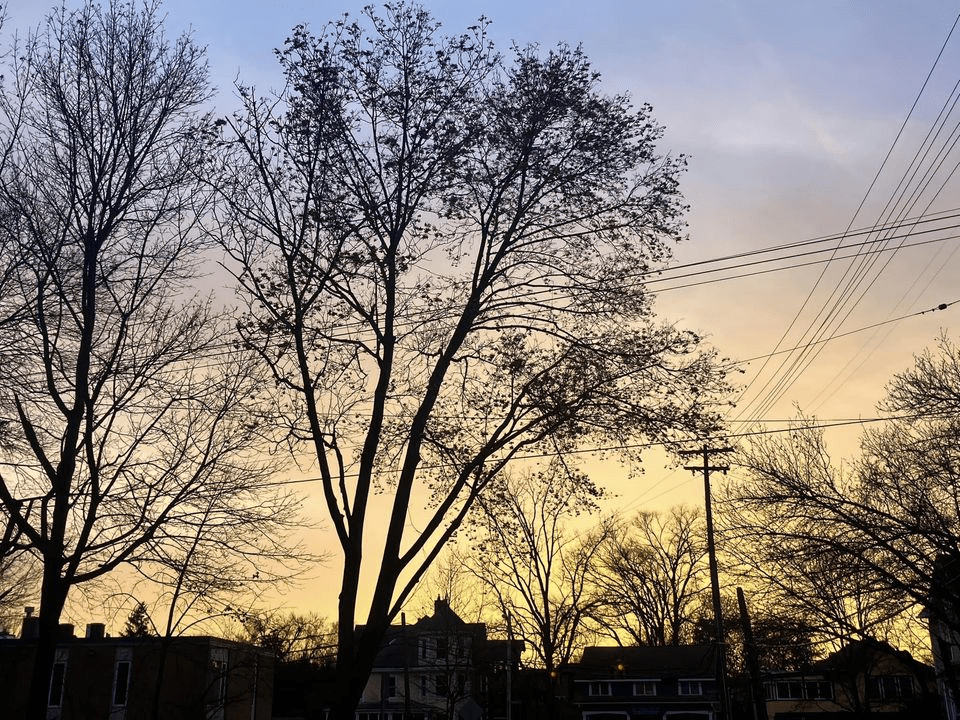
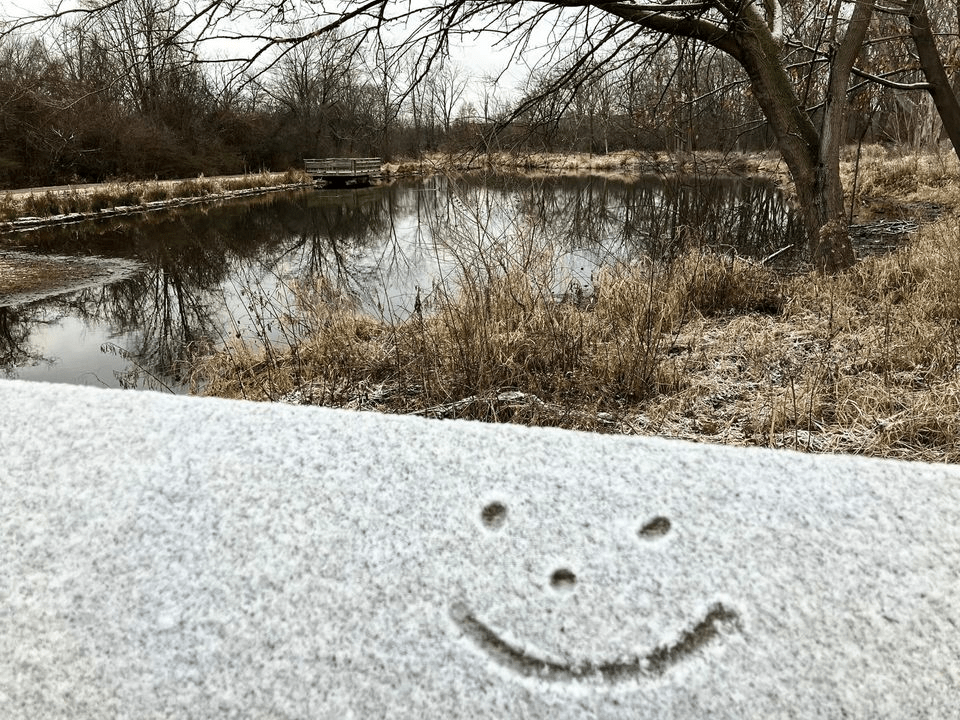
A parking lot, surrounded by grass and trees. Public domain image.
If you’re a subscriber here, you know that I always share nature photography on Sundays. I have an even more frequent rhythm on social media. Nature photography has become one of my biggest hobbies, and I take photos and share them to social media daily. “Today in Nature,” I call it. This has become a meaningful practice in my life.
From time to time, I’ll be in a community setting somewhere, and someone will say, “How do you do this every single day? How do you have the time?” I think people imagine that I’m hitting the trails and parks every single day.
In the summer, I am a little like that, I’ll admit. But in the colder part of Fall and Winter, and sometimes in the spring and summer too, let me just share that a lot of these photos are what I’ll call, “parking lot shots.”
That’s often the case, literally. I’m at, say, Target, and I find a really beautiful, tiny piece of nature to capture. Or I’m walking from my car to the building where I work, and I notice something. Or I’ve come home, and I see something pretty in my driveway.
You don’t have to hit the trails and the parks to find beauty, and I think if we look for it intentionally, we develop an eye for it. We can find it almost anywhere.
Once a month, I team up with a a therapist who is a dear colleague and friend, and together, we offer a Zoom program called, “Mindfulness Moments.” People join us on the screen, and from a comfortable position in their own homes, my colleague leads us in a mindfulness exercise. I facilitate some discussion afterward, but I treasure this time because I am doing less leading and more receiving. I love her thoughtfulness and wisdom; I love to practice mindfulness and meditation alongside her.
Last night, she asked us to imagine that it’s December 31, 2024. She invited us to create a meeting between our future selves and our present selves, both feeling gratitude for the other.
I want to extend this imagination to you today. And if you, too, would like to go to a quiet place to consider this, imagine the relationship between your current self and your end-of-the-year self. What do you want that to be like? There can be gratitude, because after all, your future self is an inspiration to where your present self wants be, but your future self didn’t get there with out the work and intention of your present self.
Imagine with us… It’s December 31, 2024.
Did you travel anywhere?
Did you gain some strength?
What hobby did you finally spend more time doing?
How much self care did you give to yourself?
What were your greatest achievements that you worked so hard to begin and now are major milestones in your life?
I have a new friend, and he’s a substitute farmer. I have never considered this role, but it makes complete sense that this vocation would exist. Farmers need to step away from their land and daily grind just like anyone, but animals and crops need daily care.
This same friend has recently moved to a local farm as well. I’ve asked him a very important question:
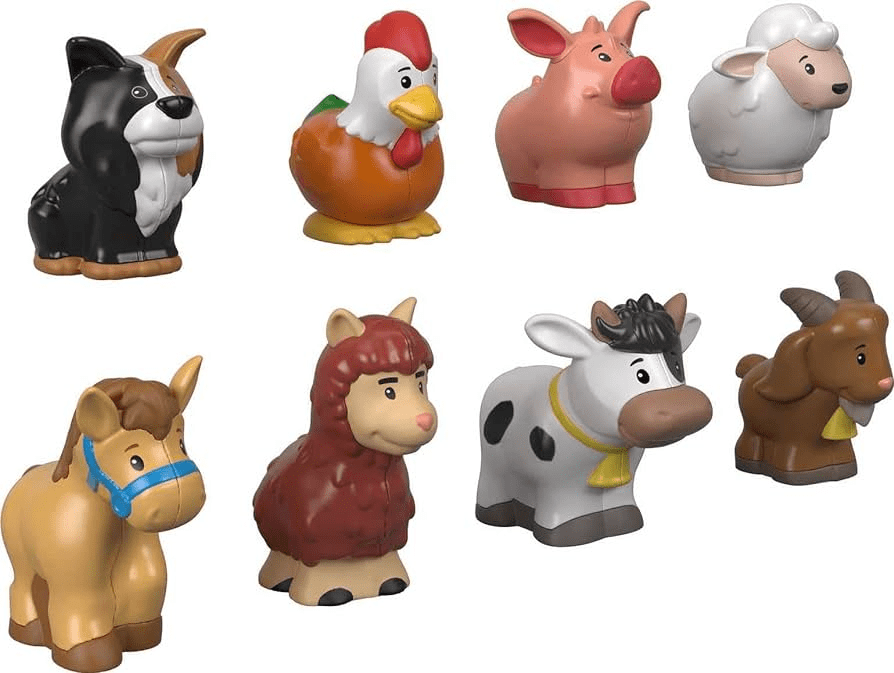
Do you think you could help me meet a baby cow this year?
“Oh, without question,” he answered, to my glee. And friends, it’s going to be so much better than that. He went to the farmers where he lives and asked to be notified every time there’s a new baby animal because… I’m going to get to meet all of them.
2024 is going to be so cuuuute. And I’m going to have so many precious friennnds. (I’ll share pictures, I promise)
She’s not my favorite candidate for a Presidential race, but I do think that Marianne Williamson hit the ball out of the park with this beautiful quote from her book, A Return to Love: Reflections on the Principles of ‘A Course in Miracles’:
“Our deepest fear is not that we are inadequate. Our deepest fear is that we are powerful beyond measure. It is our light, not our darkness that most frightens us. We ask ourselves, ‘Who am I to be brilliant, gorgeous, talented, fabulous?’ Actually, who are you not to be? You are a child of God. Your playing small does not serve the world. There is nothing enlightened about shrinking so that other people won’t feel insecure around you. We are all meant to shine, as children do. We were born to make manifest the glory of God that is within us. It’s not just in some of us; it’s in everyone. And as we let our own light shine, we unconsciously give other people permission to do the same. As we are liberated from our own fear, our presence automatically liberates others.”
And here it is in a scene from Akeelah and the Bee:
Welcome to our first installation in what I’m calling the “Neato Curiosities” series. To begin, I’d like to recommend this episode of Science Vs. They discuss ayahuasca and DMT, the molecular compound within it. They spend even more time talking about the synthetically created form of DMT and how it is being used clinically in ways that greatly improve a person’s mental health and outlook on life.
If you have time and interest, have a listen! — Renee
Every Thursday, I lead a support group over a conference call. I facilitate additional support groups as well, and those are hosted over Zoom. But this group of people likes to dial the phone and talk together all at once, so that’s how we keep it. They also playfully scold anyone who calls this a “group,” as I realize I just have above.
“Nope! Nope! We’re a family!”
They’ve decided embrace one another as chosen family. And though the framework of “chosen family” has been a part of my life for a long time — I’ve even writing a book on it; stay tuned!– they didn’t get this language from me. I never used it once with them. Still, it took form, and they have chosen that language and this way of interacting.
That vision showed up for me this week too. I dialed the number and signed in. And this is what I heard:
Happy Birthday toHappy youuuu! Birthday! to Happy! youuuuhappy to youuu to Birthdaytoouuuu Happyyyy dearrrrReneeee! toyouuuReneeeedayy! toyouuuuu!
As you’ll probably guess, I had a recent birthday, and they remembered. They sang together, all at once, and given the conference call medium, it was completely asynchronous. It was a lovely greeting.
Right now, many people are choosing and acting upon New Year’s Resolutions — most often, daily habits that they want to build over time. As we know, some of these will stick, and some will fade away.
Personally, I don’t tend to choose New Year’s Resolutions, but I do greatly appreciate the collective reset that takes place as we cross into a new calendar year. It gives us a chance to reflect, remember, express gratitude, and cast hopes for ourselves and others.
So I wonder… apart from resolutions, what might it be like to choose a guiding question? A query that can allow us to move more into what we desire or hope for our lives? Questions allow us to live in particular directions. They shape not only what we’re asking, but what we then, begin to see. Questions are great space for reflection, playing and trying things out, and of course, action.
I’m curious what you might choose. Here’s mine:
How expansive can a sense of home be? I ask this question in the direction of place. I ask it especially in the direction of people.
I am willing to be all-kinds-of-frugal this year in certain areas (living simply is a good thing in and of itself) in order to spend money to visit people I love. I want to be with my people, many of whom live all over the country. This isn’t a sense of vacationing; this is a sense of housing others and being housed. I want to host people in my home. And I have many lovely offers of people who would like to host me.
And in some of these places, I don’t only feel at home with the people I’m visiting. I also feel at home in place. Some of these cities also feel like my cities and my towns too. And I want to build that sense and that feeling. Truly,
How expansive can a sense of home be? I’m going to play with that question all year.