Image Description: A white microwave with the door open, Public Domain image.
Over the last few weeks, I’ve enjoyed leftovers after eating out at restaurants with friends, preparing meals for guests at my house, or cooking delicious feasts together.
These are the best kinds of leftovers. After a year plus of a pandemic, I hope I never take shared meals for granted.
I never thought warming up dishes in microwaves would make me smile so big.
This week, I had the occasion to provide the Voice in the Wilderness segment on the Pulpit Fiction Podcast.
It takes place toward the beginning, right after the intro. If you’d like to check that out or hear the whole podcast (I always love this one!) feel free to have a listen here.
Pastor Ralls had gone to the nursing home to visit a resident who was a member of his congregation. While they were sitting together and conversing in the atrium, he heard some strange, intriguing words.
“I love you little. I love you big. I love you like a little pig.”
These words soon became a playful refrain. Pastor Ralls and his friend heard these words innumerable times throughout their conversation. They were spoken by a woman who was sitting nearby them. She was a resident too, and though she was sitting close enough to touch them, she paid no attention to their conversation. He writes, “During my visit to the nursing home that afternoon, I must have heard this sweet, odd rhyme more than a hundred times.” She continued to look out the window, and with a broad smile on her face, she let her refrain fill the room.
“I love you little. I love you big. I love you like a little pig.” “I love you little. I love you big. I love you like a little pig.” “I love you little. I love you big. I love you like a little pig.”
She seemed continually delighted by these words.
After inquiring of a staff member, Pastor Ralls learned that this woman had been a first grade teacher for decades. Each morning, when the children entered the classroom for their day at school, she would lean down and speak these very words into each beloved ear.
What a beautiful, playful ritual.
I love this story because it invites me to imagine what those words must have been like for the children in her classroom. . .
. . . I wonder if they would giggle before she could finish, each one anticipating the end of the phrase.
. . . I wonder if they would smile before she started, each one anticipating that they were loved and valuable.
. . . I wonder if they would ever add their voices to the chorus, each one rehearsing the truth of their worth, silly as the phrase may be.
I also love this story because it invites me to imagine how those words must have formed her as a teacher. . .
. . . I wonder if she spoke these words on days when she was feeling discouraged, and they lifted her mood just a bit.
. . . I wonder if she took pleasure in speaking these words to particular children who struggled to trust love.
. . . I wonder if the rehearsal of these words helped her love herself more fully too.
No matter how these words were spoken or received in her classroom, it is clear that they resonated deep within her psyche many years later when she was challenged by dementia. The refrain is delightful and silly. It is also so meaningful.
It makes me wonder. . .
Who has told you that you’re beloved? Who has told you that you’re loved through and through? Who has told you that you’re valuable and worth it all?
Do we rehearse those words and memories? Do we recall them and let them sink into our very being?
We can always begin that rehearsal again.
And if we doubt those words within us. . . guess what?
We can rehearse them again. And again. And again. And again.
And if no one has told you today, And if you’re struggling to tell yourself, Please hear this truth: You are Beloved, Loved through and through, Valued and worth it all.
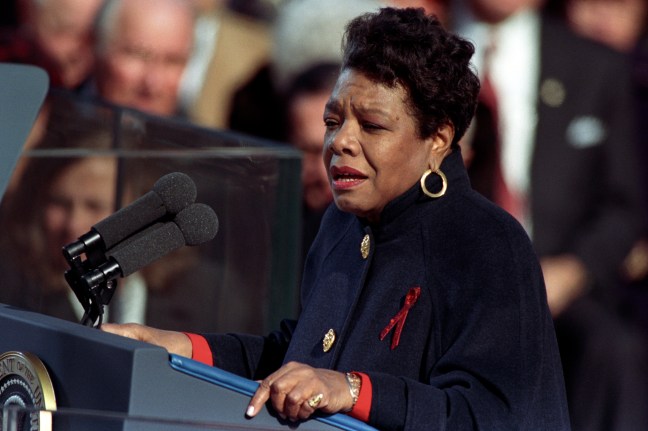
“I’ve had so many rainbows in my clouds. I had a lot of clouds. But I have had so many rainbows. And one of the things I do when I go stand up on the stage, when I stand up to translate, when I go to teach my classes, when I go to direct a movie, I bring everyone who has ever been kind to me with me — Black, White, Asian, Spanish-speaking, Native American, Gay, Straight — everybody. I say, ‘Come with me. I’m going on the stage. Come with me. I need you now.’” — Maya Angelou
I love this video from Maya Angelou.
Where do we each need support today? How can we call forth that internalized support? How can we ask for it?
A gray-blue caterpillar with orange stripes, walking on a stem. Photo: Renee Roederer
While taking a walk, I found a cute, little caterpillar and snapped a photo. I shared the photo on Facebook and Instagram.
Later, I found myself thinking, “This caterpillar knows nothing about humans, let alone that this one used a device called an iPhone to take a thing called a photo that could be shared on a thing called social media that involves a thing called websites.”
There’s a complex, larger reality that this caterpillar knows nothing about. Is it any wonder that we could be a part of realities much larger than we can comprehend too?
Then later, I thought, “How much does a caterpillar know about its own lifespan? When it begins spinning a cocoon, does it know what’s ahead? Can it know that it will dissolve into goo and then emerge transformed with wings?”
There’s a complex, seemingly miraculous reality this caterpillar likely cannot anticipate fully even in its own lifespan. Is it any wonder that more transformation might be ahead for ourselves too?
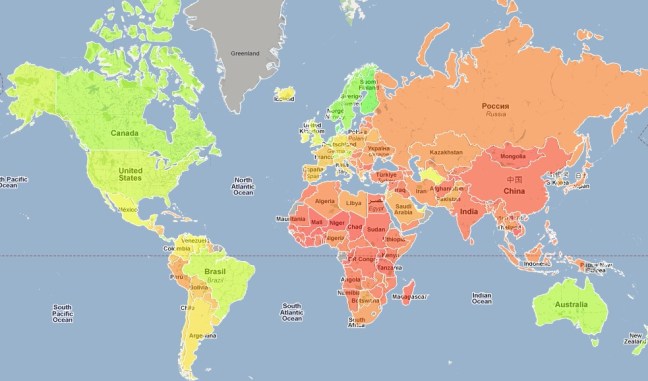
When I was six years old, I sat in a very small building with a handful of other kids, most of them much older than me, and together with a Vacation Bible School teacher, we looked at a world map.
I can’t recall what we were discussing on that day. But I do know that the very small, Southern Baptist congregation of my early childhood thought a lot about missionaries and prayed regularly for them. I also recall that there were photos of Lottie Moon, the Southern Baptist missionary who had lived in China for 40 years, in the church itself. So it’s quite possible that we were talking about missionary work (… which was often religiously-sanctioned colonialism).
At some point, while looking at this world map, I said to the teacher and the other kids, “When I grow up, I want to live in Switzerland!” I’m not sure how I had come to this conclusion or what I might have known about Switzerland at age six. But I suspect I had seen some photos or scenery on tv because I began to talk about how beautiful it is.
But I didn’t get very far because the teacher cut me off. He was also my neighbor across the street and the husband of the woman who sometimes babysat me. He felt he needed to address me and all the other kids with utmost seriousness. He even seemed a bit offended.
“Don’t ever say that,” he said. “We live in the United States, and it is the best country on earth. We are so lucky to live here,” he added, which seemed to shame me for my ungratefulness. “The United States is the best country on earth.” I think he probably said that statement more than once. Or at least, he said it strongly.
In that moment, I felt badly for not upholding the greatness of my nation. But mostly, I felt sad because I really wanted to be able to live in Switzerland. And I wanted to be able to tell people I wanted to live in Switzerland. But that was clearly the wrong thing to do. I learned quite early that the United States always had primacy.
And then, already ever the people pleaser at age six, I immediately found a way to redirect any criticism. I told the classroom some other news too: Earlier in the day at VBS, “I accepted Jesus as my Lord and Savior.”
“I want to be baptized,” I said.
That changed the mood.
But also, I meant it. I had been raised Christian since birth, yet in this tradition, you typically have a moment when you accept Jesus as your Lord and Savior for yourself. That’s the framing, and that’s the language for it. The teacher asked me a few questions, probably trying to make sure this was a genuine moment, and then, he concluded that it was. A few weeks later, I was baptized at age 6, a very young age for a Southern Baptist.
Now, I return to this scene again…
I recall this moment looking at the world map… this moment when national supremacy and faith formation were built into the same conversation … I remember hearing that the United States is the best nation on earth and internalizing that this should never be questioned… or that it might be wrong even to make space to admire the beauty of another nation.
Now, I return to this scene again…
I thought about how I grew up feeling a distanced sense of pity for people of other nations who knew war and hunger but “didn’t know Jesus” (even though there were fellow Christians in those nations). My distanced sense of pity was also an internalized dismissal which seemed to say, “Things are bad there, but that’s just how it is.” I accepted violence. I accepted poverty. I numbed any of the obvious feelings that would question those things. “That’s just how it is for those people.”
This primacy — this sense that the United States is the best and only nation that gets to count, or matter, or deserve empathy; this internalized belief, sometimes conscious, sometimes unquestioned and unconscious, that white people are superior to others and more worthy of resources; this warped theology built upon a belief that God loves Americans more than people of other nations — it kills.
Written in chalk, “You are Loved.” Public domain image.
Have you ever felt loved in limitation?
I’m not talking about failure, though we certainly need love and grace when it comes to that.
I mean, limitation. I mean, receiving love precisely in the place that feels challenging. Accepted fully as you are. Cared for in the unique particularity of your being, including what may be difficult.
That’s when vulnerability and connection become very sacred. That’s when they become very transformative.
In a variety of contexts, over more than a decade I have been privileged to build community with and among college students. And among all the gifts of that, this is one of my very favorite aspects:
I have watched people grow from being teenagers to becoming legit experts concerning so many things.
In a combination of academic study, vocational work, and life experience, these folks I know are now experts in so many different areas. I learn a lot from them. Regularly, I bring my own curiosity questions to them. Occasionally, I facilitate information between them: “Oh, I know some who would know that. I’ll ask!”
It’s interesting how someone’s phrase can pop back into your mind years after it was first spoken.
Sometimes, the voice of David Roth, one of my most beloved influences, bubbles up within me. (By the way, that’s David Nelson Roth, not David Lee Roth of Van Halen). And lately, this is the phrase that comes to mind:
“For you. . .”
“For you. . .”
“For you. . .”
These words were spoken in a litany he would say every time he baptized person in the congregation where I grew up. Most often, he said these words to babies. Each “For you” was followed by a phrase of love. Then he would add, “And right now, you’re too young to understand any of these things, but. . .” He invited the people present to be companions in telling the stories of faith and sharing this kind of love.
These days, I keep hearing the rhythm of this phrase again.
“For you. . .”
“For you. . .”
“For you. . .”
With gratitude, I think about the people who have conveyed this kind of love to me.
And these days, I ponder the mysterious realization that right now, our work and our ways of being in the world are making space for people we don’t even yet know.