“Why is it so hard to feel the difference between 400,000 and 500,000 COVID-19 deaths—and how might that impact our decision making during the pandemic? Psychologist Paul Slovic explains the concept of psychic numbing and how humans can often use emotion, rather than statistics to make decisions about risk.”
Three people, embracing. Public domain image. iStockphoto.com
Yesterday, I shared a piece about eucharist practices and the ancient Greek word often translated as ‘remember.’ This is not merely about mentally recalling an event of the past. In this framework, it’s about making it present in our thoughts, feelings, and actions.
In that same spirit, I’d like to share a guided meditation from my friend and colleague Ken Wilson at Blue Ocean Faith, a congregation in Ann Arbor. How can we pause to remember each other during this time of a pandemic, and in a deep sense, feel the connection and presence of one another? How do we participate in what we remember?
I was very moved by this recording this week. It’s 12 minutes long, and I recommend listening.
“But first let’s remember how normal it is to feel another person’s presence even when we may not see them or hear them. A young child will feel calmed by the presence of a parent or other loving caretaker in the room with them—even if the person is temporarily out of sight—as long as they are in mind and thought to be present, the child feels secure. More mysteriously, perhaps we have all had moments of feeling someone’s presence in a room before we consciously knew they were there. And, of course, it’s a very real presence that occurs when we call someone to mind, when we remember them. After all, everything that we experience, in a sense, takes place in our minds. In both practices, we activate our memory to be aware of the presence of loved ones, and memory includes the capacity we call imagination, which is also, by the way, a key component of faith, since faith is the assurance of things hoped for.
“For each practice, you can focus on the beloved others in the way that is most helpful for you. Sometimes calling their name to mind, invokes a sense of their presence. Or calling to mind a visual image of the loved one. Or any other remembered physical sense of the person: touch, smell, a particular facial expression, a laugh. However, it may be that you most readily call someone to mind, focus your attention, in particular on the positive feelings connected to the loved one. It’s not so important to have a vivid memory as to call notice and savor any positive feelings, however subtle they may be—warmth, security, comfort, delight, admiration, and so on—to and to rest your focus on those feelings.
“In Hebrew Bible, there is no such thing as ‘mere memory.’ Instead, memory is understood as a re-participation in the event remembered.”
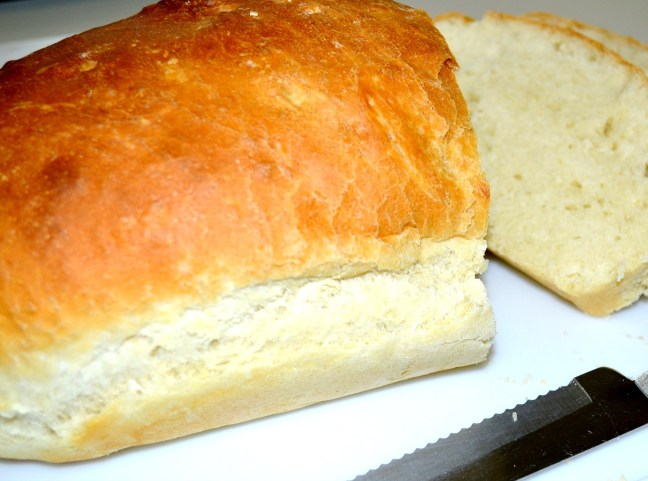
Image Description: A loaf of bread on a white cutting board with a knife to the side.
When we make space to be present to the moment before us, When we create intention to notice the surroundings around us, We are soon reminded of people.
Isn’t that true?
We walk around the grocery store and see a food item that someone especially likes.
We cross an email off our to-do list and remember someone we’d like to check in with later.
We smell a comforting scent and remember the people present in a long-ago memory.
The remembrances of people are around us all the time. This means we are invited into community all the time.
I find myself thinking about the word ‘remember.’ Though we don’t typically think about it this way, in English, the word is literally phrased as ‘member again.’ This is a way to express belonging. In community, we are members of one another. We belong.
And when Jesus shared his very last meal with his closest friends and confidants, he blessed bread before them, and broke it, saying, “Take and eat. This is my body broken for you. Do this in remembrance of me.” He then poured the cup of wine before them and said, “Drink this, all of you. As often as you do so, do this in remembrance of me.”
In the recounting of this moment, the Greek word for ‘remember’ means ‘to make present.’ Jesus is not simply asking disciples to think about him when they eat future meals together. He is asking them to reenact this moment in a way that makes him present.
In this very Sacrament, and In a life of sacramental living — noticing, reflecting, contemplating — people become present to us all the time.
So when we remember them — as they are membered once more in our thoughts, and made present to us —
perhaps would be meaningful if we reached out to say hello, making ourselves present too.
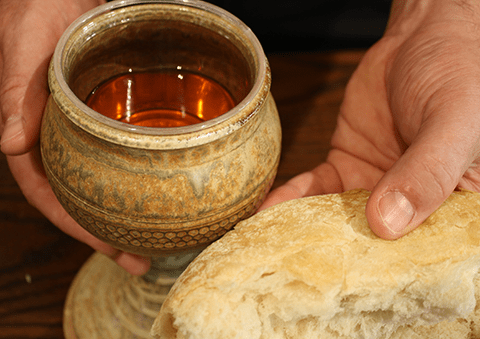
Image Description: Hands holding communion bread and a light-colored chalice of wine. Public domain image.
If you’re a part of a liturgical church community, or perhaps if you were raised in one, you may know that when people come forward to receive the communion meal together, servers will often say particular phrases while they offer the bread and the cup:
“This is Christ’s body, broken for you.” “This is Christ’s body, given for you.” “The Bread of Life.” “Receive what you are, the Body of Christ.”
“This is Christ’s blood, shed for you.” “This is the life of Christ, given for you.” “This is the Cup of the Covenant.” “This is the Cup of Salvation.”
I prefer some of these to others, but they are examples of what you might hear.
Many years ago, I was living in Austin, Texas, and often, I would share this meal together with college students. I was just one year out of undergrad myself, and the oldest students in this community became some of the closest friends of my life. They still are. Today, I’m remembering a wonderful moment when we shared this meal together.
Two of my friends were servers, and as people came forward, they continued to say these phrases:
“This is the Bread of Life.” “This is the Cup of Salvation.”
They said them very quietly, kind of reverently.
But then one of them turned to the other and said, “Why do we always whisper it?” I was nearby so I heard this, and it made me smile. After asking that question, they started staying these things much more loudly — with declaration, with confidence!
“The Cup of Salvation!” They didn’t yell it or make a joke of it. They just said it with confidence. Except it did make us smile because it was so out of the ordinary. We got what they were doing. It was wonderful.
A word like ‘salvation’ may seem like Christiany jargon. And given how some Christians are behaving and asserting faith publicly against others these days, we may bristle at a term like salvation. Too often, that word has been used to assert who is “in” and who is “out.”
But one of its primary meanings is healing — simply and wonderfully, healing. Like salve. How wonderful it is to imagine people saying with confidence,
“This is the cup of healing!” “Healing is possible!” “This healing is for you!” “This healing is for us!” “This healing connects us to each other and the larger world!” “This healing calls us to be healers!”
This is one more reason that this Eucharist meal — again, Eucharist means, Good Gift — is a prelude to all our meals and all our connecting. It sends us outward to live this way all over the place.
With confidence!
Good gifts.
Eucharist.
Every day, Every moment, Every meal, Every relationship.
More than a decade ago, I entered a worship space a bit early. I joined some people from my community in in assembling sack lunches. Together, we made sandwiches and placed them in bags with some fruit and just a bit of candy. Then we put the bags on and under the Communion Table. That night, we were going to engage a practice we decided to call “Communion Table Extended.” During our service, we shared the Eucharist meal together, and afterwards, we walked around in the neighborhood to share those bags of food with anyone who might enjoy them — mainly, neighbors experiencing homelessness and hungry college students.
As I think of that night so many years ago, a particular image comes to mind. I think of my mentor who celebrated communion with us that night. After saying a prayer, breaking the bread, and pouring the cup — all part of what is typical and sacred — he voiced some words that are also both typical and sacred: “These are the gifts of God for the people of God.”
But instead of lifting up the bread and the cup as is usual, in this moment of practicing Communion Table Extended, he lifted up the bread and a bag of M&Ms.
Bread. And M&Ms. “These are the gifts of God for the people of God.” And they were.
This meal of bread and cup… So many people have taught me how sacred this is. But I also thank this mentor of mine, both in this moment and many other moments, for teaching me how ordinary it is – that is, how grace and connection are found among us in ordinary, everyday, relational experiences.
In fact, this sacred meal is intended to be a prelude for many meals and connections. In these too, we can be surprised at how grace and connection are found among us through ordinary, everyday, relational experiences.
The image of holding up those M&Ms has stayed with me all those years.
It is another reminder of
Good gifts.
Eucharist.
Every day, Every moment, Every meal, Every relationship.
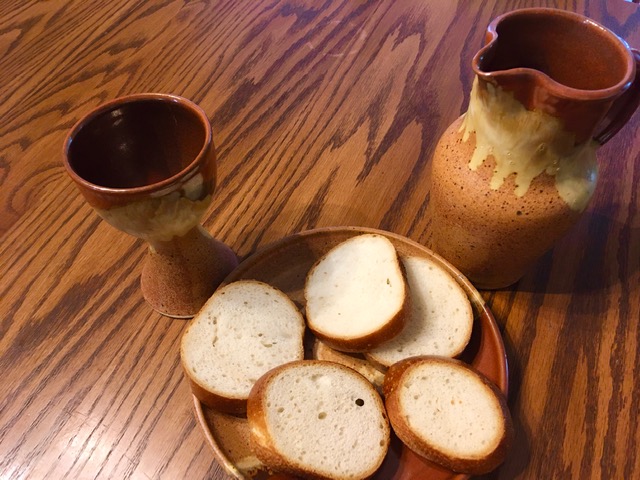
Image Description: A communion set with a cup, pitcher, and plate of bread is on my dining room table. The set was created by Karla Johnston-Krase, and it has beautiful colors of red, orange, yellow, and brown.
If you would have asked me last year, or frankly, at any point in my life, if I would have foreseen occasions when I might break bread, pour wine, and practice communion over a video conferencing platform called Zoom, the scenario would have never crossed my mind.
But I did do this with a church community yesterday, and it invigorated me. There’s something kind of odd about everyone being in their own separate places, providing whatever bread, juice, or wine they have to the moment. And yet, that feels beautiful too, like little loaves and fish multiplied into a feast of sorts (fish metaphorically, of course, unless someone brought some without me knowing!)
Over the last couple of years, my communion prayers have become remarkably connectional in their language and imagery. Wherever we are, we are connected… frankly, to everything. All the lives and loves that have preceded us… all eras of time… all of the earth… all the cosmos… all that is sacred… And to use the language of my faith tradition, all of this is incarnational… Jesus journeying with us and accompanying the many outcasts of every time, revealing a love that threatens power… the time and place of this specific meal… this bread and this cup… this gathered community.
This Zoomunity for Sacred Zoomunion.
Okay, that’s silly, but is that not incarnational too? So specific to this time, these needs, and these people before us?
All I know is that when we shared visions, words, and dreams like this, I felt fully alive. And I felt a lot of love made real.
And I thought about something that David Nelson Roth used to say. He is one of my biggest influences.
He, too, a pastor, said this,
“Sometimes people think we gather together for worship to escape the real world. But this is the real world.”
Together, in this communal setting, we are invited to ponder what is most real, most true, and most sacred — what is foundational to our living and what calls us to traverse pathways we haven’t fully realized.
This Love.
This Love is the real world, inviting our living in its direction.
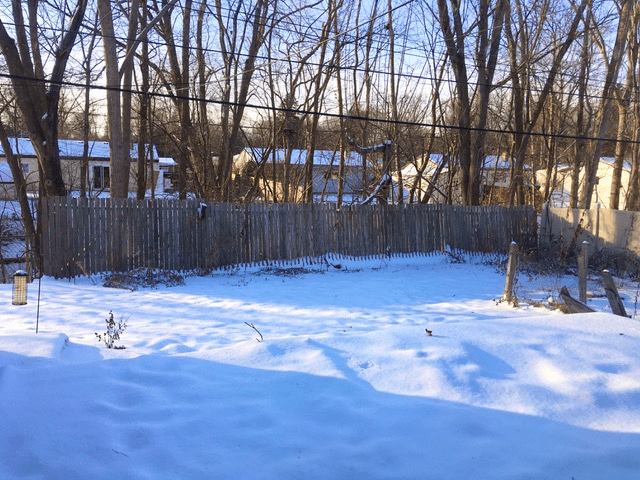
Image Description: A snowy yard with a wooden fence and houses behind it.
I gave myself a chuckle when I thought, “The Serenity Prayer teaches me that snow shoveling exists firmly within the realm of ‘changing the things I can,’ but I just don’t wanna.”
I actually enjoy snow shoveling, or as I might call it, snow pushing. I have a shovel that allows me to just scoot snow into piles on either side. I just didn’t want to get bundled to go outside. It was a day off from work, and I was cozy.
Nevertheless, I got outside to do it. I was about halfway finished when this wonderful Mystery Neighbor approached my driveway with a snow blower. He was clearing all the sidewalks and all the driveways (what a gift!) And he finished the second half of my driveway. The whole thing took about 10 minutes.
“Grant me the serenity to accept the things I cannot change, courage to change the things I can, and a snow blowing Mystery Neighbor.”
Image Description: Two small purple basil plants in small, clear glass bowls are on a counter with a plastic planter container behind them.
These are my baby purple basil plants from last spring. One day, I was was sad to see them wilting inside their planter container. It was going to be time to plant them in a proper pot soon — that, I knew — but goodness, their stems were all totally wilted, lying flat over their small mounds of dirt.
So I put these small mounds of dirt into little clear bowls. Then I put some water in the bowls. These little babies sucked that water right up, and in veryshort order were springing right into growth again. It was amazing to witness how resilient they were.
And that had me reflecting…
Sometimes, you have to change the environment. When that environment has good, solid resources and care… much is possible. Sometimes, much more than we think.
Isn’t that also true when it comes to ourselves? Our neighbors? Our relationships? Our communities? Our world?
The words, “Time for Change,” written in chalk on a blackboard. Public domain.
I have always loved that huge, prolonged, build-up crescendo in the Mumford & Sons song, “Lover of the Light.”
It starts at 3:44 and builds for a whole minute until 4:43.
I hear a bit of a metaphor in this music — a musical parable, if you will.
Intriguingly, the crescendo starts after these words:
“You may not trust the promises of the change I’ll show. But I’ll be yours if you’ll be mine.”
Then we’re off.
We hear a motive. And it repeats. And it repeats. And it repeats. And it repeats.
It keeps repeating the entire time. It keeps on sounding.
And soon, other themes and chords emerge. They begin to accompany it. Then they grow and become progressively stronger. The initial theme remains, but it is no longer the sole focus. Our attention is now drawn to the collective whole.
Change.
Over the years, I’ve shared a Howard Thurman quote with many people: “Don’t ask what the world needs. Ask what makes you come alive, and go do that, because what the world needs is people who have come alive.”
Of course, I do believe we should ask what the world needs. But I also think that our aliveness — our dreams, our connections, and the callings which fuel us — can be some of the best gifts we offer our neighbors. They are ripe for collective change.
So whatever it is. . . that dream, that hope, that longing, that resource, that gift, that ability which comes so easily that you forget it’s special,
Keep doing it.
Put it out into the world and double down on it. Because it may come along and accompany someone else’s gift. And other people may come along and begin to accompany yours.
There may be obstacles (there probably will be) but that is how the best, life-giving change is made.
I love this affirmation of faith from the Uniting Church in Australia. Sometimes, I invite people to speak it aloud collectively in worship:
We are all held in the hollow of God’s hand, loved children of the universe, born from the life which flows from God, freed to the fullness of God’s creation, with all its beauty and variety.
We are all worth dying for in Christ Jesus, all called to risen life in Christ’s rising. The way of Jesus gives us footprints for our following, and our trials and longings are known in the frailty of Christ’s birth among us and the courage of Christ’s walking with us.
We are called to new things in the Spirit, in the hope that stirs in unlikely moments, the home we find in the wastelands of our wanderings, the warmth we touch in the coldness of our need, the opening of our hearts to adventures in belonging and in the gathering in of those without a home. Amen.
I love every word of this affirmation of faith. But I always feel a special burst of energy toward the end. After speaking such powerful words about love, I feel especially energized when I say, “opening our hearts to adventures in belonging. . .”
A person I know said something quite wise recently, and I am taking it to heart: Love always involves learning. If we commit ourselves to love people, that necessarily requires our lives to be shaped and changed by those very people. Loving always involves openness and willingness to being taught, so that we grow and ultimately change.
Theologian and poet Pádraig Ó Tuama says something similar: “Belonging creates and undoes us both.”
In this affirmation of faith, the fuller phrase is this: “the opening of our hearts to adventures in belonging and the gathering in of those without a home.”
To be without a home. . . This can mean many things and represent a variety of painful experiences. But it often speaks to the experience of being cast out in one way or another, either from physical homes or entire communities of belonging.
If we are to love. . . we are to learn. If we are to learn. . . we are to grow. If we are to grow. . . we are to change.
We are to commit to the “gathering in of those without a home.”