Five photos:


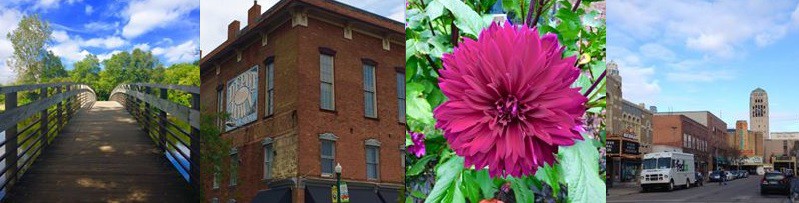
Five photos:

Good morning after staying up late to watch the midterm returns.
Well, if you stayed up.
I said I was going to stay up and watch, then started to get stressed and decided to go to bed (it’s amazing how a body can remember 2016 in its muscles) but then I tuned into a livestream with less stressful hosts and watched anyway.
I didn’t sleep as long as I would like, but I’m glad I watched until most races were called.
Yesterday, a few questions swirled around in my mind quite a bit. What would it take to inspire greater hope and possibility through politics? What would have to happen for that to take root? And what would have to happen for politics and governance to create widespread, positive changes in the lives of more people?
Two things brought these questions to mind:
1) Throughout this election season, many of my friends, both local and across the country, framed the importance of voting through conversations about “harm reduction.”
I saw this quite a bit on social media this year, and I think that’s an absolutely necessary conversation. Similarly, the same friends were quick to point out that voting is only one tool in the toolbox, and we cannot expect to enact positive change through electoral politics alone. If we want to participate in movement-building and the protection of neighbors, that requires much more than a vote every two to four years. I completely agree.
But I also thought, how sad that we have reasonably come to expect that voting is capable primarily of harm reduction, and perhaps not much more? I’m not criticizing this. I’m wondering what could be possible if electoral politics and governance were more inspiring with tangible, substantial changes in the lives of many more people?
What could politics be? What is possible?
2) Yesterday, someone sent me an excellent podcast. It’s an episode from Freakonomics, which makes the argument that the two-party system of U.S. politics is a duopoly — that it’s an industry which primarily serves its own interests rather than creating substantive changes in the lives of the majority of people.
On the podcast, Katherine Gehl and Michael Porter are two guests who have done a great deal of research into this. Having asked themselves how this duopoly could be altered and transformed, they also propose several solutions. One is non-partisan, citizen led redistricting, something that my home state of Michigan passed just last night.
But all of this brought up my larger questions too: How might we transform campaigns and governance? How might we envision politics and transform it toward greater possibilities?
These are the kinds of questions that need to linger and marinate for a long time, but here they are, sitting with me and maybe with you this morning.
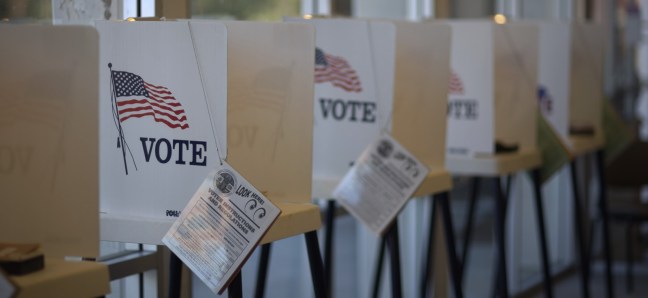
I often think about this quote from Mother Teresa:
If we have no peace, it is because we have forgotten that we belong to one another.
When we exercise our vote today (I hope most will be able to participate!) I also hope we will remember that we belong to one another. Voting is one way we do that.
It is, however, only one way we do that. Movement-building toward collective change requires much more than a vote every 2 to 4 years. (Maybe more about that later in the week).
Nevertheless, today matters a great deal. Praying for a safe and peaceful day.
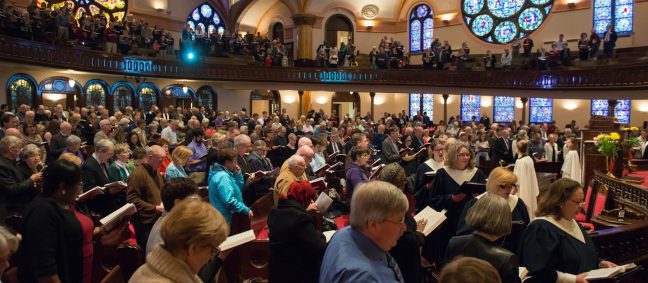
This image comes from Westminster Presbyterian Church in Minneapolis, Minnesota and can be found on their website here.
This sermon was preached at First Presbyterian Church in Howell, Michigan and was focused upon the story that is told in Hebrews 12:1-2. An audio recording is above and a written manuscript is below.
Westminster Presbyterian Church in Minneapolis, Minnesota has a stunning balcony. It’s a balcony in the round.
Most churches, if they have a balcony, have that balcony placed on one side of the sanctuary, as it is in this sanctuary today. I attended a conference in Minneapolis years ago, hosted by this particular congregation, and I was so touched to see how their balcony nearly encircles the sanctuary. When it was full, it seemed like an image of that ‘Great Cloud of Witnesses’ before us, above us, with us, and worshipping alongside us.
Scripture speaks to us so beautifully at the beginning of the 12th chapter of Hebrews:
Therefore, since we are surrounded by so great a cloud of witnesses, let us also lay aside every weight and the sin that clings so closely, and let us run with perseverance the race that is set before us, looking to Jesus the pioneer and perfecter of our faith…
Since we are surrounded by so Great a Cloud of Witnesses…
Today is the first Sunday of November, and each year on this day, we celebrate All Saints Sunday together. We remember those who have gone before us — those who have surrounded us, and those who continue to witness to us through their lives, reminding us what it means to run this race, what it means to love deeply, and what it means to belong to one another. They teach us how to live fully, following Jesus, loving our neighbors, and surrounding our neighbors with compassion, mercy, belonging, protection, and dignity.
Today, we remember those who taught us to live this way.
In scripture, the word ‘remember’ means ‘to make present.’ That’s what we do every time we eat our sacred meal and say, ‘Do this in remembrance of me.’ We experience Jesus as present.
In a similar way, on All Saints Day, we experience a time that calls forth the presence of our beloved, departed ones, and the entire Church of every time and place. Their love and light are present, and we are emboldened once more to follow Jesus with all that with have, and with all that we are, to love God and to love our neighbors as ourselves.
Years ago, I encountered a beautiful quote that was being passed around quite a bit on social media. It’s a quote from author Linda Hogan. Take this in and know that this is true for us today. She says,
“Suddenly, all my ancestors are behind me.
‘Be still,’ they say.
‘Watch and listen.
You are the result of the love of thousands.’”
Isn’t that an incredible thing to ponder?
I’m just going to read it again:
“Suddenly, all my ancestors are behind me.
‘Be still,’ they say.
‘Watch and listen.
You are the result of the love of thousands.’”
And that’s true, isn’t it?
That may call forth our grief as we miss some of these loved ones. It may call forth our awe, as we continue to embody a sense of connectedness with them, and as we open our minds and hearts to discover that we are each connected to every person who has been and currently is a part of the Church, in every nation, and at every time, over many centuries. We are the result of the love of those thousands, and many more than thousands, also. Our faith has been formed by each of these. We are truly surrounded by a Great Cloud of Witnesses.
In 1997, Fred Rogers — Mr. Rogers— won a Lifetime Achievement Award Emmy. As he walked on stage to receive the award, the room was filled with so much appreciation, and before he ever said a word, there were smiles and tears.
But that appreciation grew even more when he began to speak. In his acceptance speech, Fred Rogers moved the spotlight away from himself toward the people who have shaped us — not only those who had shaped him, but people who have shaped all of us — people unseen, yet people with names known especially to us.
He said,
“All of us have special ones who have loved us into being. Would you just take, along with me, ten seconds to think of the people who have helped you become who you are — those who have cared about you and wanted what was best for you in life? Ten seconds of time. I’ll watch the time,” he said.
People giggled at that last part.
But then, you could see everyone’s minds go to very loving places. People sat in silence with tears in their eyes, remembering the presence of people who have loved them into being. It was a beautiful span of silence, filled with many memories.
And so, today, I would also like to take about ten seconds of time to invite us to think about the people who have loved us into being, and also the Church across the world, the Church across time — the Church of the past, the worldwide Church of this moment. I’ll also watch the time.
(10 seconds)
And now I’m wondering we would like to say some of those names aloud all at once. It can be a cacophony of remembrance, making names present.
(10 seconds)
Once he finished the silence in the Emmy Acceptance Speech, Fred Rogers responded, saying, “Whomever you’ve been thinking about. . . how pleased they must be to know the difference you feel they’ve made. You know, they’re the kind of people television does well to offer our world.”
And here in Church, we say that the people you’ve been thinking about must also be so pleased to know the difference you feel they’ve made. And it is these people who are shaping our faith in this moment, inviting us, encouraging us, empowering us to be the Church now, in this place, and in this collective moment. It is sacred.
When I think about the people who have loved me into being, the people who have shaped my faith, and the people who call forth my own calling in this moment, I have to think about David.
David Roth was my pastor growing up. (I always make a little distinction here and say that it’s David Nelson Roth, not David Lee Roth!) And more than a pastor, in many ways, David was a father to me. He was deeply influential upon my life, and on a number of different occasions growing up in Church, I remember him using language about ‘Balcony People’ to talk about those who have gone before us in the way that we have just honored them today.
That term comes from Balcony People, a book by Joyce Landorf Heatherly. She discusses the importance of being in relationship with people who encourage and affirm us. David often extended this term to talk about the Communion of Saints. After his death, nearly ten years ago, David Roth is one my many Balcony People.
When we come to All Saints Sunday, I often recall a particular memory concerning David, which took place a little more than year after he died. Believe it or not, my extremely old car — it’s 21 years old! — still plays cassette tapes. And all the way back then, in April of 2010, I was driving around in Austin, Texas, where I lived at the time, and I decided to listen to one of David’s sermon tapes. It was the last sermon he ever gave at my home church, and it took place on he day he retired.
In that sermon, he began to talk about his Balcony People and named a litany of individuals and communities that had shaped his life in the Church. At one point, he said something so powerful, and I’d like to share that with you. On that tape, he said,
“They all participated in giving me birth, as there are people here who even now, participate in giving all of us birth, re-birth. . . Christ has told us that wherever we are, even if we think we’re all alone, as the Apostle Paul at times felt all alone, we are surrounded by so Great a Cloud of Witnesses.”
Then he pointed to the communion table and said, “I never come to this communion table — never! — without feeling surrounded by the ‘Balcony People.’”
As you can imagine, it moved me so deeply to hear David Roth speak these words in his own voice after we had painfully lost him to a cancer diagnosis. Even beyond death, he still speaks. He is a Balcony Person, for sure. Quite intentionally, I think of him and my other Balcony People every time I come to that communion table. When you come to the table in other weeks, I invite you to do the same as well.
So consider your Balcony today.
And consider that this Great Cloud of Witnesses is calling us to run the race that is set before us now, laying aside every weight and the sin that clings so closely, looking to Jesus the pioneer and perfecter of our faith. These Balcony People are not calling us backward but forward — calling us to be the Church in this time and place, loving God, and loving our neighbors as ourselves; serving as one congregation in a worldwide Church with neighbors all around the world; serving this neighborhood and loving our neighbors here.
With their encouragement, may that be!
Amen.

One of my core convictions is this:
I believe connections always change things. They don’t necessarily fix things, but they change their course. We need human connections with one another. Even in our alone times (we need introversion too!) internalized connections can be transformative.
Yesterday, I felt really down. I’ve been paying attention to various crises of violence in our nation, but the emotions of them really caught up with me and hit me so very hard yesterday. These also began to mingle with feelings about losses and challenges that people I know are facing personally, along with anniversaries of diagnoses and what the election felt like two years ago at this time. It just all added up. I think I needed to feel through these things and release some emotions.
In the evening, I thought I would settle into some Netflixing and then just go to bed in a harrumph, but then I got a text from someone wonderful, one of the alumni from my Texas campus ministry days. He said that his girlfriend (a Michigan alum! I love that one of our Texans is partnered with one of our Michiganders!) was about to perform in a choir concert of Carmina Burana, and it would be livestreamed from their concert hall in Chicago. Did I want to watch?
Yes, I did! And it was a great concert. Wow. And he and I had an excellent time texting back and forth during this performance — something you can’t do in a concert hall! We talked about how great the music was; we cracked a few jokes.
And after this started, I also sent the link to a handful of other alumni with whom this couple is close. And I sort of marveled that all these years later, we still talk regularly, and we if we want to tune in, we can watch a concert together in five different states.
And this completely transformed my mood. It didn’t fix the problems, but it put me back in a more hopeful space — hope which can then lean into engaging with those problems.
Connection is magic.
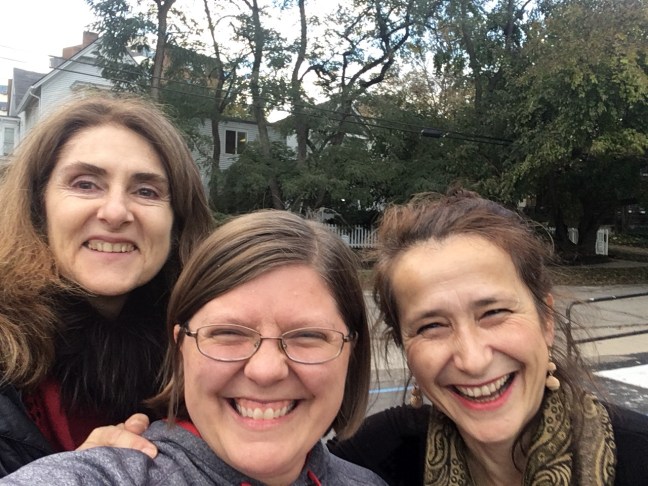
(Photo and story shared with joyful permission)
Sometimes, unexpected connections are the most delightful. They remind us that many forms of friendship and goodness take place every single day, though these rarely make it into the news cycle.
Earlier this week, I was leaving the Michigan Arboretum when two women asked if I could look up some directions for them. They had arrived recently from France and needed to get to a rental car location, but their phone battery had died. When I looked it up, I realized that it was a really long walk, so we just went together in my car.
But we all had time, so we also took a walk before that, and in the process, we became fast friends.
They asked a lot about Ann Arbor, and they told me about Paris. We talked about religion and politics (remember how you’re not supposed to talk about those? They came up quite naturally). And together, we absolutely geeked out over the colors of leaves and took photos.
I love when unexpected connections happen. I did not expect to go sight-seeing in my town with two hilarious, smart, inviting women from France this week. But it happened, and I was delighted. Now we’re friends.
They also invited me to Paris. ❤️

Photo credit: Cptvdisplay by Wags05, public domain
I wonder what it would be like if everything shifted, even for one day, and all the news stories focused on what is going right in our world, all the stories of transformation, all the stories about caring for neighbors — even the daily, mundane love and care that happens on a regular basis.
And what if for one day all the news stories covered the incredible acts of movement-building that are taking place, activists calling us in better directions with crucial demands, people speaking truth to power, neighbors imagining visions of greater love, and communities protecting the vulnerable… What would that be like?
There is undoubtedly so much pain, violence, and trauma taking place in our world. This needs our attention, empathy, care, and action.
But these vital, empowered movements are happening too. Goodness, love, and care are happening every day. We need to turn all of these toward the violence, woundedness, discrimination, and isolation around us.
It’s hard work. But it’s also happening. May we not lose heart.
This sermon was preached at Kirk of Our Savior Presbyterian Church in Westland, Michigan and was focused upon the story that is told in Mark 12:28-34. An audio recording is above and a written manuscript is below.
It was a good question: Which commandment is the first of all?
That question might have been breath of fresh air. It was voiced in a context where religious leaders were asking Jesus challenging questions in attempts to entrap him. I wonder if this question then became an occasion to center themselves once more in what was most important.
We are invited — we are called — to love God fully with all our heart, and all our soul, and all our mind, and all our strength.
And we are called to love our neighbors as ourselves.
These two are the greatest commandments, and they go hand in hand. They cannot be separated. After all, we cannot love God fully with all our heart, and all our soul, and all our mind, and all our strength, without loving our neighbors as ourselves.
These two commandments are at the heart of what it means to follow God and live together as the people of God.
Now in our own times of collective conflict, times in which some seek to belittle others, entrap others, and worse of all, dehumanize and harm others, it is important to come back to this center — to return here and once more proclaim that the God who loves us calls forth our own love. We demonstrate our love for God by loving our neighbors. We fall short of this all the time, but all the time, we are called to it anew.
This morning, you may have come to worship with a heavy heart. I know that is something I am feeling this morning. This has been a remarkably painful week in our collective, national life.
This week, as we have heard in the news, a man sent at at least eleven pipe bombs to national political leaders and media outlets. On Wednesday, a man entered a Kroger in Louisville, Kentucky and shot two Black residents after saying racist comments. Before this, he attempted to enter a church predominately attended by Black residents. I’m from the Louisville area so this, of course, hits close to home. And then, just yesterday, a man entered The Tree of Life Synagogue in Pittsburgh, Pennsylvania and shot and killed eleven people — a number of Jewish people who were there for worship, and soon after, police officers who arrived on the scene. He was shouting anti-Semitic epithets.
All three of these news stories involve the lives of our neighbors, and all three are taking place in a time of great national turmoil and conflict as neighbors turn against neighbors and are so quick to dehumanize one another.
I will say this today because we need to say it in the Church, and we need to say it out of love for our neighbors:
White supremacy and anti-Semitism are sin.
They produce violence in us — the kinds of swift, tumultuous violence we hear in the news, violent rhetoric and words, and systemic forms of violence that take place over great periods of time.
We are called to love God with all our heart, and with all our soul, and with all our mind, and with all our strength. And the second commandment is always like the first. It is always intimately connected to the first: We are called to love our neighbors as ourselves.
So today, we lift up the neighbors who have experienced these forms of trauma; we think about our neighbors who live in fear, worried about being attacked simply for who they are; and we lift up our own hearts in this place, turning toward one another in love, turning toward one another in neighborliness, because if we feel heavy today, if we feel hopeless, if we feel fear, if we feel powerlessness, we need the love of one another. And in that love, God calls us through the presence of one another toward a different way, a way of loving our neighbors by proclaiming their worth, upholding their dignity, and serving alongside them protectively in solidarity and care.
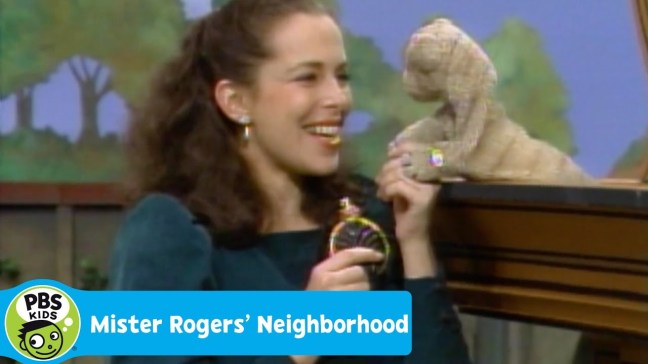
This summer, I had the great occasion to see the film, “Won’t You Be My Neighbor?” the recent documentary about the life and ministry of Fred Rogers. I loved it so much, in fact, I saw it twice, and I’d be happy to see it again. It is a powerful film.
Of course, when we think about what it means to be a neighbor and uplift the worth and dignity of our neighbors, it is easy to think about Fred Rogers and his show Mr. Roger’s Neighborhood. He invited us so often into that way of being and proclaimed to each of us that we are special and worth loving.
So many moments in this film impacted me deeply, but today, I think about one in particular. In the Land of Make Believe, there is a moment when Daniel Tiger is very vulnerable and shares something painful with Lady Aberlin. He says that he’s been wondering something about mistakes. “I’ve been wondering… if I was a mistake.” He says that he’s never seen a tiger who looks and talks like him, and he feels alone, wondering if he is so different that he might be a mistake. He begins to sing,
Sometimes, I wonder if I’m a mistake,
I’m not like anyone else I know.
When I’m asleep or even awake,
Sometimes I get to dreaming that I’m just a fake.
I’m not like anyone else.
Often I wonder if I’m a mistake,
I’m not supposed to be scared, am I?
Sometimes I cry and sometimes I shake,
wondering isn’t it true that the strong never break?
I’m not like anyone else I know.
I’m not like anyone else.
Then Lady Aberlin chimes in, also singing,
I think you are just fine as you are,
I really must tell you, I do like the person that you are becoming,
When you are sleeping,
when you are waking,
you are my friend.
It’s really true.
I like you,
crying or shaking,
or dreaming or breaking,
there’s no one mistaking it:
You’re my best friend!
I think you are just fine as you are,
I really must tell you, I do like the person that you are becoming,
when you are sleeping,
when you are waking,
you’re not a fake,
you’re no mistake,
You are my friend!
In the documentary, one of the people who worked on the show is interviewed, and paraphrasing her, she said, “This is the moment when you expect Daniel Tiger to say, ‘Oh, I guess I was wrong,’” but instead, the song becomes a duet, and they both sing their portions at the same time toward one another. It’s a reminder that this duet needs to go on and on. We and our neighbors need occasions to internalize that our humanity is loved and cherished by God and by our larger community.
It makes me wonder what would be possible if more and more, the Church became that duet partner? In a context where many are dehumanized and rightfully fearful, what would be possible if the church stood strongly alongside those who are marginalized and stigmatized and proclaimed the sacred worth that is true? What would happen? What could be possible?
These are good questions. And so, friends, wherever we are today, we are no mistake either. We are called again to a great commandment as simple and as challenging as this:
We are to love God with all our heart, and all our soul, and all our mind, and all our strength, and we are to love our neighbors as ourselves.
And here is an invitation to watch the duet in action. Take this in! 🙂

Here’s the paradoxical thing about shame —
As a feeling, it is real.
As a reality, it is untrue.
There has never been a life chapter, a day, or even a moment when we were not worth love and belonging.
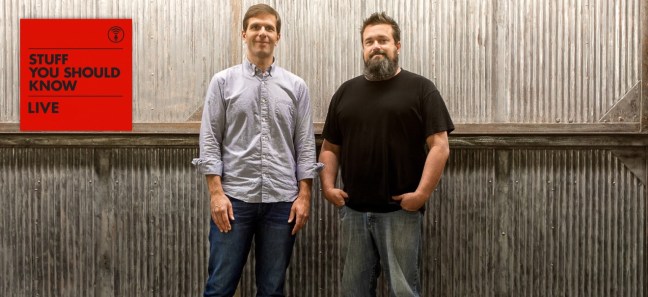
When drifting off to sleep most nights, I listen to the Stuff You Should Know Podcast.
This was one of the first podcasts that made podcasts a popular thing. It’s been going on strong for ten years now and is downloaded millions of times per month. On the podcast, the hosts Josh Clark and Chuck Bryant do a deep dive into research on some topic, giving listeners broad, introductory knowledge about it with a back-and-forth conversational style that is both informative and fun.
When I listen, I learn new things, though admittedly, I try to fall asleep to the episode, not because it’s boring but because it’s new material. And well, it works.
Sometimes, Ian asks me a playful question in the mornings: “What did you not learn about last night?”
The goal then is to share what the topic was, saying, “I didn’t learn about [ballpoint pens, waterbeds, Attila the Hun]!” I’ve usually learned something though. That’s when I share a factoid or two, and it’s always great when I can add, “and that’s really it,” because I fell asleep well.
In short, Stuff You Should Know has become a wonder for this occasional insomniac.
So last evening, a couple hours before going to bed, I decided to go ahead and look at what the topic of the new episode would be.
And… it was a whole episode… about Epilepsy!
I was delighted!
So I listened to it in total without trying to sleep, and it was so well done. It was also a good pairing with what I wrote yesterday. (See also, What If There Were No Stigma?)
Josh and Chuck talk about the history of stigma connected to epilepsy, along with odd, challenging medical treatments. Then they give such a great medical overview that is informational and humanized. They really normalize epilepsy, lifting up the challenges of its experiences, but dispelling myths.
So well done. As a kid, I did not have adequate understanding of my epilepsy while I had it, and what was experienced by me daily went undetected by most. What I would have given to have something like this many years ago — this is a great resource.
Epilepsy is much more common than people think. At any given time, about 1 in 100 people have it. And 1 in 26 people will have an epilepsy diagnosis at some point in their lives. That’s a huge number of people — people you know who have this now or have had it previously, without you knowing it, because stigma is strong and folks struggle to talk about their experiences.
And of course, talking about such experiences is always up to the choice of that person, as it should be, but how sad if people feel they cannot do so out of fear and shame. A lot of people feel those emotions.
So want to learn more? I’m going to start sharing this wonderful episode with people:

