The Mirror Box

mirror
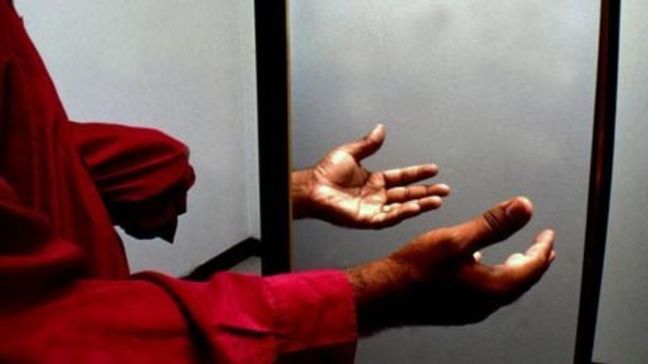
A person holds out one hand and sees it reflected as a second hand in the mirror box (read below for explanation)

V.S. Ramachandran designed an experiment that was utterly brilliant in its creativity and its simplicity. Most importantly, it worked. It was life changing.

Ramachandran is a neuroscientist who is famous for a variety of discoveries about the human brain. In particular, his work has helped reveal the incredible qualities of its plasticity and malleability. Decades ago, he designed an experiment to alleviate phantom limb pain by using two simple mirrors.

Phantom limb pain is a kind of curious thing in and of itself. Documented in medical literature for more than 500 years, many physicians had written about the challenging phenomenon some patients had after losing limbs. For years, even decades, these patients continued to feel a painful sensation in the limb that was missing. Some felt as though their lost arm or leg was held permanently in an awkward or painful position. They remarked that they wished to move it back into a more typical, comfortable position. Of course, that was impossible.

In a flash of curiosity, V.S. Ramachandran created a mirror box. He placed two mirrors together at a right angle and invited people to step inside the box. Suddenly, those who, say, lost their right arm, could see their left arm projected on the right side of their body. Inside the mirror box, it appeared that they had both arms. Then, they could “move” their missing limb into a better position by simply moving their remaining limb. And shockingly, this led to actual relief of the phantom pain! For many people, this was a permanent shift.

I love this experiment. I love that it worked. And if you’ll allow me, perhaps we can also enter this as a bit of a life analogy also:

There are times when we face one another too, and our human brains also have mirror neurons. When we see the emotions of the person standing in front of us, the neurons in our own brains begin to fire and sync with the other person. Isn’t that an incredible thing? (By the way, V.S. Ramachandran has done work on this too.)

At times,
we recognize each other and smile,
we demonstrate need to one another,
we marvel in the presence of one another,
and at times,
we present pain:
broken and insecure attachment,
grief and longing,
fear and anxiety.

In all of these, in ourselves and in others, we can choose the intention to see one another well. Certainly, with our vision, we can’t save anyone into wellness. But by choosing to mirror back what is true — love, belonging, acceptance, openness, our own humanity and vulnerability — we can create conditions that allow us to see each other and see ourselves with more clarity.

We can see each other with more truth, more safety, and more healing. And sometimes, we can reconnect or reconfigure our relationship with what we need or what we’ve lost. This too is brilliant in its creativity and in its simplicity.

–Renee Roederer

Language Matters

language
Image Description: The word ‘language’ in a dictionary.

I don’t like when we compare racism to a pandemic, virus, or illness. I hear a lot of that these days.

— This can potentially deflect some of the responsibility for racism. We are building this. We are complicit in this. We do spread it in some ways, no doubt, but we do it quite actively (even if sometimes, subconsciously).

— But even more, when we make this comparison, we are co-opting the language of pandemic, virus, illness, and disability and using it as the symbol to name something as morally evil. In our language, we make associations between illness and moral failing all the time. This increases stigma.

Racism is evil. It is systemic.

It’s something different than an illness.

–Renee Roederer

Voice

discussion debate entertainment free photo
Image Description: Four cartoon shapes of people (orange, blue, green, and red) are lined up from left to right, and two conversation bubbles (green and orange) are above their heads.

These days, during a pandemic none of us could have possibly anticipated, I’ve spent a great deal of time on the phone and on Zoom calls with people. This abundance of Zoom seems ubiquitous now, but it was relatively new right at the beginning. The phone, of course, wasn’t. Both before and during the pandemic, I’ve tended to spend a lot of time with people over the phone. Zoom fatigue is real, and I’ve experienced it sometimes, but overall, in this chapter, I’ve found myself grateful for voice.

It’s taught me something about myself as well.

We all need physical connection. I would prefer my family and friends to be easily accessible, but since that has been lacking, I realize that I’ve probably always felt a sense of physical connection primarily through voice.

That may be one of the reasons I’ve done okay in this pandemic. I didn’t lose voice. I still hear people’s voices and often.

I’m very grateful for those voices that connect physically to my own.

— Renee Roederer

Gradual

The Long and Winding Road of Life | by Brian Almeida | Medium
A long, winding road. Public domain image.

Last night, I saw the last picture of myself from the Before Times. It reemerged as a Facebook memory. I’m smiling and laughing with others, and I have no idea what is coming. At that point, I had just heard of COVID-19, and I knew we were going to need to make some shifts, but I could not have anticipated — nor could anyone have anticipated — the year that would follow.

Tomorrow, meanwhile, is my own personal pandemic-iversary. It was the beginning of lockdown. Bit by bit, we all lost access to experiences we love and people we love, and the things we could do began to narrow.

One year later — pretty much exactly one year later — we are about to experience the opposite. Bit by bit, we are going to gain access to experiences we love and people we love, and the things we can do are about to expand. This is going to be a very gradual process, but here’s the thing that fills me with excitement and gratitude:

We’re already in it.

–Renee Roederer

Child Poverty in the U.S. is about to be Cut in Half

money
Public Domain Image.
Image Description: $5, $10, $20, and $50 bills laid on top of one another.

Later today, the new stimulus aid package in the U.S. will go back to the House of Representatives for a vote. It is expected to pass, and then President Joe Biden will sign it into law. Among other provisions, this stimulus aid package includes a child tax credit that will send direct monthly payments to 93% of families with children over the course of a year — $3,600 annually per child under age 5 and $3,000 annually per older child. There are hopes that it will last more than a year, but that will require another vote at a later date.

This is going to do a great deal to reduce poverty. In fact, it is expected to cut child poverty in the U.S. nearly in half. Among African-American households, it will cut poverty by more than half. This is a big deal, and I celebrate it.

This is an attempt to resource and invest in people on the ground, rather than in those making millions and billions.

If you’d like to learn more about this and how this will impact your family, I invite you to listen to this podcast:
The Daily: A Safety Net for American Children

–Renee Roederer

Figs Aren’t Vegan

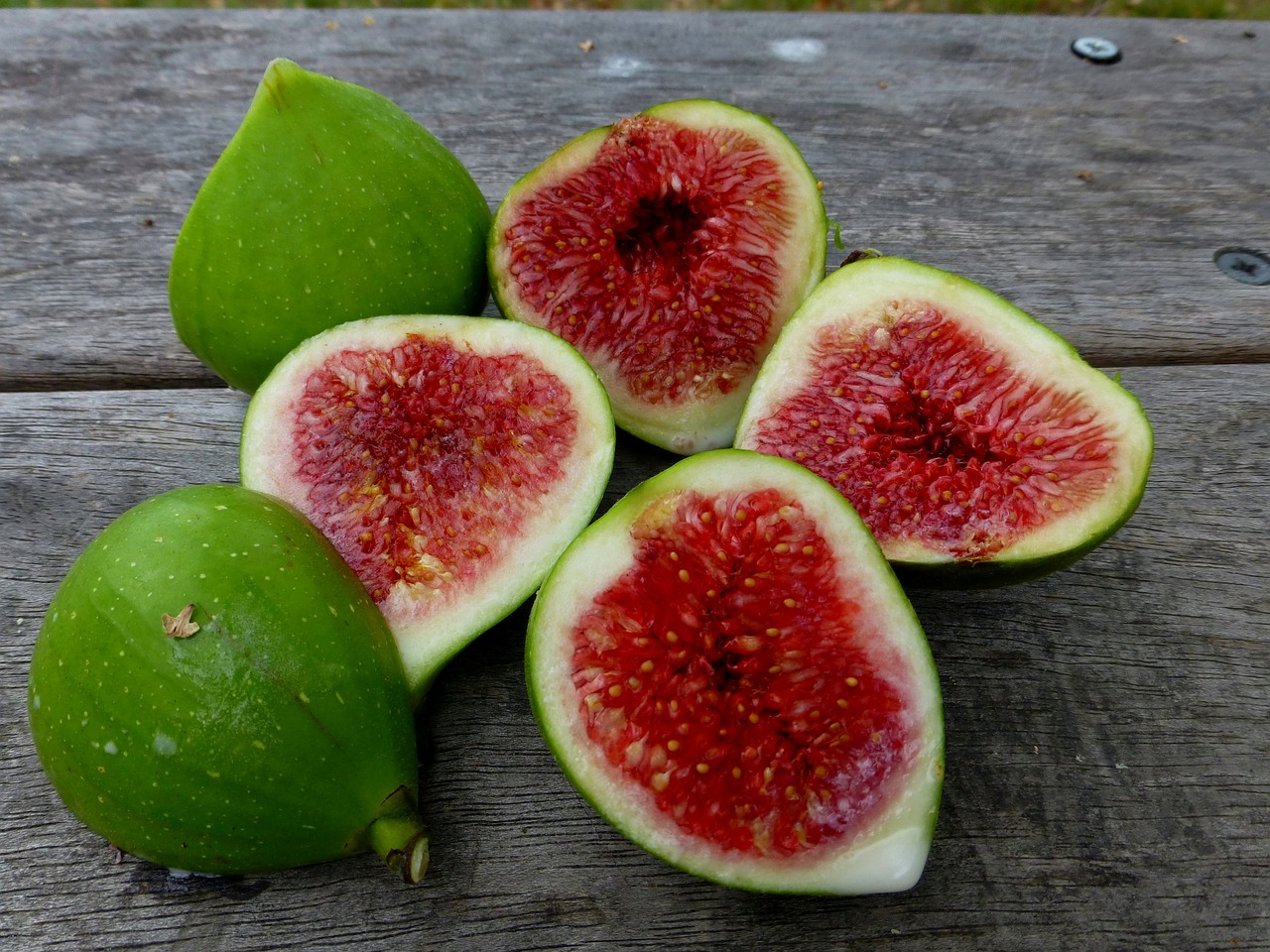
Download free photo of Figs,fruit,ripe,italy,free pictures - from  needpix.com
Figs.

This is an addendum to yesterday’s post, entitled, “Absurd But True.” In that post, I shared a list of absurd-but-true fun facts. One of them was this:

“Figs aren’t considered vegan because they have dead wasps inside.”

I said nothing less, and I said nothing more.

I posted these absurd-but-true fun facts on Facebook as well, and people kind of freaked out about this one in a humorous way. They were just utterly bewildered by this new-to-them news. “I’m never eating figs again!” people seemed to say, as they imagined wasp parts in them. “How do they get out?” someone exclaimed. That’s when someone chimed in and said,

“They don’t. The figs dissolve them. “

It’s true.

You can read about that here. Figs use trapped wasps for pollination.

So here’s where I’m going with this… and this thought is most definitely new to me… When we hear, “Figs aren’t vegan,” this means much more than “vegans don’t eat figs.”

It also means FIGS AREN’T VEGANS.

–Renee Roederer

Absurd But True

The shocked monkey meme. 🙂

Some aspects of life are so weird and wonderful.

Yesterday, I learned some of these absurd-but-true, fun facts in a sermon from Allen Brimer. These come from here, here, and here. Did you know these are true?

1) We breathe primarily through one nostril at a time, and our nostrils take turns every few hours in being the primary nostril.

2) Dolphins call each other by names. How cute is it that dolphins name each other?

3) A lemon is 70% sugar, while a strawberry is only 40% sugar.

4) Figs aren’t considered vegan because they have dead wasps inside.

5) We are born with only two innate fears — the fear of falling and the fear of loud noises. All the other fears are learned.

6) You can tell the temperature by counting the crickets’ chirps.

7) Children of identical twins are genetically half siblings, rather than cousins (which they are legally).

8) The official bird of Redondo, California is the Good Year Blimp.

9) There’s an entire holiday dedicated to what the world would be like if dogs and cats had opposable thumbs.

10) Bamboo grows so fast it’s measured in miles per hour.

11) Da Vinci’s The Last Supper originally included Jesus’ feet, but they were cut off to build a doorway.

12) The inventor of the Pringle’s can is buried in one.

13) Bubble wrap was originally intended to be wallpaper.

14) Humans are the only animals with chins.

15) Charlie Chaplain once lost a Charlie Chaplain look-alike contest. He came in 3rd.

16) Manhattants are a species of ant that are found within a 14 block area of New York City and nowhere else on earth.

17) It rains diamonds on Jupiter.

18) Can openers were invented 48 years after cans were invented.

19) From the time it was discovered and then recategorized as not being a planet, Pluto did not complete a single trip around the sun.

20) If the entire timeline of Earth’s existence was compressed into one year, humans would be born around 11:58pm on 31st December.

21) Lobsters don’t die naturally, nor do they age.

22) There was an Emu war in 1932 between Emu and the Australian army. The Emus won.

23) If you could fold a piece of paper 42 times, it would reach the moon.

24) A cloud typically weighs 1.1 million pounds.

25) Costco sells enough toilet paper each year to wrap around the earth 1200 times.

What a weird and wonderful world!

–Renee Roederer

Winter

I am very ready for spring. In the Upper Midwest, we’ve reached what some call “Mud Season.” Snow and ice are melting and making the ground pretty gross for our winter boots. But nevertheless, it was a bit warmer yesterday, and it was a beautiful day. Here are some lovely photos from the end of winter.

A river, iced over on one side.
A blue sky, white cloud, and tree branches reaching upward.
From under a bridge, a picture of a river with trees lining both sides.

–Renee Roederer

For Such a Time As This: An Evening with Rev. Sharon Risher

On February 24, 2021, the Interfaith Round Table of Washtenaw County hosted a powerful discussion with the Rev. Sharon Risher. She is the daughter of Mrs. Ethel Lee Lance in Charleston, South Carolina who was killed at Mother Emanuel African Methodist Episcopal Church, along with 8 other people, including Rev. Risher’s two cousins and a childhood friend.

Through story and conviction, we heard about the power of legacy, faith, and hope and how these have fueled Rev. Risher as an advocate for anti-racism and an end to gun violence. Rev. Risher is the author of For Such a Time as This: Hope and Forgiveness After The Charleston Massacre. It is a powerful expression of heart and boldness in the face of trauma and personal loss. In this event, we asked Rev. Risher about her story and the causes she holds dear. And we invited her to call us to action as well: How might we be called for such a time as this?