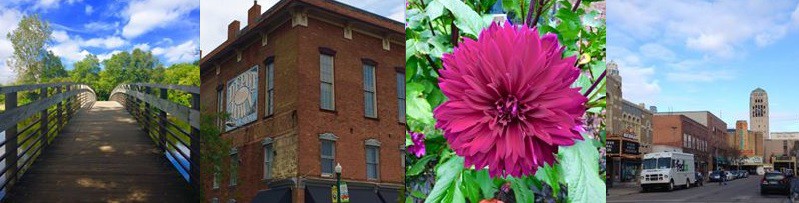
Image Description: Scenery around the Huron River in Ann Arbor, MI. There are stones and wildflowers in the foreground and trees with red, yellow, orange, and green leaves in the distance.
Over the last few days, I’ve fallen in love with my town all over again.
The truth is, I really needed a reset. It’s important to be informed, but I had been too immersed in the news cycle. Informed and immersed are two different experiences entirely. So thanks to five warm days in our local weather patterns, I made space in my daily schedule to walk in beautiful settings, taking in the autumn colors and sunshine around the Huron River in Ann Arbor, Michigan.
It’s been gorgeous. On one occasion, I found myself dreaming about what I hope my post-pandemic life will look like. This didn’t seem like a painful longing, though that would make sense given the circumstances. Instead, this felt like joyful energy that was worth my waiting and dreaming.
I’m glad I was able to clear my mind and heart for this. The truth is, nature often helps us reset ourselves in these ways.
But it wasn’t the nature alone. I visited a number of places surrounding the river, so each time, I had to get in my car and drive. As I drove through different parts of Ann Arbor, my mind had so many memories.
the place where I… the place where we… the place where all of us…
I recalled many moments and loved ones.
Interestingly, I didn’t feel sad or deprived, though my rhythms are more narrow during a time of social distancing. I felt nostalgic in a meaningful way, looking forward to connections and communities that will be revisited again, yet in new, uncharted ways.
I love this town.
I love that there’s still more to experience, not only after the waiting is over, but even now during this weird and wonky time we’re living.
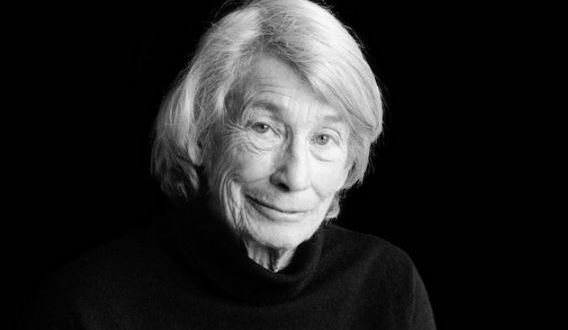
Image: With a black background behind her, Mary Oliver is wearing a black turtleneck and smiling. I found this image here.
Last year, I participated in a Poem Exchange. It was lovely.
A college student in my community sent me an email inviting me to this Poem Exchange. It’s structured in such a way that friends of friends end up emailing you poetry. I received poems in my inbox from people I’ve heard about and people who were complete strangers to me.
In the midst of that Poem Exchange, someone sent me this gem from Mary Oliver:
“Moments” by Mary Oliver
There are moments that cry out to be fulfilled — like telling someone you love them or giving your money away, all of it.
Your heart is beating, isn’t it? You’re not in chains, are you?
There is nothing more pathetic than caution when headlong might save a life, even possibly, your own.
-Mary Oliver
This is a stunning, simple, headlong call to action, and I find myself thinking of two important life lessons.
Lesson One: This is the kind of poem that speaks straight into particular situations in our lives. Do it. Say what you need to say. Act in ways you need to act. You can do this.
Lesson Two (my even larger take-away from this poem):
As soon as I received this, I thought, “Goodness… I wonder… How many specific situations has this poem has spoken straight into? Straight toward? Experiences and stories that even Mary Oliver herself could not have anticipated?”
So I found myself pondering this also…
Speak the larger message you need to speak. Put it out into the world. Write the post. Create the art. Embody the dream. Lean into the collective. Release it into the community. Sow the seeds. Express the possibility.
Because… you don’t know who will hear you and how they will hear you…
I know this experience as a preacher. Sometimes, you express that sermon, and it seems you have so little to say… Or you stayed up late writing, and it still feels disjointed and lifeless. But someone still hears something. Sometimes, they hear something life-giving that you didn’t even intend. And you wake up to the realization that you are participating in what feels like a living, breathing moment. Somehow, it flowed through you… you — a relatively unaware messenger.
So this message, this post, this art, this embodiment, this leaning, this releasing, this sowing, this expressing…
When people ask me what my favorite season or weather is, I always answer, “Warm Fall.” Last weekend, we had days in the 70s alongside all the beautiful colors of October.
I was able to spend time outside, savor the warmth, and take some photos. I thought I’d share those — trees, water, bridges, and a sunset.
When people ask me what my favorite season or weather is, I always answer, “Warm Fall.” This weekend, we had days in the 70s alongside all the beautiful colors of October.
I was able to spend time outside, savor the warmth, and take some photos. I thought I’d share those today and tomorrow — trees, water, bridges, and sunshine.
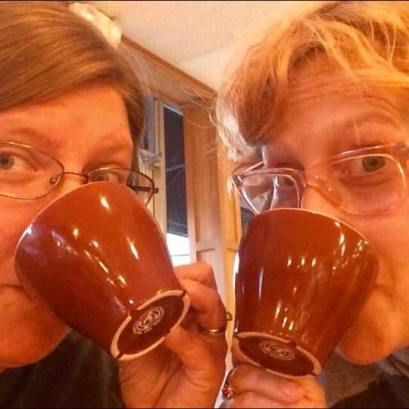
Image Description: Suzanne and I both drink from brown coffee cups.
Last year, my good friend Suzanne died after living with cancer for nearly a decade.
Many words could be used to describe Suzanne… welcoming, boisterous, joy-filled, passionate, compassionate, feisty, devoted, heartfelt, hilarious, loyal, and free-spirited. And in many ways, the words keep on coming. . . After Suzanne died, people began to speak and write about her. In a celebration of her life, Suzanne’s large, loving community gathered to honor her, not at a traditional funeral or memorial service, but at a party. Her eulogy was collective; some were invited ahead of time to speak, and others were given the occasion to join them. Before, during, and after that party, people have shared stories of Suzanne’s love and influence in their lives. Her impact was both personal and expansive. She touched each person individually and a lot of people collectively.
Before she died, Suzanne traveled to Chicago in the hopes of participating in a medical trial. It was all about to move forward until some of the measurements of the cells in her blood fell outside of the parameters of the study. She stayed in and out of the hospital in Chicago for more than a month, waiting and hoping to get those numbers in the right range. That was a challenging waiting period, especially knowing that beyond this, her treatment options were becoming limited.
While she waited in Chicago, a large number of people cared for her. Some drove her there and back; many visited and stayed with her in the hospital. Some opened their homes to her. It was touching to see this happen. I always felt that Suzanne was an example of someone who loved deeply and a model of a person who allowed herself to receive love deeply. People don’t always know how to do this. It can be a rare gift.
In one my most memorable moments with Suzanne, I called her during her time in Chicago. The occasion for this call was painful. Suzanne had just learned with finality that she was not going to be able to participate in the study. That was devastating news.
Over the phone, Suzanne expressed her sadness. But then, she began to talk about the many people who were caring for her through visits, meals, phone calls, emails, texts, and above all, presence. People truly gathered around Suzanne and for Suzanne. She invited this collective giving and receiving of care.
In recognition of that, here is what was most memorable to me in that phone call:
With love for all these people, with tears of gratitude, Suzanne said, “It makes you feel like you did something right.”
In response, it was so easy for me to affirm that statement because it was abundantly true. She had done this right. Suzanne cultivated so many relationships, each particularly valued, and all, collectively cherished. She invited all of this with her living.
Suzanne is deeply missed, and she will be missed as long as these beloved people in her life keep on living. Yet in the midst of this, after the painful loss of Suzanne, she continues to do something right, and we join her in it. These relationships keep on living. Her memory is honored. Her love is remembered and re-experienced, not only in memory, but in all the ways her many people now also care for each other. We get to turn that care toward each other as well.
And with our own living, both in the ways we remember her, and in the ways we cultivate and deepen additional relationships in our lives, we can affirm,
You did something right, Suze! And we’re going to keep on joining you.
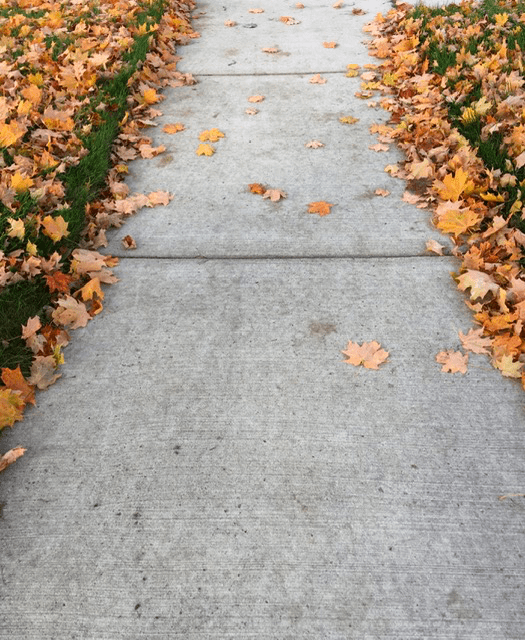
Image Description: A sidewalk with orange leaves on either side.
Yesterday, I filled up my car with gas for the first time since early March.
I am, of course, disheartened and sad about so many impacts of this pandemic. I wish it weren’t happening. I’m angry that it’s being mishandled. I look forward to it shifting. But in the midst of it, there is one piece I have appreciated for this window of time in my life. I’ve had more simplicity.
Don’t hear me wrong: Life is plenty complex, and my schedule is often full. But my daily rhythms mostly involve my house, my neighborhood, and places I walk.
It won’t be this sweeping forever. But I’ve embraced this part. For this period of time, I like this aspect of simplicity. In the midst of what I wouldn’t choose, I do choose this.
Of course, our DNA articulates the building blocks of how our bodies grow — a type of narrative, so to speak — but beyond that, our DNA carries stories of our ancestors too. Researchers have discovered that our DNA carries imprints of our grandparents’ life experiences, and perhaps, further back as well.
Sadly, this was initially discovered by looking at the impacts of trauma. When ancestors have endured trying experiences, descendants carry some imprints of those experiences. See this:
But we are not stuck in these stories. The same discovery tells us that we are writing our DNA even as our DNA writes some aspects of our lives.
So. . .
All the work we do to heal, to grow, to connect, to create space, to write new stories in our lives, and in the lives of our communities, shapes the physical building blocks of ourselves and generations that follow us.
If the leaders in the White House weren’t so ableist in their beliefs that masks make a person look sick, and therefore, “weak,” “bad,” “shameful,” and “to be ridiculed,” we might not be in this cascading mess of a contagion.
I hope for everyone involved and wish for recovery and wellness. I am dismayed and angry that leaders are needlessly exposing people to this virus, especially when they have immediate, high level access to experts and best practices to protect public health. There are a lot of people whose names are not going end up in the news cycle, but whose lives are going to be impacted and disrupted by this spread.
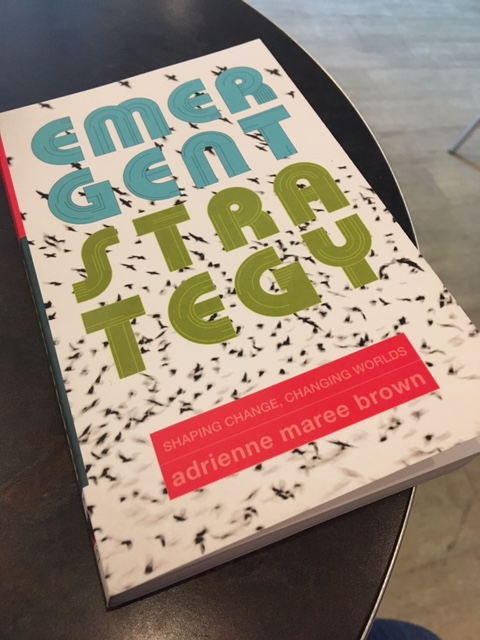
Image Description:A book is on top of a brown, curved table at an angle. Its title is “Emergent Strategy: Shaping Change, Changing Worlds” by adrienne maree brown.
I really appreciate the book, Emergent Strategy: Shaping Change, Changing Worlds by adrienne marie brown. I find it to be a remarkably refreshing, empowering paradigm shift in how we understand our relationships, our connection to the earth, our activism, our organizing, and our processes for affecting change.
There is so much I could share, as this has opened up reflections for me in many directions. But today, I want to share a piece of the book that has been sitting personally for a long time.
adrienne marie brown says,
“We need each other. I love the idea of shifting from ‘mile wide inch deep’ movements to ‘inch wide mile deep’ movements that schism the existing paradigm.” (page 20)
Inch wide, mile deep… I absolutely love that.
She is encouraging us to move away from a paradigm we might recognize very well (do you?) — that is, plunging into task-oriented work in a huge array of areas based on the urgency of the many needs around us. Those needs are very real, and when we experience burnout, we might find ourselves driven more by ‘shoulds’ than feelings of relational care. In the midst of this, she encourages to move toward a paradigm that is based on relationships — going deep with them, going deep with the care of them — because that is how transformation really happens.
It’s also much more sustainable. Whether it’s in our employment, our vocation, our neighborhood vision, or in larger scale movement work, mile wide, inch deep rhythms often lead to high burnout and low impact.
But inch wide, mile deep… That’s refreshing, transformative work.
And lately, I’ve found myself desiring this. To plant myself/ourselves particularly — not widely, but deeply — to be all-in on a few things, very specific inches,
trusting that those roots go deep, trusting that those roots find nourishing soil, trusting that those roots intertwine with other roots,
finding connection to the people planted in other inches. (and intersecting) (and providing collective nourishment).