One Pause Changes Everything

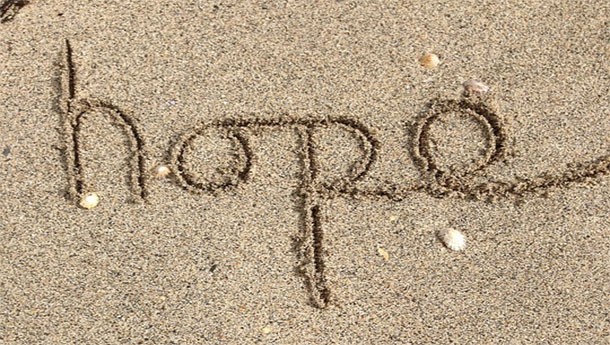
comma

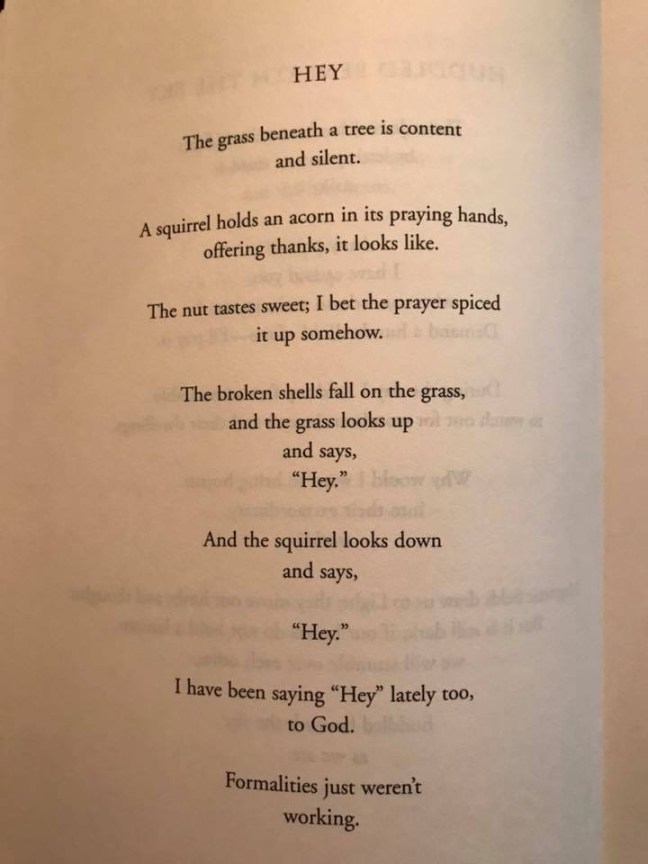
I really love this poem by Brian Shivers. I thought I would share it with you today.

One Pause Changes Everything (A Poem)

No one cares.
No,
one cares.

No one sees me.
No,
one sees me.

No one hears me.
No,
one hears me.

No one accepts me.
No,
one accepts me.

No one loves me.
No,
one loves me.

— bshivers

Brian Shivers is currently the Senior Associate Pastor for Spiritual Life at Second Presbyterian Church, Indianapolis, IN. He has been at Second in various roles since the summer of 1990. 

He loves sharing life with Jennifer, partner for over 30 years, and Allison, their amazing 19 year old daughter. They are honored that a chocolate lab, named Latte, and a tuxedo cat, Bella, allow them to live in their home.

Names

[I found this image here].

Recently, I had the opportunity to hear some folks encourage a particular person, and I noticed that something kept happening quite naturally. Instead of simply saying, 

“We’re with you. . . We believe in you. . . We know you can do this. . .”

they also kept adding the person’s name:

“We’re with you, [Name]. . . We believe in [Name]. . . We know you can do this, [Name].”

Throughout all of this, I was reminded of how powerful names can be. In the context of expressing love, gratitude, or encouragement, names themselves can be words of deep affection.

After I had already been pondering this, in a different context, a friend said that she wanted to hear her name more. She felt like people hadn’t said her name as often lately, a name she shares with a relative she lost years ago.

Perhaps somewhere within us, we are all longing to be addressed by name. This sacred process of speaking and hearing names comes from a place of being known and honored as the ones we are. We are seen and cared for in all our particularities.

When addressing others with love, gratitude, and encouragement, I’m going to start speaking names much more often and much more intentionally.

Renee Roederer 

Love Your Neighbor


When asked, “Teacher, which commandment in the law is the greatest?” Jesus answered, “‘You shall love the Lord your God with all your heart, and with all your soul, and with all your mind.’ This is the greatest and first commandment. And a second is like it: ‘You shall love your neighbor as yourself.’ On these two commandments hang all the law and the prophets.”

Love God

– and – 

Love Neighbor

There are many Christians that go out of their way to try to convince others that God is real and worth loving. But what happens when those same Christians hold a concept of God that isn’t very loving? An ‘understanding’ of God doesn’t inspire love of neighbors? A view of God that even tolerates or promotes the exclusion, harm, and abuse of neighbors?

It makes me wonder. . . 

Rather than starting with some heady, propositional-theology concept of God – even one authentically to be loved –

What if we just love our neighbors?

What if we make a radical, joyful commitment to care for our neighbors’ wellbeing, celebrate our neighbors’ worth, and live in empathy and justice?

Of course, some would say that we can’t really even understand or practice love, care, celebration, empathy, or justice apart God’s revelation.

But since God’s revelation is always incarnational, we will undoubtedly discover love, care, celebration, empathy, and justice in the presence of our neighbors.

Maybe we if start with love for neighbor, we’ll actually discover a loving God.

Renee Roederer

The Sacred Otherwise

swirl

Every single thing that happens is born of particularity.

The largest things and the smallest things, alike —
who we know and love,
what routines we’ve developed,
how we’re partnered,
what our daily work looks like,
even what we’ve had for breakfast —
these may not have happened at all, except very particular factors lined up.

He showed up at a meeting.

A conversation brought synergy.

She asked me for a favor.

We missed the plane.

A job ad suddenly came into view.

I got fed up.

Someone told them they were really good at this.

A new question emerged in her mind.

Every bit of this is particularity. Most of life has an “it wouldn’t have happened this way, except” attached. I love to think about this.

And here’s a Real Mystery:

At times, we might sit back and marvel that some the best gifts of our lives,
the very best people and opportunities for whom we feel an immense amount of gratitude, might not have come into being in the way they have, and may not even exist!
except for the fact that we experienced a major life detour —
at times, one we would have never chosen, and one we may not have wanted at all.

We might look at these people, opportunities, and life rhythms as expressions of
The Sacred Otherwise.

Yes!
The Sacred Otherwise. . .

Without the detour —
the interruption,
the disruption,
the loss,
the departure,
the frustration —
we wouldn’t have had these other experiences.

Plan B, C, D, ad infinitum are very holy, because they are expressions of life that might not have existed at all. This is true with most things, in fact.

They are the Sacred Otherwise.

This doesn’t mean that the detours, interruptions, disruptions, losses, departures, and frustrations were gifts in and of themselves. In fact, they might still ache somewhere within us.

But even then, even there,
The Sacred Otherwise is born of particularity.

And so we marvel.

Renee Roederer


Choose That Which is Choosing You

Moon

If you close your eyes and awaken your awareness,

If you inhale deeply and let that breath fill every part of your being,

If you allow yourself to sit with the Question —
really and truly, as if you were taking it out for tea,
it will inhabit you,
it will enliven you,
it will call you by name,
and you will know what I’m talking about.

You will be familiar with the Question,
because it keeps making itself familiar to you.

It is that Question that keeps rising again
inside your being,
like an enormous, beckoning moon,
and the mysterious tide She consistently summons.

Yes, listen.
Stand on the shore of the horizon
and welcome the Question revealed in the waves
of
longing
lingering
dreaming.

. . . that Idea that keeps returning,
. . . that Love that keeps emerging,
. . . that Path that keeps arriving,

Listen. . .
In the swell of waves,
Ah, there it is –
Won’t you?

It sounds for you –
Won’t you?

Hear it resound and expand –
Won’t you choose that which is choosing you?

Renee Roederer


Well, Bless Your Heart, Son of Spinach

Among our neighbors in the backyard, is a groundhog. His name is Son of Spinach (at least to us, anyway).

We don’t see him everyday, but he has a den nearby, so from time to time, he shows up in our backyard. And to say something both true and alliterative, Son of Spinach is so overly skittish. At the smallest noise, he runs away to hide, sometimes under our deck. This quality feels like an endearing, funny, sad combo.

Today, Son of Spinach was feasting himself on grass quite out-in-the-open in our backyard this morning. And when I made a slight sound to unlock our screen door, he ran for cover under the deck. I found myself wondering, how long will he stay down there? How much recoup time is necessary for the popping sound of a lock? How long will it be before he feels safe again?

Then, I thought of us – that is, we humans. We hide and recoup too. Sometimes, we need alone time or sustained opportunities for self and community care.

But other times, we just doubt ourselves.

When it comes to the second, I hope we know there’s a whole out-in-the-open living opportunity for us.

Renee Roederer

The World is Waiting for the Sunrise. . .

reid

Accompanying the joyful sounds of the piano, bass, and trumpet, we sang particular words over and over again last night. We even broke into spontaneous dancing.

The world is waiting, for the sunrise, for the sunrise. . .

Our hearts were full, and we felt very alive.

We were welcoming a new academic year, even as we shared a heartfelt goodbye. Last night in Ann Arbor at Canterbury House, we celebrated the ministry of our good, local colleague and friend, Reid Hamilton. He has been the Chaplain of Canterbury House for thirteen years. As I joked last night, that’s a whole teenager of time.

At the University of Michigan, Canterbury House has cultivated a sacred, nurturing space for decades, and Reid has brought himself fully to it. During that time, thousands of people have also entered the house and added themselves to the vision of this community.

Some have come for rest and worship.

Canterbury House is an Episcopalian ministry center with weekly worship, combining musical and liturgical elements of Taize and Jazz in a rare and beautiful art form. Over the years together, we have heard sacred texts, shared convicting words, and gathered around the grace of the Eucharist celebration.

Some have come for hospitality and meals.

Canterbury House provides weekly suppers for students and community members, creating a welcoming space where people can be themselves in the presence of one another. Over the years together, we have sat around many tables in this kind of friendship, welcome, and hospitality.

Some have come for celebration and music.

Canterbury House is a thriving concert venue. In partnership with local artists and the Jazz Department at the University of Michigan, musicians perform and inspire. Over the years together, we have been fortunate to experience the craft and vision of numerous young musicians.

Some have come for justice and local action.

Canterbury House provides a meeting space for a number of local groups who are engaged in community organizing and social action. Over the years, we have been been energized and challenged by the work of young activists and leaders.

It occurs to me that many people in this world are longing for spaces where they can be celebrated, challenged, and called into deeper meaning and relationship. Canterbury House is only one expression of this kind of vision, but perhaps we begin to change the world when we create spaces like these.

So,

For the gift of thirteen years. . . Thank you, Reid Hamilton. Thank you for your service, love, vitality, compassion, and laughter.

And,

For all the years that preceded those and for all who made them possible. . . again, thank you.

And,

For all that will be. . . our gratitude abounds.

There is a simple, beautiful prayer by Dag Hammarskjöld that feels just right:
“For all that has been, Thanks. For all that will be, YES!”

The world is waiting, for the sunrise, for the sunrise. . .

Renee Roederer


That Jobs Argument is Weird, Misinformed, and Nasty

immigrants

In order to justify the sweeping, round-up of immigrants for deportation —
In order to justify ending DACA and potentially upending lives of young people, some say,

“But they’re taking our jobs.”

Well, this is a weird argument. It’s misinformed and flat out wrong. And frankly, it’s really nasty.

It’s kind of an odd thing to say, really. In this argument, there’s a sense that American citizens, who have papers to that effect (after all, isn’t this really about race and paper status?) are being shut out of the economy because immigrants have jobs.

But that’s not how an economy works. It’s not a zero sum kind of thing. We have 800,000 young people who are enrolled in DACA, and approximately 11.2 undocumented immigrants in this country. Do we not realize that immigrants buy things? That provides jobs for the larger economy. Do we not realize that immigrants pay taxes? This provides for the economic safety net in this country, including social security. Do we not realize that highly educated DACA immigrants provide ingenuity, creativity, and generativity to their workplaces, thus likely creating jobs for others too?

This argument just doesn’t hold up. If you want to watch a good, short video that addresses some of the myths in this rhetoric, watch what economist Robert Reich has to say.

But beyond the argument being mistaken (and this is most important) it’s just nasty. This argument views immigrants as consistent, undeserving takers rather than viewing immigrants human beings who are our neighbors. It’s morally wrong to separate families and endanger the economic future of fellow human beings. It is morally wrong to sacrifice their lives to the altar of our own mythical superiority. This is xenophobia and white supremacy.

Immigrants — young DACA immigrants and their wider families — should never have to prove their capitalistic value in order to stay in the United States, as if that’s what makes them worthwhile. Immigrants are fully human. Immigrants are our neighbors. They have intrinsic worth, and when we partner together, we can build better communities.

Let’s start there, and let’s build a vision that brings this home.

Renee Roederer

Global Knowledge, Local Action (Part 2)

local

Yesterday, I wrote a piece about a particular recognition: These days, we are exposed to an unprecedented amount of news highlighting pain around the globe. At times, some of the news gets left out, like the massive floods that have taken place in South Asia or the massive famine taking place in East Africa. (White supremacy at work, friends).

But during this era, for the first time in human history, we are aware of a huge amount pain and suffering around the entire globe. Our connections to news outlets and social media enable us to organize massive actions of support, but we are also more aware of violence, oppression, and inequality.

For most of human history, we have only known what is local, so this larger scale of information can be overwhelming. But we do know it, and it is changing us. In fact, it may be changing our biology, as massive changes in our world are prone to do.

In the midst of it all, we naturally want to fix all of this brokenness. And along with the challenge of knowing such large scale pain, we also grapple with the recognition that we cannot fix all of it.

But here’s the thing I want to lift up in response to this moment we are living.

We can change how the global themes of violence, oppression, and inequality function in our local neighborhoods.

Do.
Not.
Underestimate.
This.

You and I also have the ability to know more fully how injustices function in our neighborhoods, our City Halls, our police departments, our schools, our workplaces, our streets, and certainly, the parts of our towns that tend to get ignored or dismissed.

You and I can know these things. And we can we can act.

We can learn relationally how these injustices are affecting people’s lives.  We can learn about the policies and rhetoric that drive such harm. We can get behind the leadership of people directly affected. We can use social media to report local stories of people working together to solve problems.

So when we hear national and global stories about immigration, we can ask, who are the undocumented immigrants or refugees are in our towns? Who is organizing? We can get involved and act.

So when we hear about Islamophobia growing nationally, we can reach out to Muslims directly and ask how we can support them. Who is organizing? We can get involved and act.

So when we hear about police brutality and violence, we can research what sort of policies our local police departments have. Who is organizing? We can get involved and act.

So when we hear about violent acts and policies against trans people, we can connect with LGBTQI+ advocacy groups. Who is organizing? We can get involved and act.

So when we hear about natural disasters wreaking havoc around the world, we can learn who is fundraising in our local area. Who is organizing? We can get involved and act.

We can do something. We must.

So what concern has yet to leave you alone? What breaks your heart? What keeps you up at night?

Look locally to discover how to be present to the pain. Look locally to learn how to act in solidarity. Organize. We can do this.

Renee Roederer


Global Knowledge, Local Action (Part 1)

Fish

This weekend, I went hiking, and at one point, I found myself looking down into the shallow part of a pond. Lots of little fish were swimming around, darting here and there rather quickly. Then a curious thought suddenly popped into my mind. It was silly, but perhaps you can relate to it too. I thought,

“These fish don’t know about Donald Trump.”

I stood there and let myself expand on this silly thought. These fish don’t know anything about our news cycles. As human beings, our actions obviously affect them in some ways, but. . . They don’t know about the threat of nuclear war. They don’t know about the anguish of DACA ending. They don’t know about white supremacy or Islamophobia or Democratic rollback or unchecked, out-of-control, capitalistic greed. Quite literally, they don’t know any of these things.

And this is perhaps the silliest part: I suddenly felt a little envy. I wondered what it would be like not to know these things.

Of course, I don’t really wish not to know. Ignorance may be bliss for a while, but solidarity calls to us. It is crucial to know each other’s pain and be present to one another. So I am also grateful to know.

But those fish invited me to think well beyond my initial, silly thought. I began to ponder this too: Our vast amounts of connectivity are really quite new in human history, and likely, they are changing our biology and human experience. Social media, for instance, allows us to express solidarity and empathy in times of crisis quite quickly and on a large scale.

And at the same time in this era — the first time in all of human history — we are exposed to knowing pain, violence, and struggle around the entire globe. Our brains have probably not fully evolved and adapted yet to having this much awareness of pain. Throughout most of human history, we only knew what was local.

But in this era, we do know, and it will change us, including our biology and human experience.

So in light of that, here are some questions for reflection:

How is this changing you?

How are you caring for yourself in this?

How does your global knowledge lead to local advocacy and care for others? (More about this tomorrow).

Renee Roederer

Speaking of social media, especially Facebook, I’m not sharing my blog pieces there as regularly there as I used to do. Still a bit, though not as much. If you know anyone who might enjoy this blog, feel free to share it and invite them to subscribe. Thanks to all of you who follow along!