Recently, my husband and I had the chance to meet someone new. Until that moment, she was completely unknown to us, but our stories are connected. She grew up in the house where we currently live.
As she was growing up, she was best friends with our neighbors’ daughter. Since she was back in town visiting (from the Austin area no less, where we also used to live) our neighbors walked a few doors down and introduced us. We began to tell stories about the house we shared.
Her stories had more depth and longevity, of course. This is our first house, and we’ve only lived here a year and a half. But as she talked about her parents and her growing up years, she answered some wonderful curiosities for us . . .
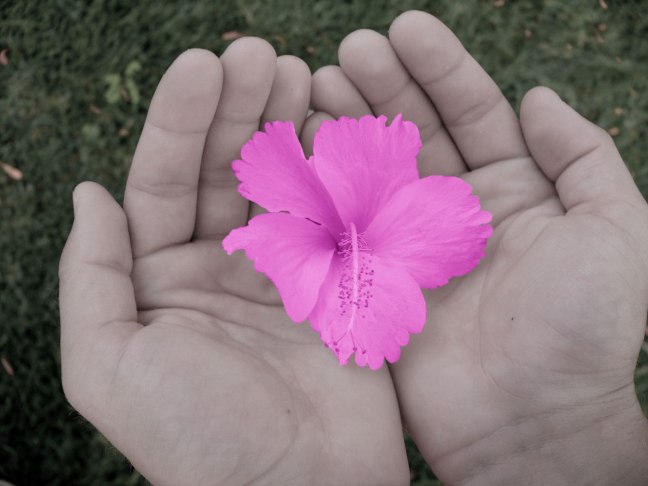
. . . Her father was locally famous for growing roses. He grew many in the backyard and more in the basement during the winter months. Our basement has many nails which supported grow lights for these roses.
. . . Her mother was locally famous for baking cakes, cupcakes, and pastries. That’s why we have an enclosed sunroom addition with a second sink. Even more important for baking, there used to be a second oven too.
. . . All the neighborhood kids used to play in our house and yard. It was a central location (and of course, the central place for all the delicious treats!)
I loved to hear about these. Stories of the past then easily moved to stories of the present. Our new friend loved that Ian is gardening here. He’s doesn’t grow roses, but many types of food and flowers are flourishing in the yard again. I loved to ponder our house’s history as a central location for people. We bought this particular house because we wanted to host others. It isn’t particularly large, but its rooms feel so spacious and open with a lot of light. They flow well into one another which is great for hosting.
Her family preceded us, and they lived here thirty years. We’ve been here less time, but we’ve inhabited the same space and made memories in it too.
And this made me wonder, how often are we unaware of this kind of experience? How often are we housed in the stories of others? There are obvious connections that we never think about. The only thing separating these connections is time. That’s it. Just time. What if we could know the stories that house us?
Stories of people and events on the same land,
Stories of people and events in houses of worship,
Stories of people and events in schools,
Stories of people and events across distant family trees,
And likely, many more stories, only unknown to us because time has passed.
I like to ponder this, and I’m curious to consider how we make stories now which will house others in the future.
This sermon was preached at First Presbyterian Church in Ypsilanti, Michigan and was focused upon luke 13:10-17. The audio recording is above and a written manuscript is below.
Jesus was teaching in a synagogue, and right in the middle of his words, a woman appeared. This woman had a painful ailment which caused her to be bent over continually, and she had struggled in this way for eighteen years. She simply appeared while Jesus was teaching, and though we can’t know for sure, I wonder if she just wanted to sneak in. . .
I wonder if people ever really saw her, or if they merely viewed her through this ailment she was experiencing. Did they see her as a person of worth and value? Or did they somehow believe she was cursed because she had this struggle? We don’t know. Perhaps she had become somewhat invisible to the community. Maybe she decided to sneak in without much notice.
People may have stopped seeing her. At the same time, she struggled to see others. Bent over in that painful state, she could never look anyone in the eyes. I bet that was isolating. I imagine that was painfully lonely.
So she appears while Jesus is teaching, sneaking in and hoping to go unnoticed.
But Jesus sees.
Jesus notices.
Jesus sees the pain that she’s been carrying, but he also sees her. He sees her as a person of worth and value, a daughter of Abraham. She is a daughter of the covenant. She never asks for Jesus’ attention and notice, but he gives it generously with great care.
Jesus calls over to her and says, “Woman, you are set from your ailment.” I wonder what she began to think. . . Could it be true? But Jesus didn’t speak words only. With care, he laid his hands on her. And immediately, she stood up straight and began to praise God.
She stood up straight. In other places in the Bible, that kind of language is used to talk about resurrection. In a sense, this was a resurrection experience. She gained new life. She was restored to the community, and she rejoiced. Her pain ceased, and she was beginning to know her worth again. She never saw this coming, but Jesus saw her.
That was a happy, unexpected ending, but the story doesn’t end there.
It is also a challenge for us today.
The leader of the synagogue was furious. In fact, the story says that he was indignant. He stood up and began to speak. Though he was angry with Jesus for this action, I notice that he didn’t address Jesus directly. He addressed the crowd that was gathered there. “There are six days on which work ought to be done; come on those days and be cured, and not the sabbath day.”
This woman hadn’t asked for anything. She just stepped in, maybe hoping to be included, but the leader of this synagogue treated her as if she had interrupted everything. “Come on those days to be cured!”
She hadn’t asked for anything.
Jesus did this.
And Jesus comes to her defense. I imagine he was indignant himself. He saw some hypocrisy here, and he did not hold back. He said, “You hypocrites! Does not each of you on the sabbath untie his ox or his donkey from the manger, and lead it away to give water? And ought not this woman, a daughter of Abraham whom Satan has bound for eighteen long years, be set free from this bondage on the sabbath day?”
Now keep in mind that Jesus had come here to teach, and now, having expressed compassion for this this woman and healed her, he was teaching. But he was teaching in ways they might not have expected. He was even teaching with some anger, reminding the people who they are, Whose they are, and Whose day this is. The Sabbath day belongs to God and is dedicated to freedom from oppression.
The Sabbath day of all days. . . shouldn’t it be a day of God’s Kingdom being realized? Is there not a better day to heal and see the worth of human beings, especially those who have been marginalized and pushed to the outside? Is there not a better day?
Jesus saw the great gulf between this indignation they were expressing and some of their own actions. So Jesus stands up for those who need healing. The Resurrected One reminds us what the Sabbath is all about. It is a part God’s reign being realized on this earth. And in in his angry words, the people were convicted. The story says that “his opponents were silenced,” and they all joined in this beautiful rejoicing.
Perhaps they didn’t expect to rejoice on this day in any special day. Maybe they didn’t expect to have their routine interrupted or to witness anything extraordinary. It makes me wonder. . . what did they expect? Did they expect to show up in the synagogue simply to have their just routine experience – to hear some holy words, to say hello to some friends, and go back home to other routines? Is that what they expected?
But they did experience something extraordinary:
The Kingdom of God will break in
whenever and wherever the Kingdom of God will break in. . .
And it makes me wonder. . . what do we expect? How might we need to be interrupted? Perhaps we need to be interrupted by people who are marginalized – people who are living their lives beyond our sanctuary walls this morning. If they decided to be present today, they might just come in a bit late, sit by themselves, and hope not to be noticed. They might not expect anyone to notice them and see their worth.
Maybe we need to be interrupted by the people who would never walk through the doors of a church building. Some feel that the Church has been too harsh and judgmental. At times, the Church speaks a language so removed from everyday life that it seems not to connect with others. Some have given up on Church and walked out altogether, and some have never entered because they don’t feel comfortable here. Is this what we expect? More of that? Maybe we need to form relationships with our neighbors and listen deeply. What do they long for spiritually?
The Spirit will break in whenever and wherever the Spirit will break in.
The Kingdom of God will break in whenever and wherever it will. . .
convicting us,
convicting people beyond us, and
bringing us together,
not as we have always been,
but in new, fresh beginnings of the Spirit.
What if we began to expect that?
What if we began to see this day for what it is?
Sunday is the day of resurrection.
It is the day of resurrection life.
What if we began to live as though that message was real, trusting that we truly belong to God? What if we were commissioned to leave this place with the expectation that we will see people — really and truly, see people with value —
viewing their pain with care,
witnessing their passions and gifts,
walking alongside their joys,
and honoring their deep worth and worth.
What if this day of resurrection could transform us that deeply? And what if we began to expect it?
I bet it would transform our lives. I bet it would transform our churches. I bet it would transform our communities because we would begin to see people in new and deeper ways. Perhaps, seeing us alive, they would view us in new ways also.
This weekend, I saw an interesting article online. [1] It was by a man named Thom Rainer, who has researched congregations for more than twenty-five years. He had a challenging recognition. He said, “Stated simply, the most common factor in declining churches is an inward focus.” He is speaking about congregations which exist primarily for themselves. He is speaking about congregations which tend to spend nearly all their time and energy focusing upon themselves. The ministries are primary for the members. . . The funds of the budget are used almost exclusively to meet the needs of members. . .
I wonder if this is also connected to a congregational experience where people merely expect the routine – to hear some holy words, to say hello to some friends, and then to go home back to other routines. A congregation which exists for itself and its own routines begins to decline. Then it can easily become obsessed (as many of our churches are) with making new members, sometimes out of faithfulness, yes, but sometimes out of a motivation to increase the size of the congregation in order to meet the size of the budget. That’s where many churches are today.
But thank God, there is more. There is a deeper, fuller life which calls all of us away from an inward focus.
The Spirit will break in whenever and wherever the Spirit will break in.
The Kingdom of God will break in whenever and wherever it will. . .
So in its midst – right here in front of us today – will we come alive? Will we rejoice and praise God for the unexpected ways God continues to show up? And will we leave here ready to see and be seen – to live in our community, seeing worth and value in the lives around us? Will we?
May God invite us into this kind of resurrection life.
On Saturday, my husband Ian and I caught a few minutes of the equestrian individual jumping event at the Olympics in Rio. This isn’t an individual event entirely, of course, because it involves a horse and a rider. That makes two.
For the longest time, Ian and I had the same questions as we listened to the coverage. The commentator kept making athletic statements, sometimes using the pronoun ‘he’ and sometimes using the pronoun ‘she.’
Who is considered to be the ‘he,’ and who is considered to be the ‘she’?
-And-
Who is considered to be the athlete? The horse, the rider, or both of them?
Eventually, Ian and I let out a laugh at the same time. Though we hadn’t talked about it yet, we had been wondering these questions simultaneously. We had clearer answers once the commentator said, “She went to Stanford,” and “He loves bananas.”
That definitely cleared some things up, but as I continued to watch and reflect, it raised larger issues too:
This commentator seemed to admire the athletic prowess of the horse and the rider. But I realized that only one of them has a choice about competing. What happens to the life of the horse if he makes a permanent decision to stop jumping?
The athleticism of horse and rider are simultaneously admired, but who benefits from a win? Is the horse treated differently if he wins? When the horse ages or can’t win anymore, is he permitted to live another chapter elsewhere, or is he sold and killed?
The horse didn’t go to Stanford, yet he was considered to be an intelligent animal with some autonomy. The commentator referred to him with language we might use for a human. I wondered, why do we respect the intelligence of some animals but relegate other highly intelligent animals (pigs come to mind) to a lifetime of living in cramped cages where they can’t even move?
We love our pets, and we admire the strength of powerful animals. We enjoy safaris, and we work to conserve the habitats of some creatures around this world.
But we also support an food industry which causes endless suffering for some animals from birth to slaughter. We assume these animals have no intrinsic worth, and we keep their suffering out of view.
So horse or other animals? Who’s valued?
Perhaps we need to remove the ‘or’ and ponder these inconsistencies.
Over the last two weeks, the world has watched the performances of the U.S. women’s gymnastics team with utter awe. These gymnasts have demonstrated unbelievable strength and skill while I’ve sat on my couch as a sedentary spectator. I’ve watched their art and athleticism with my mouth wide open. As they tumble and fly through the air, one-word questions of astonishment tumble out of my mouth: “What?” “Who?” “How?” I struggle to believe that these feats are possible, yet they are happening in Rio. These gymnasts are individually remarkable, so naturally, all five of them formed a team that was virtually unbeatable.
Aly Raisman was their team captain. She is an incredible gymnast and leader. After watching it all unfold, I have concluded that Aly Raisman is the most phenomenal silver medalist imaginable.
Raisman returned to the Olympics after winning the individual all-around gold during the London games in 2012. This year, it seemed that a repeat win was unlikely. Simone Biles entered the competition highly favored, and she did not disappoint.
But when I watched Aly Raisman perform her floor exercise routine, I was equally impressed. It became clear that any other year, she would surely win the gold medal herself. Watch her opening tumbling pass here. It’s incredible.
Silver medalists can have it tough. A number of studies have demonstrated that bronze medalists are often happier silver medalists. Bronze medalists consider their alternative and realize they might not have had a place on the podium. Sliver medalists consider their alternative and realize they could have won the gold. This recognition can be painful.
In the midst of this, I have great admiration for Aly Raisman. She is strong, skilled, and immensely talented. In a year when Simone Biles could not be beaten, Raisman was graceful and generous. That relational posture demonstrates power and leadership. She and Biles have even become close friends. We watched them hold hands during competitions, support each other between their routines, and laugh hard together during NBC interviews.
Aly Raisman is phenomenal. She has showed us that second place can also demonstrate tremendous leadership.
[Wikipedia: Tig Notaro at Bumbleshoot 2010, by Shawn Robbins/Kata Rokkar]
Have you ever had an inside joke with yourself?
Perhaps you’re in a meeting that’s stretched out for hours, and you instantly find a tiny detail to be hilarious. Maybe you’re walking outside, and while no one is watching (thank goodness) you trip unceremoniously on the sidewalk and do a face plant. Or perhaps while recounting a stressful moment to a friend, it begins to sounds so over-the-top-ridiculous that you can’t stop laughing together.
All of these things have happened to me. I bet they’ve happened to you too. This is proof that almost anything can be funny. It’s not that everything is a laughing matter. Far from it. But in the right time and context, almost any subject matter can launch us into fits of laughter.
Take for instance, one of the most hysterical, random moments I’ve ever seen in a comedy video. Watch Tig Notaro push a stool around. It’s fantastic!
If we’re in a truly stressful situation today, that isn’t funny. Nope, not at all. But I bet we might find one detail that is. Savor it. It might help.
These words of Frederick Beuchner form one of my very favorite quotes:
“In the entire history of the universe, let alone in your own history, there has never been another day just like today, and there will never be another just like it again. Today is the point to which all your yesterdays have been leading since the hour of your birth. It is the point from which all your tomorrows will proceed until the hour of your death. If you were aware of how precious today is, you could hardly live through it. Unless you are aware of how precious it is, you can hardly be said to be living at all.”
Interestingly, this quote has woven its way through a lot of important events in my life. I first heard it when someone framed the day of my ordination with it. It became quite meaningful to me. I often voice it to others at weddings. It is the kind of quote that seems fitting for significant life events.
But this quote about ‘today’ is meant to speak about the everyday-ness of life also. We encounter this sacred juncture of yesterdays and tomorrows every time we experience today.
And we can be honest here: There are moments, entire days, and entire years of days that don’t feel so shiny and precious. Sometimes we are in the throes of grief, depression, or anxiety. Sometimes we hate our jobs. Sometimes we love but don’t like our kids. Sometimes we don’t know how we’re going to pay our bills.
We might not be living the today we want.
Yet it is today. There is some possibility in that. And if we can’t find the hope and preciousness in this day, that’s completely acceptable. In such moments, we can invite others can hope and believe on our behalf. No matter where we find ourselves — in an exhilarating day of possibility, or an anxious day of concern — it is a sacred juncture. It’s not the end.
Last week, I recorded a voice text and sent it. “I had a really good week,” it started. I shared the details in a litany of gratitude:
This happened, AND!
This happened, AND!
This happened, AND!
As soon as I sent it, another level of gratitude emerged: I knew this person would rejoice in every part of that list. I could trust and anticipate that connection. Whatever the content — joy, pain, laughter, confusion, or struggle — I am grateful for people who hold the space.
I have called the very same person when my weeks haven’t been so great. In fact, I have a good number of trusted confidants who hear about my best and worst weeks alike.
They give presence.
They show love.
They are great gifts.
To every person who holds the space in our lives, today, I say thank you.
We all have opportunities to participate in this kind of connection. When we love people, we hold the space of their dreams, fears, quirks, frustrations, and hopes. In one sense, this happens quite naturally simply as we come to know each other. But even though it happens naturally, we shouldn’t forget how holy it is.
So I wonder,
. . . Who has held space for you lately?
. . . Or whose space can you easily anticipate, even if it’s been a long while since you’ve talked?
If people come to mind today, tell them, “Thank you.”
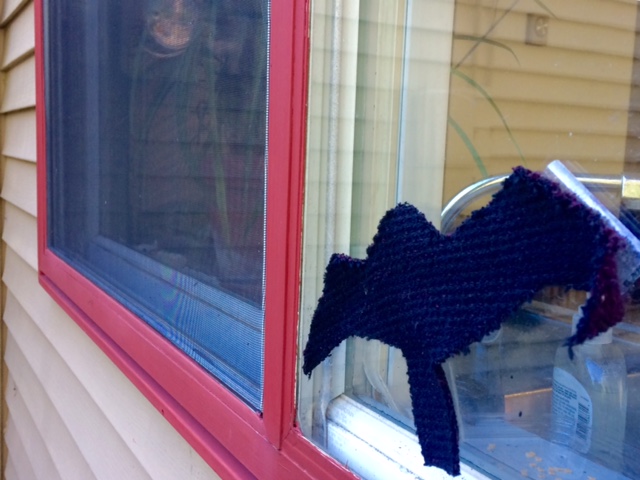
On a particular day about two months ago, I returned home on a Sunday afternoon to find something strange taped outside our window. “What’s that?” I asked. I knew my husband was home so I spoke the question in his general direction. That’s when I saw him cutting felt at the kitchen table.
“They’re for the hummingbirds,” he said.
Earlier that morning, at quick speed, a hummingbird flew straight into our window. Ian saw it happen and was quite saddened, recognizing he had not thought about the windows when he placed a hummingbird feeder near our house. To remedy the danger, he was now cutting and crafting felt.
After that hummingbird hit our window, it fell to the ground, and Ian stepped outside to look after it. With some time, the bird began to move, but it was grounded and stunned for about an hour. Ian checked diligently on the little bird every five minutes, and eventually, he was thankful to see it take flight again.
Ian didn’t want a repeat occurrence so he began to ponder solutions. After searching the internet, he discovered he could cut materials into the shape of birds of prey. Other people have done this too and taped them to their windows. As a result, hummingbirds avoid the glass.
Ian placed several of these on our window.
Two months later, when I see them, they still make me smile. In part, this is because they look so goofy. But beyond the surface laughter, a deeper smile emerges within me too. They’re a visible reminder that every living being has real value. Hummingbirds are worth this much thought and care.
And every day, these goofy, taped birds remind me of Ian also. I love a person who lives by this worth, thought, and care. More than anyone I know, he demonstrates this kind of commitment, and he does so quietly without attention. He’s a dedicated vegan. He’s planted two clover patches for the wild bunnies that live in our backyard. And he has created fake, felt predators to protect the hummingbirds.
Ian gives me a greater sense of wonder about the world, and he consistently makes it feel like a gentler place.
And I want to follow his lead.
I recognize that we can all create gentleness, by
slowing down,
wondering more,
mirroring worth,
celebrating value,
finding solutions,
laughing generously,
showing affection, and
loving what is around us.
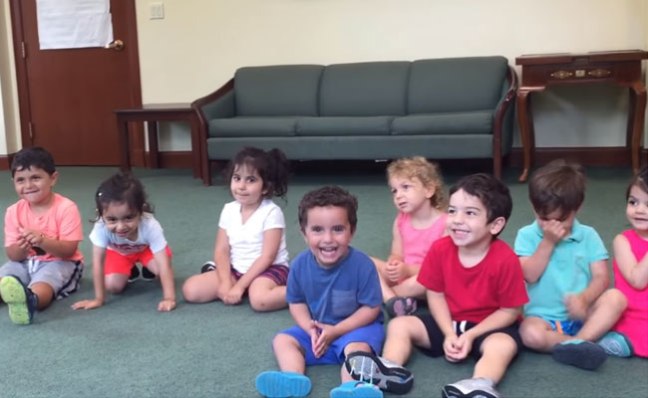
Disclaimer: You should really only watch this video if you’re willing to have a better day. Because it’s pretty challenging to avoid the joy here. The precious kiddo in the blue shirt just can’t keep it together. When you pair clapping with sudden bursts of silence, it’s . . . well, the best thing in the whole world.
During my very last week of high school, every morning began with a creative conspiracy. It was implemented by giggling, teenage masterminds. Collectively, we struggled to stiffle our laugher as we waited for our teacher to enter the room. Each stunt stranger than the last, we pranked Mr. Youngblood five days in a row. Our very last days of public education were filled with practical jokes.
And what sort of pranks do teenage masterminds create? Fire alarms, smoke bombs, or egg smeared chalkboards? Not these teenagers. We were way too nerdy for that.
Mr. Youngblood entered the room to find us all wearing. . . Ayn Rand masks.
Ayn Rand masks! A classmate had actually taken the time to find an Ayn Rand image, blow it up, print twenty-five some odd copies, and glue them to sticks so we could hold them to our faces and greet Mr. Youngblood as he walked through the door. Once he did, there we were, dressed to the nines in our Objectivism best. He loved it.
I could say that Mr. Youngblood introduced us to Ayn Rand, but it was, in fact, the other way around. Before we ever met him in the classroom, he assigned The Fountainhead as summer reading. We entered our senior year ready to discuss that large work, and we were introduced to one of our best teachers.
In his English class, we learned how to analyze classic works of literature. We learned how to hone our unique voices as we wrote with greater nuance. We had spirited discussions, and we challenged each other. And we laughed. Every day, we laughed.
This last aspect of our experience has been on my mind lately. Within it, I recognize that a larger lesson was present all along. It was never sketched out as a lesson plan, but Mr. Youngblood embodied it in the classroom. It was both simple and profound: He delighted in us as students. He thoroughly enjoyed us as people.
Sure, we occasionally drove him crazy. But most often, he greeted us with a dry wit we also enjoyed. That wit accompanied our intentional learning and created spontaneous moments of playfulness. He believed in our voices. He delighted in us, and we knew it.
Bob Youngblood died two weekends ago, and I have been reflecting on this kind of legacy. Teachers impart great knowledge, but they are also in a position to teach a larger lesson of delight. When teachers delight in their students, their students come to know their own worth. From that awareness, they go on to learn in self-directed ways.
Since our Ayn Rand mask wearing days, my classmates and I have almost doubled in age. This astonishes me. Even more, I am amazed to consider who we have become. We have charted career pathways, formed families, and created meaning. Bob Youngblood would delight in all of this too, I am sure.
Robert Frost once wrote that poetry “begins with delight and ends in wisdom.” [1]
Good teachers spark delight and illumine human worth. From these gifts, a lifetime of learning continues.
-Renee Roederer
[1] Robert Frost wrote this in the foreword to his Collected Poems (1939).




 [
[