Changing the Story of Education

These days, public schools are facing great disparities in funding, and teachers and students continue to struggle with high-stakes testing. In some places, teachers face these realities with the awareness that their salaries could be reduced or eliminated. It is complex and deeply challenging.

In the midst of all of this, however, there is a story of educational success that you need to know. In fact, the nation needs to know this story, because it could change the ways we design curriculum, evaluate student learning, and empower our students to affect change in their own communities.

This has all taken place in Ypsilanti, Michigan.

Susan Santone is the Founder and Executive Director of Creative Change Educational Solutions. She and her excellent team of fellow consultants work with educators in public schools. They help teachers and administrators restructure their curriculum so that students gain academic mastery while they learn about human needs on local and global levels.

On their website, Susan Santone addresses an educational dilemma in this way:

“What do you do if you’re a teacher, and everything you’re passionate about is largely absent from the curriculum?

“This is the dilemma I faced more than 20 years ago when I was teaching in the public schools. I was immersing myself in learning about global issues such as hunger and human rights, and desperately searching for a way to bring these issues into education. I envisioned classrooms as places where students learned to solve the problems affecting their futures and communities. To bring this about, I founded Creative Change in 2002 built on the values of equity, democratic education, sustainability, and research-based practices. Since then, our mission has been to help educators with curriculum transformation for better schools, more impassioned teachers, and fully engaged students.”

So let’s hear the success stories from Ypsilanti Public Schools in her own words. Susan Santone recently gave a Tedx talk about them:

In her Tedx talk, Susan Santone describes the ways that Creative Change Educational Solutions helped teachers redesign an ancient civilizations course for middle school students. “What could be less relevant to a seventh grader than the aqueducts of Rome?” she asks.

To transform their learning, teachers turned stories of the past into lessons about the future of Ypsilanti. Along with their students, they pondered which conditions and practices of the ancient past led to the rise and fall of civilizations.

While learning this material, students turned their attention to local and global questions of sustainability, and as a culminating event for the class, students organized their own Community Sustainability Summit which was attended by the mayor of Ypsilanti, township supervisors, and leaders from public health and public safety. Students learned academic material and created change in their own communities. The academic scores on their pre- and post-test rose by 40%.

Susan Santone says that their second project had even more remarkable results. She and her team helped teachers redesign their U.S. History course so that students could delve into the studies of institutional discrimination, racism, and the struggle for equality. Students began to wonder why Ypsilanti’s population is 30% African-American, but the makeup of Ypsilanti Public Schools is 70% African-American. This opened up opportunities for students and teachers to analyze segregation, white flight, and the U.S. policies  of the past and present which have enabled these trends.

The academic results were astounding. Scores of a rigorous pre- and post-test rose by 95%. Students became engaged in their studies, and they began to create connections between their curriculum, opportunities for change, and their own leadership.

It is clear that Creative Change Educational Solutions has much to teach us.

Please visit their website to learn more, and you can follow them on Facebook and on Twitter.
–Renee Roederer

The Loves of God

trinity[1]

This sermon was preached at St. Andrew’s Presbyterian Church in Dearborn Heights, Michigan and was focused upon Romans 5:1-5.  The audio recording is above and a written manuscript is below.

Romans 5:1-5

This opening paragraph of the 5th chapter of Romans contains many powerful, evocative words. And very likely, if we reflect on them, we’ll notice that these words usually have stories attached.

There are words like faith, peace, grace, endurance, character, hope, and love.

These words weave their way through the letter Paul is writing, and as we connect to them personally, there are probably stories attached. . .

There are moments in our lives when we’ve felt our faith was deeply rooted and connected to the faith of others. . .

There are moments when we’ve felt a deep and abiding sense of peace. . .

There are moments when we became suddenly aware of the grace of God and the ways it impacts our lives. . .

There are moments when we’ve lived stories of endurance, character, hope, and most especially love. Or at the very least, these are the stories we want to live, don’t we?

We want to live stories of endurance, character, hope, and love,
and these are the stories we want to share.

Certainly these words are a part of our collective life together also — not only our individual life – but these words involve the very life that God is weaving through all humanity. These words are the stories God wants us to live.

Yet I also notice in this passage there is a challenging word too. It’s an honest word, and it is a word that likely has stories attached also. The word is suffering. There are moments in our lives when we have experienced deep suffering –

moments of loss, illness, confusion, and isolation,
moments when we began to question whether we were worth very much,
moments when we questioned whether our life has value and meaning.

Our world knows suffering too, including communities that surround us right now. We live in a world where poverty, racism, and classism all exist, along with the many divisions we create to separate some from others, declaring worth and value upon some while viewing the rest as ‘less than.’ The word suffering has stories attached too.

Interestingly, Paul says, “We also boast in our sufferings, knowing that suffering produces endurance, and endurance produces character, and character produces hope, and hope does not disappoint us. . .” Why? “. . . because God’s love has been poured into our hearts through the Holy Spirit that has been given to us.”

So many times, well-meaning people have looked at stories of suffering and tried to make them better than they really are. We have so many ways of speaking trite expressions, trying to make the suffering better in some way, but without recognizing the pain that is found within ourselves, our friends, our neighbors, and our world. We say things like,

“God will never give you more than you can handle.”
But we know that some bear burdens that do feel absolutely unbearable.

Or we say,

“Everything happens for a reason.”
This can make our pain seem as though it is somehow necessary,
like it is some crucial sacrifice toward an amorphous, future good coming into being.
Goodness does often come into being, but it doesn’t make our pain necessary.
It doesn’t mean it is God’s plan, hope, or desire for us.

I don’t think Paul is talking about any of these platitudes when he says, “we boast in our sufferings.”

Let’s hear that sentence again. Paul says, “We also boast in our sufferings, knowing that suffering produces endurance, and endurance produces character, and character produces hope, and hope does not disappoint us. . .” Why? “. . . because God’s love has been poured into our hearts through the Holy Spirit that has been given to us.”

I think Paul is saying that God’s love is the final word, and God’s love is weaving its way throughout our lives — so much so that it is even present in the suffering. Perhaps, it is known most intimately in the suffering, not because God needs us to suffer to discover it, but because God loves us so deeply, that God will be with us right there. God will love us always, and God’s love will be revealed in and through even the stories of suffering.

And that brings us to other words found in this passage. They are tiny words, and on the surface, they seem insignificant, yet they reveal God’s posture toward us.

Words like with.

Have you ever thought about how amazing that word is? Paul says, “We have peace with God.” With.  God seeks to be with us. God shows up, including the deepest stories of suffering. As God is with us, we feel peace, and sometimes we feel this beyond our deepest understanding. The word with reveals God’s posture toward us.

Or how about the word through?

Paul says we have this peace with God “through our Lord Jesus Christ, through whom we have obtained access to this grace in which we stand.” Through. We have received God’s love and mercy through Jesus Christ. We are reconciled through his very life. This word reveals God’s posture toward us.

Or how about the word into?

Paul says, “God’s love has been poured into our hearts through the Holy Spirit that has been given to us.” Into. This love comes into our very being, and the Holy Spirit dwells with us. Into. This word reveals God’s posture toward us.

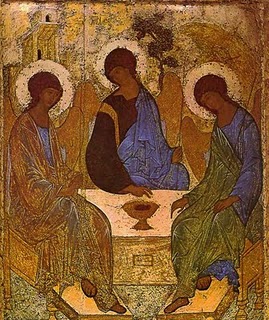
In the midst of the season of Pentecost, today is Trinity Sunday. This is a day in the Christian calendar when we ponder the love of the Triune God. We don’t just do this solely with our thinking, working really hard in some way to wrap our minds around the reality that God is somehow three and one at the same time –One God, Three Persons: Father, Son, and Holy Spirit. This is not some game of mental gymnastics.

This is a day when we can ponder the Triune God with our hearts and our very lives.
This is a day when we ponder the Triune God with our very life stories.

And perhaps we could say,
this is a day when we ponder not only the Iove of the Triune God,
but the loves of the Triune God.[2]
These loves might just transform how we see our stories.

When we say that God is Triune, and
when we say that God is one in three persons,
we are saying that at the very heart of God —
at the very heart of Who God Is —
lies the existence of community.
God is one, and
God exists in a community of relationships,
as love is shared and expressed between the Father, Son, and Holy Spirit.

And here is one of the most beautiful truths about this revealed vision of Who God Is:

God wants us to join the community of these loves.

It’s not that we become God,
but each of us and all of us
are invited truly to an experience of the life of God.

This Triune vision reveals God’s posture toward us,
so we know when we suffer,
we are never alone.
We are surrounded by God.
We are surrounded by a community of loves –
Father, Son, and Holy Spirit –
and we are invited into the community of loves that exist around us
in our own relationships,

in this community of faith,
in this entire world
where God can be found
around every corner,
under ever rock,
and revealed in and through every human life,
each one infinitely filled with worth and value.

These are the loves that surround our lives.
These are the loves that transform our stories.
So let’s hear Paul’s words one more time:

“We also boast in our sufferings, knowing that suffering produces endurance, and endurance produces character, and character produces hope, and hope does not disappoint us because God’s love has been poured into our hearts through the Holy Spirit that has been given to us.”

These are the loves of God for the people of God.

Amen.

–Renee Roederer

[1] Image: Andrei Rublev, public domain.

[2] My thinking on ‘the loves of God’ was strongly influenced a Trinity Sunday sermon preached by the Rev. David Nelson Roth at St. John United Presbyterian Church in 2006.

Presbyterian Outlook: Nones and Dones Find God-Breathed Belonging

outlook

Today, I’d like to share an unfolding story with you. It’s about a new community we are organizing in Southeast Michigan:

We are Michigan Nones and Dones.

In the last year, I have been privileged to participate in a variety of new projects and community endeavors in Ann Arbor, Ypsilanti, and metro Detroit, and this community has become my greatest passion.

You may be asking, who are Nones and Dones?

Nones are religiously unaffiliated with any particular faith tradition, though many are interested in spirituality. Dones are those who have maintained their religious identity (many of them are Christian), but have left established, institutional religious settings like churches. In our community, Nones and Dones are coming together to talk about spirituality, and we are finding a deep sense of meaning and calling together.

And we’re just at the beginning of this unfolding story. I can’t wait to see where this goes, and I hope that others will join us in the creation of new communities like this one.

Presbyterian Outlook, a national magazine of the Presbyterian Church (U.S.A.) featured a story about us in their recent Pentecost edition (pages 23-24). And today, they published an electronic version of our story. Please check it out: Nones and Dones Find God-Breathed Belonging.

I invite you to visit our Facebook Page and give us a ‘like.’ Then you can receive regular updates on your newsfeeds about what we’re doing. Thanks, as always, for your love and support.

–Renee Roederer

We Need Full-Time, Neighborhood Chaplains: How Might We Support That?

ann arbor

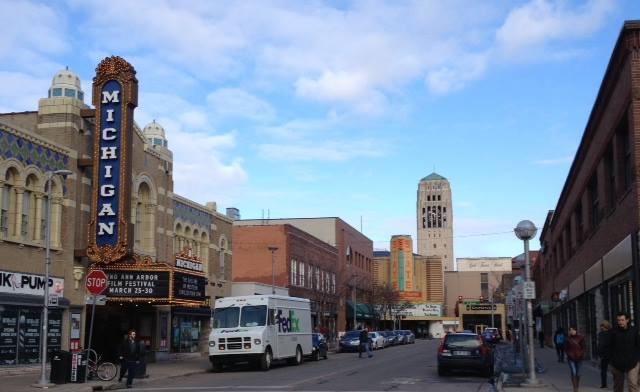
Yesterday, I spent some quality time with my local college town. I meandered through our downtown district, noticing what was happening in and around our shops and restaurants. Then, I wandered through our local campus. Most students have left for the summer, so it feels emptier. At the same time, with a less busy atmosphere, more can be noticed and appreciated in specific ways.

I did not intentionally eavesdrop, but while walking, I naturally overheard some conversations. One person articulated to a colleague her grand strategy to achieve the ideal schedule. She went through all the safeguards she will eventually put into place so that she is no longer juggling everything to an absurd degree (her words) and will finally have time with her family.

That is an expression of the challenges my neighbors often face in this university town with its demanding culture and the internal pressures of the impostor’s syndrome.

But as I walked along, I encountered other kinds of struggles as well. At one point, I sat with a friend of mine. It’s been a while since I’ve seen her, but she was back in a space she frequents from time to time. She and her husband come here to panhandle on both sides of the street. They struggle to have shelter, but today, they have a different concern. Her husband’s mother has died, and they need to get to Toledo to be with the rest of the family. I listened and said a prayer with her.

In the midst of all these moments, I pondered the gifts and needs that people carry here. Then suddenly, I had a thought which filled me with a sense of recognition and rootedness.

“I want to be a chaplain for this town,” I thought.

The idea resonates with recognition because it taps into my sense of calling.
The idea resonates with rootedness because I love this place.

In many ways, that’s already who I get to be functionally. It’s a great gift to live like a chaplain in the midst of two towns — Ann Arbor and Ypsilanti, Michigan. Though I’m not making a living this way, I hardly feel more alive than these moments when I get to be in the neighborhoods, visiting with people, learning from them, and speaking spiritual meaning alongside them.

This thought stayed with me when a friend sent a text a few hours later. She’s a seminary student taking a class to explore the practice of ministry in a post-congregational context. She mentioned that this class will be important, as she and her fellow students will need to engage ministry and community development differently than pastors who have come before them.

That’s good language for the transition we’re in, I found myself thinking later. We are moving into a post-congregational culture, and in some ways, we are already there.

I don’t think this the end of Christianity, and
I don’t think this is the end of spiritual community.
They aren’t ending, 
but they are definitely changing.

Local congregations are not suddenly irrelevant without any meaning or mission to offer their neighborhoods. But at the same time, neighbors aren’t connecting with congregations in the same ways they did decades ago. There are disconnections and cultural changes taking place both within and beyond local churches, and they are creating the shifts we are watching. At the same time, some congregations have practiced exclusion and poor ethics, and that has sent some leaving quite deliberately, perhaps without a new home to practice their spiritual life.

In a similar way, congregational pastors are not suddenly irrelevant without any meaning or mission to offer their neighborhoods either. Many of them want to be present with people beyond the walls of their own congregations. In fact, they long to have time for it. But as their congregations are declining, there are simply more pastoral and administrative needs on the inside. How can congregational pastors have the time to connect broadly with people beyond their own church contexts? It is definitely a challenge.

For all of these reasons, I wonder. . .

What if we could call people to serve as chaplains for particular towns and neighborhoods, organizing spiritual life and community connections in uncharted ways?

What if we actually did that?

What would be needed, and what obstacles would have to be cleared, in order to create such roles?

What if some of our seminarians could serve in this way upon graduation?

I’m a realist, knowing it would take a lot of financial support and creativity to form these kinds of roles, but the shifts we are seeing in spiritual demographics are already necessitating them.

So what are your ideas?

How could this actually be done?

–Renee Roederer

All

fire

[1]

This sermon was preached at St. Andrew’s Presbyterian Church in Dearborn Heights, Michigan and was focused upon the story that is told in Acts 2:1-21.  The audio recording is above and a written manuscript is below.

Acts 2:1-21

All.

I hear that word weaving its way throughout this entire story.

All.

It’s right there at the beginning: When the day of Pentecost had come, they were all together in one place. The disciples of Jesus were all in a house together. The twelve disciples were there, likely with other men, women, and children who called themselves disciples too. We don’t know exactly what they were doing when the great, surprising moment of the Spirit came, but we do know that they were in fellowship together. We do know they were all in one place.

They had been doing this together for a while in a season of waiting. Now surely, they couldn’t have anticipated the full power and all details of this moment, and most likely, they wouldn’t necessarily have expected it to happen that very day. No, they couldn’t have anticipated all the details, but were waiting purposefully.

After Jesus died and was raised to new life, he spoke to his disciples, saying, “Thus it is written, that the Messiah is to suffer and to rise from the dead on the third day, and that repentance and forgiveness of sins is to be proclaimed in his name to all nations, beginning from Jerusalem. You are my witnesses of these things. And see, I am sending upon you what my Father promised; so stay here in the city until you have been clothed with power from on high.”

So when the day of Pentecost had come, they were all together in one place. They were waiting purposefully for the promise of God, but in any given moment, could they have anticipated that the time was right upon them? I bet they were just as stunned as anyone else was that day.

Suddenly from heaven there came a sound like the rush of a violent wind, and it filled the entire house where they were sitting.

I’m sure they were startled.

Divided tongues, as of fire, appeared among them, and a tongue rested on each of them.

What strange, wonderful details.
And that’s when we hear the word again. . .

All of them were filled with the Holy Spirit and began to speak in other languages, as the Spirit gave them ability.

Could they have possibly anticipated this holy moment and what it would be like?

Could they have possibly known how deeply empowered they would become without a moment’s notice?

When the Holy Spirit suddenly entered that room, God empowered them to become witnesses to proclaim this great message of forgiveness, freedom, and release for the people.

They spoke good news about all these things, and initially, all those who heard them were stunned. Pentecost was an ancient, annual festival of the Jews. People from many different nations were present during this holy moment. They were Jews who lived in other places. They came to Jerusalem from every nation to celebrate this great festival of the harvest.

When the people heard all this sound and these words of forgiveness, freedom, and release, they were shocked. They said, “Are not all these who are speaking Galileans? So how is it that all of us – all of us, wherever we have come from – are hearing these words in our own languages?” They were stunned by this. The story says, All were amazed and perplexed, saying to one another, ‘What does this mean?’

So often, when we enter our own celebration of Pentecost and remember this holy moment, we think of this story as a miracle of tongues. Certainly it was, for the disciples were speaking languages previously unknown to them.  But Eric Law, an Episcopal priest and author, frames this moment in another way. He says that this Pentecost moment was a miracle of the ear.[2] Suddenly, people divided by language, national origin, and cultural upbringing were connected, and all were able to hear one another.

This is truly a miracle of the ear.
This is a miracle of God bringing people together so that this message of good news may be heard.

This is what they heard:

Peter, standing with the eleven, raised his voice and said to all of them, People of Judea and all who live in Jerusalem, let this be known to you, and listen to what I say. These people are not drunk as you suppose. It’s only 9 in the morning! No, this is what was spoken by the prophet Joel.

And listen as the word all weaves its way through Peter’s speech.

In the last days it will be, God declares, that I will pour out my Spirit upon all flesh, and your sons and your daughters shall prophesy, and your young men shall see visions, and your old men shall dream dreams. Even upon my slaves, both men and women, in those days I will pour out my Spirit; and they shall prophesy.

And Peter closes by saying,

Then everyone who calls on the name of the Lord shall be saved.
All who call on the name of the Lord shall be saved.

That’s what happens in this moment of Pentecost.

Beyond the portion of the text we read today, Peter continues in his speech. He talks about the life, death, and resurrection of Jesus. He talks about forgiveness, freedom, and release. Peter shares all of this with the people, for God is providing all of these for the people.

After they heard all of this, the story continues, saying that they were cut to the heart. They said Peter and the other apostles, “What should we do?” Peter invites them to repent, be baptized in the name of Jesus, and receive the Holy Spirit.

And they do. The story goes on to say,

Those who welcomed his message were baptized, and that day, about three thousand persons were added.

So this day of Pentecost –
the day we are living together –
I keep thinking about this word All
and the power that is within it.

I marvel at the power and the beauty of the large, expansive vision of God.
All.

I marvel at the power and the beauty present
when we are all gathered together,
not simply living a mundane moment,
not simply living one of 52 Sundays on the calendar,
but being present this day and waiting upon God.
All.

I marvel at the power and beauty that takes place
when all are empowered,
perhaps to do things that have seemed impossible.
All.

I marvel when all are able to hear each other,
especially in this world where see so many divisions —
with our political leanings,
our genders,
our races and ethnicities,
our class structures,
our expressions of culture,
our expressions of church culture. . .
What a miracle it is when we are all able to hear one another
and recognize that the Spirit of God
can be found in and among all of these human lives.

I marvel at this word:
All.

These visions and these powerful ways of thinking are truly of the Spirit. They are large. They do seem impossible at times. They are certainly expansive.

And you know what else I notice? These large-scale visions of God all take place in and through the presence of specific human lives. These people gathered together, and they waited upon God. They were simple, ordinary people, and God chose to empower them.

They were people like you and me.

With our histories, our life experiences, our variety of ages,
we gather all together,
and large, expansive visions can take place in our midst too,
perhaps right in a moment when we aren’t expecting it.

Will we wait for the presence of the Holy Spirit among us?
Will we allow ourselves to be empowered?
In the unexpected moment before us today,
will we allow our vision to be as expansive as God’s?

So let’s close in the same way we began:

When the day of Pentecost had come, the people of St. Andrew’s Presbyterian Church were all together in one place.

Come,
Holy Spirit,
Come.

–Renee Roederer

[1] I found this image here.

[2] Eric H.F. Law shares this perspective on Pentecost in his book The Wolf Shall Dwell With the Lamb: A Spirituality for Leadership in a Multicultural Community.

Trayvon’s Black Life Matters: Hearing from Black Voices

Trayvon

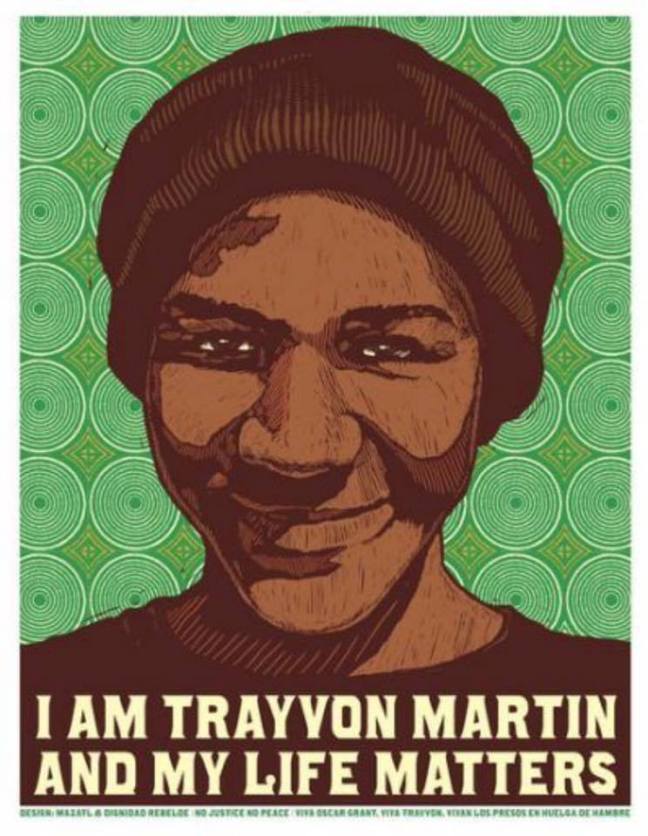
Yesterday, the man who killed Trayvon Martin decided to let the world know he plans to auction the weapon involved in that violent act. Many people were rightly appalled.

The gun has been placed on auction sites and then removed several times now, but this fact remains: We don’t merely have a man willing to profit from the death of Trayvon Martin — a teenager whose life mattered very deeply — we have droves of individuals who would like to purchase such a weapon. This mirrors the practice of selling and sharing lynching souvenirs.

We must speak out and resist this auction.
We must speak boldly that black lives matter.
Trayvon’s Black Life Matters.

Here are pieces from some black bloggers and commentators. Let’s listen and share:

Rebecca Ruby Ahmad-Robinson,
On Mattering

Shaun King,
The Man Who Killed Trayvon Martin is Injustice in the Flesh

David A. Love,
Zimmerman Selling a Souvenir of Hate

Steven W. Thrasher,
George Zimmerman’s Gun Auction is an Ugly Symbol of Racism

For the Goal

To Do

Yesterday, I was defeated by a to-do list.
It still remains, technically unwritten;
but piece by piece,
and point by point,
it chiseled itself into my brain.

Do this, then –
Do that, then –
Achieve this, then –
Accomplish that.

It hammers.
It sculpts.
It hardens and solidifies.
Pristine and chiseled,
it presents itself complete and paramount.

And it does all of this. . .
For The Goal.
(Or at least, that’s what I’m led to believe).

Instead, this to-do list,
this master carpenter,
becomes a goal in and of itself.

If I’m not careful,
my thriving will diminish,
my playing will diminish,
my living will diminish,
while
my toiling,
my striving,
my working,
grow,
extend,
increase,
accumulate.

Forget the real goals!
The living,
The playing,
The thriving!
Suddenly, these are less than a host of check marks,
Suddenly, these have less value than solid lines marked through words.

Suddenly,
DO and DONE
become more
than LIVE and LIVED.

Well, today, I turn a corner.
I will not cross LIFE off some oppressive list.
Peace and pleasure will permeate my work,
and no lines will run through
BREATHE
LOVE
ENJOY and
SAVOR.

Yesterday, I was defeated by a to-do list.
Today, I live for the goal.

–Renee Roederer

alive


I Am Afraid of a Harmless Thing

ddll

[1]

I am afraid of a harmless thing.
It looks like it could creep,
or bounce,
or pounce,
or charge awkwardly with its considerable appendages.

But it does none of these.
It stays in place all day long,
content to rest in a single crevice,
or reside in clumps of countless others.

It wishes me no harm;
likewise, I wish it no hurt.
Unlike curious schoolchildren at recess,
I will not examine it,
or smash it,
or dash it,
or remove any of its legs.

But –
I will stand irrationally in fear.
I will freeze in the presence of a childhood phobia.
No matter the logic:
“It can’t bite you,”
“It can’t poison you,”
“It can’t jump on you,”
I will cringe with revulsion and anxiety.
I am afraid of a harmless thing.

It makes me wonder. . .

When
the word can’t enters our thinking, or
the word won’t enters our hoping, or
the word don’t enters our dreaming,
perhaps we fear something harmless too?

–Renee Roederer

[1] Photo Credit: Mehran Moghtadai/Arad/Wikipedia

Living in The Now

joshua

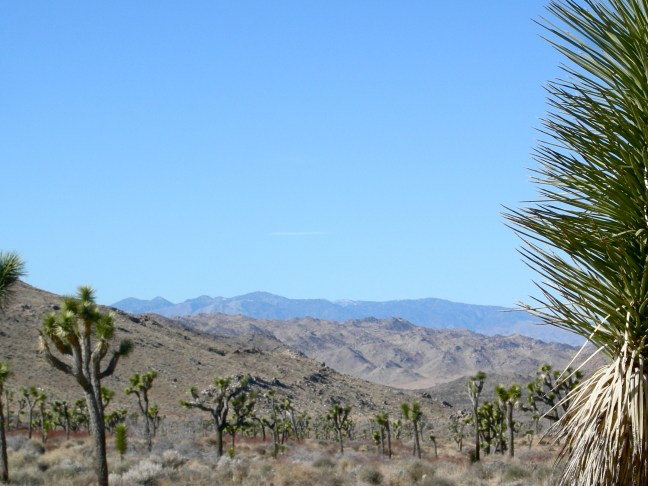
Years ago, my husband Ian and I took a trip to the gorgeous and unique terrain of Joshua Tree National Park. There were many beautiful landscapes to savor with our eyes, but when we first arrived, I struggled to concentrate.

I had left town with a personal conflict unresolved, and while away in the desert, I had limited cell phone access to bring it to resolution. At this point, there was very little I could do about it but wait.

Looking back now, it was a relatively small issue, and it all turned out fine. But at the time, I could not stop thinking about it. I was in the presence of so much beauty, but I continued to focus on the situation that was causing me the most stress and anxiety. As we human beings are so prone to do, I could not live in the moment at hand right before me.

Dr. Ellen Langer, prolific scholar and researcher on mindfulness, uses a particular phrase to describe this kind of experience. She says that so frequently, we live in a perpetual state of constant partial attention. 

Constant partial attention. . . Isn’t that a perfect way to describe this kind of experience? So often, we move through our days simply going through the motions, rarely paying attention to what is right in front of us. Instead, our minds gravitate toward our to-do lists and the situations that make us most anxious. We get stuck mulling over the past or worrying about our imagined future. In the process, we miss the present moment.

And this is nothing short of tragic, because there is much to experience right before us! The present moment is a holy doorway: Through it, we can connect more fully with our surroundings, our inner life, our neighbors, and the deep stirrings of the Spirit.

It’s all right there before us,
a veritable feast for all our senses.
But so often, we settle for constant partial attention.

Poet Elizabeth Barrett Browning has a creative way of capturing this as well. She says,

Earth’s crammed with heaven,
And every common bush afire with God,
But only he who sees takes off his shoes;
The rest sit round and pluck blackberries. [1]

Those are true, creative words which inspire us toward recognition.

During that trip to Joshua Tree National Park, I knew I could no longer fixate upon a conflict I could not change. So I invented a practice which served me well for the rest of our trip. Five years later, I still return to it.

I call it Now-ing.

Now-ing can serve as a spiritual practice or even game of sorts. It has two basic rules:

  1. Pay attention to what is around you. Take time to notice more deeply. See, hear, and smell the scenery. Feel the wind blowing. Notice the people around you. Experience gratitude.
  2. Only think about or ponder a) what is right in front of you and/or b) something one reminder away. For example, we can think about a tree in front of us and/or what the tree reminds us of. A tree might remind us of a memory, a hope, a person, or something else. It might even wake us up to a new idea or direction. All of that can be pondered and savored along with the tree.

But! In this game, our thoughts can only move one segue away. There is no need to turn this into a string of thoughts which will take us away from the present moment and what is presently before us, i.e.
the tree in front of you,
reminds you of a memory, which
reminds you of your second-cousin, which
reminds you that you need to make a phone call, which
reminds you of all the unanswered emails, which
reminds you of your workplace, which
reminds you of your workplace bully, which
reminds you of your long-lasting sense of insecurity. . .

or whatever that string may be.

When Now-ing, if we go to a place like that, we can gently bring ourselves back to the present moment and its surroundings with no judgment. This can be practiced again and again. There is no failing. It is a spiritual practice and game that we can’t lose.

Instead, with the present moment gifting us all the time, there is only room to gain.

–Renee Roederer

Mother’s Day: It’s Complicated

[1]

Each year when Mother’s Day rolls around, I celebrate a number of formative, loving people who have nurtured me into being in variety of beautiful ways. I find myself deeply grateful that all these individuals and communities have come into my life.

I also recognize that this day can be very complex and deeply painful for many as we remember mothers and children who have died, ponder struggles with infertility, deal with painful memories, or grapple with separations and estrangements.

If you find yourself grieving or longing today, please know you’re not alone. Today, I’ve listed a number of excellent links that bring home just how complex this day can be.

You are loved.

A Mother’s Day Blessing For All

Reconsidering Mother’s Day

Being a Mom Without a Mom

Being the Mother of a Child Who Died – On Mother’s Day

‘This will all be worth it’; The Silent Cost of Infertility

The Peculiar Grief of the Adult Orphan

5 Reasons Why It’s OK If You Don’t Want Children

Unhappy Mother’s Day: My Mother Was Abusive

A Vision

[1] I found this image here.