Hydrangea Update

I recently shared an image of my first-ever hydrangea bloom at my house, and I wrote about it as an analogy for nurturing community. I invite you to read,

I Totally Did/Didn’t Do That

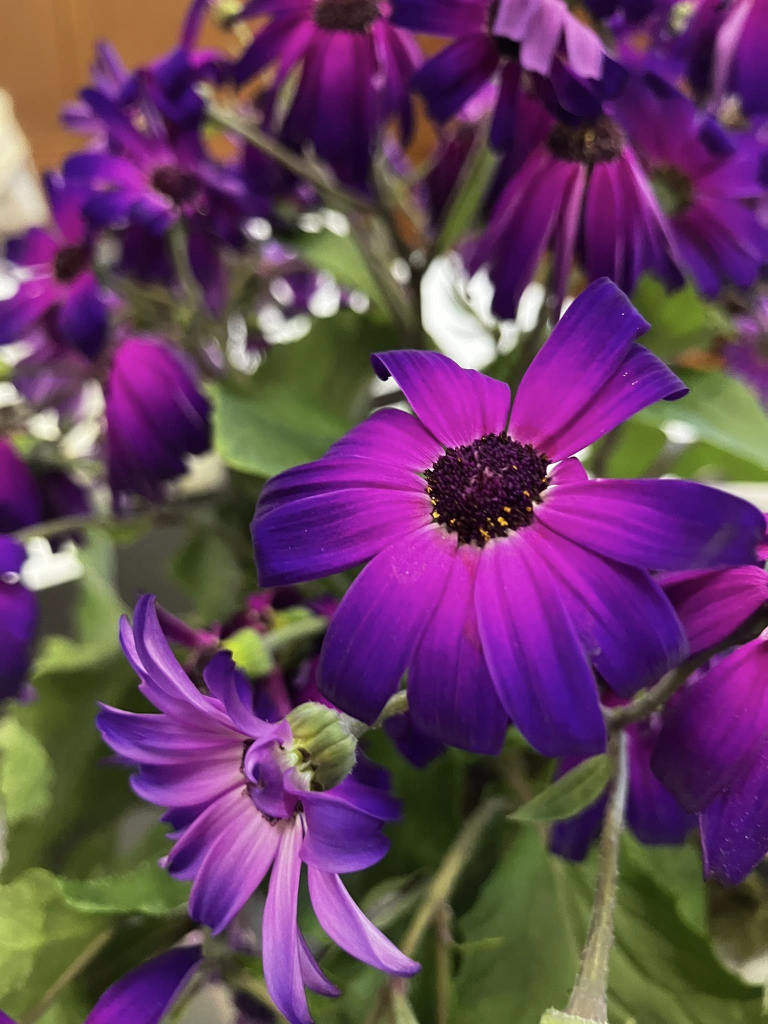
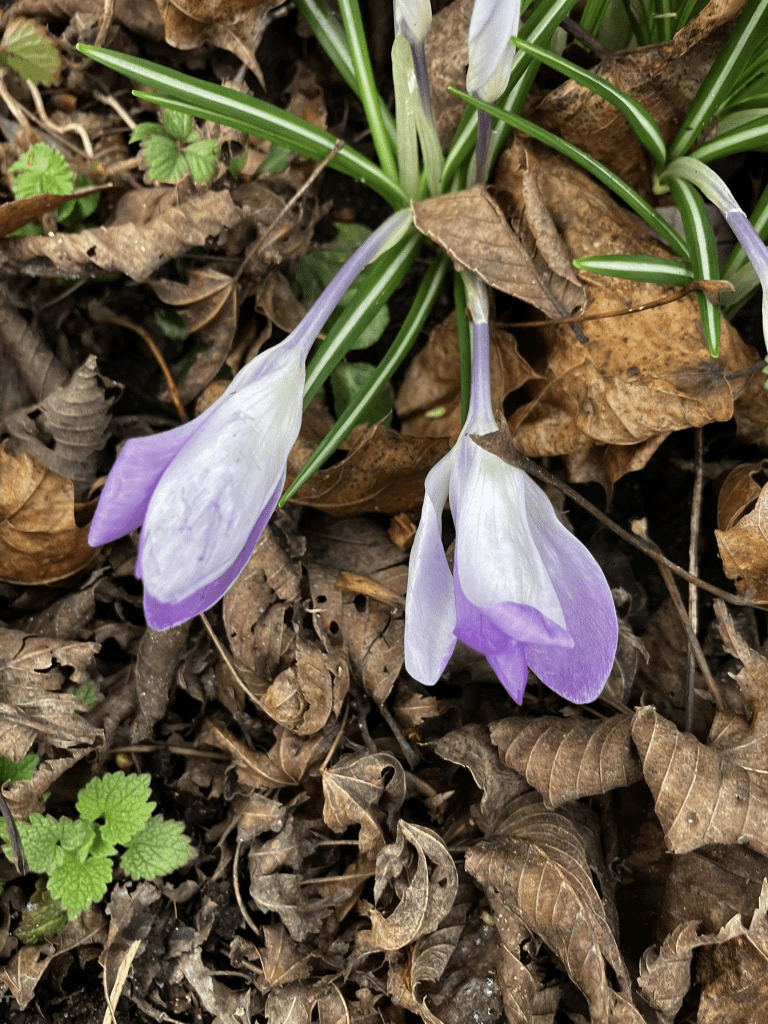
I arrived home yesterday afternoon after spending time with national colleagues at the Epilepsy Foundation Leadership Conference. Giving a nod to the awareness color for our community, the theme for the conference was, “Paint the Future Purple.” When I approached my front door, with great surprise, my newly-turned-purple hydrangea took my breath away.

Having spent time with my wider community in Atlanta this last week, painting the future purple, I continue to be surprised by the power of what can be created, simply by making space for joyful possibilities.

Renee Roederer

Kinship: “Share the Same Soul”

Jia and Zuri say they are twins. In fact, they tell everyone. They are four years old and go to the same preschool. They are remarkably close and sometimes assert their unique relationship by choosing to wear matching clothes.

Jia is white, and Zuri is black.

When folks ask them what makes people twins, the girls say, “Similarities.” They talk about how they are more than just sisters — certainly more than best friends. Their birthdays are close together, and they are the same height. They like the same things.

Recently, at a birthday party, another child told them they can’t be twins because of their different skin colors. Jia began to cry, but then, she responded with this statement: “We’re twins because we share the same soul.”

Very sweet.

It may also feel precarious. It is easy to wonder how society might deny these girls their connection, and worse, over time, treat them differently based on race.

But they demonstrate a deep connection that sustains them. They assert a vision for that connection with familial language. Why do we insist that things must be literally true, when they are in fact truer than true?

This is Kinship.

I wonder what we could learn from them.

Renee Roederer

Kinship: A Myriad of Entry Points

Words with Friends

So I love, love, love this story: He’s 22. She’s 81. Their Friendship is Melting Hearts.

This article from The New York Times tells the story of Spencer Sleyton and Rosalind Guttmann. There is a nearly 60 year age gap between them, but they became friends while playing the game Words with Friends on their phones. Spencer is a rapper and producer from East Harlem; Rosalind lives in Palm Beach, Florida.

The article starts with this really great line. Spencer Sleyton and his friends were sitting around one day naming their best friends. “When it was his turn, he said: ‘My best friend is an 81-year-old white woman who lives in a retirement community in Florida.’”

That was a bit of an exaggeration — maybe not best friends — but they had authentically become quite close. They were assigned to each other via the randomized game player process on Words with Friends, and then they played over 300 games. Throughout these games, they began to use the chat feature to connect, and then they shared wisdom from their lives.

Recently, Spencer Sleyton flew to Palm Beach to meet Rosalind Guttmann for the first time. Such a special experience. Two people who could have easily been strangers now have a special bond.

This is Kinship.

And it’s a reminder that just about any occasion or medium can make this possible. In this case, even a Words with Friends app!

I find myself reflecting on this in my own life and in the lives of people I hold dear. I think about how many simple occasions became entry points to build such life-giving and formative bonds. Many times, I could not have foreseen where they would go.

One common entry point in my relationships seems to be coffee shops.  I think about how many meaningful relationships started with getting coffee somewhere. I can look back on various locations and think about them with names attached. This is where I met _______. Here’s where I met ________. Now, these are the kinds of people I cannot imagine not knowing.

There have been other launching points: Returned emails; sitting next to someone at a meeting, then realizing commonalities; Facebook chats, including with people I’ve not met in person; being introduced via shared friendships; showing up for a Meetup Group event.

It always starts somewhere. It can start just about anywhere.

So what new occasions might open doors for Kinship, maybe even soon? We can look for these. We can cultivate these.

Renee Roederer

Mental Health Monday: Need Away, Friends

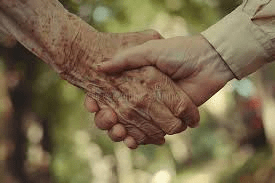
Two people clasping hands. Public domain.

All people in this world have needs that are particular to themselves.
Every person.

And

All people and all communities have unique and particular strengths to share.
Every person, every community.

I’m not sure if we can ever truly run from need, because human need is one of the most honest and real things about us all. But we definitely try. There may be a number of reasons for this. Among them, we’ve internalized lot of cultural narratives about individualism, self-sufficiency, and the belief that we must produce and earn love and belonging. (Psst, those are myths. Dangerous myths).

But those cultural narratives take form in our thoughts and feelings…

“I’m a burden.”

“I’m too much.”

“I don’t want to over-ask.”

“I don’t want to trouble.”

“They’re going to get tired of me.”

“I can’t voice this.”

Soon we’re speaking narratives about ourselves, and we run from our need and from one another. But again,

All people in this world have needs that are particular to themselves.
Every person.

And

All people and all communities have unique and particular strengths to share.
Every person, every community.

There is no shame in any of this. We can embrace these parts of ourselves. We can share these parts of ourselves. We can love these parts of ourselves.

Need away, friends. Welcome to humanity!

Renee Roederer

Clarence

File:Orb weaver spider web.jpg
Orb spiderweb, public domain

My house has a spider. (Not on the inside.)

Outside, around the frame of my front door, there is a spider who over the last couple of weeks keeps choosing this spot to make a web. I named him Clarence. He’s a red spotted orb weaver, and around this time each year, red spotted orb weavers show up in my neighborhood and around my house. I used to be afraid of them, but a couple years ago, I had another orb weaver who chose the same spot, and I have a really sweet story about rehoming him. (His name was Herbie).

If you’ve followed along this far, sure, you may already think this post is weird, but you’d be surprised how naming spiders can make you less afraid of them. 🙂

Anyway, sometimes, I have to take a broom to Clarence’s web, because, you know, front door. But other times, I’ll just use the backdoor. We’re co-existing. I figure I can do this for a couple of weeks. Plus, these webs are so extraordinary if you take the time to view them. I’m impressed with Clarence.

What I’m most impressed with is his persistence. Yesterday, was a broom day (sorry, buddy). But around 6pm, sure enough, there he was starting anew. And of course, once this geometrically neato thing is built, he just… waits. He’s persistent, and it’s patient.

And yes, I’m anthropomorphizing, and he’s a character now. But if we pay attention to the beings around us, we might learn some lessons too.

Renee Roederer

I Totally Did/Didn’t Do That

The bloom of a hydrangea plant in my front yard.

The other day, I noticed something lovely—a budding hydrangea bloom in my yard. This is the first plant I’ve ever put in the ground myself, and it made me smile.

On one hand, I totally did that. I ordered the plant online, shoveled a spot for it, and placed it into the earth. I considered the amount of sunlight and felt confident it would receive enough rain. There’s real satisfaction in knowing I played a part in making this happen.

But at the same time, I totally didn’t do that. I didn’t make the bloom appear. The growth and blooming happened on its own, something beyond my actions. I just provided the space.

Community is like this too. We can create the conditions—making space for people to connect, for ideas to grow—but the actual growth happens on its own. The transformations we hope for aren’t something we can force or fully direct. We simply make space, and then something deeper takes place.

Renee Roederer