A recording will definitely do, but if you can listen to the real birds outside chirping away, even better. Bird songs calm our nervous systems.
Fun Facts: The sounds of birds are lovely, and they remind us of spring (great things). But they’re also calming for evolutionary reasons too. When our early human ancestors heard birds chirping and singing in the trees, that meant there probably weren’t any predators around. So everyone could be more calm and less on guard.
And our bodies remember this. So listen away!
Bird songs, along with other forms of calm, activate our parasympathetic nervous systems. And in a time of collective trauma, this is what we need. Our autonomic nervous systems have a 1) sympathetic nervous system which ramps up our ‘fight or flight’ responses, and a 2) parasympathetic nervous system which calms them down.
So in times of stress and trauma, we want all the life hacks we can muster to activate the parasympathetic nervous system.
* I want to thank Shannon Dingle for a series of tweets she did in which she gave some valuable ‘trauma life hacks.’ I’m borrowing her phrase, so I want to give a nod to her work and her Twitter handle: @ShannonDingle
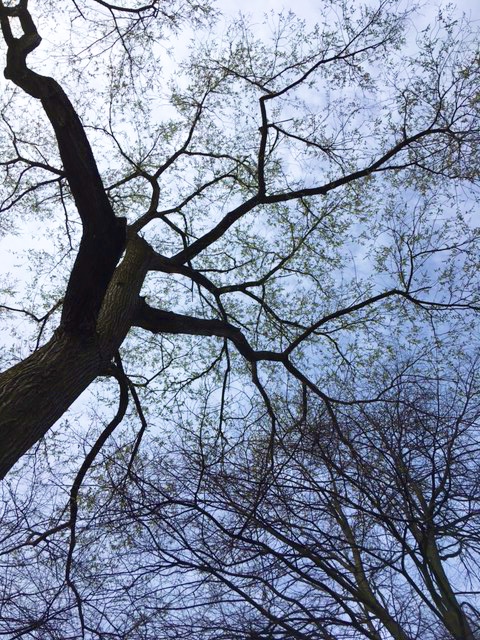
After all our lovely days of spring so far, we got a throwback yesterday to winter. The snow didn’t stick around for long, but for a few hours, it was gorgeous.
Photos of snow lining the branches of trees with a clear, blue sky.
Protestors hold two signs which read, “Is my son next?” and “#BlackLivesMatter.” Public domain.
Twenty minutes before the announcement of Derek Chauvin’s guilty verdicts, police in Columbus, Ohio shot and killed Ma’Khia Bryant, a 16 year old girl who lived in foster care.
A photo of Daunte Wright and his child. Photo Credit: The Wright Family.
CN: Police Killings of Black People, Gun Violence, Grief, Loss of a Child
Yesterday, the jury in the Derek Chauvin trial began their deliberations. In the midst of the uncertainty of what may come next, Minneapolis looks like a military zone. This morning, my thoughts are with Black community members and activists there. They are with people everywhere who feel the grief over George Floyd’s death and anguish over police brutality across this country.
During the Derek Chauvin trial, also in the Minneapolis area, officer Kim Potter killed Daunte Wright, a beloved, 20 year old Black man. He was a son, a father, and a friend.
And here’s a thought that keeps emerging in my mind…
When George Floyd was killed by Derek Chauvin in a horrific, brutal way on camera — when he struggled to breathe, begged for his life, and called out for his Mama,
surely, Katie and Aubrey Wright, Daunte Wright’s parents, imagined,
What if that was my son?
And then, horrifically, later, It was.
I imagine every parent who lost a child to police violence first saw a previous story in the news and thought,
What if that was my child?
only for it later to be their child.
This is devastating, It is psychological violence, It is physical violence.
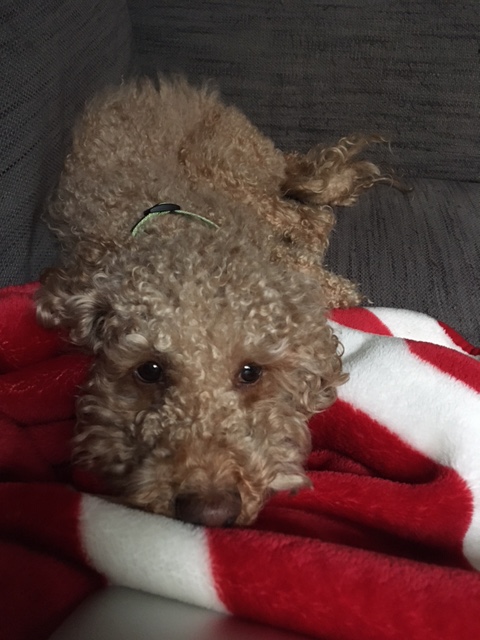
My precious Golden Doodle friend wants me to pet him on the head.
About once a month, I have the privilege of watching my friend’s dog for a 3-4 days. I’ve written about this dog several time on this blog because I always learn something from him.
I say it is a privilege to watch him because he is such a joy. He’s wonderfully playful and very chill, alternating between these but never hyper or super-barky. And he’s so attentive. It seems he’s always aware of me, just paying attention and noticing, either passively or actively. When I get up, he gets up. When I move to a different room, he follows me. When he’s with me, he’s very attuned to me.
He’s also a natural therapy dog. He was never trained as such but he’s functioned that way for many people. He’s well known and very beloved on the University of Michigan campus, and students love to be greeted by him and have a chance to pet him.
He’s also super snuggly. He’s a giver dog. I’ll be on the couch, watching tv, and all the sudden, I’ll feel his head rest on my feet as a pillow. Or he’ll cuddle right up next to me, and it makes my heart full.
Yes, a giver. But today, I want to talk about how he’s a receiver.
He loves scritches. He likes when I pet him under his chin. I think he likes all that snuggling for himself, not just as a gift to me. I found myself thinking about this over the weekend.
I mean, yes, he’s a dog. Like all dogs, he enjoys all of that. But I was thinking about how receiving is a natural part of his life. I’m not sure why so many humans resist receiving from each other. Sometimes, we don’t like to be helped, or seen, or complimented.
This lovely, vicarious dog I have never says, “Oh no, I’m fine,” refusing to let me be the giver. He never seems to feel guilty for receiving. He never says, “Oh, I feel like such a burden.” He doesn’t get up to clean the whole kitchen to prove that giving is what his role is supposed to be. He doesn’t seem to believe he must be productive at all times. He doesn’t do a million things for me out of fear that I might leave him if he doesn’t please me perfectly. He doesn’t hide under the couch, afraid that I might see him, know him, and care.
So why do humans do and feel the equivalents of all of these things?
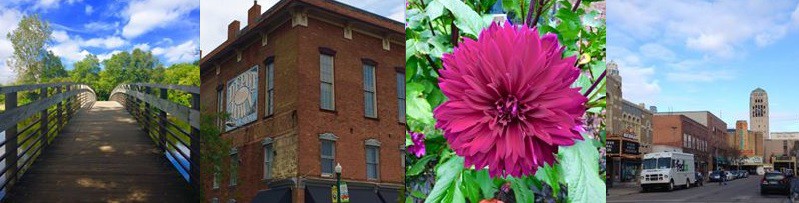
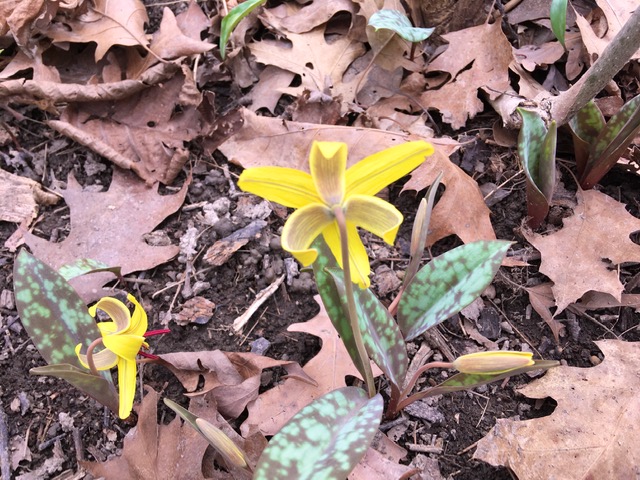
I’ve started a new photography project. After my autumn journey of walking the Border to Border Trail, I’ve decided to go exploring again this spring. This time, I’m visiting all 163 parks in Ann Arbor — and in alphabetical order! We are truly fortunate — and frankly, privileged — to have so many beautiful, set-apart, outdoor spaces.
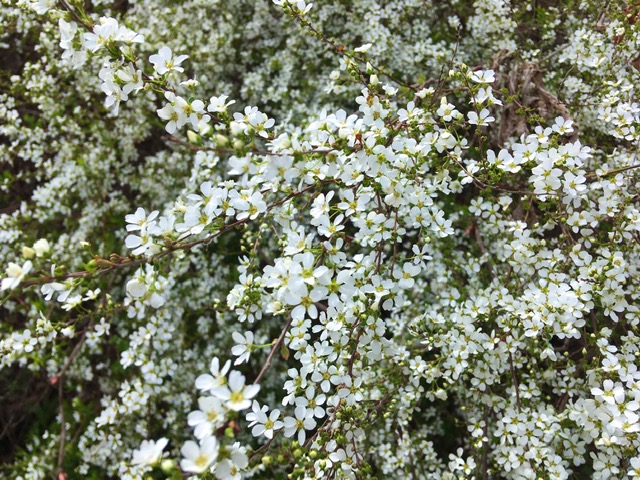
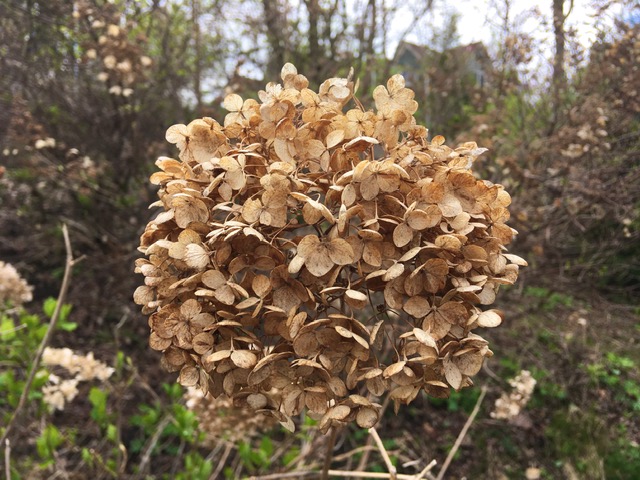
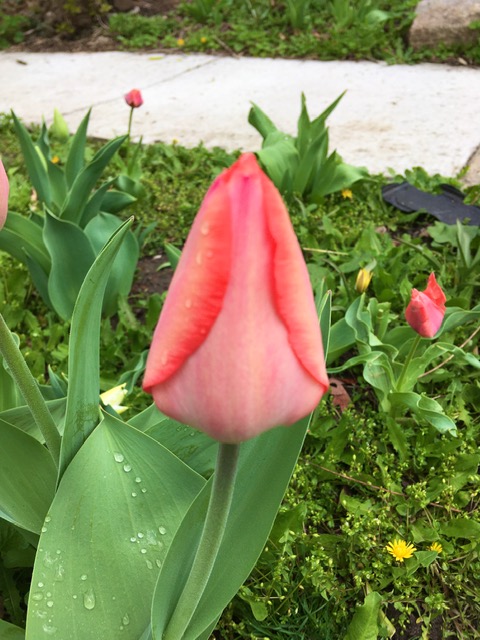
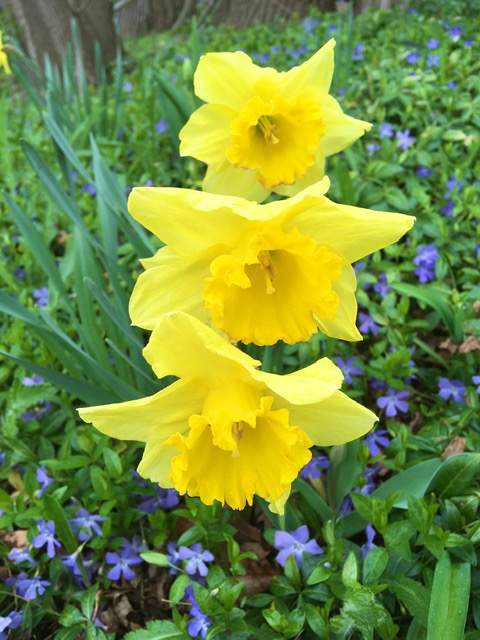
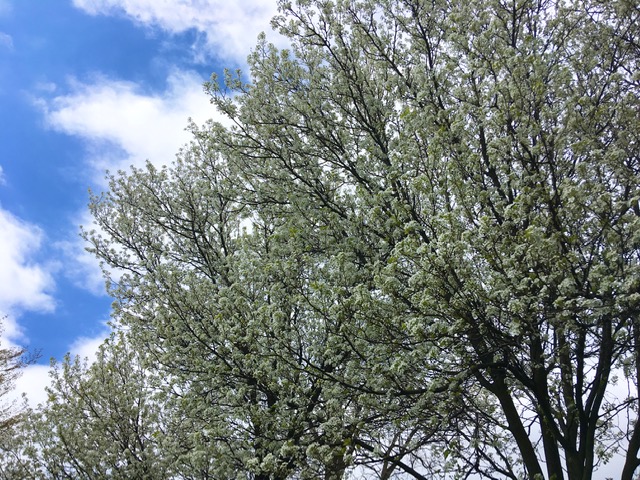
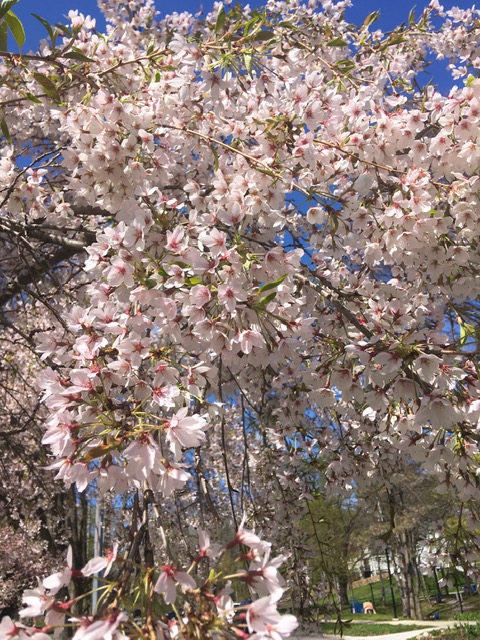
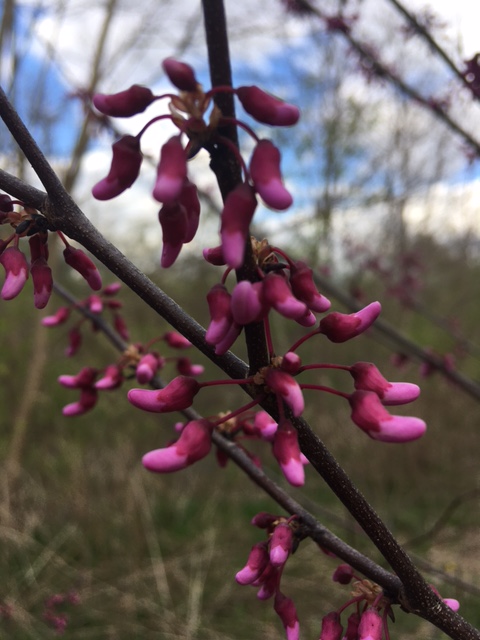
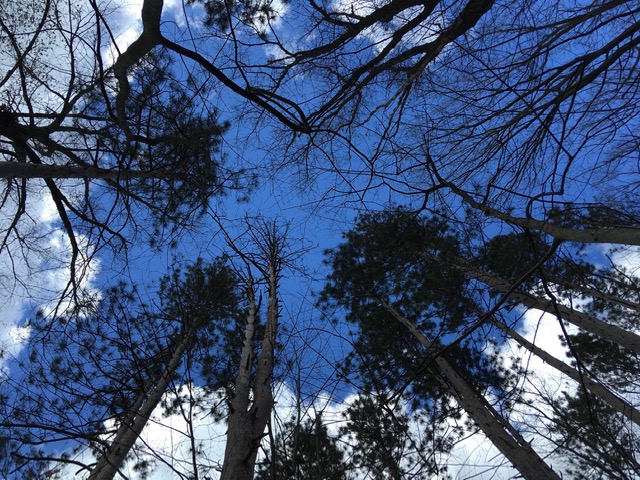
Here are some of my favorite photos from this week. Flowers, trees, and blue skies…
Image Description: The earth and the moon. Public domain image.
These days, it’s so important to give and receive gentleness from one another.
Gentleness is a consistent human need, but right now, we may need it in a particularly deep and present way. Our world seems to be reeling from waves of trauma. When we hold awareness of traumatic pain, whether we’ve experienced it directly or felt it via the news cycle, our bodies, minds, and spirits can be deeply affected.
Waves of trauma in our world are not new, of course, but right now, we are especially aware of injustices and forms of insecurity – white supremacy, economic inequality, numerous natural disasters, deportations and family separations, and violence on a massive scale. To be aware of these things is not merely to know about them but to be affected by them.
We need action – decisive, creative, and disruptive action to adequately address and rectify all of these.
And alongside that action, we also need gentleness.
Our bodies need it, our minds need it, our emotions need it, our sense of spiritual longing needs it.
And perhaps, our sense of time needs it too. Here is a paradoxical thing I have learned over the years about trauma:
Trauma often distorts time. This is especially true in a post-traumatic experience. A small detail in the present moment can suddenly pull us back into the past, making it feel as though a past upheaval is happening right now. Likewise, a small detail in the present moment can suddenly ignite anxiety, causing a tailspin of fear in which we imagine a future where the upheaval might repeat itself. In these ways, trauma can bookend the present moment with a past and future that feel quite painful and insecure.
But with gentleness,
Trauma also opens up time. This is a pretty miraculous thing. There is also concept called post-traumatic growth. (Watch this video). Some people who experience the upheaval of trauma are able to remake their lives and live them more deeply, often with a greater sense of love and spiritual meaning than they might have had before. This is in no way to suggest that the trauma is somehow a good thing or a blessing in disguise. Certainly not. But post-traumatic growth can happen alongside the traumatic distortion. When it comes to a sense of time, there can actually be a bit of reversal of what I’ve articulated above. Good memories and meaningful relationships can be internalized in such a way that they are felt as deeply present. Beloved people and life-giving moments from the past and hopes for the future can feel more accessible in the present moment among people who have experienced post-traumatic growth.
So what helps people experience this kind of growth? Two things are very important:
1) being surrounded by a community of care with relationships that add gentleness and sustaining presence
and
2) becoming enabled to make meaning of the traumatic experience, while learning to create a new narrative with that meaning.
So these days, in this time we’re living, I wonder,
Can our world collectively experience post-traumatic growth? Can this be a collective awakening toward deeper love and greater meaning?
Those questions are not easily answered, so they linger.
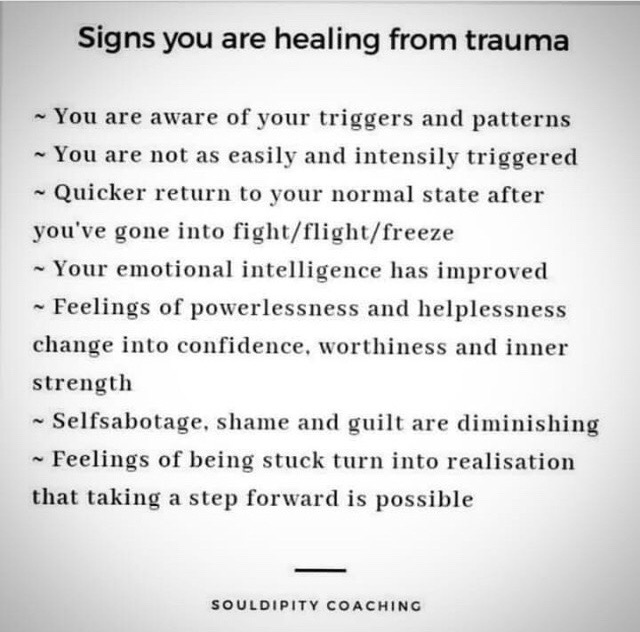
Image Description: A list from Souldipity Coaching. Gray background, black text. The text is written out below in the post.
During the COVID-19 pandemic, we’ve been living a time of collective trauma. In the midst of it, it may be helpful to hear this again and repeat it to ourselves; we need reminders to be gentle with ourselves and one another.
These things are true as well: -It’s okay to be upset and in a place of need in our lives. -It’s okay to feel confused and unsure of what to do about it. -It’s okay (and good, even if it doesn’t feel easy) to seek help for trauma, pain, or difficulty.
For the sake of our own health, that of our family, and that of our community, I think this is a good time to learn more about trauma — not only because of this collective one we’re facing, but also, because some of us have been carrying and processing previous traumas for a good while now. Or we may feel stuck in physical trauma reactions without knowing that’s what’s happening inside our nervous systems. This is particularly true if we are cycling through these physical fight, flight, freeze, or fawn reactions, but are not quite aware of a single event or storyline to point to as their cause. (<— Helpful link there)
I really appreciated this image that I placed at the top of today’s post. It’s a list from Souldipity Coaching. I offer it as encouragement, particularly if we want to celebrate the ways we have already healed. It reads,
Signs you are healing from trauma
-You are aware of your triggers and patterns -You are not as easily and intensely triggered -Quicker return to your normal state after you’ve gone into fight/flight/freeze -Your emotional intelligence has improved -Feelings of powerlessness and helplessness change into confidence, worthiness and inner strength -Selfsabotage, shame, and guilt are diminishing -Feelings of being stuck turn into realisation that taking a step forward is possible
That’s encouraging, isn’t it? And if you read this and think, “I’m not there yet…” I still want to offer that encouragement. We’re always in process, and these things can become true for us:
–You can become aware of your triggers and patterns –You can learn how to regulate your nervous system so it’s not so easily and intensely triggered –You can have quicker return to your normal state after you’ve gone into fight/flight/freeze/fawn –You can grow in your emotional intelligence –You can change your powerlessness and helplessness into confidence, worthiness and inner strength –You can diminish self sabotage, shame, and guilt –You can shift your feelings of being stuck and realize that a step forward is possible
Therapy is crucial for healing trauma. If you can, please seek it out.
Community is crucial for healing trauma (it can’t stand in for a therapist, but it’s also just as important). If you can, please seek this out.
Our best inner resources are crucial for healing trauma, and we all have them. If you can, please activate them. And remember, you don’t have to do this all by yourself or by your own strength alone.
Opportunities to check in with each other are crucial during times of collective trauma. It’s good to check in personally with loved ones and invite others to check in with us. I hope you hear that intention in this post too. If you need someone to talk to, I will listen.
Today, I’d like to share this video from Dr. Nicole LePera, who goes by The Holistic Psychologist on social media. I highly recommend her Facebook and Instagram accounts as well as her YouTube Channel.
She asks, “Do you have trauma brain?” Here are some signs she mentions:
1) Obsessive desire to be chosen by others without any awareness about how you and your body feel about the connection
2) Chronic social anxiety
3) Need for consistent distraction
4) Ego states of self-judgment and comparison
5) Lack of trust that leads to procrastination, self-sabotage, and shame cycles
If you notice any connections or resonance with these, be kind to yourself, know you’re not alone, and know that you can find help for these.
Image Description: The top says, “What we think healing will look like,” and the bottom has a pie graph with various responses to “What healing actually looks like.” This image is by @heidipriebe. Text in full below.
Healing is… not always easy. But it’s deeper and fuller than coasting or living in a conflicted way. Maybe there are rifts we need mend in our relationships. Maybe we need to stand up for ourselves. Maybe we need to be kinder to ourselves. Maybe we need to apologize.
There’s a solid, light blue circle filled in full with the response,
— Meditating peacefully
Then below, there’s a pie graph with a deeper and fuller list.
“What healing actually looks like”
— Unpacking Trauma — Having Difficult Conversations — Taking Radical Responsibility for Your Actions — Implementing Healthy Routines — Setting & Enforcing Boundaries
What does this evoke in each of us?
During a recent Zoom worship service, someone mentioned one of Jesus’ teachings from the Sermon on the Mount that I haven’t thought about in a while — the portion about the speck in your brother’s eye and the log in your own? I think that probably landed in a really humorous way in its original context because it’s so preposterous. I once heard a translation that said, “How can you get the sawdust out of your brother’s eye when you have a telephone pole in your own? First take the telephone pole out of your own eye, and then you will see clearly to take the sawdust out of your brother’s eye.”
It made me laugh. I just imagine someone knocking others over with their telephone pole while they try to analyze and pick at others. Ouch, but also very cartoon-y. It’s a silly image about a very true experience.
We all have our work to do. Let’s choose the deeper healing.