I Can Hardly Believe This Happened

homeboy

So I’m an external processor.

I mean, you probably know this about me. I do blog five times a week. But beyond that, I live for the rhythms that allow me to reflect in words with others. Given my calling, I am privileged to receive the reflections of a large number of people on a regular basis. And I too, love speaking my own.

Well, two days ago, I found myself wanting to process some things that have been on my mind and heart. Over these last few months, been pondering my own sense of calling and all the gifts it has given me over these last twelve years. Throughout the ups and downs and winding roads of it, I marvel at the sense of community that has been built over time. These days, I feel a desire to rededicate myself to that calling and larger community vision.

In the midst of pondering these things earlier this week, I had so many thoughts and questions. Then I suddenly thought of Father Greg Boyle and said inwardly, “I wish I could talk with him about all of these things.”

Greg Boyle is the founder and spiritual leader of Homeboy Industries in Los Angeles, an organization that provides healing, hope, jobs, and economic opportunity for people who were recently incarcerated or have left gangs. He is also the author of Tattoos on the Heart, my very favorite book. In that book, Greg Boyle tells the stories behind the community at Homeboy Industries, reflecting theologically as he invites us into a spiritual practice of kinship and deep belonging.

I have admired Father Greg and the entire community at Homeboy Industries for years. When I lived in Southern California, I met him briefly once, and twice, I sat through the daily Morning Meeting at Homeboy Industries. This is a really moving daily practice where the whole community begins the morning together with laughter, celebration, and a “Word of the Day” meditation.

In addition to the general admiration I’ve had for Father Greg all these years, on Monday, I found myself actually wanting to talk to him, because I knew he was the perfect person to understand some of my reflections, questions, life directions, and stories.

So. . . perhaps because I needed to externally process something, I created a post on Facebook.

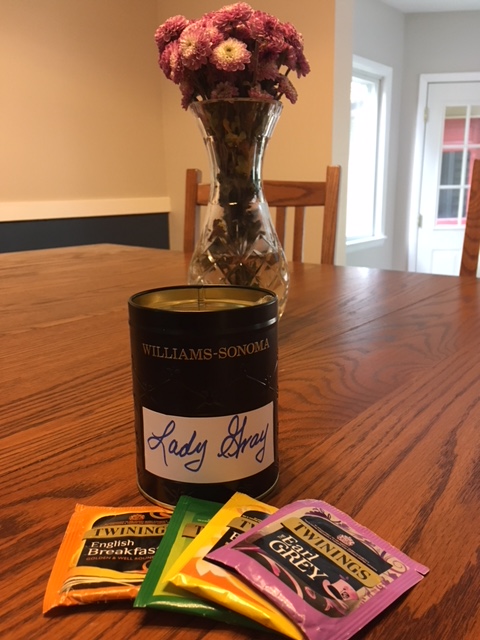
I shared a photo of a cup of coffee and wrote,

If you could sit down with anyone, dead or living, to receive some life advice, maybe over coffee or tea, who would you choose?

I have so many questions right now for Fr. Greg Boyle.

You?

And here’s what I can hardly believe: In less than a minute — less. than. a. minute. — a friend of mine told me that a relative of hers is married to a relative of his, and that she could actually put me in touch to have a conversation with him.

Then later in the day, another person told me that her own good friend and colleague is also a very close personal friend of Father Greg. She could also put me in touch with him.

So. . . at some point in the next month, I think I’m actually going to try to make some plans to talk to Father Greg Boyle about my own calling pathway.

And I can hardly believe this has happened!

Renee Roederer


We Can Choose Peace Over Productivity

bridge

Once more, I’m mindful of the impacts of the Me Too conversations happening on social media this week. In the midst of them, perhaps it is important to remind ourselves,

We can choose peace over productivity.

In fact, there may be a number of situations and contexts where we need to hear such freedom.

We really can choose peace over productivity.

We have constructed our culture in such a way (in fact, this is part of the Patriarchal way of organizing ourselves, and it hurts people of all genders) to value productivity above much else — including our own wellbeing and the wellbeing of our neighbors.

When we are hurting, how often do internalized messages bubble up to the surface, conveying. . . ?

“Come on. Get on with it.”

“This isn’t as bad as what ________ experienced. Why can’t I get anything done?”

“I don’t have time to think about this. I have so much to do.”

“Look competent.”

“Get it together.”

These are self-critical messages in contexts where our productivity and our constructed image are viewed more highly than our true selves and our need for wholeness.

Well, guess what matters more?

You — the real you — and your wholeness.

We can choose peace over productivity.

So what space do you need today?

Renee Roederer


Me Too: Some Impacts

me_too

Last night, a multitude of people wrote two words on their Facebook Timelines: Me Too.

For many, these words were intended with at least two purposes:

1) to signify how widespread sexual harassment and sexual assault are in our culture (folks shared that these have happened to them; it’s not hard to see how large the numbers of people are who have been affected)

and

2) to signal to people that they’re not alone if they’ve experienced these.

While numerous people wrote Me Too on their Timelines, others chose not to do so. There are a number of reasons why people might make such a choice. It’s important to say this:

No one needs to share such words or the experiences behind them in order for those experiences to be real and believable. And no one has to share such words or the experiences behind them for one’s personhood or bravery to be affirmed. If you found yourself grappling with these last night, please know that you are indeed brave, and your personhood is indeed affirmed. Self-disclosure is always a choice.

Today, we are becoming more aware of the impacts of last night’s words. As we do that, we should be mindful of this:

Because self-disclosure, even if only two words, happened in massive numbers last night, many people are remembering some of the worst abuses of power they have ever experienced in their lives. In addition to recalling such moments mentally, our bodies remember too. Old emotions of misplaced shame and guilt can be ignited. These were often internalized in the moment of abuse, though folks were not at all at fault.

This is a good day to be gentle with ourselves and others.

Many people won’t want to be asked about their posts or these challenges (please keep that in mind) but we should be aware that many people will be suffering inwardly today.

My best thoughts are with any who are struggling through painful memories and physical feelings today. If you could use a person to talk to about any of this, please reach out.

Renee Roederer


Transformative Care For Ourselves and Others

belove

A few days ago, I watched a really helpful video from James Finley. He teaches at the Center for Action and Contemplation, founded by Richard Rohr. He wanted to discuss ways to care for ourselves and others during times of collective trauma.

As we know, people around the world are experiencing numerous challenges that are deeply disturbing. We are living in a time of great inequities and injustices. As we experience these directly or hear about them through the news, we are affected.

I find these words to be comforting and helpful. I encourage you to take some time to view James Finley’s video: A Message from James Finley.

Remember

bread

When we make space to be present to the moment before us,
When we create intention to notice the surroundings around us,
We are soon reminded of people.

Isn’t that true?

We walk around the grocery store and see a food item that someone especially likes.

We cross an email off our to-do list and remember someone we’d like to check in with later.

We smell a comforting scent and remember the people present in a long-ago memory.

The remembrances of people are around us all the time. This means we are invited into community all the time.

I find myself thinking about the word ‘remember.’ Though we don’t typically think about it this way, in English, the word is literally phrased as ‘member again.’ This is a way to express belonging. In community, we are members of one another. We belong.

And when Jesus shared his very last meal with his closest friends and confidants, he blessed bread before them, and broke it, saying, “Take and eat. This is my body broken for you. Do this in remembrance of me.” He then poured the cup of wine before them and said, “Drink this, all of you. As often as you do so, do this in remembrance of me.”

In the recounting of this moment, the Greek word for ‘remember’ means ‘to make present.’ Jesus is not simply asking disciples to think about him when they eat future meals together. He is asking them to reenact this moment in a way that makes him present.

In this very Sacrament, and
In a life of sacramental living —
noticing, reflecting, contemplating —
people become present to us all the time.

So when we remember them —
as they are membered once more in our thoughts,
and made present to us —

perhaps would be meaningful if we reached out to say hello, making ourselves present too.

Renee Roederer


Space For Our Names

Last weekend, Ian and I had a really wonderful opportunity to travel to the Upper Peninsula of Michigan for a few days. It was a needed gift to change up our routines, do some hiking, explore new areas, and see some beautiful fall colors.

One thing I try to do occasionally, especially in times of stress, is make some space to simply notice things. From time to time, it’s good to just let the surroundings speak to us.

This weekend, I noticed one thing that will stay with me for a long time:

On Friday, we walked into a café in Munising, Michigan. It’s called Falling Rock Café and Bookstore. As soon as we stepped in the door, I was moved by a particular sight – a huge number of mugs hanging on hooks. Each mug was labeled with a person’s name. Four whole walls of mugs and names.

All the mugs represented the regulars from the community in Munising.

There were rows and rows of first and last names. Some labels used relational titles like “Rev. _____” and “Coach _____.” I saw many Indigenous names. I saw some names in quotes, a nickname inserted between a person’s first and last name. All of these people could pull their own mugs down from the wall and order coffee.

This was all so touching. These mugs were a symbol of welcome. These mugs were a symbol of being known and valued.

I teared up a bit as I stood there looking at these long lines of mugs.

We all have a deep, human longing to be known and welcomed just like this. We need to know that we belong in our communities – that there is space for us.

Space for who we are. Space for our very names.

Renee Roederer

Let the Trees Speak to Our Roots

Today’s piece is a re-post and one very connected to this time of year. Enjoy!

trees

I had a total geekout yesterday about these trees.

When I walked out of the gym, I just stood there, stunned that so many gorgeous fall leaves were present in one place. Of course, I did more than just stand there. I took a bunch of photos and recorded a goofy, geekout video on Snapchat.

Beyond the worthy geekout, however, these trees also remind me of something. I think they’re a valuable symbol, especially as we feel fatigued and on edge during this season.

Every autumn, trees reveal their vibrant colors
when their energy is shifted toward their roots.

All spring and summer, leaves gather energy for sustenance and growth through their photosynthesis process. When the autumn begins, leaves don’t really turn red, orange, yellow, and brown. They are revealed to be red, orange, yellow, and brown. In preparation for winter, deciduous trees stop their photosynthesis process. As a result, the accompanying color of green recedes, and we see the revealed colors of these leaves. This process prepares for the winter season in which roots can continue to thrive and grow.

When we see the vibrant colors of autumn, we might also make spiritual analogies and ponder our own rooting process.

As we think about the present moment we’re living, and the future we want to live,

What forms of energy do we need to shed?
What forms of energy do we need to pursue?

To what and to whom are we rooted?
With what and with whom are we connected?

How can a sense of groundedness reveal beauty?
How can rootedness help us see the worth and value of our neighbors?

During this season, when we see the trees (and potentially, have a geekout) perhaps we can ponder these kinds of questions. As I watch trees make these changes, I like to imagine that their energy and focus is moving into the ground — into the most foundational parts of being — and I find myself wanting to do the same.

What do we need to bring inside ourselves toward the most foundational parts of our being?

Grace
in the midst of divisiveness?

Joy
in the midst of strife?

Conviction
in the midst of cynicism?

Justice
in the midst of violence?

Peace
in the midst of anxiety?

Let’s ponder these when we see the leaves.

Renee Roederer

Life Finds a Way

moon1

Am I foolish for believing that we can create a better society? A deeper way of living through empathy? A better way to organize ourselves toward care and human flourishing?

I don’t know. It’s possible that such hopes are absolutely foolish, but I still want to believe them. I bet you do too. And if we don’t dream better, we’ll never do better.

Whether this is foolish or ultimately hopeful, I will tell you something I do believe at the core of my very being:

I believe in the Mystery of Goodness.

I believe that life finds a way.

Despite the harm we cause the earth and one another, remarkably, goodness still shows up. In fact, it is a bit of a Mystery, isn’t it? Alongside the suffering, love often finds us in completely unexpected ways. And we ourselves are empowered by strength within us and beyond us to reach out and cultivate that kind of love too.

We lean into this Mystery of Goodness –
the second chance,
the sudden surprise,
the hilarious synchronicity.
the grace received.

Life truly finds a way.

Now here’s where I make a silly nod to a movie: Remember that scene in Jurassic Park where Dr. Ian Malcolm, Jeff Goldblum’s character, discovers that the dinosaurs on the island have figured out how to procreate, even though they are all female? Biology has kicked in and created an alternative method. To the dismay other scientists, he says with annoying conviction, “Life, uh, finds a way.”

I do not deny the harsh realities of violence, trauma, and loss in our world. Sometimes pain is unleashed in ways that can never been fully rectified or fully redeemed. We ache in these moments.

And yet —

The Mystery of Goodness finds us and can fill us in sustaining ways. She gives birth to new chapters, new dreams, and new ways of being.

Do we dare hope for this?

Renee Roederer

Dreaming a Grace (Marlene Marburg)

I imagine a place
a-fire
people gathering, sharing
food and conversation and
their deep desires
for the way things can be
in this world at this time
in places
where Church is crumbling
and a new consciousness
of God in all things
(in joy and pain)
is emerging
without competition,
without striving to be or do anything.

I imagine listening and awakening, and holding
as precious each other
and each other’s gifts and each other’s dreams,
inviting each other to speak,
to show and tell stories,
to challenge and be challenged
by the arts,
to say what can only be spoken
in airy spaces,
to separate stifling rules and blinkered vision
from expansive love and kindness.

I imagine insight and discernment
and holy decisions and implementation.
I imagine shared prayer
and the uplifting grace of love
that won’t tolerate stinginess,
maintaining the way things have been.

I imagine leadership that enables
recedes from its own ego,
from the disabling power of self-doubt.

I imagine a ritual of reclaiming, reshaping
a communion of souls,
lifted and raised to the Mystery of God

the mystery of each other.

I imagine a quiet interior ‘yes,’
a buoyant ‘yes,’ risking the storms
which try to drown God’s feet in us.

I imagine daring and courage
until they are no longer such.

I imagine the ‘yes’ of Jesus
tipping tables and healing hearts,
the ‘yes’ disposition to all-things-God
that took him to Gethsemane.

I imagine post-resurrection people,
Pentecost people
living the unquenchable flame.

I wonder what you imagine.

This is the fifth and final piece in a series on feminist spirituality. Feel free to check out the others as well:

The Moon is My Petronus
The Rise of the Matriarchy
She
Can Our World Experience Post-Traumatic Growth?


Can Our World Experience Post-Traumatic Growth?

These days, it’s so important to give and receive gentleness from one another.

Gentleness is a consistent human need, but right now, we may need it in a particularly deep and present way. Our world seems to be reeling from waves of trauma. When we hold awareness of traumatic pain, whether we’ve experienced it directly or felt it via the news cycle, our bodies, minds, and spirits can be deeply affected.

Waves of trauma in our world are not new, of course, but right now, we are especially aware of injustices and forms of insecurity – white supremacy, economic inequality, numerous natural disasters, deportations and family separations, and violence on a massive scale. To be aware of these things is not merely to know about them but to be affected by them.

We need action – decisive, creative, and disruptive action to adequately address and rectify all of these.

And alongside that action, we also need gentleness.

Our bodies need it, our minds need it, our emotions need it, our sense of spiritual longing needs it.

And perhaps, our sense of time needs it too. Here is a paradoxical thing I have learned over the years about trauma:

Trauma often distorts time. This is especially true in a post-traumatic experience. A small detail in the present moment can suddenly pull us back into the past, making it feel as though a past upheaval is happening right now. Likewise, a small detail in the present moment can suddenly ignite anxiety, causing a tailspin of fear in which we imagine a future where the upheaval might repeat itself. In these ways, trauma can bookend the present moment with a past and future that feel quite painful and insecure.

But with gentleness,

Trauma also opens up time. This is a pretty miraculous thing. There is also concept called post-traumatic growth. (Watch this video). Some people who experience the upheaval of trauma are able to remake their lives and live them more deeply, often with a greater sense of love and spiritual meaning than they might have had before. This is in no way to suggest that the trauma is somehow a good thing or a blessing in disguise. Certainly not. But post-traumatic growith can happen alongside the traumatic distortion. When it comes to a sense of time, there can actually be a bit of reversal of what I’ve articulated above. Good memories and meaningful relationships can be internalized in such a way that they are felt as deeply present. Beloved people and life-giving moments from past and hopes for the future can feel more accessible in the present moment among people who have experienced post-traumatic growth.

So what helps people experience this kind of growth? Two things are very important:

1) being surrounded by a community of care with relationships that add gentleness and sustaining presence

and

2) becoming enabled to make meaning of the traumatic experience, while learning to create a new narrative with that meaning.

So these days, in this time we’re living, I wonder,

Can our world collectively experience post-traumatic growth? Can this be a collective awakening toward deeper love and greater meaning?

Those questions are not easily answered, so they linger.

But I know this: Gentleness will be important.

Renee Roederer

Hope to Sin Only in the Service of Waking Up 

by Alice Walker

Hope never to believe it is your duty or right to harm another simply because you mistakenly believe they are not you.

Hope to understand suffering as the hard assignment even in school you wished to avoid. But could not.

Hope to be imperfect in all the ways that keep you growing.

Hope never to see another not even a blade of grass that is beyond your joy.

Hope not to be a snob the very day Love shows up in love’s work clothes.

Hope to see your own skin in the wood grains of your house.

Hope to talk to trees & at last tell them everything you’ve always thought.

Hope at the end to enter the Unknown knowing yourself. Forgetting yourself also.

Hope to be consumed to disappear into your own Love.

Hope to know where you are –Paradise–if nobody else does.

Hope that every failure is an arrow pointing toward enlightenment.

Hope to sin only in the service of waking up.

This is the fourth piece in a series on feminist spirituality. Feel free to check out the others as well:

The Moon is My Petronus
The Rise of the Matriarchy
She
Life Finds a Way