
Donald Trump, president and chief executive of Trump Organization Inc. and 2016 Republican presidential candidate, holds up a Bible while speaking at the Values Voter Summit in Washington, D.C., U.S., on Friday, Sept. 25, 2015. The annual event, organized by the Family Research Council, gives presidential contenders a chance to address a conservative Christian audience in the crowded Republican primary contest. Photographer: Drew Angerer/Bloomberg via Getty Images
During the culminating speech of the Republican National Convention, Donald J. Trump took the stage to accept the Republican nomination for the Presidency. As he addressed the nation, the bulk of Trump’s speech was anticipated; a draft had been leaked to the press. Before he took the stage, I read that draft and braced myself to hear many troubling, discriminatory statements. But one remark blindsided me completely.
Toward the close of his speech, Trump’s voice, which had been loud and pointed, slowed and became more quiet. With a serious tone, he personally thanked evangelical Christians for their role in gaining him the Republican nomination. That’s when he expressed a desire I did not anticipate. He said he would like to repeal particular laws which prohibit religious leaders from endorsing specific political candidates from their pulpits and houses of worship. He said,
“At this moment, I would like to thank the evangelical community because, I will tell you what, the support they have given me — and I’m not sure I totally deserve it — has been so amazing. And has been such a big reason I’m here tonight. They have much to contribute to our policies.
“Yet our laws prevent you from speaking your mind from your own pulpits. An amendment, pushed by Lyndon Johnson, many years ago, threatens religious institutions with a loss of their tax-exempt status if they openly advocate their political views. Their voice has been taken away. I will work hard to repeal that language and to protect free speech for all Americans.”
After a lengthy, incendiary speech, this statement at the close knocked the breath out of me. I’m not trying to be overdramatic, but when I heard his words and the tone that accompanied them, I gasped and had to hold on to something. I almost fainted.
Clearly, Donald Trump spoke these words and meant them sincerely. As a Christian minister, this troubles me deeply. The implications are dangerous.
In WWII era Germany, the German Christian movement of the Church became enmeshed with German nationalism. During that time, the largest part of the Church pledged allegiance to the authoritarian dictatorship of Adolf Hitler and the Third Reich. The German Church also supported the Holocaust and washed its hands of the death and destruction it unleashed.
It is important to consider this precedent.
During his incendiary speech at the Republican National Convention, Donald Trump spoke dangerous rhetoric about Latin American and Middle Eastern people. At one point he shouted, “We don’t want them in our country!”
He repeated a refrain concerning his commitment to “law and order,” but he said nothing about the violence Black Americans are facing in our nation. That was erased from his speech entirely.
The separation of Church and State is vital. Without it, religious communities can be manipulated or forced to cower to authoritarianism. This can lead to violence. For this reason, it is important to consider the precedent of the German Christian movement. Trump’s speech at the convention made many assertions of white supremacy. We must not repeat the past.
Yesterday, while trying to calm and protect a man with autism, Charles Kinsey laid on the ground with his hands held up high on video, and a police officer shot him. When asked why he fired his gun, the officer said, “I don’t know.”
Thankfully, Kinsey’s injuries are not life-threatening, but the trauma and violence is very threatening.
Last night at the Republican National Convention, Mike Pence said that Martin Luther King Jr. was one of the heroes of his youth. In the very same speech, he listed the challenges that police officers are facing as they have experienced recent violence. Without question, these officers and their families personally deserve empathy for the losses they’ve recently endured, and violence against them must be decried. But there were also obvious omissions in the list of names and incidents of violence that Mike Pence chose to spotlight last night.
Black lives matter.
This phrase seems to enrage some. But it must be said because in the face of police violence and brutality — in the midst of numerous cases of police officers going uncharged or un-convicted after shooting and killing black lives — it is clear that black lives don’t matter to some. At the very least, we and our institutional systems regularly indicate that black lives matter less.
Last night, in another RNC speech, Alton Sterling, a black man killed by police officers in Baton Rouge, was listed as heroic, and people in crowd the muted their cheering. Some even booed.
Yesterday’s shooting is another horrific instance of violence. It’s true that not every police officer is personally responsible for what happened to Charles Kinsey specifically yesterday. But every police officer must be responsive to what has emerged as a clear pattern of violence against black lives in the system of modern policing. Most importantly, we must be responsive. We have to push and protest toward that change. We have to put that pressure on.
These patterns aren’t new, and they didn’t just emerge. Remember Rodney King all the way back in 1991? These patterns been happening for a long time. 2015 and 2016 have just really made them obvious.
This summer, I’ve had the opportunity to do some cross-country traveling on airplanes. Each one propelled me high into the air and landed me safely on a runway in an entirely different location. I’m not an enormous fan of flying; I certainly despise turbulence when I have to endure it. But this process gets me where I need to go, and I have grown completely accustomed to it. And if you think about it, that is truly incredible.
First of all, flying is truly incredible.
A well-crafted machine with jet engines climbs into the air at enormous speeds without ever falling to the ground or blowing up from its own energy. It begins an ascent from a narrow strip of ground. Then, with the expertise of pilots and precise instruments, it lands accurately on a completely different, narrow strip of ground. This seems so improbable, yet it happens more than 100,000 times every single day.
Second of all, my lack of anxiety is truly incredible.
We know that plane crashes are extremely rare. This puts my mind at ease. Many times, I’ve allowed my imagination to answer, “What would it be like if this plane just began to plummet?” But I never expect that, nor do I think about it in detail. This lack of anxiety is especially surprising, as every single journey begins with an in-flight safety video to discuss the best survival attempts for the worst possible scenarios. The ritual viewing of the in-flight safety video invites us to ponder complete disasters, but it concerns us so little that we often give it our minimal attention. We conclude that these situations are extremely unlikely, so we don’t allow ourselves to worry.
This is what surprises me the most. During certain chapters of my life, I’ve been prone to anxiety, but I don’t feel it while flying. I am hurled into the stratosphere, and it does not faze me. A mere, glass window stands between me and unbreathable air, but I’m not concerned. I descend to the ground at speeds unique only to this experience, but I feel no fear.
Yes, the odds of disaster are rare, but beyond this awareness, I have simply come to expect the best. The in-flight safety video does not convince me otherwise, even though it addresses the worst case scenarios imaginable. I expect to arrive safely.
When a plane flung me across the U.S. last week, I found myself reflecting on all of this. If I’m not worried thousands of feet in the air, why on earth do I regularly project and fear the worst case scenarios I can possibly imagine in my everyday life? Why do I do this during challenges less death-defying?
When I have a dream. . .
When I want to take a risk. . .
When I hope for belonging. . .
I know I could win a creative award for the imaginative genius I unleash upon my fears.
As I thought about these questions, this time, my imagination stepped in to aid me. I had a thought which immediately made me laugh aloud: What if we could create the equivalent of in-flight safety videos for our everyday fears?
I immediately began creating dramatic productions for everyday kinds of anxieties. . .
– How to survive the performance review
– How to survive the helicopter parent
– How to survive the dentist appointment
– How to survive the public run-in with the ex
– How to survive the 2016 Presidential Election
The list could go on and on.
While flying, I smiled on the plane as I began to direct my in-flight safety videos toward my own personal fears. I amused myself, wondering,
– What is the equivalent of the ‘unlikely water landing’ in this scenario?
– What is the life vest for this situation, and where is it located?
– What or whom serves as the exit, keeping in mind that the exit may be behind me?
– Who would I cast in the role of the ‘Smoking is not allowed on any Delta flight’ lady?
I invite you to do the same. I wonder, what worst case scenarios are you currently casting into your life? Can you find a way to laugh at them? Can you direct a video?
Most of all, can you simply come to expect the best –
that in the end, you will indeed land safely?
[I took this photo of Jack and Sharon Rogers after he received an Excellence in Theological Education Award at the 221st General Assembly of the PC(USA) in Detroit.]
With vivid clarity, I remember the moment I first talked with Jack Rogers.
I had just moved to Pasadena, California. As a new resident in the neighborhood, I wandered over to Pasadena Presbyterian Church. Little did I know at the time. . . My wandering was the first moment of a deep and meaningful chapter. I simply arrived there for worship that first Sunday. I did not yet know that I would eventually become the Associate Pastor of the congregation.
But before any of that would unfold, I was a new guest on a particular Sunday. After worship was over, I joined others on the patio for coffee and conversation. That’s when I spotted Jack and Sharon Rogers. I recognized Jack right away because he had been a colloquium speaker at Austin Presbyterian Theological Seminary while I was a student.
“Wait, Jack Rogers attends this church?” I asked myself with excitement. I decided to walk over and introduce myself.
But as I approached them, I was immediately nervous. I had a lot of admiration for Jack Rogers. He was the Moderator of the 213th General Assembly of the PC(USA) and had written nearly 50 works. His book Jesus, the Bible, and Homosexuality: Explode the Myths, Heal the Church had been instrumental in framing sacred texts and ushering in greater empathy, acceptance, and inclusion of LGBTQ people in the life and leadership of the Church. For many people, this book was a spiritual game changer of minds, hearts, and relationships.
I walked closer to Jack and Sharon, and I wondered what I would say. My palms were a little bit sweaty. That’s when I tried to get his attention. I said, “Hello. Mr. Rogers?”
More accurately, I could have asked, “Dr. Rogers?” or “Reverend Rogers?” Now that I’ve known him, I’m sure that “Jack?” would have been completely acceptable also.
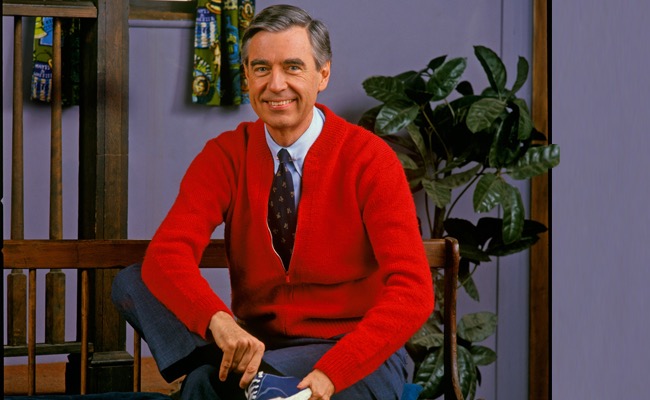
But no. Instead, I blurted out, “Hello. Mr. Rogers?” and immediately, I could only think of this guy. I stood there blushing.
To Jack, I’m sure it wasn’t so weird to hear his own last name in a question. But because I was suddenly thinking about Fred with puppets, my nervousness moved to embarrassment. Hopefully, I didn’t show that on my face.
I pushed through my awkward blushing and introduced myself to Jack. That’s when I had the chance to meet Sharon also, whose life and work I would come to admire greatly. For decades, Dr. Sharon Rogers has worked alongside people with disabilities and educated others to do the same. In particular, she has given confidence and empowerment to non-verbal children in public schools. This was a good, first conversation. I am grateful for our introduction on that summer day.
That simple, slightly embarrassing greeting after worship was just the beginning. Eventually with more time, I would become one of the pastors of Pasadena Presbyterian Church, and Jack and Sharon would become great mentors and friends.
Some people have particular gifts to minister to pastors, offering encouragement and friendship so easily. Jack and Sharon gave this gift to me in abundant ways. They regularly shared words of affirmation and kindness to me after I preached sermons. This always meant a lot to me. Frequently, they made connections between my words and ideas and I had yet to consider. Jack was such an astute theologian and thinker, and he expanded my mindset even as he encouraged me quite intentionally.
Jack Rogers died last week, and many grieve his loss. This Friday, people will gather for his funeral at Pasadena Presbyterian Church, and they will honor the great gift of his life. In this challenging time, we are prayerful for Sharon, their children and extended family, and the large, expansive church family that surrounds them.
After hearing the news of Jack’s death, I thought about that first conversation on the church patio. I had not thought of it in a long time, but it seemed so appropriate.
When Fred Rogers died, numerous people emerged publicly to share the ways he encouraged and mentored them over large spans of time. He kept in touch with children as they grew into adulthood. He also met adults and wrote letters back and forth with them for decades. He took care to let all of them know how special they were. People came to believe in their worth and value because of his loving posture toward them.
Now that Jack Rogers has died, numerous people will also emerge publicly to share the ways he encouraged and mentored them over large spans of time. In many cases, these will be people who have been marginalized by churches. Jack had a personal conversion experience in the 1990s which moved him toward greater acceptance of the LGBTQ community. That change in thinking became a personal calling and mission. He advocated for the ordination of LGBTQ people and same-gender marriage. He stood fiercely beside people with loyalty — in some cases, for decades — upholding and encouraging their calling when church institutions vehemently denied it. Jack Rogers took care to let these people know how special they were. People came to believe in their worth and value because of his loving posture toward them.
Fred Rogers and Jack Rogers,
Two Presbyterian ministers who loved expansively with advocacy and devotion.
May we follow their leading.
Blessings upon you, Jack.
May you always know your worth and value,
held forever in the presence of God’s great love.
After the painful events of last week, our nation is experiencing another traumatic wave of violence, grief, and protest. Alton Sterling and Philando Castile, two black men, were killed violently by police officers two days in a row. Their deaths were recorded on cell phone videos and then broadcast across social media sites.
Protestors then took to the streets. During a peaceful Black Lives Matter protest in Dallas, a sniper shot violently into the crowd, targeting police officers specifically. Five police officers were killed violently — Brent Thompson, Patrick Zamarripa, Michael Krol, Michael Smith, and Lorne Ahrens — and six more were wounded.
Conversations and debates have emerged on social media in response to these deaths. Last week, I was especially convicted and challenged by a post from the Rev. Denise Anderson. She is the newly elected Co-Moderator of the Presbyterian Church (U.S.A.). I appreciate her leadership and am grateful for the ways she is shaping important conversations we need to have together. In her post, she challenged white people to confess their racism openly in conversation with others:
Her post was shared 809 times and has made an important impact. In response, several of my friends and colleagues have begun to write honestly, confessing their own racist thoughts, actions, and motives. We have all been socialized by racist beliefs and biases. It is important that we own these patterns and confess the ways we personally promulgate racism. If we cannot have these kinds of conversations, we cannot see racism for what it is. And if we continue to deny the existence of its effects, we will never make changes to the structures and systems that perpetuate it.
I’ve been reflecting on my own patterns. Today I want to confess a particular motive that shows up in my thinking and acting. I am not proud of this, and though I am not alone in behaving this way, I want to take personal responsibility for it. I also want to continue a broader conversation.
My racist confession is this:
I am nearly always trying to be a good white person.
Nearly.
Always.
[Photo Credit: Spike Lee]
I am not proud of this, but it creeps into my thinking. Let me explain what I mean.
When racism is discussed, I have a motive to appear like I get it and am doing a good job working against white supremacy. I know I haven’t arrived in some sort of enlightened or evolved sense, but this motive nearly always arrives on the scene. It coexists with my better motives. I have a desire to be and look like a good white person.
This is a racist motive:
It centers me inside myself for the sake of myself.
It also chases a myth:
Racism exists in structures of privilege. White folks can check our privilege; we can also use it purposefully for change. But we will never be untouched or unaffected by the privilege we carry. Racism is not about some good or bad identity I hold. Racism is a system of oppression structured to give privileges to light skinned people like me at the expense of people of color. It is insidious and wrong.
The desire to look like a good white person is not my only motivation in this anti-racism work (a ‘but’ is coming). When these outrageous, repeated injustices of racism happen in our nation, I join others in feeling rage, grief, and a sense of longing for active change. This is real and deep. BUT let me be clear: I am no saint, nor do I deserve a cookie for having the emotions and desires I should have. These are feelings, desires, and motives I should have authentically in relationship with others.
None of this makes me a good white person. None of this makes me above the fray.
None of this should leave me unquestioned.
But sometimes, I wish it would, and
I chase this as a terrible motive.
I want to see tangible changes in our racist structures, but in the midst of it all, I confess that there are moments when I also want to justify myself. I feel guilt and shame, and I want to rise above these feelings by looking better. This means I begin to center myself, my feelings, and my appearance in the work. This is racist.
Black and brown lives are at stake.
Black and brown lives matter more than white feelings.
These kinds of motives are especially tempting for white folks who are preachers, speakers, and community organizers. We know it is important to speak and act rather than remain silent. In the midst of that, we easily become obsessed with trying to get it right and say the right things. We are afraid of making mistakes, so we want to look enlightened and ‘woke.’
But we’re still in denial and afraid.
We stumble over ourselves to make sure people see our concerns in Facebook comments. A person of color expresses grief, and white folks line up in the comments to say things like,
“Me too. This is so hard, and I just feel awful.”
“I’ve lost so much sleep over this.”
“I can’t believe this is happening.”
We want to make sure people know we’re affected. Are we trying to prove something to others? To ourselves? Sometimes, I am.
I hope we do feel the grief.
I hope it does motivate us.
But it doesn’t make us above the fray.
I am not some good white person floatingabove it all.
My attempts to prove otherwise are racist.
This sermon was preached at St. Andrew’s Presbyterian Church in Dearborn Heights, Michigan and was focused upon Isaiah 50:4-9 The audio recording is included above.
This has been a traumatic week of grief and violence.
Rest in peace and power. . .
Alton Sterling
Philando Castile
Brent Thompson
Patrick Zamarripa
Michael Krol
Michael Smith
Lorne Ahrens
Our nation is reeling with traumatic pain this week; Alton Sterling and Philando Castile have been killed by police officers two days in a row. Tonight, I want to link to some articles written by Black voices.
Alton Sterling and Philando Castile, may you rest in power.
People of this nation, no resting.
Let’s put justice into action.
Some haunting questions linger as the nation grieves, rages, and protests over the death of Alton Sterling at the hands of Louisiana police officers. . .
Alton Sterling may have seen the videos of Eric Garner and Walter Scott when they were killed by police officers and wondered, “What if that was me. . .?”
And then it was.
Certainly, Alton Sterling knew of Michael Brown, Sandra Bland, Tamir Rice, Renisha McBride, and Freddie Gray. Perhaps, with horror yet with empathy, there were moments when he wondered, “What if that was my family. . .?”
And then it was.
This is what many people of color are wondering all across our nation today: Will that someday be me or my family?
In light of this lingering, traumatic question, I wonder. . .
When will we finally create a nation where “No,” could actually be trusted as an answer?
When will we finally create a nation where “No more!” drowns out any cry of “No, he deserved it because [insert manipulative spin]?”
When will we finally create a nation where “No, I didn’t do anything wrong,” is treated with respect for civil liberties instead of an escalated “No, you’ll do what I say. . .”?
Until our voices resound with the right kind of NO,
Until our
minds,
hearts,
spirits, and
bodies resound with that kind of NO,
No change will ever come.
This sermon was preached at St. Andrew’s Presbyterian Church in Dearborn Heights, Michigan and was focused upon Mark 1:40-45. The audio recording is above and a written manuscript is below.
Mark 1:40-45
A leper came to him begging him, and kneeling he said to him, ‘If you choose, you can make me clean.’ Moved with pity, Jesus stretched out his hand and touched him, and said to him, ‘I do choose. Be made clean!’ Immediately the leprosy left him, and he was made clean. After sternly warning him he sent him away at once, saying to him, ‘See that you say nothing to anyone; but go, show yourself to the priest, and offer for your cleansing what Moses commanded, as a testimony to them.’ But he went out and began to proclaim it freely, and to spread the word, so that Jesus could no longer go into a town openly, but stayed out in the country; and people came to him from every quarter.
This little story at the beginning of Mark’s gospel is completely shocking. And it’s more than shocking. It’s scandalous. This is how Jesus chooses to begin his ministry in Galilee. . .
When Mark starts his Gospel, he hits the ground running. There’s no birth story here. It’s almost like there’s no time for it. Mark starts out full speed ahead. And so much happens in this first chapter. It almost like Mark is capturing little snapshots and piecing them together for us in flashes, like some trailer for an action film. He strings these small stories together with words that become characteristic for him. This story – “and” — This story – “and” – This story. “And, and, and.” “Immediately” this. “Immediately” that. Mark uses the word “Immediately” over and over in his writing.
So much happens in this first chapter!
The Gospel of Mark starts out this way:
“The beginning of the good news of Jesus Christ, the Son of God.”
Then we’re off.
John the Baptist appears in the wilderness, baptizing. Three verses about John baptizing Jesus. Immediately the Spirit drives Jesus into the wilderness. Two verses about his temptation there. Jesus calls his first disciples. And Jesus stuns a synagogue of people when he casts out an unclean spirit from a man. “What is this?” they say. “A new teaching – with authority!” And immediately, Jesus heals Peter’s mother-in-law from her fever right after they leave the synagogue. And then the whole city gathers around her door, asking Jesus to heal people of their diseases. And then Jesus goes on a preaching tour, doing the same type of work all around Galilee.
All of this is in one chapter! What’s going on here? Mark starts out building Jesus up in this amazing way. “The beginning of the gospel of Jesus Christ, the Son of God.” A baptism. Healing. New authority! A city at a door! Jesus’ reputation is building. . . and then, WHAT?
Jesus has an encounter with. . . a leper?
Wait a second. . .Mark, this is really where you want to throw this story in? Right here? Just when you were building up Jesus in every way? Really?
Now granted, Mark didn’t put chapter numbers and verses in his gospel. The early church eventually did that. But Mark puts this story right at the beginning – right after a huge string of stories that give Jesus an immense amount of credibility. And then, this story — this scandalous story.
A leper approaches Jesus and falls on his knees begging. This is scandalous in itself. A leper was someone who could have had a variety of skin diseases that were considered to be unclean by Levitical law. According to the law, people with leprous diseases were supposed to wear torn clothes, keep their hair disheveled, cover their upper lips and cry out everywhere, “Unclean! Unclean!” They had to announce their own condition everywhere. They were seen and known only through this label. Lepers were supposed to live alone, and they were supposed to stay outside the camp or city.
So what gave this leper the audacity to approach Jesus? Who did he think he was? Or maybe a better question is this: “Who did he think Jesus was?”
“If you choose, you can make me clean.”
Here was this outsider – an outcast – on his knees, kneeling and begging. He must have been trembling there, terrified. He had approached Jesus when he was supposed to remain as far as possible from him. And this was more than a simple break of the rules. He could defile Jesus! He was ritually unclean, and at any point, if he contacted Jesus, he would make Jesus unclean too. He could damage him. He could ruin an entire preaching tour.
But he had audacity because he had faith. He must have known that there was something different about Jesus. “If you choose, you can make me clean.”
And Jesus was different. He was moved with compassion. The word used in the Greek text says that his compassion was bodily. He was gut-wrenched about this. And perhaps he was angry about it too. Why did this man have to be constantly overlooked, living with continual stigma, isolated from his family – from the entire faith community – when he too was a Child of God?
Then Jesus does what is shocking. He does what is utterly scandalous. Willingly, he chooses to touch this man – this man with leprosy. “I do choose. Be made clean!” Jesus has broken the social custom of his day. He’s obliterated it. He’s touched the one who was labeled and stigmatized to be untouchable.
And there’s that word of Mark’s again: “Immediately,” the leprosy left him, and he was made clean. But things hadn’t returned to back to some simple state. In one touch, Jesus and this man with leprosy have exchanged places. The healed man goes into the open – into the city where he has been previously forbidden with new life and newfound freedom. And because he spreads the word about his new life, Jesus can no longer enter a town openly. He stays out in the desert places, and because of the word of this leper, people come to Jesus from every corner to join him there. Jesus is on the outside now, among desperate people. In one willful touch, Jesus has chosen to become a leper.[1]
Who is this Jesus? Who is this One who goes against the social norms if it will restore people to true worth and dignity? Who is this Jesus that Mark is portraying – this One who goes on to do so many scandalous things in this Gospel – telling a paralyzed man that his sins have been forgiven, no matter the rage of the others who witness it? Who is this one that heals on the Sabbath – who time and time again, puts human need first? Who is this one who continues to be touched by the ritually unclean – a woman who has been bleeding for twelve years, longing to only touch his garment and be healed? Who is this Jesus who eats with tax collectors and sinners? Who is this Jesus who chooses common fishermen to follow him – who chooses 1st century women to be disciples? Who is this Jesus who says, “Let the children come to me?” Who is this one who is constantly, willfully choosing to break our every social custom to serve human need and dignity first? Jesus is one who transgresses what is expected. Jesus, who did not sin toward God, constantly moves against what our society tells us is the norm. Jesus is a healer. Jesus is a Transgressive Healer.[2]
What would it take for us to do the same? What would we risk to become the healers we are? Here we are, together on a simple, routine Sunday. Some of us may be relatively new to this place. Others of us have known the members and friends of this congregation for decades. When we are gathered together on Sundays, we are often among the dearest people of our lives. Have you ever considered that friendship is a gift that can change the world? What happens when we show up in the lives of others to be with them in their darkest hours – to know their gifts and their beautiful qualities, yes – but also to know the most painful and difficult aspects of their lives? What happens? How does the human presence of friendship change the world?
And what happens when the love of friendship spreads beyond itself to include those who are on the margins of society?
What would happen if we did that? In light of this shocking story that we’ve heard today – in light of this scandalous and Transgressive Healer Jesus — may this be true: May the ‘yes’ between us say ‘yes’ to a world beyond us. May the ‘love’ between us say ‘love’ to a world beyond us.[3]
We’re called to be healers. We are called to be healers in this world, not necessarily because there’s anything extraordinary about us, but because we belong to a Divine Healer of this world who enters our pain, suffering, and stigma. We follow a Divine Healer who is so very Human. He chooses our condition. And this is the One we follow.
Who are the lepers of our modern day culture? Who is being told day-in and day-out that they belong on the outside? Immigrants? Refugees? Undocumented workers? People who are Lesbian, Gay, Bisexual, Transgender, and Queer? People who don’t know where their next meal is coming from? People with a skin-color that society defines as unacceptable? People with terminal illnesses? People who live alone and who are desperately lonely? People with mental illnesses? People with stigmatizing disabilities? Children who are abused and neglected? Young people in the foster care system? Muslims who are feared and stereotyped in this country?
You are ministers, and Jesus Christ, the Transgressive Healer, dwells in you. May the ‘yes’ between us say ‘yes’ to a world beyond us. May the ‘love’ between us say ‘love’ to a world beyond us.
May your friendships invite you to live as the healers you are. Thanks be to God. Amen.
3 I was grateful to first hear this language in a wedding sermon given by the Rev. Ben Johnston-Krase, co-planter of Farm Church in Durham, North Carolina.
This morning, I had the privilege to speak at Northside Presbyterian Church in Ann Arbor, Michigan. This community has one of the most beautiful, inclusive visions of church I have seen. I’m grateful for the ways this community practices justice and welcomes people so wholeheartedly.
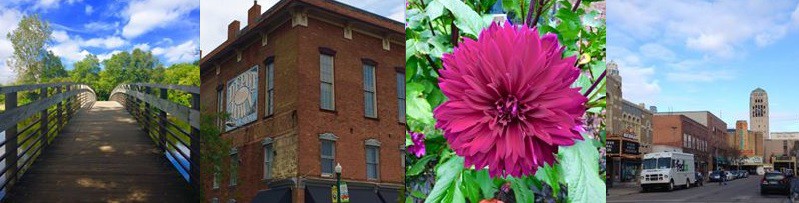
At their request, this address shared some of the unfolding story of Michigan Nones and Dones. This community is meetup group on Meetup.com and was started in Southeast Michigan eight months ago.
March 25, 2012 was a beautiful, important day in my life.
On that day, I stood at the back of a church sanctuary and waited for a worship service to begin. I watched people enter, and I smiled in their direction. I loved these people deeply. This day was important in my wider community too. Beloved people walked into a sanctuary in Austin, Texas and sat down. Together, we waited for a service to start.
Some worship leaders stood at the back of the sanctuary with me. We had all prayed about twenty minutes ago, getting ready for this service. But suddenly, I noticed that one person was missing.
I was curious, “Where could he be?”
At this point, the organ prelude started. After waiting a few minutes, we walked forward to light a candle. Other worship leaders walked in with me too, and we sat down at the front. We started my ordination service without the preacher of the day.
He was missing, and we couldn’t find him. The service continued with words of welcome and a prayer of confession. At one point, someone went out to find him. All of this was puzzling because he had been with us when we prayed before the service. Finally, during the Passing of the Peace [i.e. the greeting time] he walked up to me and apologized profusely. Not long after that, it was time to give his sermon. As he began, he launched into a hilarious apology:
“Well, I’m sad to start this moment off with an apology. . . I’ve been looking forward to day for months, and somehow, back in December, I had it in mind that we started at 3:00.”
(We started at 2:30).
“I’m glad I wasn’t clear across the campus right now. Rather, I was sitting in my old office, just sitting there. And I came out and heard music. I thought, ‘Oh, they’re running through one of the hymns. I don’t think they run through hymns in this church.’”
Everyone laughed.
“This is like a pastor’s anxiety dream! The service starts and you’re nowhere to be found.” He held up the manuscript of the sermon and said, “I do have the sermon. It’s right here!” We laughed some more.
Soon after, he read this story from Numbers.
Though completely unintentional, his late arrival was not lost on us. This story is about elders who had been invited to the Tent of Meeting for an ordination. God sought to place the Spirit on seventy leaders, but two of them missed it. Eldad and Medad stayed behind. They were late.
Our ordination preacher was late too, but on that day, he shared one of the most convicting sermons I’ve ever heard. He ordained me and commissioned everyone to a particular way of living. He invited us to seek God’s Spirit in the camp.
He challenged us to find God’s Spirit in places beyond our expectations .
He challenged us to find God’s Spirit beyond our church institutions.
In this story, Moses had been leading the people with great challenge. They were wandering in the desert. . .They were in transition from slavery to a future they could not know fully. They were hungry, and they missed certain aspects of their life in Egypt. They complained. We can hardly blame them.
I try to imagine what this must have been like for Moses. He mentions that he is leading more than 600,000 people on foot. He can’t bear the burden alone. So God says, “You’re right. You can’t bear the burden alone. Call to me 70 elders, and I will put some of the Spirit that is on you, and place it on them so that you don’t have to bear this all alone.”
So soon after, Moses and the elders they went to the Tent of Meeting. It’s important to lift up what an important day this was. Not just anyone could go inside the Tent of Meeting. This place was associated with God’s own presence. You would think that when they received the invitation, Eldad and Medad would have shown up on time.
But they didn’t. And yet, something miraculous happened. Eldad and Medad, outside of the expected place for the arrival of God’s Spirit, stayed among the people. They were with the average folks in the camp, and the Spirit of God rested on them too. The elders inside that tent prophesied on that day. But so did these two. . . these two people who never showed up in the tent. . .God’s presence and Spirit was among them and with them. God is truly with the people.
And thank God.
The Spirit will rest where the Spirit will rest.
God goes beyond us.
God beckons us into new places.
This last week, I attended the 222nd General Assembly of the Presbyterian Church (USA). Collectively, we know we are entering a time of great, religious change in our world. We are experiencing change in our local congregations. We are seeing change within our larger denomination. We are watching what are some are calling a New Reformation in the wider Church. For some, I know that these changes can feel daunting. They can bring up anxieties at times. All of that is understandable.
But I also believe that God is at work, doing something new. God is at work in these changes. We know that many of these changes are connected to shifts in religious demographics. With that in mind, I’d like to tell you a story about something I am learning. These days, I am growing in new ways as we ponder these shifts.
Back in October, I suddenly had an idea.
I wondered, “What would happen if we started a Meetup Group for Nones and Dones?” ‘Nones’ and ‘Dones’ are buzzwords right now in the sociology of religion. By Nones, I don’t mean Roman Catholic Nuns, but N-O-N-E-S, people who are religiously unaffiliated. There are also Dones out there – people who have left established, religious institutions behind, most often Christians who have left churches for one reason or another. I wondered, what would happen if we brought these groups together to talk about spirituality, life, the teachings of Jesus, and our personal experiences? What would happen if we came together?
So I went to Meetup.com, an online platform where people can search for interest groups in their geographical region. People can make profiles for those groups and RSVP to meet people in person. I created a meetup group called Michigan Nones and Dones and described it as a community for people who are “spiritually curious but institutionally suspicious.”
I believe God is up to something in this vision. It has become much more than an idea that popped in my brain. It is now a community – one I never expected.
People started joining. They made online profiles and began showing up in person in restaurants and coffee shops. The first time we met, we were at Cottage Inn on William Street in Ann Arbor. We didn’t have a huge group. It was just five people there. But two of them had driven from an hour away to come to this. I thought, “Oh, this must be meeting a need, perhaps larger than I realized.”
Then, as we entered 2016, this community had a really powerful moment in January. We were at Sweetwater Coffee and Tea in Ypsilanti. On that day, most people were meeting each other for the very first time. I opened our conversation by describing our group:
This is a community for Nones, people who are religiously unaffiliated —
Atheists,
Agnostics,
People who are ‘spiritual but not religious,’
People who don’t claim any tradition in particular,
People who blend various religious traditions and practices
and
This is a community for Dones, people who have maintained a religious identity –
many of them Christian,
but have left established, institutional communities, like churches for one reason or another.
I described that this is a welcome place for anyone and everyone –
People who fit these descriptors, and
People for whom these descriptors might not apply.
After opening with that, I asked one simple question. In fact, I thought this was going to be the most surface question of the day, but it transformed everything. I said, “How about if we introduce ourselves? Would you tell us your name, and then, do you identify as a None, a Done, something in-between, or something else?” That seemed to cover the gamut.
In that simple question, something magical happened: One by one for an hour and a half every single person around that corner told their story of faith and spirituality. They told these stories in detail. They talked about some of the highest and most hopeful moments in their life journeys. They talked about some of the most painful experiences they had known in churches and other religious organizations.
And though some of that content was very heavy, the room did not feel heavy all. It felt like a great release had happened, and we were suddenly connected on this deep level.
My friends, God is up to something in that!
The Spirit will rest where the Spirit will rest. And that often means beyond us – beyond these institutions and these walls that we have created in our churches. God is out there in the camp too – in Ann Arbor, Ypsilanti, Saline, Chelsea, and Detroit.
God is at work inside our churches, and
God is also at work beyond them.
On that day, I realized that people are ready to tell their stories. Some people simply do not feel comfortable in the walls we have created. Tragically, some of our sanctuary walls have been used in ways that box in and exclude.
People are so ready to talk about their experiences if we will sincerely ask them and respect who they are. Many are ready to share if we will go to them and listen among them.
I think we’re called to way of living.
The Church with a capital C is called to that experience – to go out and speak the good news we have known, yes, but also to listen closely, because there are Eldads and Medads out there who are ready to prophesy to us with their own life experiences. They have forms of spirituality which undergird their lives, and often times, the Church needs their voice of critique and hope.
These voices are valuable. They’re valuable to God, and they’re valuable to us. So Michigan Nones and Dones continues to meet and listen. These beloved people we are meeting have great wisdom to share.
At the General Assembly, Presbyterians elected a new Stated Clerk this week. His name is the Rev. Dr. J Herbert Nelson, and he is the first African-American Stated Clerk of our denomination. What a powerful, beloved human being he is. . . J Herbert Nelson has worked tirelessly for justice in faithful ways his whole life, and I think he will lead us to wonderful places. During the General Assembly, he said this about the church: “We are not dead. We are reforming. We are alive, and we are well.” I’m excited about that.
I think part of this reformation process includes voices of the Nones and the Dones –
the Eldads and the Medads,
the people in the camp. . .
God is bringing us together in our neighborhoods to change all of us.
So I think we can chase this kind of vision. We can expect God’s Spirit around every corner.
And to close, I want to bring this full circle. As we think about ordination, I want to remind everyone at Northside Presbyterian Church that we’ve all been ordained to this kind of life. Oh sure, some of us have been ordained as elders or deacons, but I’m not even talking about those kinds of ordination.
I’m talking about baptism.
That’s an ordination we all share. Every one of us in this room has been called and commissioned to an entire lifetime of finding God’s Spirit –
pointing to it,
learning from it,
growing through it,
being alive. . .
And so I would say to each one of us today – we who have been baptized into this way of life – go forward form this place today into these neighborhoods,
because you have a message to share,
and you have a love to give.
And you also have ears and hearts to listen,
to ask those questions,
to live those culminating moments,
to celebrate those convening breakthroughs
when we hear God’s Spirit at work,
not only within us, not only among us, but also beyond us.