If It Blooms Late, It Still Blooms

A Daylily.

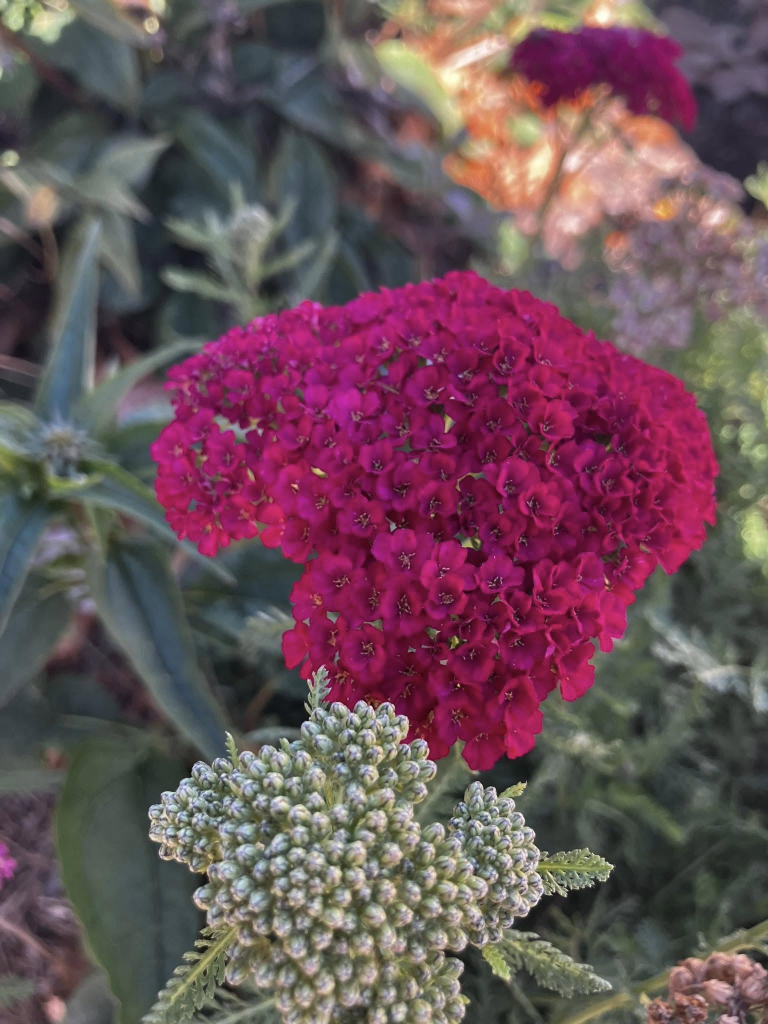
I pulled into my driveway at dusk, and in late September, I noticed a single daylily in bloom. I have about ten daylily plants, and almost all of them flower in June, with a few lingering into July. But there, in a row of green with no blossoms except one, was a lone latecomer — a bright flower opening in autumn.

That’s a nice image, and it brings me to this thought:

If you have an intention, a project, a relationship, a community, an introduction, a reconciliation, an idea, an endeavor, a vocation, an opportunity to rest, an occasion to play, or anything under the sun that emerges later than expected, it still matters. It can form and thrive in its own time — and that, too, is worth celebrating.

Renee Roederer

Your Why

A labyrinth. Public domain.

This past week, so many needs came at me at once. When your to-do list is long and the opportunities to care for others keep multiplying, it’s easy for the main motivation to shift into “just get it done.” In that mode, we can lose touch with The Why—the deeper sense of meaning we carry into our work, our reflection, and our actions.

I noticed that happening to me this week.

In those moments, it helps to pause and capture a snapshot of The Why. When you see it, notice it. Hold onto it. Internalize it.

That practice can renew us and remind us what truly matters.

Renee Roederer

Don’t Play it Small

She wasn’t my candidate for a Presidential race, but I do think that Marianne Williamson hit the ball out of the park with this beautiful quote from her book, A Return to LoveReflections on the Principles of ‘A Course in Miracles’:

“Our deepest fear is not that we are inadequate. Our deepest fear is that we are powerful beyond measure. It is our light, not our darkness that most frightens us. We ask ourselves, ‘Who am I to be brilliant, gorgeous, talented, fabulous?’ Actually, who are you not to be? You are a child of God. Your playing small does not serve the world. There is nothing enlightened about shrinking so that other people won’t feel insecure around you. We are all meant to shine, as children do. We were born to make manifest the glory of God that is within us. It’s not just in some of us; it’s in everyone. And as we let our own light shine, we unconsciously give other people permission to do the same. As we are liberated from our own fear, our presence automatically liberates others.”

And here it is in a scene from Akeelah and the Bee:

“The Peace of Wild Things” by Wendell Berry

A Wood Duck. Wikimedia Commons

The Peace of Wild Things
by Wendell Berry

When despair for the world grows in me
and I wake in the night at the least sound
in fear of what my life and my children’s lives may be,
I go and lie down where the wood drake
rests in his beauty on the water, and the great heron feeds.
I come into the peace of wild things
who do not tax their lives with forethought
of grief. I come into the presence of still water.
And I feel above me the day-blind stars
waiting with their light. For a time
I rest in the grace of the world, and am free.

 The Peace of Wild Things And Other Poems (Penguin, 2018),

Real Impacts: Caleb, Taco, and Broccoli

Medicine drip on a pole. Wikimedia Commons.

I listened to an NPR podcast yesterday, and I’m still thinking about Caleb, Taco, and Broccoli. You can hear it here: NPR Transcript.

The story was about the administration’s freeze on federal research funding for universities. On paper, that might sound like a budget issue. But in practice, it’s people’s lives and work being disrupted — professors, students, staff. And it also impacts people who need the innovations that this research provides. The podcast connects with a four year old named Caleb who is waiting for a pediatric heart pump implant. This device is currently put on hold because of frozen research funding. Meanwhile, Caleb has to use a VAD, an artificial heart that has to be plugged in throughout the day. Caleb has named his VAD “Taco,” and his pole with blood-thinning medicine “Broccoli.”

Hearing those names reminds me that research is never just numbers on a page. It’s real people, with real dreams, trying to make real progress. And policies like this freeze slow down labs (significant in itself) but they also they ripple outward into healthcare, climate solutions, equity, and opportunity.

I keep wondering: How many Calebs are stalled with Tacos and Broccolis right now? And how can we speak up to make sure research and discovery keep moving forward?

Renee Roederer

What is Your Abundance?

Apples and grapes in a basket. Public domain.

We often associate abundance with money, and that is certainly one type, but there are so many other kinds of abundance that can provide meaningful contributions to others — especially when we organize and combine them. Maybe your abundance lies in time, in the space you’ve carved out for yourself, or in the relationships you’ve nurtured over the years. Perhaps it’s in your resilience, your ability to laugh even in the face of difficulty, or the joy you find in cooking a meal from scratch. It could be in the connections you have, in the wisdom you carry about telling the truth, or even in your patience and persistence.

These forms of abundance can be powerful resources, not just for ourselves but for others. While one person might have an abundance in a certain area, they may also find themselves lacking in another. And this is where we can step in. Recognizing where we have abundance, we can find ways to give and share with others who may need it. Together, these shared resources can build networks of care and circles of resilience that not only support individuals but also fuel collective action for justice and change.

So, I ask us all: Where do you have abundance? And how can you give from these places — to help one another and create conditions for change?

Renee Roederer