Wisdom from Dr. Fauci: Two Paragraphs

Around this time last year, I had the great occasion to listen to Dr. Anthony Fauci speak. The University of Michigan held a Comeback Commencement for the Class of 2020. Two of my loved ones finally got that chance to have a commencement ceremony. Dr. Fauci received an honorary doctorate from the University of Michigan, and he was the commencement speaker. I’ve included a video of his speech below.


Two portions of his speech really stood out to me, and I appreciate these dual callings he issued to us. 1) We must challenge what he calls, ‘the normalization of untruths,’ and 2) it’s important not to let the difficulties of our age steal all our joy. From this second place, we realize we can shape life differently.

“What troubles me is that differences of opinion or ideology have in certain circumstances been reflected by egregious distortions of reality. Sadly, elements of our society have grown increasingly unfazed by a cacophony of falsehood and lies that often stand largely unchallenged, ominously leading to an insidious acceptance of what I call ‘the normalization of untruths.’ We see this happen daily, propagated through a range of information platforms, social medias, so-called news organizations, and sad to say, certain elected officials in positions of power. Yet the outrage and dissent against this alarming trend has mostly been muted and mild. If you remember nothing else from what I say today, I truly appeal to you, please remember this: It is our collective responsibility not to sink to a tacit acceptance of the normalization of untruths, because if we do, we bring danger to ourselves, our families, and our communities. This is how a society devolves into a way of life where veracity becomes subservient to propaganda, rather than upheld by a guiding principal for creating and sustaining a just social order.”

— And —

“In closing, I’ve been speaking to you over the last few minutes about the serious issues we are facing in our current world, and so putting the serious business aside for a moment, I want to close with a reminder about the joyousness of your life to come and what a bright future you have. Allow yourselves to cultivate this joy as much as you do your professional accomplishments. Find your source of joy and happiness and fully embrace it. And think upon your future as that stated by the political theorist John Homer Shaw, and I quote, ‘The future is not some place we are going to but one we are creating. The paths are not to be found but made, and the activity of making them changes both the maker and the destination.’”

Thank you, Dr. Fauci.

–Renee Roederer
Full Circle

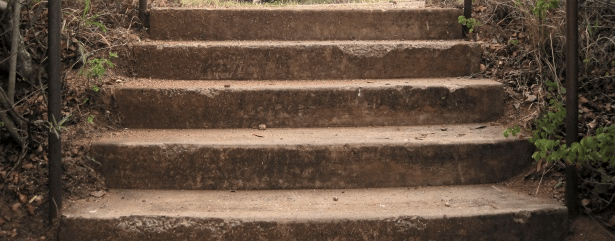
Concrete Stairs. Public domain image.

I have a very vivid memory of sitting on a stoop alongside the Green Street sidewalk in Pasadena, California. I had earbuds in and was listening to music. A particular Elton John song came on shuffle, and I found myself thinking about Michigan. I was in transition and about to move there soon. As that song played, I found myself thinking about how I was going to meet students at the University of Michigan who would be significant in my life. At this point, they were nameless, but I knew they would mean a great deal to me.

A whole decade later, I took the bus to meet some University of Michigan alumni who have become significant in my life. On a warm, spring day, we planned to take a walk together. I arrived a little bit early and sat on the steps near their apartment. I had earbuds in and was listening to music. That particular Elton John song came on shuffle, and I sat there, pondering how it was all true.

–Renee Roederer

Consensus

Two streams of a river coming together. Public domain, iStock photo.

While at a community event this week, a community leader said,

“Consensus is not the unification of opinions. It’s a convergence of conscience.”

That’s a wise statement. I thought I’d share it and let it speak in a variety of directions.


With a Full Moon in Each Eye

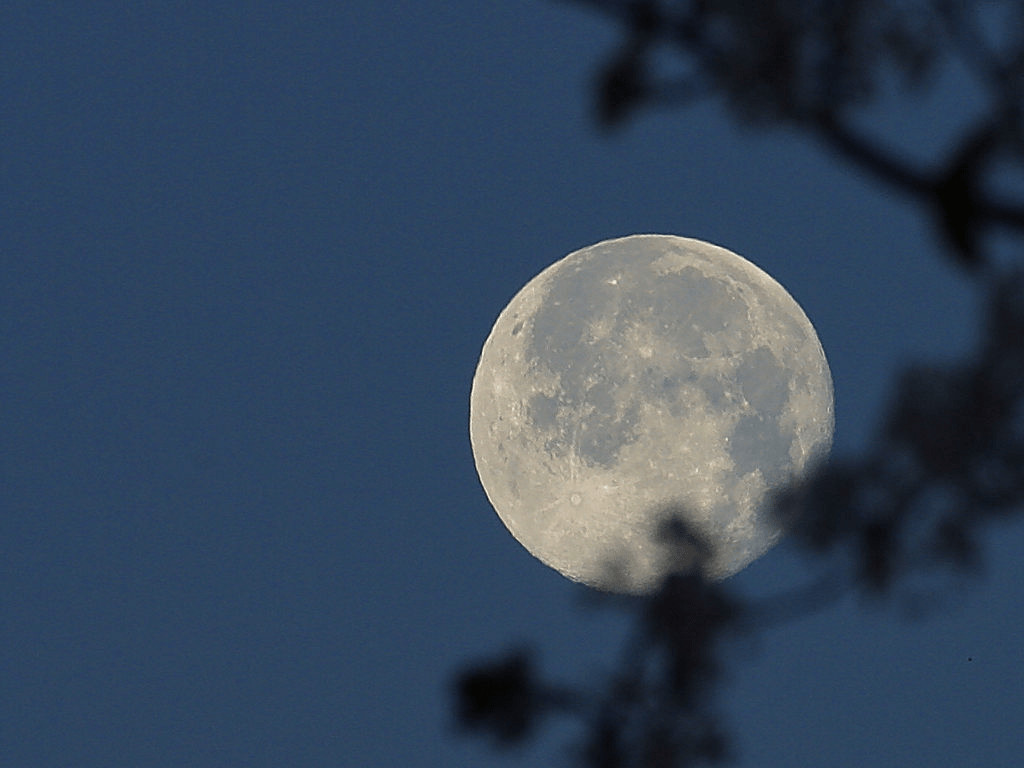
Image Description: A full moon, large in contrast with branches. Image by Jon Sullivan, Wikimedia Commons.

Why not live this way?

A poem by Hafiz:
“With that Moon Language”

Admit something:
Everyone you see, you say to them, “Love me.”
Of course you do not do this out loud, otherwise
Someone would call the cops.
Still, though, think about this, this great pull in us to connect.
Why not become the one who lives with a
Full moon in each eye that is always saying,
With that sweet moon language, what every other eye in
This world is dying to hear?

If We Change the Environment

Two small purple basil plants in small, clear glass bowls are on a counter with a plastic planter container behind them. 

These are baby purple basil plants. I was sad when I saw them wilting inside their planter container. It will be time to plant them in a proper pot soon — that, I knew — but goodness, their stems were all totally wilted, lying flat over their small mounds of dirt.

So I put these small mounds of dirt into little clear bowls. Then I put some water in the bowls. These little babies sucked that water right up, and in very short order were springing right into growth again. It was amazing to witness how resilient they were.

And that had me reflecting…

Sometimes, you have to change the environment. When that environment has good, solid resources and care… much is possible. Sometimes, much more than we think.

Isn’t that also true when it comes to ourselves? Our neighbors? Our relationships? Our communities? Our world?

–Renee Roederer

Sometimes, Growth Comes Quickly

Hosta plants

In what seems like two days ago, I stood in the backyard and thought, “It will be time for the hosta plants soon.” They weren’t there yet.

It really does seem like that happened two days ago! But then again, ever since the pandemic began, I have no fully accurate sense of time. Post-pandemic time is Jeremy Bearimy.  Maybe it was last weekend. But it certainly wasn’t a long time ago.

Then, yesterday evening, I looked out side, and what? There they are. They had sprung up, all together, and quickly.

It’s a reminder that sometimes… growth happens quickly. Yes, most of the time, it happens slowly with lots of twists and turns, but sometimes — maybe out of necessity? — it comes quickly. We can welcome it when it does.

—Renee Roederer

Choose That Which Is Choosing You

Image Description: A large, orange-colored full moon is on the horizon in the center of the image, within a black sky. A dir road, down the center of the image, leads to the moon. Grass, trees, and a fence line both sides of the road.

If you close your eyes and awaken your awareness,

If you inhale deeply and let that breath fill every part of your being,

If you allow yourself to sit with the Question —
really and truly, as if you were taking it out for tea,
it will inhabit you,
it will enliven you,
it will call you by name,
and you will know what I’m talking about.

You will be familiar with the Question,
because it keeps making itself familiar to you.

It is that Question that keeps rising again
inside your being,
like an enormous, beckoning moon,
and the mysterious tide She consistently summons.

Yes, listen.
Stand on the shore of the horizon
and welcome the Question revealed in the waves
of
longing
lingering
dreaming.

. . . that Idea that keeps returning,
. . . that Love that keeps emerging,
. . . that Path that keeps arriving,

Listen. . .
In the swell of waves,
Ah, there it is –
Won’t you?

It sounds for you –
Won’t you?

Hear it resound and expand –
Won’t you choose that which is choosing you?

–Renee Roederer

Lessons from a Care Worker: Shopping in the Container Store

Tupperware stacked. Public domain image.

In times of high stress and collective trauma (oh, you know, what we’ve been living for at least 7 years straight… compassion for us) sometimes older narratives of stress and trauma get pulled to the surface too. We might be aware that these are getting triggered. Or we might be less aware.

It’s helpful to bring these to awareness. As therapist Margaret Foley says, “If we have unprocessed material deep inside, we have two choices. We talk it out, or we act it out. We reenact what we have not resolved.”

These unresolved reenactments can become large narratives in our present-moment lives, but they are out of place and out of time. Or they might weave within our present-moment situations. Have you ever felt that your reaction to a present challenge is a bit oversized and disproportionate to the moment? Older stories and older emotions might be getting triggered too.

Within all of this, sometimes we look for people — close loved ones (frequent) or people of less personal significance (less risky) to play roles in our reenactments. We cast them as characters in the drama, and they serve as placeholders to hold these stories. They become containers to store our old emotions. But this can really harm relationships too.

Common containers include:

The role of the rescuer. We cast people as characters to save us. We want to be seen in our vulnerability (valid) but become dependent upon others for our feelings of safety. We externalize that need because we struggle to feel safe internally.

The role of the villain. We cast people in the character of scapegoat, attempting to funnel our pain into them and send them off. This is really an attempt to rid ourselves of our own anger and pain.

The role of the stand-in. We cast people into the character of a significant person in our lives. We begin to engage this person with the emotions we actually have for our mother, or father, or sister, or brother, or estranged friend, or person we miss, or person who wounded us.

I speak about all of this as a care-worker. I see this happening so frequently in this era of time. This comes from a natural place of wanting to heal pain, and it makes sense for this to happen after years of collective trauma. Of course, this would unearth old narratives. I also speak about this as person who lives in this era of time, witnessing and feeling my way through all of these things too. The challenge is, people aren’t asking to find themselves in the cast list of our internal storylines — unless, they themselves, are reenacting their own traumas by stepping into these roles too (that happens also!)

We can add care to others, but we aren’t rescuers.

We can make mistakes, but we aren’t villains.

We can care about the emotions people have for significant individuals in their lives, but we can’t become the stand-ins for those particular people.

Role-casting might bring some initial relief, but it also doesn’t work. We have to actually process the unprocessed material and storylines.

That’s the harder, but more life-giving work. Sending care to all of that.

–Renee Roederer