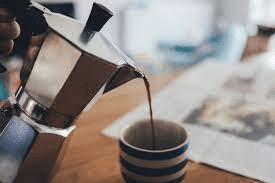
Image description: Coffee being poured into a mug from a carafe.
I grabbed a carafe of coffee and mindlessly poured it into a cup in a way that one would during communion, lifting the carafe higher to increase the distance the between the coffee coming out of the pot and the cup, as if to make it visible to a congregation.
And that is the precise moment when I knew I needed coffee.
Once, a 4 year old I know said this with total sincerity:
“Jesus was very sad… But then! He got happy! And he changed his name to Paul. And that is why we have Paul Sunday, and sometimes, we call it Paulmmmmm Sunday.”
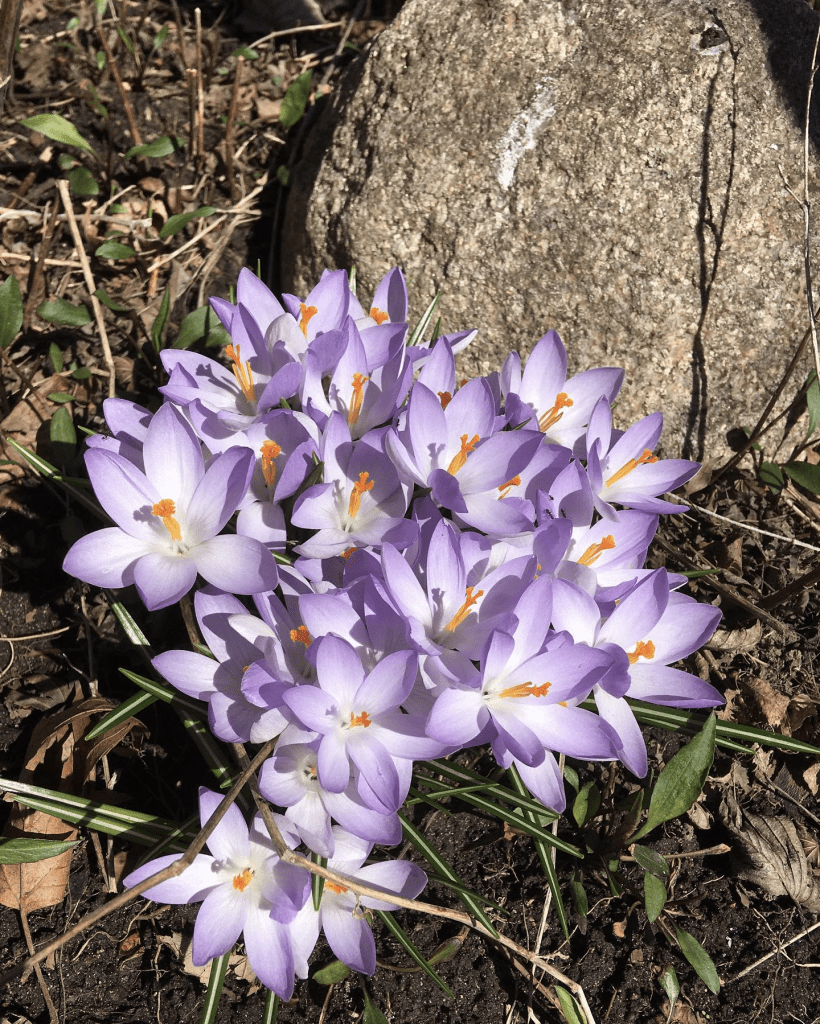
One of the things I love during this time of year is the occasion to watch perennial wildflowers emerge in their typical order throughout the spring and summer. And the first ones are always the crocuses.
“Welcome to spring!” I think. “We’re here!”
Right now, I have little bouquets of crocuses sprouting in my yard (pictured above). They’re gorgeous, and they give me delight. We’re really here!
I had a chance to listen to both of these podcast episodes over the weekend, and I thought I’d recommend them to you as well.
Well Someone Had to Do SOMETHING! — In this episode of This American Life, people find a gap in needs and realize they are the person to address those needs. There are some creative stories here, some funny ones, and some powerful ones coming out of the needs in Ukraine.
Making Sense: Sight Unseen — This episode is connected to a series on Vox’s Unexplainable about the senses. What is lost and what is gained when people don’t have the ability to visualize in their imaginations — a condition known as aphantasia? This episode also shares that people with vivid, visual imagination skills are also more prone to anxiety. Whether people cannot visualize at all, or are especially skilled in this, there are ways to compensate for gifts and challenges.
It started as a solidarity move. Many people in the community I serve do not drive, and I wondered, what would it be like to get around on public transportation for awhile? Can it be done easily, or no? Whenever possible, I started taking the bus for in-town travel.
I’ll add that we have much better public transportation in my town than in many places around the state, and in that regard, it is much easier to do here. In other places, it’s not so doable, and many people have fewer options to meet their needs, socialize, and get out of the house. This troubles me. It puzzles me too. I don’t know how to solve the problem, because each county is a patchwork quilt of options and lack of options.
For the purpose of this post though, I want to say that I now adore taking the bus. I, of course, have the privilege of choosing it or choosing driving, and that’s not the same as what others experience. But when given the choice, I love choosing this option for so many reasons:
— It slows me down, not in an inconvenience way, but in a way that makes me feel more mindful, and in a way that makes me feel like time is more abundant.
— I love that I can answer emails while getting to somewhere (if I choose, that is; sometimes, I just listen to music).
— I love the process of figuring out how to get somewhere on a bus route.
— It invites me to walk outside more.
— It reduces the carbon footprint.
— It reduces the money I’m spending on gas.
— It supports this being an option for those who need it.
I truly adore taking the bus. I’m going to keep this up and ramp this up.
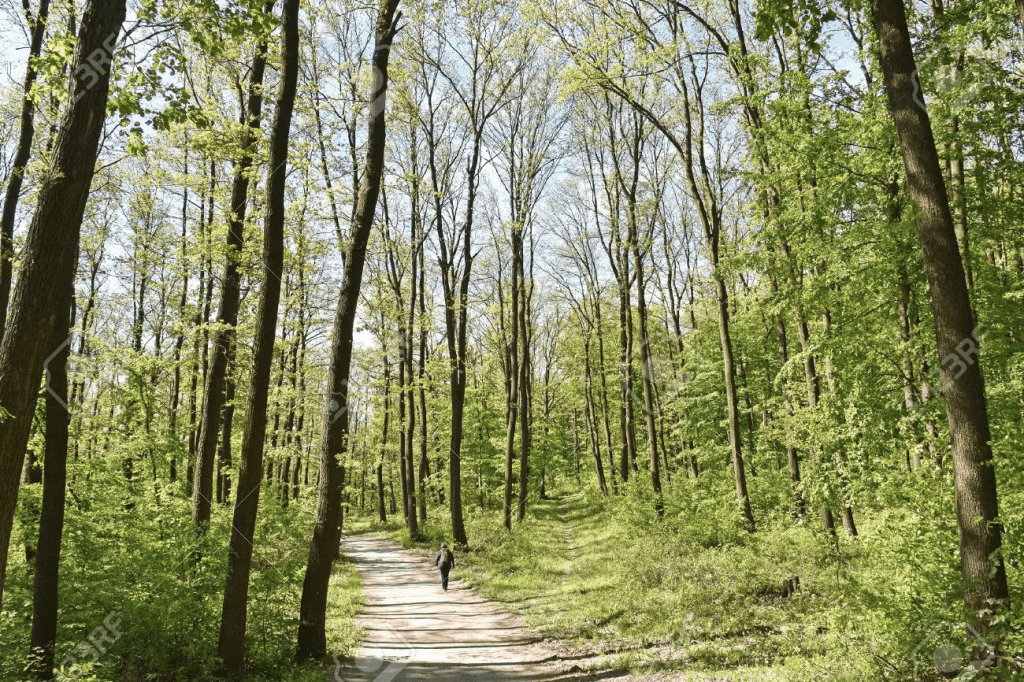
Image Description: A person is walking down a dirt pathway in the woods with tall, green, leafy trees on either side. Public domain image.
I have declared April 1-October 31 to be a season of being outside. I am really dedicated to this. Every day, I want to be outside walking or exploring, even if it’s just for a small portion of a rainy day.
I suppose at this stage, I’m a bit of a local walking connoisseur, though there’s still so much for me to explore. I’ve walked the entire Border to Border trail, a 70+ mile trail that weaves through our county. I have also visited all 163 parks in my town. (And in alphabetical order — because why not? 🙂
As I plan walks during this Season of Being Outside, I’ve realized that I can craft walks particularly. Twice this week, I had walks planned with loved ones, and I said, “Where do you want to go today?” They weren’t sure, so I said, “What type of place do you want to walk in today? Is there anything you’d like to experience?”
“Take me somewhere that has a canopy.” Then we did!
“Take me somewhere that has a bridge over water.” Then we did!
I think this is a fun game. 🙂 So if you’re local to me and want to make requests, let’s take a walk. I’m here for this.
We tend to think of survival as competitive — survival of the fittest, and “it’s a dog eat dog world”– but when we zoom in really close, we see that nature is so frequently cooperative. And when we zoom out and look at earth as a whole, we see that nature exists as large systems of interdependence.
One of my chosen family members came to town and stayed the night with me. We spent the late afternoon and evening bopping around to various places on the bus, and we walked 20,000+ steps for the day. (By the way, this post is about this person being in their element, but this kind of day is so very much in my element.)
When we got off the bus to go home for the last time, I said, “Since we’re close, would you mind if we walked over to Panera for me to get a coffee for the morning?”
“Sure. Can I go to the Barnes and Noble next door?” she asked with sudden excitement.
“Of course, but this will also be the quickest coffee-getting ever.”
“Okay!” And then she ran! She booked a three minute run to the Barnes and Noble, and she ran with such joyful abandon toward those books. It was hilarious watching her grow smaller as she got further away on that very purposeful run. And I thought, “This is the her-est thing ever.” She loves learning everything. She’s got to sprint toward books.
After that, I walked the rest of the way slowly on purpose. And I took a longer time getting that coffee on purpose. And when I walked inside Barnes and Noble, I said, “Let’s stay here a while.”
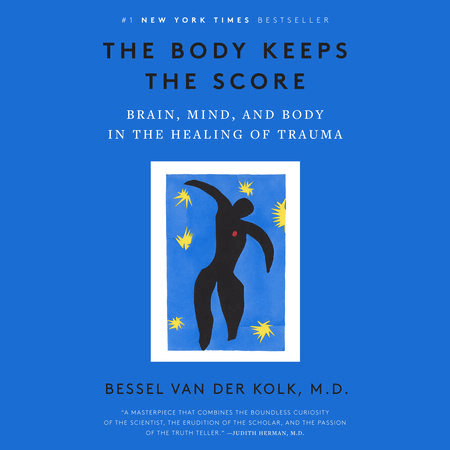
The book cover for Bessel van der Kolk”s, The Body Keeps the Score: Brain, Mind, and Body in the Healing of Trauma.
As Bessel van der Kolk’s book states, the body does indeed keep the score.
When people have gone through trauma and high stressors, their emotional processing is often delayed until they feel safer situationally, relationally, and psychologically. Alongside anything we’ve experienced personally, we should not underestimate how challenging this pandemic has been for us collectively over the last two years.
We’re reaching a period of time when weather is warming and COVID numbers are lower, so we have more occasions to be outside in nature and enjoy the presence of our close relationships through visits, shared meals, events, and travel. This increases our sense of emotional safety. This is a wonderful shift, but alongside it, older, unprocessed feelings may rise to the service. And at the exact same time, we are in the precise anniversary window of the initial lockdown period of the pandemic, and our bodies remember that anniversary too.
With both of these lining up at the exact same time — increased relational safety and an anniversary period — we may notice that people are experiencing difficult emotions and somatic reactions in their bodies. People are anxious, exhausted, irritable, sensitive, or insecure — sometimes, without even knowing why. Stressors that may have seemed mild at another time suddenly may seem insurmountable. People find themselves living multiple stories at once too: An experience is stressful in the present, but additionally, it seems to rhyme with old childhood wounds, so these suddenly rise to the surface in our emotions, and people find themselves reliving and reenacting those old stories in the present.
One of the best ways to care for all of this is to notice it happening and realize that it makes sense. This is a time to care for our needs, practice gentleness with ourselves and others, and honor the overlapping stories that emerge. These experiences are much more painful and disruptive if we aren’t fully conscious of them, or we don’t feel like they make any sense. They do. And the dual timing of this increased relational safety and this significant anniversary will invite our awareness and deep care.