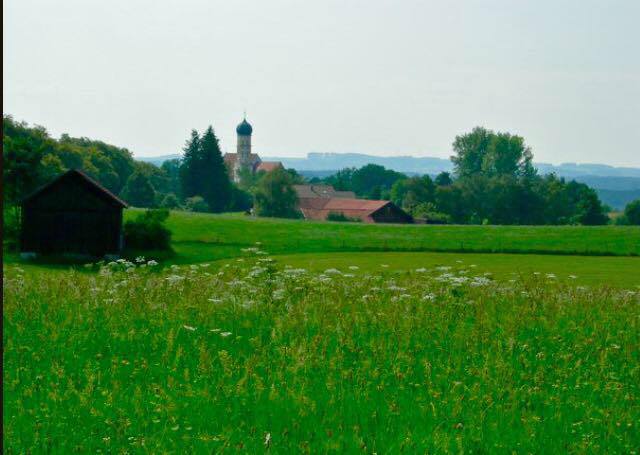

This photo is from the shore of Lake Michigan in Racine, Wisconsin.
This sermon was preached at Kirk of Our Savior Presbyterian Church in Westland, Michigan and was focused upon the story that is told in Mark 9:30-37. The audio recording is above and a written manuscript is below.
“What were you arguing about on the way?”
Silence lingered in the room once Jesus and his disciples had settled into the house in Capernaum.
“What were you arguing about on the way?” That’s what Jesus asked them.
There was a long pause, and none of the disciples spoke up.
I wonder, what did they think and feel during that silence? Did they suddenly feel shame, exposed in some way, recognizing that Jesus had at least partly overheard them? Did they feel frustration, remembering that one particular comment or that one particular person that irritated them the most? Did they make their case inside themselves internally, prepared to bolster themselves should someone speak up, but this time in front of Jesus? Did they feel anxiety about speaking? Who was actually going to answer this question?
They never did answer. They sat there in silence, knowing what had happened before.
The story says, “But they were silent, for on the way they had argued with one another about who was the greatest.”
It was a foolish argument in many ways, but it might have been reactive. Maybe it was born out of deep anxiety. . . As they were passing through Galilee, Jesus was teaching his disciples, and he kept returning to something difficult, something profoundly challenging for them to even take in. He said, “The Son of Man is to be betrayed into human hands, and they will kill him, and three days after being killed, he will rise again.” They did not understand this. They knew it was important, but they couldn’t comprehend him. Maybe they felt afraid to even ponder the implications of what he was saying. They were certainly afraid to ask him to clarify.
This was actually the third time recently that Jesus had spoken in this way, and each time, the disciples demonstrated that they didn’t understand. That might have made Jesus feel very alone.
This time, reactive in their anxiety, they began to argue with one another about who was the greatest. In the chaos of what Jesus was implying, they began to turn against one another. They began to posture themselves in the presence one another. They fell all over themselves with dominance. Who was the greatest? What a foolish argument… But what a human argument.
How did they seek to determine this — who was the greatest? Was it about who could speak and lead? Was it about who had possessions? Was it about who held power? Was it about who was closest to Jesus — who had the closest proximity to what he said and did, or who was closest personally to him in relationship? What was their benchmark?
Did that even matter? The result was the same. Rather than choose to be present with one other, and care for each other in their collective confusion and anxiety, they chose the pathway of dominance. They sought to be the greatest.
“What were you arguing about on the way?”
That question lingered as they sat in the house together. And after a time of silence when none of the disciples spoke, Jesus answered his own question. He answered it in a way that the disciples did not expect.
Jesus sat down and called the twelve to him. In sitting down, they knew he was about to teach them. Then Jesus said, “Whoever wants to be first must be last of all and servant of all.” Jesus turned everything upside down in this way. He inverted first and last. But he actually did more. In saying this the way he did, he created a paradigm shift. In this statement, Jesus turned them toward each other. This statement has care and relationship in it. “Whoever wants to be first must be last of all and servant of all.”
And then Jesus said and did even more. He found one of the children in the house and placed that child front of them. We don’t know who this child was, or how old the child might have been. But because they were gathered together, staying in a house in Capernaum during their travels, this might have been a child of one of the disciples.
Jesus took this child in his arms. He embraced this child and said, “Whoever welcomes one such child in my name welcomes me, and whoever welcomes me, welcomes not me but the one who sent me.”
I wonder if there was then another silence, if the disciples sat there and watched Jesus and this child interact with one another. It was joyful. And care and relationship were a part of this moment.
And a conviction must have lingered in the room. In the silence, the disciples must have felt it internally.
Jesus had placed a child before them, one who did not typically speak and lead, one who had no possessions, and one who held no power. More than just about anything, this child had vulnerability. And along with it, and precisely in it, this child had care and relationship. This child had worth and value apart from anything these disciples argued about on the road.
In the silence, the teaching was clear. Not easy, but clear. Jesus was teaching them to travel in the pathway of vulnerability where they would find care and relationship. Jesus was teaching them to relinquish the pathway of dominance, because the most vulnerable of this world have the greatest proximity to Jesus. Jesus is calling us to that same proximity. Jesus is calling us to be the Church among the most vulnerable.
What would happen — what could happen — if the Church followed even more in this direction?
What would happen — what could happen — if the Church really lived this way?
We might ponder the disciples’ argument on the way to Capernaum and recognize that it was foolish. But we also know it is so very human… We carry our own anxieties too. And collectively, the Church in North America, and many of our own Presbyterian congregations too, face decline. And in the midst of our own anxieties about that, there are times when we value dominance.
Sometimes, congregations complete with one another for members and for resources.
Sometimes, congregations seek to align themselves fully with those in power, and then become so enmeshed with their dominance that they refuse to hold people in power accountable. Churches can align themselves fully with those who have wealth, those who have influence, or those who represent political parties.
Sometimes, congregations can become obsessed with building themselves up — what program do we need to create to ‘get’ more people? (Notice how we use language of acquisition sometimes to talk about our neighbors.) And how do we get them to pledge? While this can involve a lot of language about neighbors, and there is certainly nothing wrong with invitations in these directions, a process that talks about ‘getting’ and ‘acquiring’ can become easily quite insular and self-focused.
Sometimes, congregations can place certain pastors on pedestals. They participate in the creation of celebrity pastors, who are placed above accountability, who are viewed as being “too big to fail.” But people can easily abuse that power — any of us can abuse that power — when given so much of it.
But what would happen — and what could happen — if the Church followed Jesus more and more in this direction toward vulnerability… in the proximity of those who are most vulnerable in our world?
Yes, often, children… children who don’t know where their next meal is coming from… children who are abused and neglected… children who are orphaned and separated from parents… children who are incarcerated… children who live in poverty… children who have chronic illnesses… children who are grieving… children who know violence in their nations and in their homes…
And… all the adults around us who were children just like these. Yes, all the children of God, whatever their age, who know vulnerabilities like these. And yes, maybe we ourselves — children of God — who have known vulnerabilities like these.
I wonder what could happen if the Church gave up its desire for dominance and moved toward the proximity of these neighbors. I wonder what could happen if the Church placed these neighbors at the center, including the center of leadership. I wonder what could happen if the Church turned even more toward one another and toward neighbors in care and relationship.
We might look different than we do now. We might be a part of communities with an array of backgrounds and experiences, with a variety of people leading. While our buildings are great gifts and resources, Church might become less defined by the building — “Do you go to Church?” often means, “Do you go to worship in that building?” — but instead, Church might be defined more as an embodied community of commitments toward neighbors.
The Church might come even closer to Jesus himself. The Church might come alive, even experience resurrection, in that vulnerability, and in that care, and in that relationship.
We are invited into this today. This is our sacred calling. This is our welcome and embrace.
May we have the courage, and may we trust the grace of God, to follow in that direction.
I am grateful to the contributions of the Rev. Rolf Jacobson of the Sermon Brainwave — Working Preacher podcast, who spoke this week about “relinquishing dominance.” That influenced my sermon direction.