The Connections Run Deep

Cody Foster, my cousin and close friend, gave me the greatest gift last weekend. He is working toward the completion of his Ph.D. in history, and last week, he was in Southern California to do some research at the Nixon Library.

On Friday, he took the Gold Line to Pasadena and went exploring. Then, over several hours, he sent me photos of where he was in real time.

And every moment of this gave me complete joy. My husband Ian and I lived in Pasadena for three years. We loved the neighborhood where we lived and worked, and during that chapter, we met incredible people who continue to be a part of our lives.

Cody walked around and visited them. Then in photos, he allowed us to greet each other.

He walked down Del Mar Boulevard and saw its gorgeous jacaranda trees in bloom. These are my favorite trees in all of nature — truly, that very street, my very favorite. 

Then he walked to our old apartment and took a selfie.

Then he walked to Pasadena Presbyterian Church, where I used to be a pastor, went upstairs to the office, and said hello to them from me! I was so glad they were able to meet Cody.

Then he visited City Hall, which is incidentally, the City Hall from Parks and Recreation.

 
These connections were so meaningful. In all those moments and texts, family, and place, and people, and time, were meeting together.

We need connections like those. Thanks, Cody, for giving me such a kind gift. 

You’re good people. As are Hanna and Penny (such a funny doggy).

Renee Roederer

Lasting Kindness

These balloons are a wonderful mystery.

A while back (kind of a shocking while back! Keep reading. . .) people from the community at New Life Presbyterian Church did something very kind for me. They learned that it was the anniversary of my ordination, and they threw a shindig in celebration for me as a surprise. It was so sweet and meant a lot to me. These balloons were one of the gifts. 

Are you ready for this?

They’re still floating! Six weeks later.

I took this photo yesterday. I’ve never had helium balloons last more than a couple of days. Perhaps I’m behind the times on helium balloon technology, and this is more of a normal occurrence these days? Who knows? But I keep marveling that they’re still up in the air, and I’m curious to learn just how long they will go.

They’ve become a bit of a symbol in the house: Kindness lasts. 

When I’ve had a rough day, I’ve looked in their direction and remembered the kindness this community showed me. These balloons have also reminded me to find some creative ways to show kindness to others.

Above all, they’ve reminded me to pay attention and be present to what’s around me. When I’ve done that, other things have served as reminders of lasting kindness too.

Like the other day, when I was in the grocery store aisle, and I saw some Sleepytime Tea. I suddenly remembered when Michael Jinkins, at that time Dean of Austin Seminary, gave me some of that tea. He knew I was experiencing some challenging, prolonged insomnia and specifically thought to bring me some. It meant so much to me. I haven’t thought of that in a long while – that was 9 whole years ago when I was a seminary student – but it made a meaningful, lasting impression on me.

Or like the other day, when I looked down, and I saw my keys. Specifically, I saw my key to Canterbury House, the community where I spend time with students. About a year ago, Chaplain Reid Hamilton gave me a key to the space and was just flabbergasted that I hadn’t had one for months. I never opened or closed the space, so I didn’t know that it would be typical for me to have one.

Last night, I learned that he gives keys to every student community member too so that space can feel like a home away from home – a refuge where they can drop in, make a meal, play the piano, or have a place to study. Canterbury House is our collective house. I love that. That’s kindness.

Kindness lasts. And it reminds us we belong. When show it to each other, we never know how long that impression will last.

Renee Roederer

Three Things to Name

truth

  • No one should be denied healthcare because of a lack of financial means.
    Wealth is never synonymous with worth.

    Physical, emotional, mental, and behavioral health must not emerge as luxury items for people at the top of a caste system.

  • Black Lives Matter.
    Without qualification,
    Without a need for explanation,

    Black lives simply, profoundly, intrinsically, and thoroughly matter.

  • Undoubtedly, when people gain concentrated power, they have ample opportunities to abuse others. It is thoroughly dangerous.

    But even in the most entrenched hierarchy, there is always — always — more power in the collective that exists below —
    If it is organized.
    If it refuses to accept divide and conquer tactics,
    If it is centered around solidarity (when you are attacked, I protect you; when I am attacked, you protect me)

    The collective can be power beyond our wildest imaginations.

    Renee Roederer

Where They Say Your Name

We all need communities in our lives that know us, cherish us, and value us. This is a real, human need.

We need communities that will say our names – communities that will remember us, voicing who we are with respect, support, love, and belonging. I was thinking about this the other day:

Canterbury House is a place that says my name. 

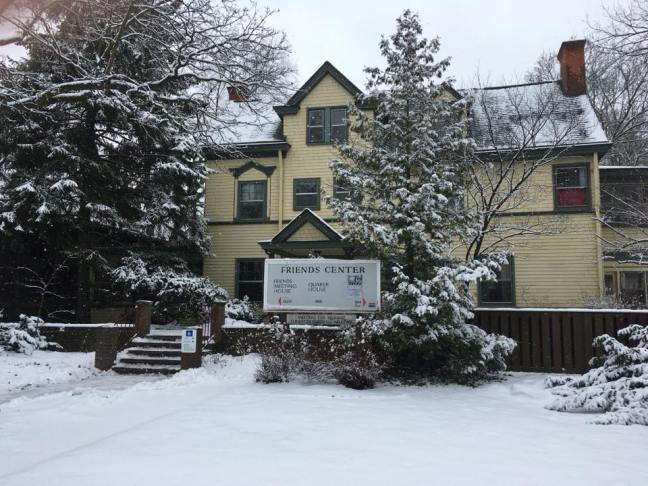
Canterbury House is the Episcopalian student ministry center at the University of Michigan. It is a house of shared meals and community building. It is a venue for concerts, particularly for jazz. It’s a space for spiritual exploration. It is a community where I am so grateful to know students and work alongside them.

And it is it is a community that says my name.

It’s a community that says a lot of names, in fact. Over the last year and a half, I’ve thought about this many times. On Wednesday nights, Canterbury House has a time of worship, reflection, singing, and prayer. When we have that time of prayer, we end up listing names. We remember people before God and one another just by saying their first names aloud. And when we voice those names, we remember them with respect, support, love, and belonging. We do this during the quiet improvisations of reflective, creative, jazz musicians.  It is a sacred ritual.

And during this time of prayer, Reid Hamilton, the Chaplain of Canterbury House, always says my name aloud. Every single week. This means a lot to me.

In fact, everyone who participates in that prayer has lists of people we remember each Wednesday night. I have a list too. We don’t know all the people named, but after more than a year together, I think we all know each other’s lists. These are litany of people’s names, a rhythm of people to whom we are connected, people for whom we have hope, people who are remembered especially when they are struggling.

This is so important.

I wish that people scapegoated and discriminated against by religion, people with sacred names and identities, had more spiritual communities who said their names with respect, support, love, and belonging, rather than marking them with labels of disregard and exclusion.

We all need communities in our lives that know us, cherish us, and value us. This is a real, human need.

Renee Roederer

When Voyager 1 Turned Around

voyager1palebluedot

[Voyager 1 pale blue dot. Image credit: NASA/JPL]

When we connect with a sense of Beyond — when we zoom out to see a larger field of view — we see ourselves in a different light. We encounter our finitude, our fragility, and our power.

In 1990, the space probe and explorer Voyager 1 was 13 years old and 3.7 billion miles away from the earth. On February 14 of that year, scientists commanded the probe to turn around and take a photo of the earth. That command resulted in this image. Astronomer Carl Sagan called it “the pale blue dot.”

He added poetic meaning and power when he added convicting words to this image. He said,

Look again at that dot. That’s here. That’s home. That’s us. On it everyone you love, everyone you know, everyone you ever heard of, every human being who ever was, lived out their lives. The aggregate of our joy and suffering, thousands of confident religions, ideologies, and economic doctrines, every hunter and forager, every hero and coward, every creator and destroyer of civilization, every king and peasant, every young couple in love, every mother and father, hopeful child, inventor and explorer, every teacher of morals, every corrupt politician, every “superstar,” every “supreme leader,” every saint and sinner in the history of our species lived there–on a mote of dust suspended in a sunbeam.

The Earth is a very small stage in a vast cosmic arena. Think of the rivers of blood spilled by all those generals and emperors so that, in glory and triumph, they could become the momentary masters of a fraction of a dot. Think of the endless cruelties visited by the inhabitants of one corner of this pixel on the scarcely distinguishable inhabitants of some other corner, how frequent their misunderstandings, how eager they are to kill one another, how fervent their hatreds.

Our posturings, our imagined self-importance, the delusion that we have some privileged position in the Universe, are challenged by this point of pale light. Our planet is a lonely speck in the great enveloping cosmic dark. In our obscurity, in all this vastness, there is no hint that help will come from elsewhere to save us from ourselves.

The Earth is the only world known so far to harbor life. There is nowhere else, at least in the near future, to which our species could migrate. Visit, yes. Settle, not yet. Like it or not, for the moment the Earth is where we make our stand.

It has been said that astronomy is a humbling and character-building experience. There is perhaps no better demonstration of the folly of human conceits than this distant image of our tiny world. To me, it underscores our responsibility to deal more kindly with one another, and to preserve and cherish the pale blue dot, the only home we’ve ever known.

-Carl Sagan, Pale Blue Dot, 1994.

Our finitude.
Our fragility.
Our power.

Renee Roederer

Keep the Renewable Resource Callings Going

candles

Have you felt depleted lately?

I’ve had some moments like that over the last few months. Fortunately, it’s just been a few days here and there rather than a sustained season, but when those days have come, they have really come. Meanwhile, I know that some among us carry a sense of depletion that feels more sustained, and there are deep longings for greater energy. Wherever we find ourselves, I’d say, what is. . . simply is. No judgment, and we can give ourselves a lot of grace.

I especially ponder this when I consider all the movement work that is happening within us and around us. As we know quite well, there’s always more to do than any one of us can do alone. The size of it all can feel pretty daunting. Fortunately, we do actually have each other, and we bring different pieces to the work.

In the midst of that, this is pretty crucial: We need to keep the renewable resource callings going.

What I mean is that we all have callings — tasks, endeavors, activities, visions, and rhythms — that uniquely energize us even as we give them energy. As much as we give them energy, we receive energy back. They’re like renewable resources for us.

With so much need, we might forget to prioritize them. We might sacrifice them because we sacrifice our own self-care. But we need self-care. And. . . at the very same time, we should never underestimate how helpful these renewable resource callings can be to our movements and communities. They come so naturally and fill us so much that they might not seem like work. But they would be taxing work to someone else. It’s helpful to keep these callings precisely at the core of our work because they are uniquely alive in us.

And our movements and communities absolutely need our aliveness.

Sometimes, we have to do what we have to do, and that includes tasks that drain us. Some even add risk to us. But there are renewable resource callings too. They enrich us and our communities.

What are yours?

Renee Roederer

The Gig Economy is a Total Strugglebus

strugglebus

I just want to own this today: The gig economy is a total strugglebus.

I know a lot of people on this bus — folks who live for creativity, innovation, vision, purpose, and a willingness to take imaginative risks. But this bus is also a challenge. The projects and people behind them are not often adequately resourced.

Money is obviously the paramount challenge. But also, when you try to solve that problem. . . are there adequate emotional and relational resources for discussing the tangible financial challenges in the first place? I was speaking with a friend yesterday who mentioned that money conversations are taboo in the United States in ways that they are not around the world. People talk about their salaries quite openly in other places around the globe, in large part, to ensure that equity is upheld.

But there are cultural setbacks here to talking openly about the need for funding. People just don’t do that. Or they don’t do that easily. 

Meanwhile, the gig economy constantly requires people to demonstrate and prove that their work is worth funding. So how do people talk about these challenges openly without guilt or shame — either the people trying to make a living this way or the affirmative audiences from whom support is requested?

I don’t think our larger cultures know how to talk about this.

Folks on this bus, major solidarity. You and your work are worth it. Truly.

To all of us, it’s pretty clear that we value these types of work. (Think of the people you laud as innovative. I’m sure you already have a number of specific people in mind.) How do we create a better economy for our most innovative endeavors and leaders?

Renee Roederer

I Really Love Choral Singing

Yesterday, I wrote that my well was feeling dry.

I found myself desiring to connect with community, nature, art, or music to gain greater inspiration. Last night, I had an opportunity for this in a dress rehearsal, and afterward, I felt deep gratitude. Tonight, Ian and I are joining the UMS Choral Union, the Toledo Symphony, and four talented soloists in performing Beethoven’s Missa Solemnis. It’s an incredible piece of music.

I love the range of emotion in it. At times, the Missa Solemnis soars with joy and praise. In other moments, the text asks for peace, and you can hear the music express ambivalence. . . Is peace really possible? Or, is peace without justice ever really peace? 

The music evokes all those exclamations and questions. 

Choral singing is pretty great when you think about it. People breathe together and use their voices to express sound and emotion. Singers convey texts and weave harmonies. In many cases, performers bridge time as they connect with music composed centuries ago and make it present.

It’s pretty neato.

So I encourage people to find outlets that uplift bodies, emotions, and possibilities. If we can’t dream, we can’t easily create change.

If we can dream and connect with people in our own exclamations and questions, we initiate one form of change right in the moment.

Renee Roederer

Sometimes, the Well is Just Dry

That’s where I am today. A dry well.

This week, the pace of activity has been frenetic as troubling events have harmed real people. Like. . .

– White supremacists tearing down and a defacing anti-racist flyers on our campus.

The impending deportation of a father in our town. He has no criminal record. His deportation doesn’t make our town safer. It just unleashes trauma upon a mother and two children.

– More national news about attempts to deconstruct people’s needs – healthcare, services, and safety.

– And a number of unfolding scenarios that are causing personal harm in the lives of people I know.

Last night, I realized that I had run out of ideas of things to write about this week, in large part, because the well feels a bit dry. So I’ve decided to write about that.

I know this is an experience many of us are having. Sometimes, we know about challenging events. Some impact us directly. Other times, they don’t, but they call for our action, solidarity, and empathy. In times like these, there are moments when we respond, but we also run out of inspiration. And then we need to ask ourselves again, what does inspire us? What does keep us going?

Sometimes, it might be helpful to zoom out of our own spinning thoughts. To take a moment just to be in the moment. To notice what is right in front of us. To talk with a friend. To be in nature. To engage in art, beauty, and music.

I’m not advocating for pure and prolonged escapism. In many cases, there is a great deal of privilege in being able to take a break. Mostly, I mean that we need inspiration from these gifts – to work against the systems and actions that are harming people, yes, but also to work for a better vision than those systems in the first place. We need inspiration, and these gifts can give us that vision.

And sometimes, it might be helpful to zoom in. If we still ourselves and meditate, we can reconnect with our foundational values. Interestingly, if we go inward in a way that doesn’t center ourselves, we instantly reconnect with the relationships that inspire us and a fuel us forward in this important work.

So how’s your well? Is a little dry right now? What can we do to find that inspiration again?

Renee Roederer

Confession

Christians believe in confession, right? We practice it in a variety of ways based on our own backgrounds, but it remains an important practice in our collective life.

Right now, I’m in the midst of doing a large research study. It’s the Final Project for my Doctor of Ministry degree. I’m conducting 40 in-depth interviews with people who are religiously unaffiliated and/or Christians who have stopped participating in traditional, institutional churches. I’m seeking to address this primary research question: 

When participants imagine or seek participation in a spiritual community, what traits, practices, and organizational forms do they most value?

I can’t talk a lot about the details of the study responses yet, because it isn’t complete. I can tell you that I am gaining so many important perspectives and hearing incredible wisdom from people.

I can tell you this too:

No one ever says…

… I’d like to be a part of a community where I feel boxed in, personally judged, and scapegoated.

… I’d like to be a part of a community where one person or a small group of people have disproportionate power and decision-making ability.

… I’d like to be a part of a community where there are layers of secrecy and a real lack of transparency. 

So. . . why, oh why, do people have these kinds of experiences so regularly in Christian congregations?

Therein lies the confession.

But also, hear the good news: There are other visions. There are other ways to live in spiritual community.

Renee Roederer